* The 20th Asian Games officially opened on Saturday, offering an opportunity to look back on the transformation of Chinese sport over more than half a century.
* China made its Asian Games debut in Tehran in 1974 and hosted the Asian Games for the first time 16 years later. Since then, China has topped the Asian Games gold medal table at 11 consecutive editions and hosted the event three times.
* The Asian Games have reflected China's rise in international sport alongside its broader economic and social transformation.
NAGOYA, Japan, Sept. 19 (Xinhua) -- The 20th Asian Games officially opened on Saturday night, offering an opportunity to look back on another remarkable journey: the transformation of Chinese sport over more than half a century.
China made its Asian Games debut in Tehran in 1974. 16 years later, Beijing welcomed Asia to the Chinese capital as host of the 1990 Asian Games.
Since then, China has topped the Asian Games gold medal table at 11 consecutive editions and hosted the event three times. For China, the Asian Games have come to represent far more than competition, reflecting the country's rise in international sport alongside its broader economic and social transformation.
MAKING A DEBUT
Zhang Dawei still remembers the autumn day in 1974 when, at the age of 28, the basketball player was given the honor of carrying the Chinese flag at the opening ceremony of the Asian Games in Tehran.
"I blocked out everything around me," Zhang later recalled. "All I could think about was holding the flag properly and keeping pace with the team."
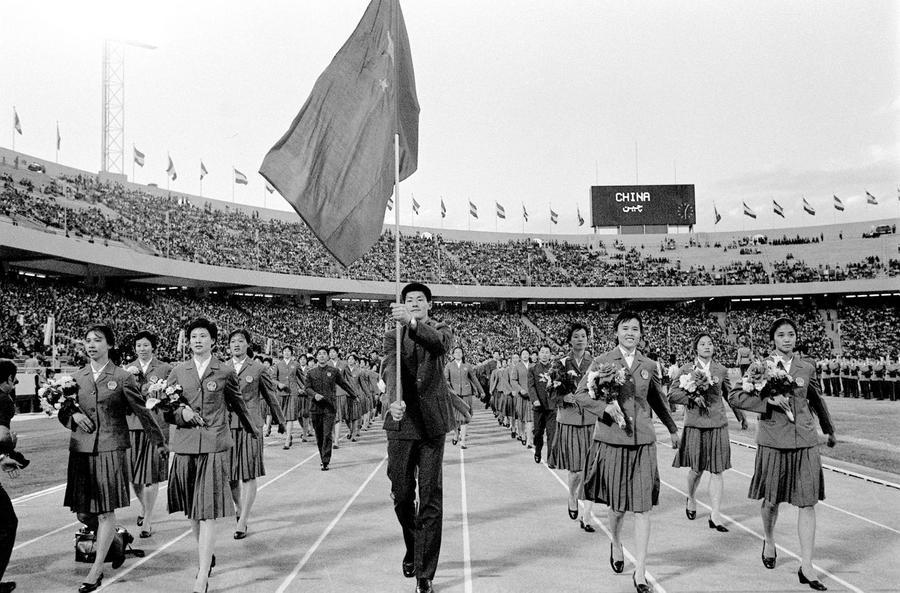
For China, the moment carried significance far beyond sport. The country had been largely absent from international competition for more than a decade.
The arrival of the Chinese delegation at Tehran airport attracted considerable attention, with photographs of the team appearing in newspapers in several countries the following day.
The athletes soon gave the world another reason to take notice.
Su Zhibo won the first gold medal of the Games in the men's free pistol event, while teammate Li Yamin set a world record in the women's 25-meter standard pistol competition. China finished third in the medal table with 33 gold medals.
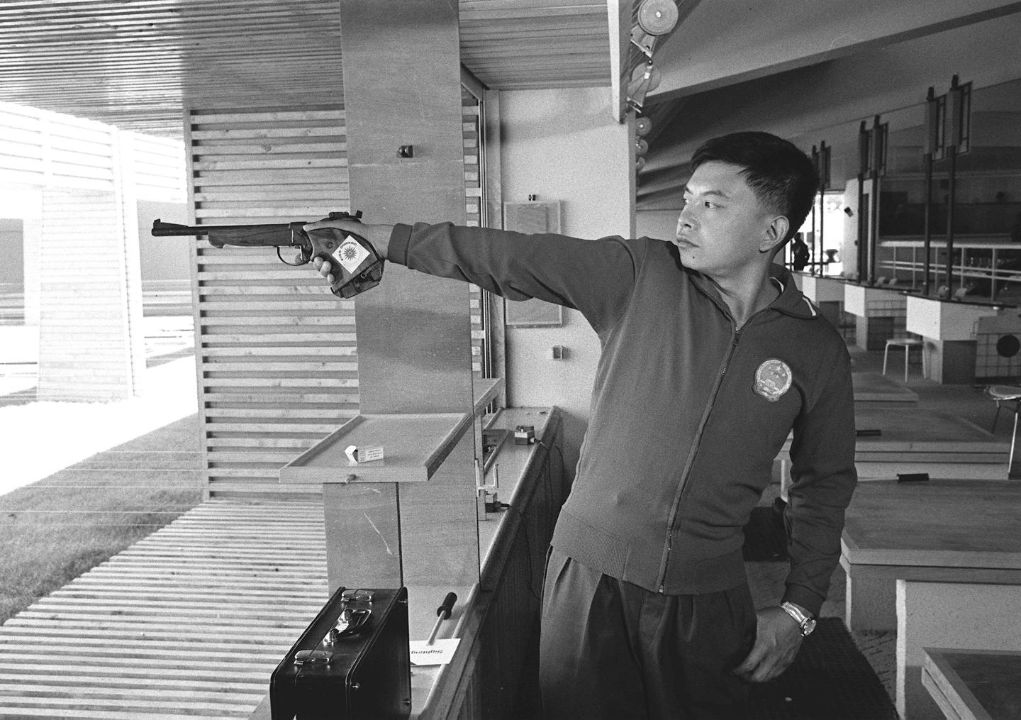
The message was clear: China was returning to the international sporting community.
In 1979, China's legitimate seat in the International Olympic Committee was restored, paving the way for Chinese athletes to compete more widely on the world stage.
At the 1982 Asian Games in New Delhi, China won 61 gold medals, overtaking Japan, which had dominated the Asian medal table for years. It was the first time China had finished atop the standings, a position it has retained at every edition since.
Among the rising stars in New Delhi was 19-year-old gymnast Li Ning, who won four gold medals. He would go on to become one of China's most recognizable athletes and, later, one of its best-known sports entrepreneurs.
Looking back, Li said athletes of his generation understood that they carried a responsibility beyond competition.
"China had just begun opening its doors," he recalled. "When athletes went abroad, we weren't simply going there to compete. We were also representing the image of our country."
A WINDOW ON CHINA
In 1983, China submitted its bid to host the 11th Asian Games in Beijing. Hiroshima, Japan, also entered the race, but Beijing ultimately won the bid.
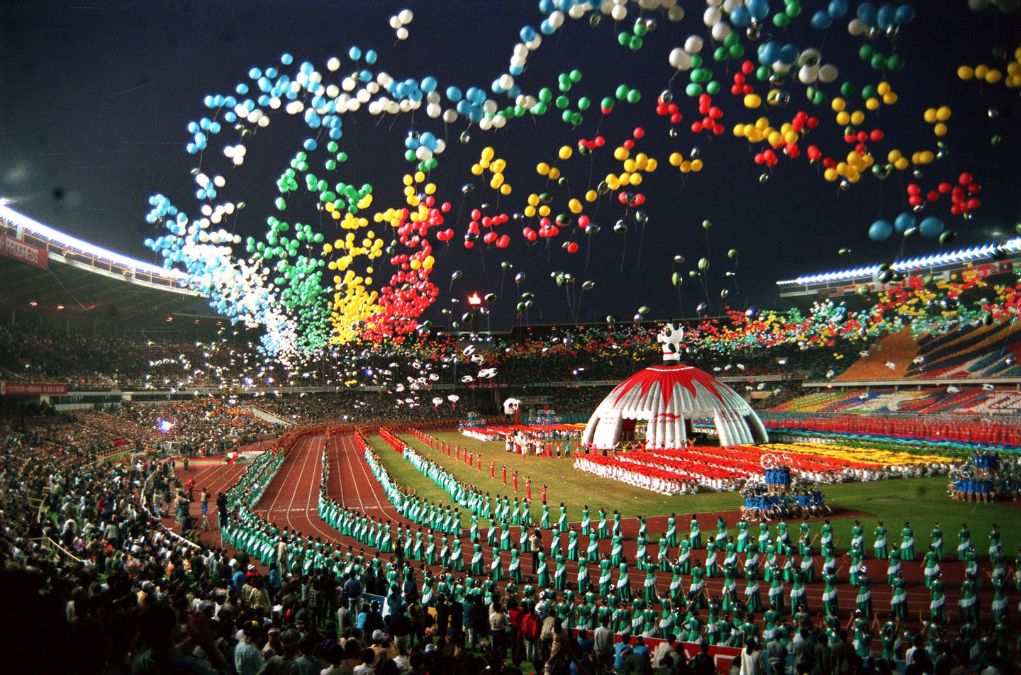
Securing the hosting rights was only the beginning. The organizing committee faced a funding gap of around 600 million yuan (89.45 million U.S. dollars). Then, a little girl named Yan Haixia donated 1.6 yuan (about 0.24 U.S. dollars) from her New Year's gift money to the organizers, helping spark a nationwide fundraising campaign. Between 1987 and 1990, people across China donated a total of 270 million yuan to help finance the Games, which is the first major international multi-sport event happened in the country.
After retiring from competition, Li Ning turned his attention to business. One of his ambitions was simple: Chinese athletes should be able to stand on international podiums wearing brands produced in their own country.
The Li Ning Company sponsored clothing for the Asian Games torch relay and the Chinese delegation's medal ceremonies. The brand's appearance at the Beijing Games proved a landmark moment for China's emerging sportswear industry.
On home soil, China's athletes dominated, winning 183 gold medals, nearly twice as many as South Korea and Japan combined.
Yet the significance of the Beijing Games went beyond the medal table.
At the closing ceremony, the Saudi Arabian delegation unfurled a banner reading "Thank you, China," while Bangladesh's read "Long live friendship."
18 years later, the symbolism of the Beijing Asian Games returned on an even larger stage.
On the evening of Aug. 8, 2008, billions of viewers around the world watched as the Beijing Olympic Games opened with a spectacular ceremony. A series of giant footprints made from fireworks appeared to move along Beijing's central axis toward the National Stadium, better known as the "Bird's Nest." That same north-south axis had been transformed by the 1990 Asian Games.
Two years later, the Asian Games returned to China, this time in Guangzhou. The context had changed dramatically.
China had overtaken Japan to become the world's second-largest economy. Guangzhou's GDP had surpassed 900 billion yuan in 2009, more than half of China's entire national GDP in 1989.
The contrast with Beijing 20 years earlier was striking. The 1990 Games had required a nationwide fundraising effort, while Guangzhou was able to rely largely on the resources of a single city and market-based financing to prepare for an even larger event.
"Through a city's new path of development, people can see the spirit of reform taking shape across the country and experience the fruits of opening up," said Lin Yanfen, then an official with the Guangzhou Asian Games Organizing Committee.
China's athletes once again dominated the medal table, winning 199 gold medals.
But public perceptions of sporting success were beginning to change. Sport was increasingly becoming something to participate in and enjoy, rather than simply something to win.
With Aug. 8 being designated National Fitness Day and the implementation of national fitness regulations, more Chinese people have been shifting from "watching sport" to "doing sport."
13 years later, Hangzhou took up the baton.
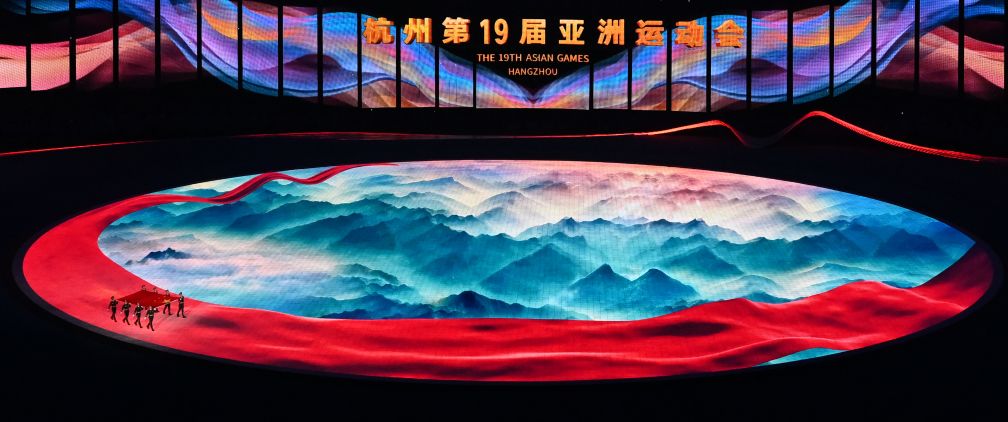
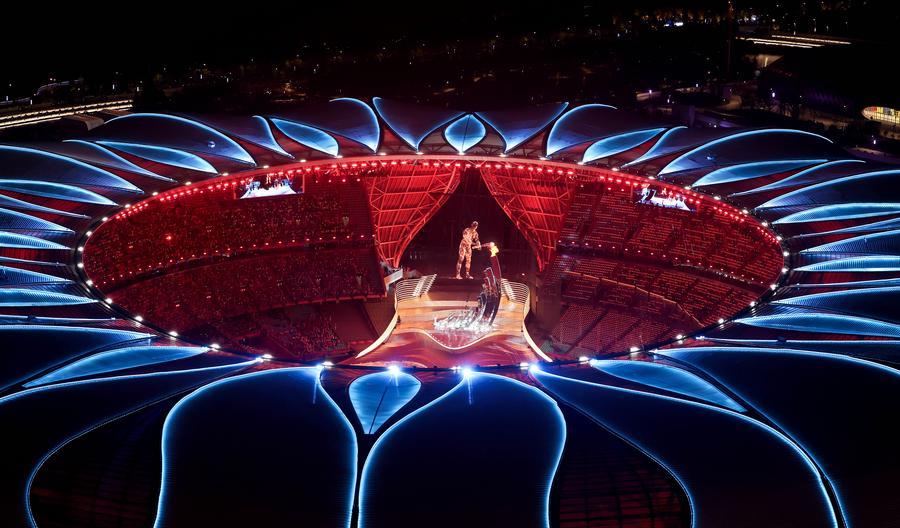
China's athletes remained the overwhelming force at the 2023 Asian Games, winning 201 gold medals, an Asian Games record for a single delegation, and topping the gold medal table for the 11th consecutive time.
Technology became one of the defining features of the Hangzhou Games, with artificial intelligence, augmented reality and other digital tools integrated into the event.
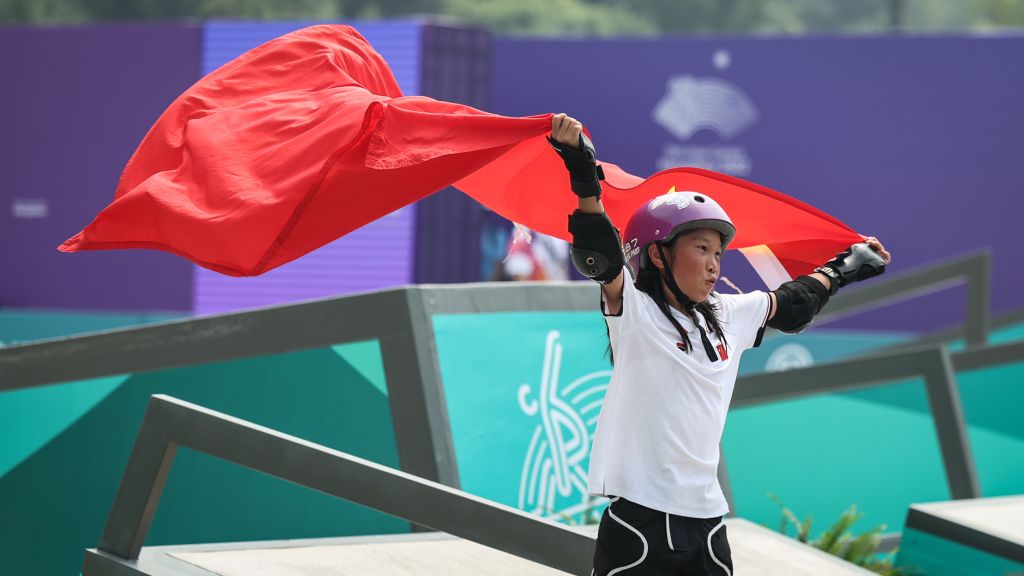
The Games also introduced the first digital torchbearer program. More than 100 million people joined the online torch relay, extending the Games' reach beyond the host city.
From China's return to the Asian Games in Tehran in 1974 to the technologically advanced spectacle in Hangzhou, the country's Asian Games journey has traced more than five decades of change. Now, as the 20th Asian Games open, that journey goes on. ■