GAZA, Sept. 18 (Xinhua) -- On a seven-dunam plot near the "Yellow Line," 55-year-old Mohammed Al-Dahdouh bends over a small field of potatoes, a fraction of the more than 40 dunams he once cultivated.
The military demarcation line established under a ceasefire arrangement separates Israeli-deployed areas from the rest of the Gaza Strip, making every planting season a gamble.
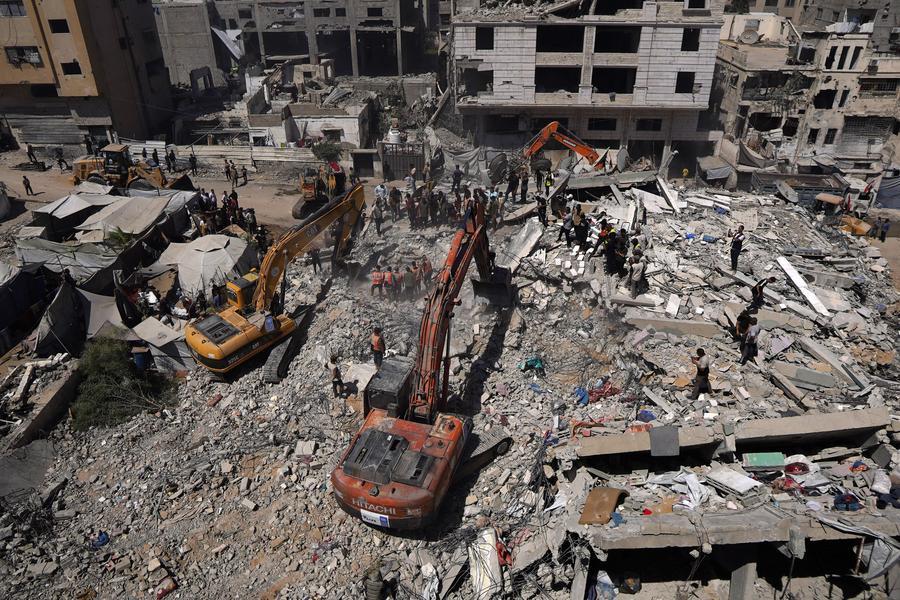
Since the war began on Oct. 7, 2023, Gaza's farmland has shrunk dramatically. Water, electricity, fuel, and agricultural supplies are scarce or unaffordable. Yet Al-Dahdouh, a father of six, refuses to abandon the soil.
When shelling nears, he flees; when it stops, he returns.
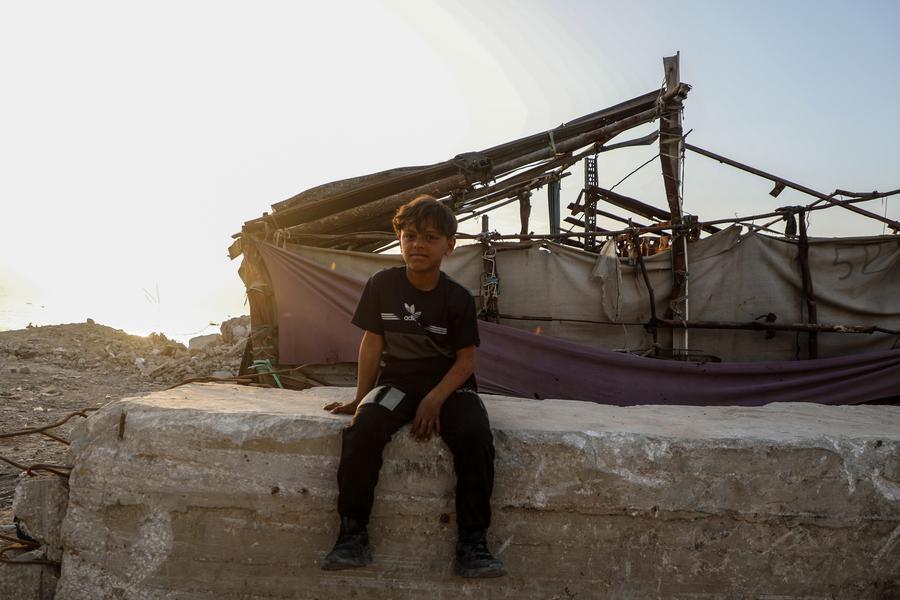
His struggle mirrors that of farmers across the enclave. In Beit Lahia town in northern Gaza, 42-year-old farmer Ibrahim Abu Samhadana grows strawberries, zucchini, and eggplant while living in a tent beside the ruins of his home.
His family's 22 dunams are gone.
"The war has completely devastated the agricultural sector," Abu Samhadana said.
Still, he plants on.
"I am determined to rely on agriculture, as it is the profession we have known since childhood," the farmer, also a father of six, added.
In southern Gaza, the guava season, normally from September through December, tells a similar story.
Farmer Hani Al-Qudra's land in Khan Yunis has shrunk from about 1,350 dunams before the war to around 200 dunams, and his workforce from about 100 to 15.
"Guava is one of the most important crops in the Gaza Strip; both residents and farmers depend on it for food and employment opportunities," Al-Qudra said.
Consumers feel the loss too. In a Khan Yunis market, 45-year-old Ahmed Al-Najjar, a father of three, said guava, once an affordable seasonal fruit, is now beyond reach for many families.
"It saddens me when my children ask for it, and I cannot buy it," Al-Najjar said.
Experts paint a grim picture. Agricultural specialist Mohammed Abu Shamala said guava cultivation had fallen from about 1,700 dunams before the war to less than 100 in Gaza, while damage to farmland and irrigation systems and rising water salinity have degraded crop quality and limited the cultivation of some varieties.
A Food and Agriculture Organization assessment issued in August found that only about 448 hectares, or roughly 3 percent, of Gaza's cropland remained both accessible and undamaged. Gaza's Hamas-run agriculture authorities have put agricultural losses at about 3.49 billion U.S. dollars.
Before the war, agriculture accounted for about 10 percent of Gaza's economy and supported more than 560,000 people. Today, for farmers like Al-Dahdouh, Abu Samhadana, and Al-Qudra, insisting on cultivating potatoes, vegetables, and guavas has become a struggle to preserve both their livelihoods and what remains of Gaza's agricultural sector.
When shelling subsides, Al-Dahdouh returns to his seven dunams, tending his potatoes and preparing to plant tomatoes in the coming season.
"I insist on farming and earning an income for the sake of my children," he said.■