WUHAN, Sept. 19 (Xinhua) -- On a steep hillside in the Three Gorges region along the Yangtze River, drones glide over rows of citrus trees, spraying pesticides across the orchard.
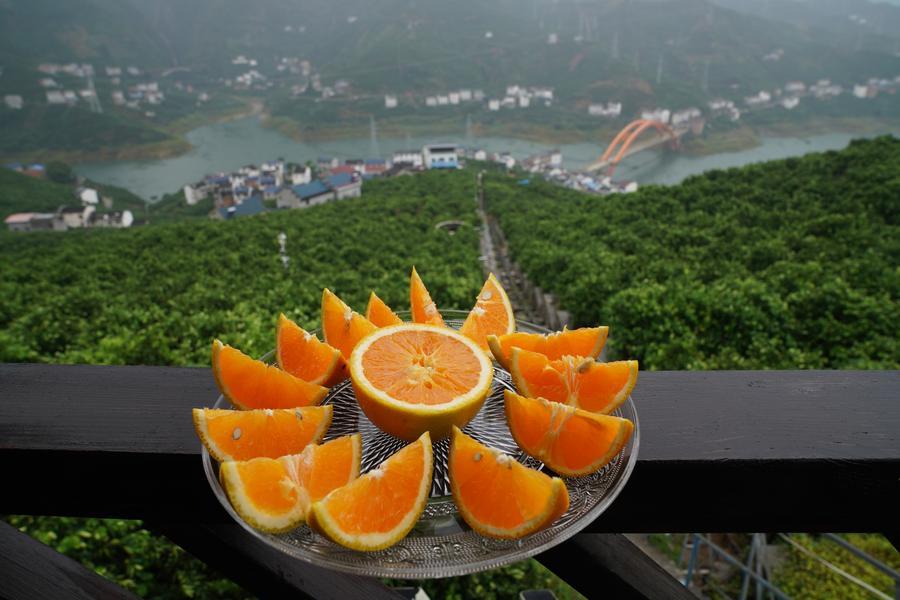
It is one of the many jobs drones now do in Zigui, a mountainous county in central China's Hubei Province. During the November harvest, they also carry freshly picked navel oranges down the slopes.
For years, fertilizing and spraying the orchards were done by hand. Getting oranges down from Zigui's steep hills meant carrying baskets along narrow, uneven paths, with elevation drops of up to 400 to 500 meters.
Guo Xingcheng, 39, knows the work firsthand. After starting to manage his family's orchard in 2011, he spent the next decade carrying the fruit himself during the harvest, about 50 kilograms per trip. On the toughest stretches, the journey could take up to 40 minutes.
"The paths were rough. At first, baskets would fall and people would stumble," he said.
That began to change in 2021, when Zigui started testing drones to transport oranges. Guo became the first person in the county to buy an agricultural drone and learn to fly it, trying it out in his orchard.
"A drone can carry 100 kilograms at a time and fly down the mountain in just one minute," he said.
The technology has advanced quickly since. A drone can now move 25,000 to 30,000 kilograms of oranges a day, roughly the workload of 10 people.
For crop protection, one drone can do the work of about 25 people, while applying pesticides more precisely and using less water and chemicals.
"Farmers were skeptical at first," Guo said. "Soon, more and more wanted to use them."
Guo later started a company that now employs 10 drone pilots, all young people who have returned to Zigui, as well as a crop protection team of more than 40 workers.
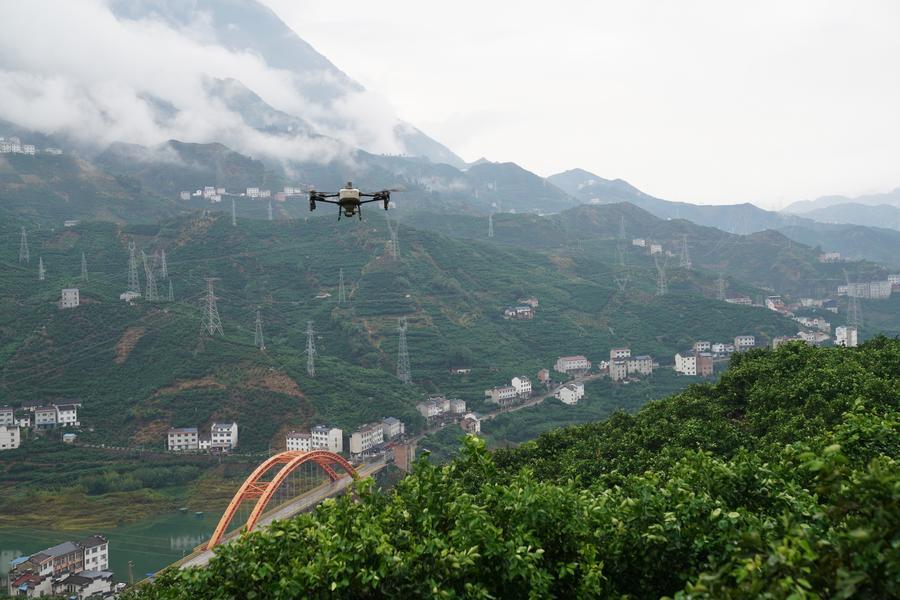
The work has drawn more young people. Zigui now has around 2,600 certified agricultural drone pilots.
With the orange harvest still weeks away, some of Guo's pilots are now in Fujian Province in eastern China, helping transport pomelos by drone.
"The terrain in Zigui is complicated, with lots of trees and steep slopes, so flying here takes a lot of skill," Guo said. "Our pilots find it much easier when they work elsewhere."
Li Songfei, a local government official in Guojiaba Township, Zigui, said the government uses agricultural support funds to subsidize farmers' drone purchases and helps arrange pilot training.
Drones are only one part of the changes in Zigui's orchards.
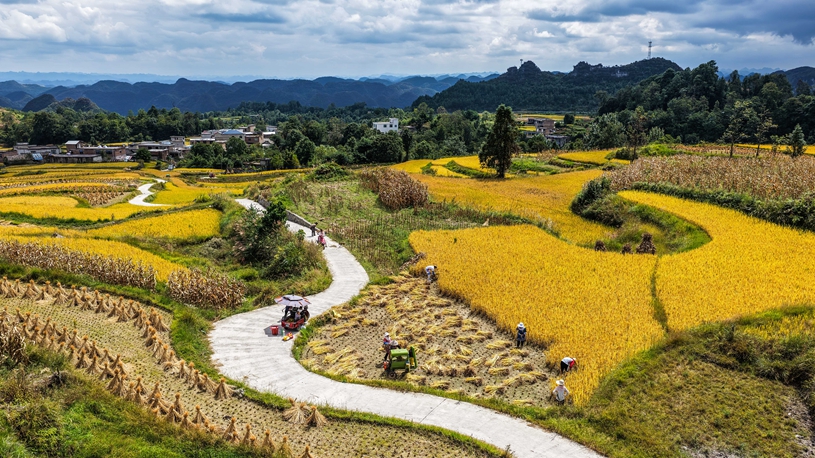
Across nearly 400,000 mu, or about 26,700 hectares, of citrus orchards, the county has digitally mapped individual plots, recording information such as elevation, slope and tree age. Farmers can also use smartphones to upload photos of pests and diseases and receive identification and treatment advice.
For farmers who once relied mainly on experience and weather, data is becoming another tool for managing their orchards, said Li Li, an official with the county agriculture bureau.
But the changes taking place in Zigui's orchards come against a much longer history of change.
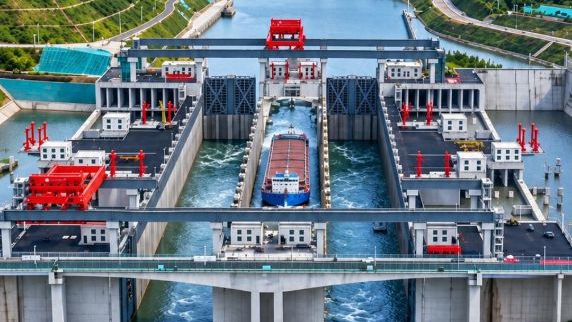
Zigui was among the areas most affected by China's Three Gorges Project, the world's largest hydropower project. Roughly 100,000 people -- about a quarter of the county's population -- were relocated before the dam began operating in the early 2000s.
Li Songfei, a native of neighboring Henan Province, has spent more than five years working with local communities.
Her work has coincided with a new phase of rural development since China declared an end to absolute poverty in 2021, with efforts shifting toward revitalizing rural areas and raising the incomes of hundreds of millions of farmers.
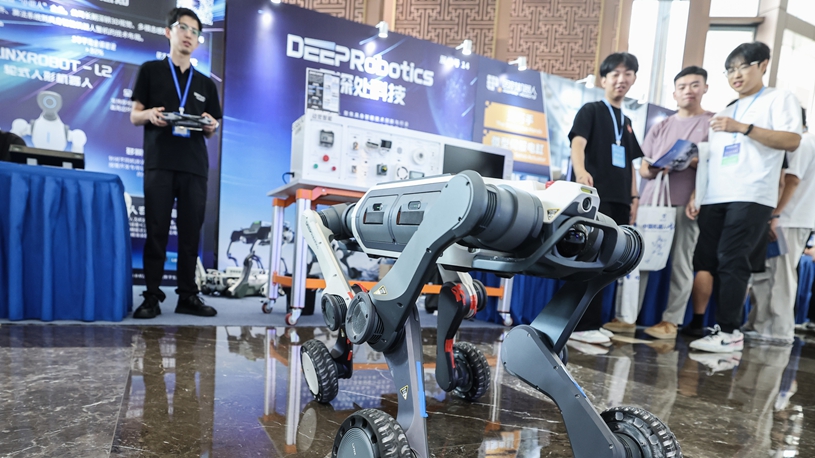
New technologies are increasingly part of that effort, from drones and the Internet of Things to robotics, opening up new possibilities for agricultural production.
The county's orchards now produce more than 1 million tonnes of oranges a year, generating over 25 billion yuan in output value and supporting more than 260,000 people.
Zigui is also the hometown of Qu Yuan, one of China's best-known ancient poets, whose writings more than 2,000 years ago came to embody a deep devotion to his country and people.
"You can see how much this place has changed," Li said. "But amid all the change, there is also continuity. What endures is the passion and resilience with which people here have always sought a better life." ■