
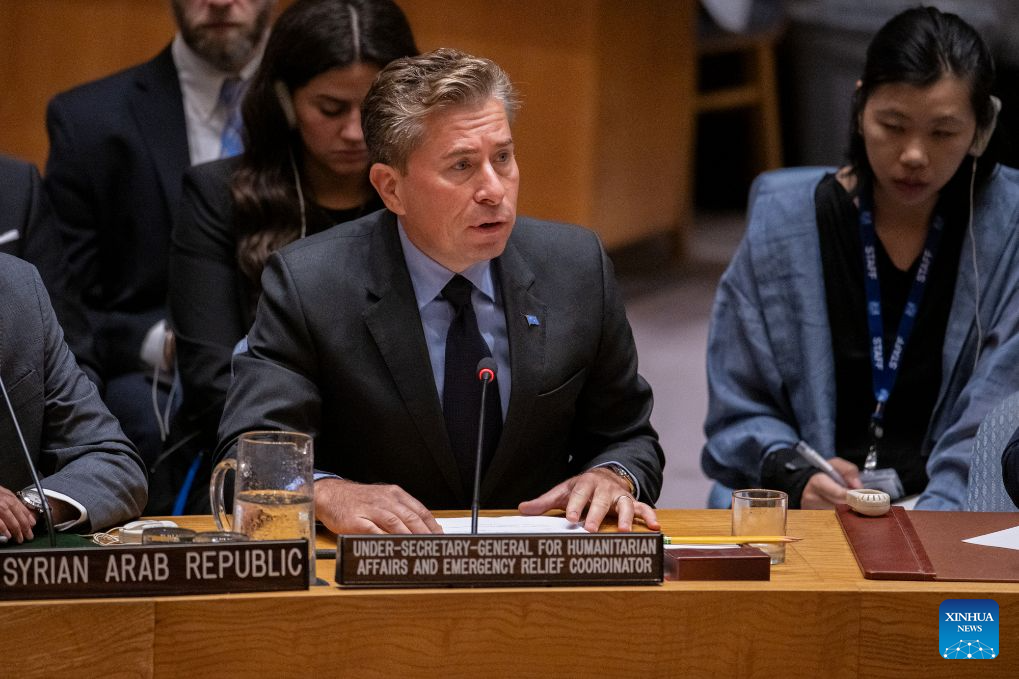
UN Under-Secretary-General for Humanitarian Affairs Tom Fletcher (C) speaks at a Security Council meeting at the UN headquarters in New York, Sept. 17, 2026. Tom Fletcher said Thursday that continued displacement, localized insecurity, regional escalation and landmines are threatening the return of displaced Syrians. (Manuel Elias/UN Photo/Handout via Xinhua)
UNITED NATIONS, Sept. 17 (Xinhua) -- UN Under-Secretary-General for Humanitarian Affairs Tom Fletcher said Thursday that continued displacement, localized insecurity, regional escalation and landmines are threatening the return of displaced Syrians.
More than 2 million internally displaced Syrians and 1.8 million refugees have returned home voluntarily since December 2024. This historic wave of return, the highest in Syria in decades, is a profound sign of hope, Fletcher told the Security Council.
However, 5.5 million people inside Syria have not yet returned, nearly 800,000 of them still in camps. And currently only 18 percent of Syrians outside the country say that they plan to return home in the coming year, he said.
"Without homes, schools or clean water, today's returnees risk becoming tomorrow's displaced," said Fletcher.
A second challenge is localized insecurity.
Attacks by the Islamic State in eastern and northeastern Syria, along with sporadic violence, rebuilding challenges and bureaucratic hurdles, threaten lasting peace. True stability is not possible until every community, most crucially Syria's women, is fully integrated in the nation's political and economic fabric, he said.
The escalation of tension across the region means maritime choke points, disrupted supply chains, reduced humanitarian access and even greater economic pressure on Syrian families, he said.
With disruptions to the Strait of Hormuz, and now to Bab al-Mandab, higher fuel and transport costs will increase the prices of food, medicines and other essential goods for families already struggling, he warned.
Landmines are making recovery efforts a lethal gamble, said Fletcher.
Since December 2024, explosive ordnance has killed 880 people, including 269 children, and maimed 1,616 more, nearly 40 percent of them children. Mines block the fields, orchards and grazing lands that families need to feed themselves, he said. "You cannot build an economy over a minefield."
Fletcher said there is a need to invest in the transition out of humanitarian need and toward reconstruction and growth, to remove the obstacles standing between recovery and development, and to invest the political capital needed to keep Syria out of regional conflict.
"Syrians have endured enough. They are making progress that has defied many who predicted or wished it impossible. Let us also meet this moment," said Fletcher. ■
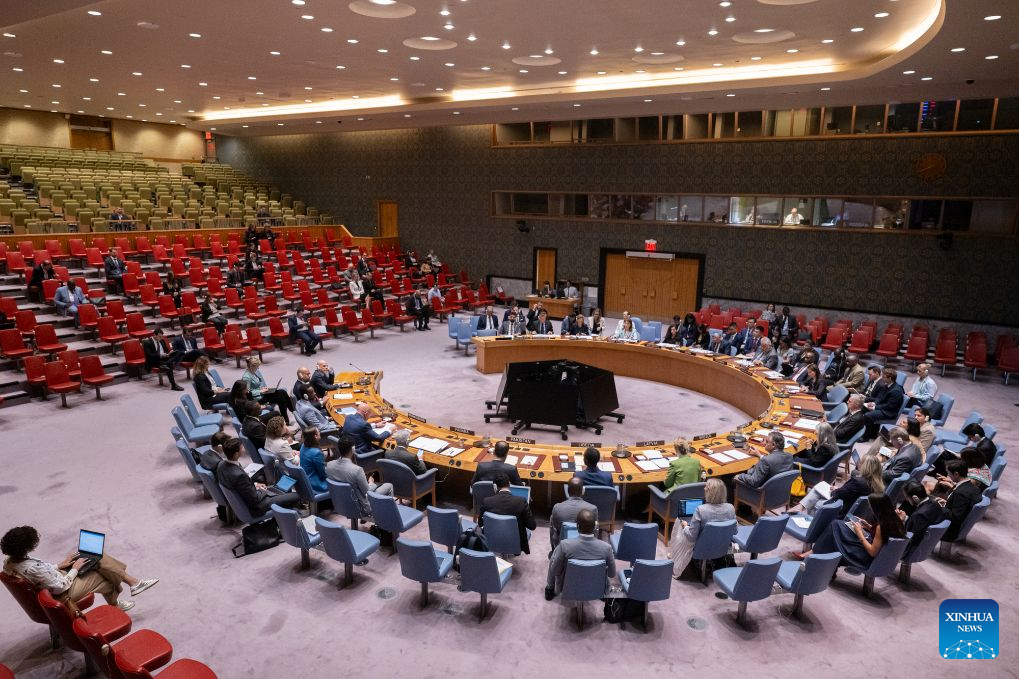
The Security Council holds a meeting on the situation in Syria at the UN headquarters in New York, Sept. 17, 2026. UN Under-Secretary-General for Humanitarian Affairs Tom Fletcher said Thursday that continued displacement, localized insecurity, regional escalation and landmines are threatening the return of displaced Syrians. (Manuel Elias/UN Photo/Handout via Xinhua)


