
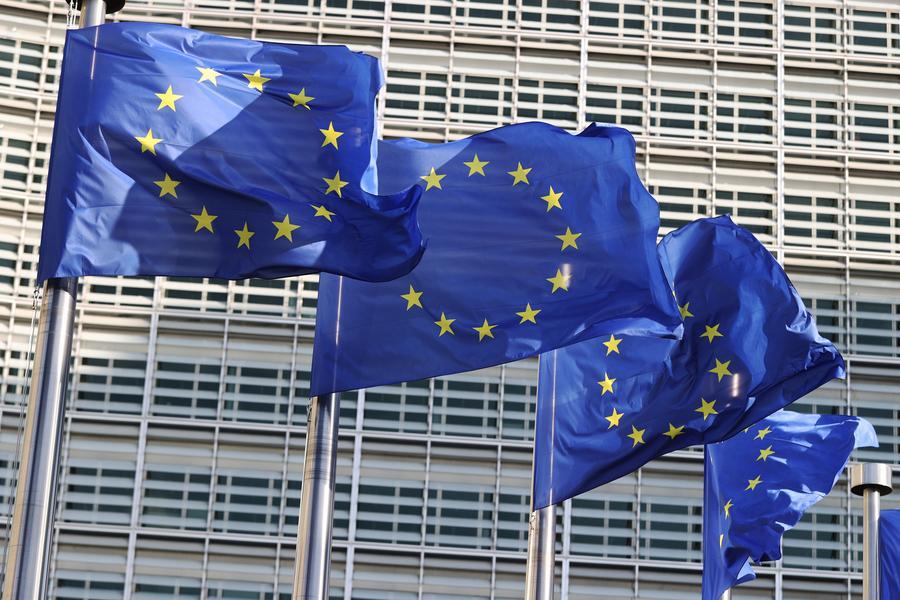
Experts believe that the exchange underscored a broader shift: as Ottawa and Brussels face growing friction with Washington, both are seeking greater strategic room and reshaping a transatlantic relationship long centered on the U.S.
STRASBOURG, France, Sept. 17 (Xinhua) -- The European Union (EU) and Canada moved visibly closer this week, even as Washington pushed back.
European Commission President Ursula von der Leyen on Wednesday proposed opening the door for Canada to become the European Union's first "associate member," while Canadian Prime Minister Mark Carney backed a broader alliance with Europe spanning trade, defense, energy and the Arctic.
After U.S. President Donald Trump threatened new tariffs over the move, Carney said no country could dictate Canada's international partnerships. Experts believe that the exchange underscored a broader shift: as Ottawa and Brussels face growing friction with Washington, both are seeking greater strategic room and reshaping a transatlantic relationship long centered on the U.S.
PRESSURE FROM WASHINGTON
Europe has faced disputes with the United States over tariffs, defense burden-sharing and strategic dependence, while Canada has accelerated efforts to diversify trade and external partnerships amid escalating economic tensions with its southern neighbor.
Trump said that if he considered the EU's proposed arrangement with Canada a "hostile act," the U.S. could impose serious additional tariffs or reduce trade with Europe.
Carney rejected the pressure on Thursday, saying no one could decide what language Canadians speak, what their culture should be or with whom Canada could reach international agreements. He nevertheless argued that stronger ties with Europe could also make Canada a stronger partner for the U.S.
Although von der Leyen did not mention the U.S. by name in her State of the Union address, Washington was "present from start to finish," according to Ian Lesser, distinguished fellow of the German Marshall Fund.
Lesser said the symbolism of inviting Carney and proposing associate membership should be viewed against deteriorating U.S.-Canada relations and Europe's efforts to hedge against growing transatlantic uncertainty.
The German Institute for International and Security Affairs (SWP) said that Canada's highly asymmetric economic relationship with the U.S. gives Ottawa a strong incentive to seek Europe as a counterweight.
RESHAPING TRANSATLANTIC TIES
During her State of the Union address, von der Leyen proposed upgrading EU-Canada relations from the Comprehensive Economic and Trade Agreement to an "Alliance for the Future," covering technology, defense, energy, cybersecurity and the Arctic.
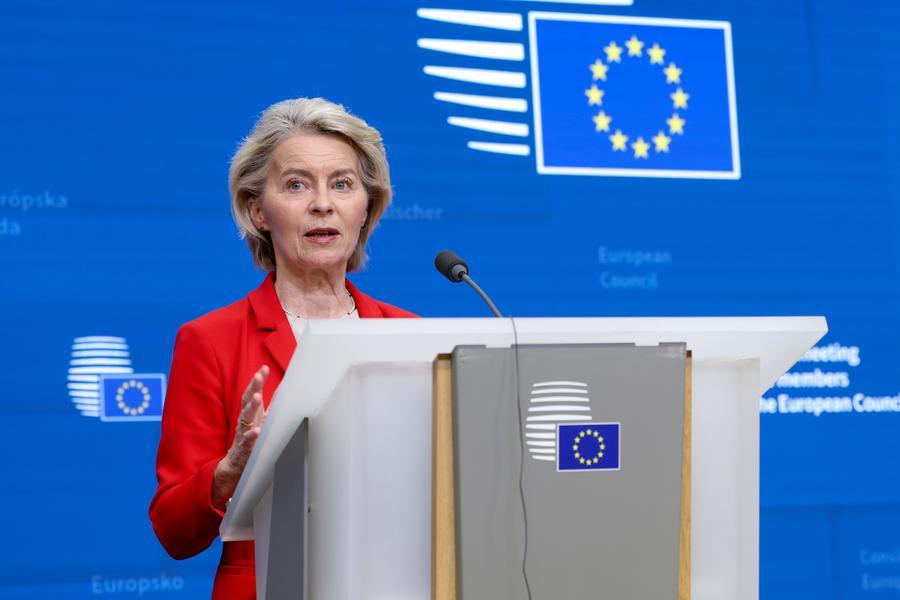
Carney repeatedly framed closer ties with Europe in terms of sovereignty and strategic autonomy. He said partnerships should reinforce sovereignty and reduce the ability of any single external power to control markets, constrain strategic choices or threaten territorial integrity.
The defense dimension could go further. Von der Leyen proposed a European Security Council involving partners including Canada, Britain, Norway and Ukraine.
Sun Chenghao, senior fellow at Tsinghua University's Center for International Security and Strategy, told Xinhua that Brussels is beginning to explore a more layered model of integration that would allow trusted partners to participate more deeply in European markets, industry and security without formally joining the bloc.
Imran Bayoumi, senior researcher of the Atlantic Council, said that the EU-Canada ties could represent Carney's broader strategy of cooperation among "middle powers" against a more volatile world.
Sun said the emerging architecture suggests that transatlantic relations could gradually move away from a structure concentrated overwhelmingly around Washington toward a more "multi-nodal" network, in which the EU, Canada and other partners gain greater room for initiative.
STRUCTURAL LIMITS
The "associate member" proposal surprised some EU diplomats, while questions remain over what rights and obligations such a status would entail, Politico reported.
Some European governments are cautious about how far preferential market access and regulatory integration with Canada should go, and about possible reactions from Washington.
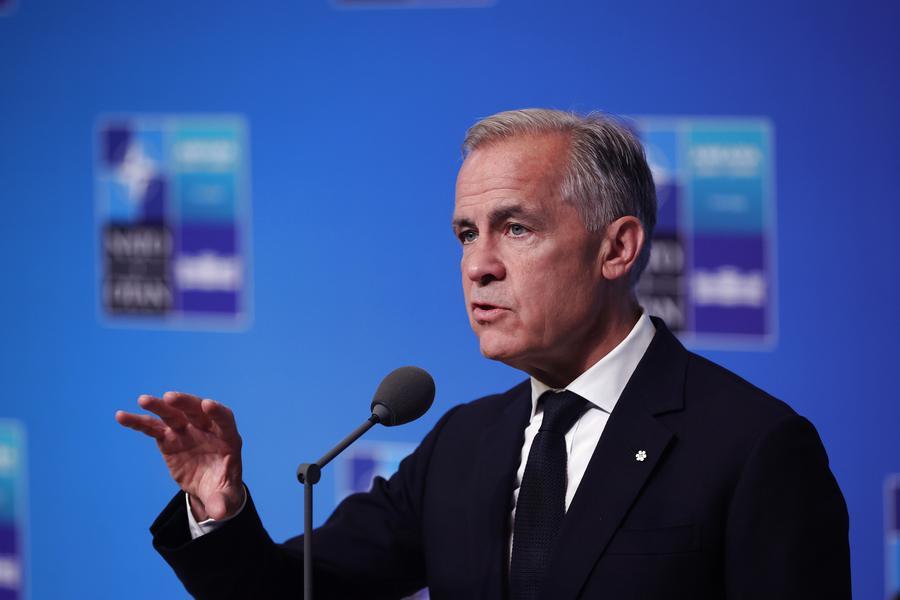
Carney said Thursday that any new arrangement would also have to go through Canada's domestic political process, including debate and a final vote in parliament.
Analysts believe that there are deeper structural constraints as well.
For Canada, the sheer scale of the U.S. market remains difficult to replace even as Ottawa accelerates efforts to diversify trade. For Europe, deeper integration with Canada also faces institutional limits. Patrick Leblond, an expert on international economic relations at the University of Ottawa, said Canada is unlikely to adopt EU laws or join the EU single market or customs union.
Militarily, both Europe and Canada remain deeply embedded in the NATO framework, Sun said.
He said closer EU-Canada cooperation can reduce some single-point dependencies in energy, defense industry and political coordination, but the real test is whether the new mechanisms can gradually move from political declarations to actual capabilities. ■