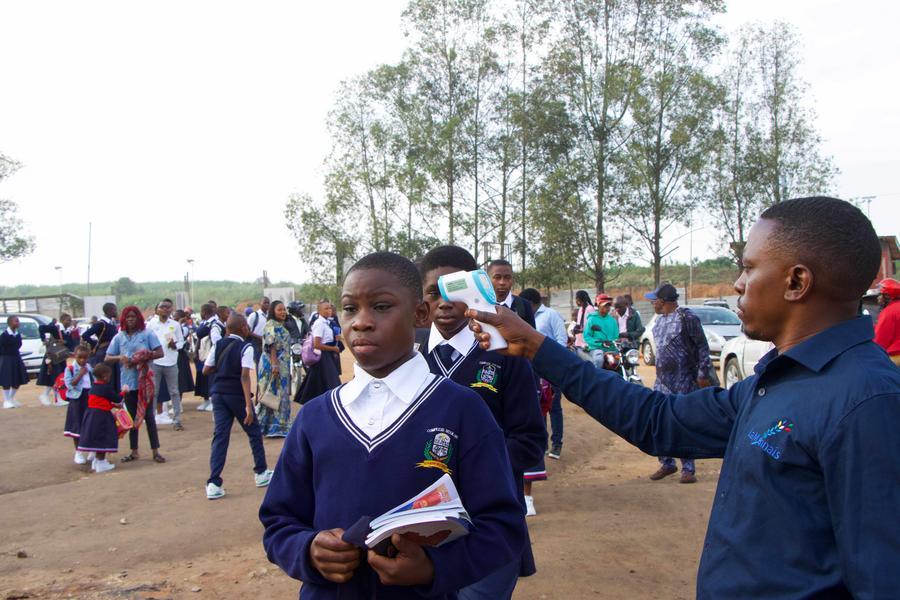
KINSHASA, Sept. 16 (Xinhua) -- Ebola transmission is showing starkly different trends across affected areas in the Democratic Republic of the Congo (DRC), with the epidemic peak having passed in Ituri, the main epicenter of the outbreak, while transmission continues to rise in the eastern province of North Kivu, a leading Congolese Ebola expert said late Tuesday.
Jean-Jacques Muyembe, a veteran Congolese virologist heading the country's National Institute of Biomedical Research, said there had been "a clear improvement" in the fight against Ebola in Ituri.
"The peak is behind us (in Ituri). We are already on the downward slope," Muyembe said at a press briefing in Kinshasa. By contrast, he said the epidemic curve in North Kivu was still rising and "has not yet reached the plateau."
He stressed that the epidemic was unfolding at different stages in different provinces, making it difficult to assess the situation simply by combining case numbers nationwide.
Muyembe nevertheless cautioned that bringing the epidemic under control did not mean it was over, stressing the need to further strengthen contact tracing and other response measures.
Placide Mbala Kingebeni, director of Research, Clinical Trials and Innovation at the Africa Centers for Disease Control and Prevention, said at the briefing that progress in Ituri remained uneven, with cases and deaths declining in some hotspots while incidence was still rising slightly in other health zones.
The World Health Organization (WHO) offered a similar assessment earlier Tuesday.
"There are some, perhaps very early, signs that the epidemic is beginning to decline in some areas, while increasing exponentially in others," Olivier le Polain, head of Epidemiology and Analytics for Response at WHO, said at a UN briefing in Geneva.
He said some affected areas were more under control than others and could be viewed as separate epidemics rather than a single epidemiological challenge, warning that early improvements could still be followed by renewed flare-ups.
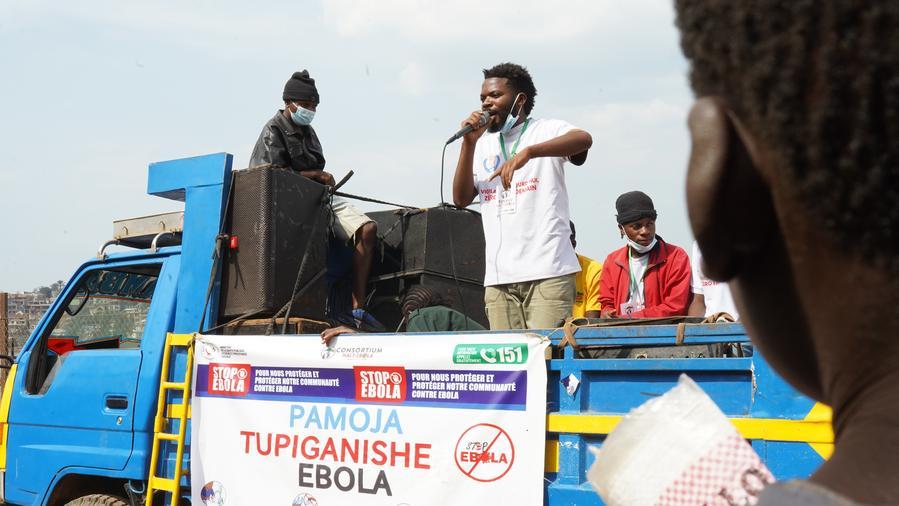
North Kivu has emerged as one of the main areas of concern. Le Polain said weekly cases reported in the province had roughly doubled within weeks.
"Although the response has been unprecedented in its scale, the epidemic continues to expand," he said, warning that the high caseload and wide geographic spread meant it would take "many, many months" to bring the outbreak fully under control.
Muyembe did not give a new deadline for containing the outbreak, saying only that response teams should "do everything possible so that we can celebrate the New Year under better conditions."
The DRC government's latest situation report, with data through Sept. 13, showed that the country had recorded 7,258 confirmed Ebola cases, including 3,510 deaths, across 62 health zones in seven provinces.
The current outbreak has become the largest and deadliest Ebola epidemic in the DRC's history and the second-largest globally, after the 2014-2016 epidemic in West Africa.■