
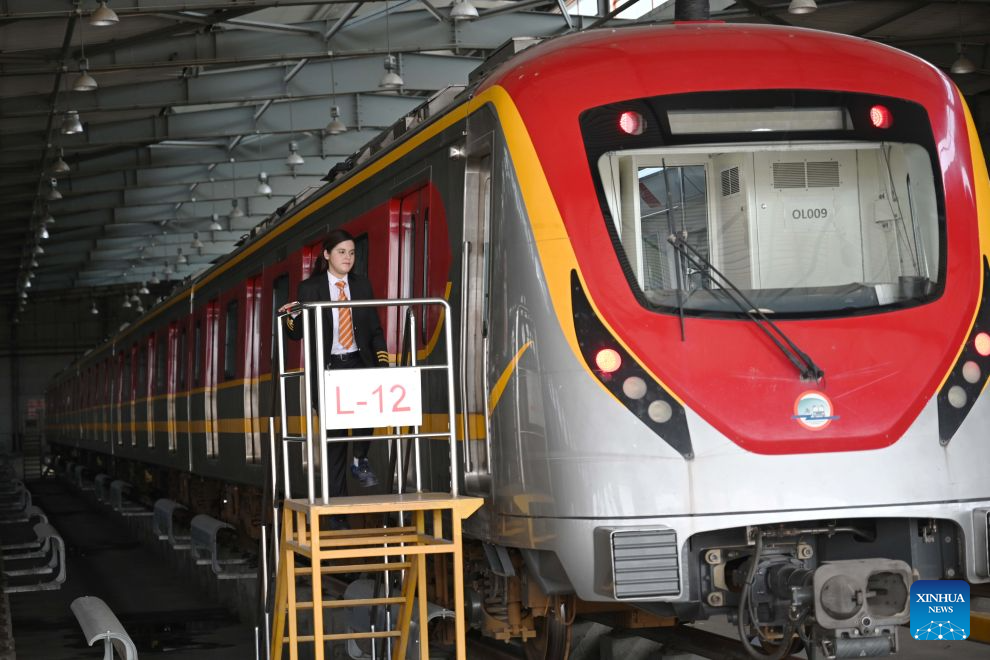
Nida Saleh, a female metro driver of the Orange Line Metro Train (OLMT), boards a train in Lahore, Pakistan, Aug. 5, 2025. (Xinhua/Ahmad Kamal)
by Raheela Nazir
ISLAMABAD, Sept. 16 (Xinhua) -- Wearing a smart navy blue uniform and looking all primed and equipped to operate a massive train, 26-year-old Nida Saleh could barely contain her excitement while mounting herself into a cabin of the Orange Line Metro Train (OLMT).
The metro train is the first modern rail transit system in Pakistan's eastern Lahore city under the China-Pakistan Economic Corridor (CPEC), jointly constructed by China Railway Group Corporation and China North Industries Corporation.
"I used to think why I could not get to choose the field of my choice and prove myself in the workplace and challenge traditional gender stereotypes," Saleh said.
"A few years on, here I am working blissfully as Pakistan's first female metro driver." Saleh joined the project as a transport engineer before deciding to take on a more demanding role as a train operator under the guidance of Chinese engineers.
"Initially, my family was concerned, but witnessing my passion for opening a way for other women, my parents were at ease. My main purpose is to bring about social change and improve the well-being of Pakistani women while becoming a source of hope, encouragement and inspiration for other women," she said.
Saleh believed that the journey to become the country's first female metro operator was not possible without the Chinese colleagues who went the extra mile to train her and impart world-class technical knowledge and standard operating procedures.
"The gesture of women's empowerment through the Chinese projects symbolizes the great friendship between Pakistan and China," she said, adding that CPEC projects in Pakistan are not only empowering local women and helping them grow, but also playing a pivotal role in transforming the country's economic landscape.
After Saleh's resounding success, another batch of 10-15 women were trained to enhance women's participation and promote professional independence for them in Pakistan.
"Never in my wildest dreams have I thought of becoming a train driver, said Hijab Aziz, another female train operator.
"I was a bit nervous initially, but thanks to my seniors, Chinese and Pakistani colleagues who taught us the nitty-gritty of train operations and passenger handling," she added.
Aziz takes pride in sharing that she is one of the pioneers. "During my training, I completed my theoretical and practical courses in which we studied safety protocols, passenger safety, fault handling and train operations to become certified train operators," the 25-year-old explained.
"We also learned about pressure handling as we are handling huge locomotives. We have been put through several tests and practice before actually hitting the rail track. This project is first-of-its-kind in providing opportunities to females in such fields," she added.
Being part of Pakistan's public transport system, which is considered the backbone of urban mobility, providing essential services that support economic activity as well as social equity, Aziz said she feels a sense of achievement as she transports people to their workplaces, educational institutes and day-to-day activities.
The OLMT in Lahore developed a new working space for the female segment of society to excel professionally, said Qamar Mehboob, deputy general manager at the OLMT.
"Modern systems do not differentiate between genders, and technology is gender-neutral if mastered. The orange line project is committed to women's empowerment, which will be offering more opportunities for women in various departments, including maintenance and operations in the coming days," he added.
Wang Zhiwen, acting director of operations and maintenance at the OLMT project, said that highly experienced subway drivers from China are involved in teaching Pakistani female train operators according to Chinese standards.
"From theoretical learning to handling emergencies on main lines, female train operators were quite proficient," he said, adding that Chinese supervisors intend to train more female drivers as well as engineers to do maintenance and repair and deal with malfunctions in the future.
The OLMT is catering to more than 260,000 people daily with reduced travel time, having a substantial effect on the lives of people, especially those who could not afford to travel frequently. Considering the high demand for a cheap mode of transportation in Lahore, the capacity of the service is being increased to 500,000 people daily with additional train sets, according to Bilal Akbar Khan, Punjab minister for transport and mass transit.
Many projects under the CPEC and joint ventures between Pakistani and Chinese companies are bringing about socio-economic benefits to Pakistan, transforming the lives of locals, and furthermore, many projects are proving to be game-changers for Pakistani women.
"The Orange Line is one such example where women's participation is being encouraged by creating a conducive environment, making them feel respected, valued and supported, leading to higher job satisfaction and productivity," Khan said.
"Enabling women professionally at workplaces and providing them an appropriate mode of transportation is the country's top priority, and the Chinese people are helping us in this regard," he said.
Sadia Ahmed, an electrical engineer working at the rolling stock department of the OLMT, said that since her recruitment she has excelled in professional skills and learned the latest technology, with the privilege of having a happy and supportive working environment.
"When I joined this company about two years ago, I knew this was exactly what I was looking for -- a chance to jumpstart my career and better future -- build a successful and accomplished life for my family and myself," Ahmed said enthusiastically. ■
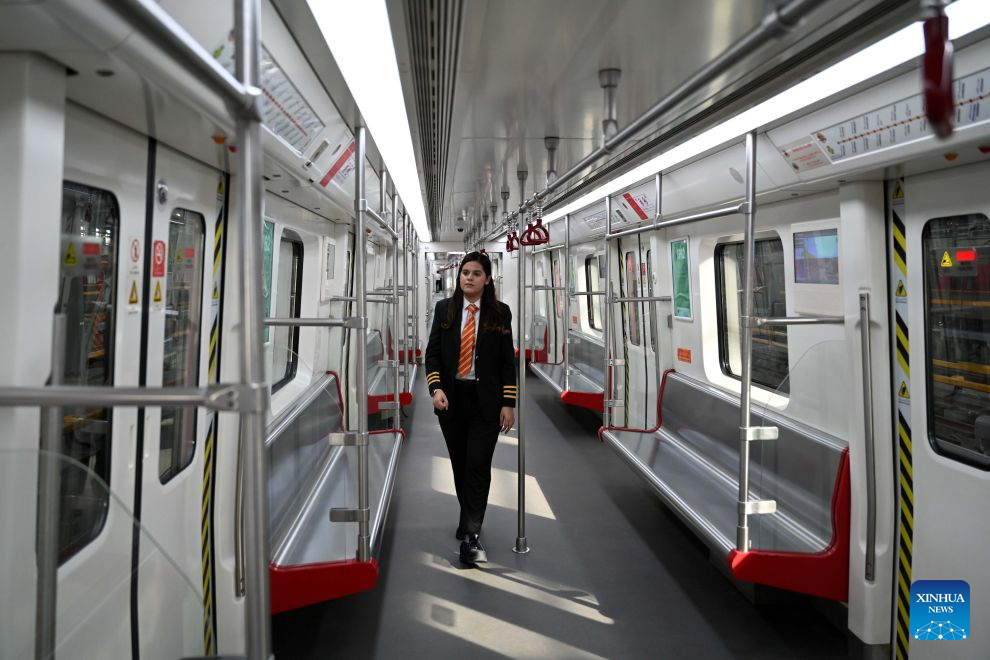
Nida Saleh, a female metro driver of the Orange Line Metro Train (OLMT), performs pre-trip safety checks in Lahore, Pakistan, Aug. 5, 2025. (Xinhua/Ahmad Kamal)
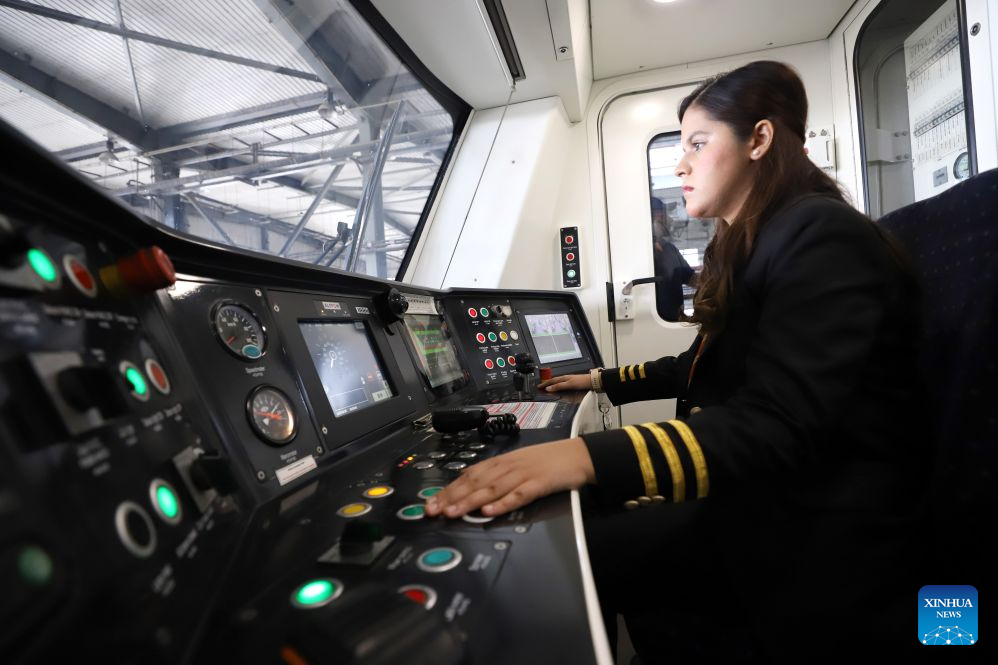
Nida Saleh, a female metro driver of the Orange Line Metro Train (OLMT), prepares to start a train in Lahore, Pakistan, Aug. 5, 2025. (Xinhua/Ahmad Kamal)
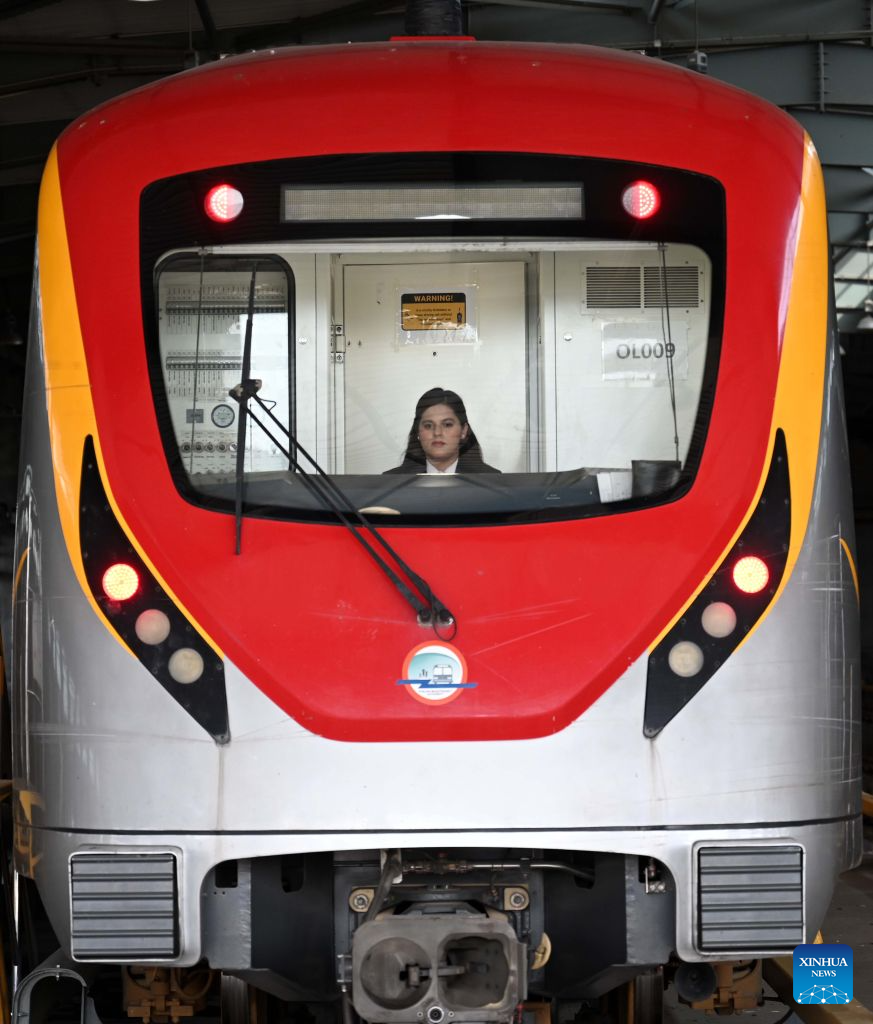
Nida Saleh, a female metro driver of the Orange Line Metro Train (OLMT), sits in the driving cabin of a train in Lahore, Pakistan, Aug. 5, 2025. (Xinhua/Ahmad Kamal)
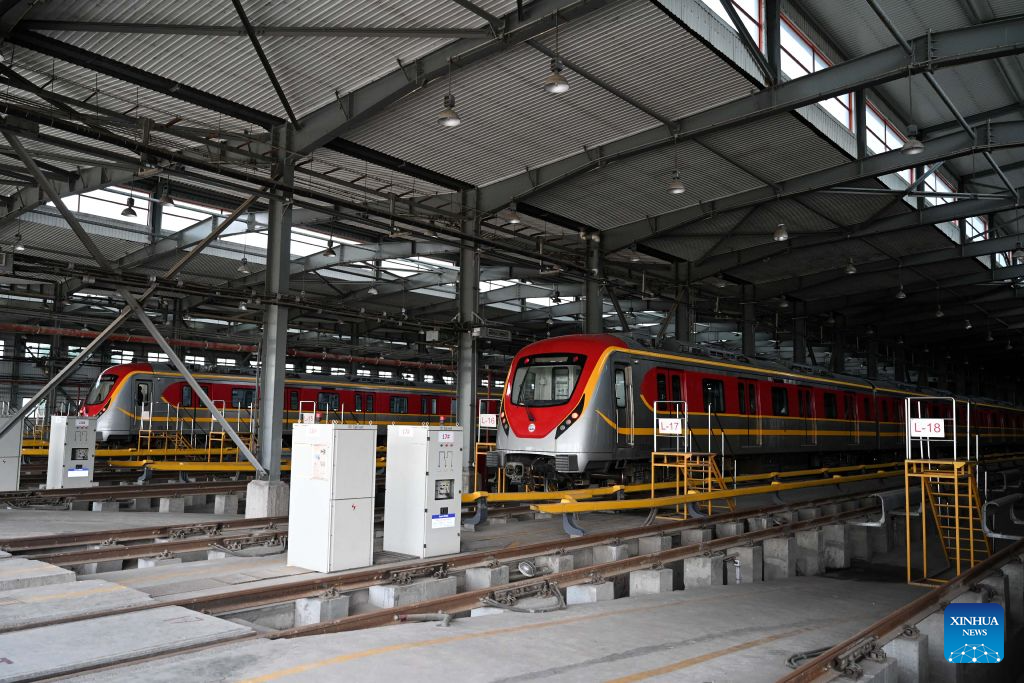
Trains are pictured at a depot of the Orange Line Metro Train (OLMT) in Lahore, Pakistan, Aug. 5, 2025. (Xinhua/Ahmad Kamal)


