
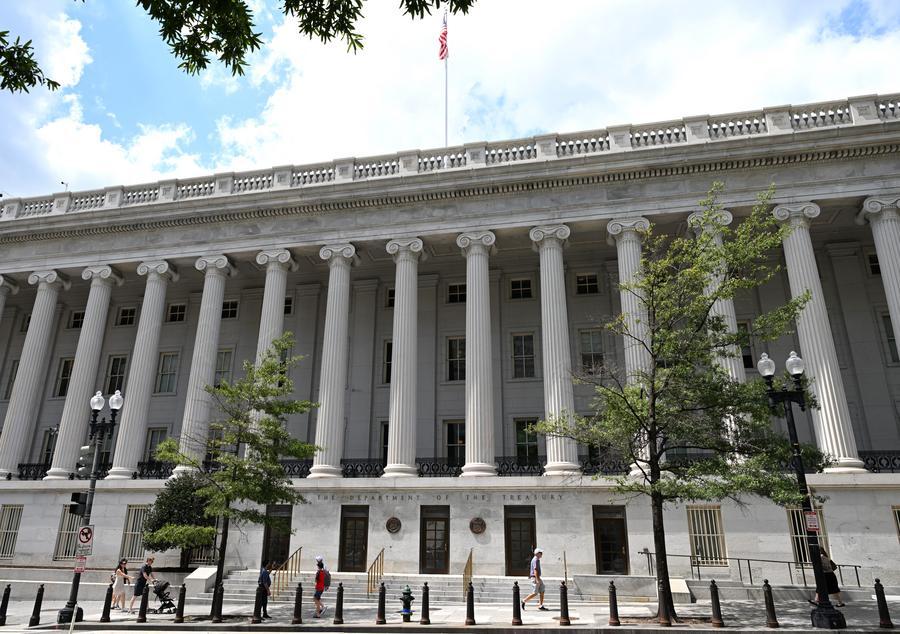
NEW YORK, Sept. 15 (Xinhua) -- The yield on the benchmark 10-year U.S. Treasury note rose to 5.04 percent in early trading on Tuesday, the highest level since July 2007, signaling higher borrowing costs across the broader U.S. economy.
Higher oil prices, prospects of persistent inflation and expectations of further interest rate hikes have been seen as factors driving up yields on U.S. Treasury bonds in recent days.
The relentless upward march in bond yields this year translates directly into heavier financial burdens for consumers seeking to buy homes, finance vehicles or take out personal loans. It simultaneously drives up the cost of capital for businesses and increases debt-servicing costs for the U.S. government itself.
The global bond market, anchored by the nearly 32-trillion-U.S.-dollar Treasury market, has experienced a significant sell-off. Investors are grappling with a complex array of macroeconomic headwinds, including surging energy prices, mounting uncertainty surrounding the ongoing war against Iran, unchecked U.S. government spending, and expectations of further monetary tightening by the Federal Reserve.
The surge in yields has come despite concerted efforts by the U.S. Treasury Department to stabilize the market. Treasury Secretary Scott Bessent has orchestrated various interventions in recent weeks to contain the rise in longer-dated yields. So far, those efforts have yielded little success.
The latest spike in bond yields comes just ahead of the Federal Reserve's highly anticipated monetary policy decision on Wednesday. Traders have priced in a 92 percent probability that the central bank will raise its benchmark interest rate by 25 basis points at the conclusion of the Federal Open Market Committee meeting.
The Fed has "little choice but to hike rates" this week, as the bond market has been "signaling for weeks that higher rates are warranted," said Carol Schleif, chief market strategist at BMO Wealth Management, on Tuesday. Citing hot inflation data, strong corporate earnings, a resilient labor market and severe geopolitical disruptions, Schleif cautioned that elevated yields "could be here to stay for some time."
Wall Street analysts are closely monitoring the fallout in the stock market, though opinions remain divided on the severity of the threat.
In a note to clients on Tuesday morning, Barclays strategists warned that higher rates have already pressured valuations and are increasingly putting equity portfolios at risk.
"While earnings have so far offset the drag, the approaching 5 percent threshold in 10Y yields marks a historically important inflection point, beyond which rates have typically become a more persistent headwind for equities," the Barclays strategists wrote. They added that the risk of a "sharper repricing" would grow if yields move materially above current levels.
Conversely, the BlackRock Investment Institute maintained a more optimistic outlook in its own Tuesday note, saying that the rising global interest rates "have not knocked us off our pro-risk stance."
U.S. stocks posted significant losses in Tuesday morning trading. ■