BEIJING, Sept. 16 (Xinhua) -- As a doctor reviewed a patient's test results at a hospital in north China's Tianjin Municipality, an alert suddenly flashed on the computer screen, recommending further tests for hepatitis B. The patient had come in complaining of fatigue and nausea, unaware that the routine checkup might reveal something more.
The alert was generated by an intelligent detection system designed to help doctors identify potential infectious disease risks at an early stage. An AI-powered agent could sift through the patient's medical records and flag key diagnostic clues within 30 seconds, with other agents assessing the risk and generating reports to support epidemiological investigations.
In the past, identifying hepatitis cases largely depended on doctors' clinical experience, followed by a step-by-step screening process that could take some time, said Dai Jigeng, head of the public health department of Tianjin Second People's Hospital.
With patient privacy strictly protected, the system now enables more timely testing and risk identification, shifting infectious disease detection "from a largely passive process to a more proactive one," Dai said.
What is happening at the Tianjin hospital reflects a broader shift in China toward smarter, multi-point-triggered infectious disease monitoring and early warning, an approach underpinned by a 2024 guideline jointly issued by the National Disease Control and Prevention Administration and eight other government departments.
Unlike traditional detection, which relies heavily on confirmed diagnoses and manual reporting, the new approach has evolved into a broader system that captures signals from multiple sources, including hospitals, laboratories, pharmacies and environmental data to identify potential risks for further investigation.
In December 2025, a smart detection system in Shanghai's Jing'an District automatically identified a potential spatial cluster involving three pneumonia patients living in the same residential community.
The warning triggered a closer look. Investigators found that the three had no close contact or common exposure, and the suspected cluster was quickly ruled out.
It took less than 24 hours from the initial alert to the final determination of the results, according to Wu Huanyu, deputy director of the Shanghai Municipal Center for Disease Control and Prevention.
"An agile and efficient monitoring and early-warning system is key to ensuring the early detection and timely response to major outbreaks," Sun Yang, deputy head of the National Disease Control and Prevention Administration, said at a recent press conference.
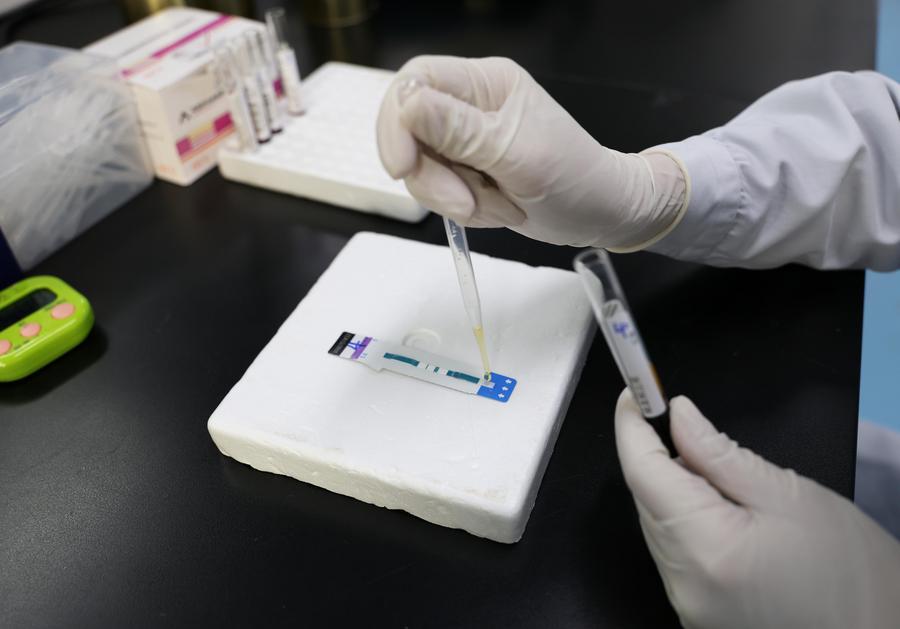
China has significantly strengthened its infectious disease detection and early-warning capabilities in recent years. During the 14th Five-Year Plan period (2021-2025), it established eight monitoring systems covering areas including symptoms, pathogens, disease vectors and wastewater, supported by more than 40,000 laboratories capable of identifying infectious disease pathogens, according to Sun.
Meanwhile, more than 50,000 medical institutions deployed intelligent infectious disease monitoring software, helping reduce the average time between diagnosis and reporting from 5.2 hours to 3.7 hours, Sun added.
The country's 15th five-year plan for disease prevention and control, released in July, calls for the basic establishment of a modernized disease control system with distinct Chinese characteristics by 2030.
It calls for establishing a more robust institutional framework and working mechanisms to guard against and defuse large-scale epidemic risks, along with an efficient, multichannel monitoring and early-warning system capable of responding rapidly to emerging threats.■