
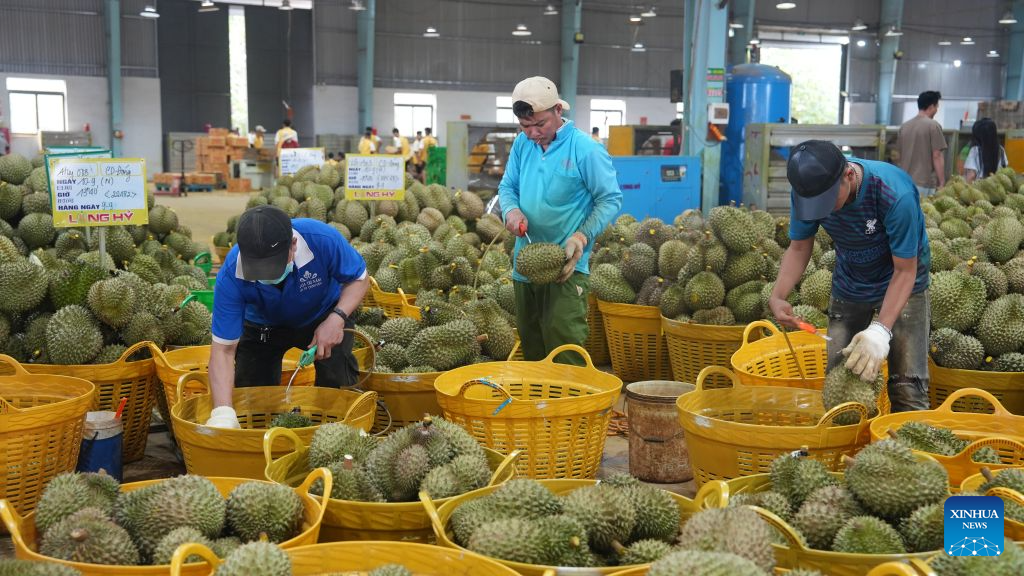
Workers clean durians at a durian processing factory in Dak Lak province, Vietnam, Sept. 10, 2026. (Xinhua/Hu Jiali)
by Xinhua writer Phan Hong Nhung, Hu Jiali
DAK LAK, Vietnam, Sept. 16 (Xinhua) -- In Thai Binh village in Ea Tul commune, Le Tuan Tai walks under a canopy of durian trees, with sunlight falling through the leaves. He taps a green-yellow fruit with a small knife. A dull thud. "It's ripe," he says.
For nearly four decades, Tai's family has farmed this land in Vietnam's central province of Dak Lak. First rubber, then coffee, now durian. Nearly 2,000 trees cover 10 hectares. The shift is personal -- and increasingly common.
Dak Lak, long known as Vietnam's coffee capital, has more than 214,000 hectares of coffee and annual output topping 530,000 tons. And currently, a new crop is spreading fast: durian. The catalyst was China. In 2022, Vietnam signed a protocol allowing official exports of fresh durian to China, ending years of small-scale border trade and giving farmers steadier prices.
Dak Lak Province is one of Vietnam's major durian-producing areas. Its durian acreage has expanded from 15,000 hectares in 2022 to 45,000 hectares in 2026, with output in 2026 expected to reach about 500,000 tons.
Last year, the locality contributed about 1.1 billion U.S. dollars to the country's total durian export revenue of 3.86 billion dollars, according to the Department of Vietnam Customs and the Dak Lak Durian Association. Separately, Vietnam's Lao Dong newspaper reported that with 940,000 tons of durian exported to China, Vietnam, for the first time, surpassed Thailand and became China's largest durian supplier.
Durian is a demanding crop. It needs more labor and capital than coffee. "You cannot leave a durian orchard for a week but can leave a coffee one for a whole year without much attention," Tai told Xinhua, comparing durian to a newborn that needs daily care. Yet farmers keep switching because the returns are hard to ignore.
Do Viet Hung, owner of Hung Toan durian orchard in Ea Tul commune, began planting durian in 2017. Before his first harvest, he invested more than 10 billion Vietnamese dong (about 391,000 U.S. dollars) in an automatic irrigation system, fertilizer and intensive care.
Hung said his orchard began bearing fruit three years after planting, when durian sold for about 25,000 Vietnamese dong (about 0.98 U.S. dollars) per kilogram. Prices have since climbed to 60,000 Vietnamese dong (about 2.34 U.S. dollars), he said.
Tai's orchard is expected to produce 350 tons this year, worth about 18 billion Vietnamese dong (about 703,000 U.S. dollars). "Coffee gave our family a stable but modest living," he said. "Durian prices in recent years have kept household spending comfortable." About 70 percent of his fruit is destined for China.
Le Anh Trung, chairman of the Dak Lak Durian Association, said the durian industry's future lies not in replacing coffee but in building a more diversified and sustainable agricultural base. Coffee retains special importance for Dak Lak, while durian is becoming a high-value export industry.
"In the next stage, we should not only ask how many more hectares can be added, but how much value can be created on existing acreage," he said.
He envisions a value chain that runs from standardized raw-material zones to inspection and traceability, packaging, deep processing, cold storage, logistics and international markets. China's rising standards for quality, food safety and traceability, he said, have already pushed the province's durian industry to professionalize production and strengthen its supply chain.
That shift has brought processors and exporters into the supply chain. Vietnam 001 Fruit Company Limited, founded in 2022, has exported more than 2,000 containers of durian worth over 236 million dollars. Its fruit now reaches consumers across China, from Kunming and Guangzhou to Shanghai and Beijing, covering high-end supermarkets and wholesale markets in lower-tier cities.
"We source our fruits through local cooperatives, covering combined growing areas of about 1,500 hectares," said Nguyen Thi My Duy, director of the company. As Chinese demand has room to grow, she said, competition will hinge on quality and trust, not volume.
"Quality starts in the orchard, not the factory," Duy told Xinhua. The company has worked closely with farmers from the start and plans to invest in deep processing, such as durian cakes and dried fruit, to add value and prepare for the day when the fresh market matures. "We do not want to sell just a durian. We want to maximize the value of durian," she said. "That is also how companies can respond more proactively to market changes and help farmers secure more stable sales."
As the sun sets over Thai Binh, the orchards turn gold. Trucks loaded with fruit rolled out of the village. For farmers in Dak Lak, durian is no longer just an alternative crop; it is a new crown jewel of Vietnam's coffee kingdom. ■
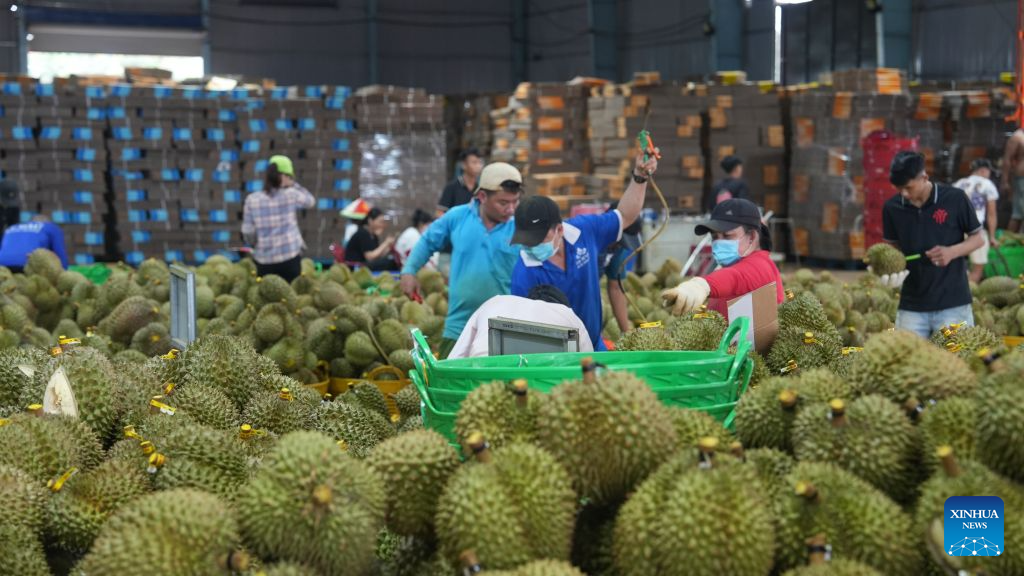
Workers pack durians for export to China at a durian processing factory in Dak Lak province, Vietnam, Sept. 10, 2026. (Xinhua/Hu Jiali)
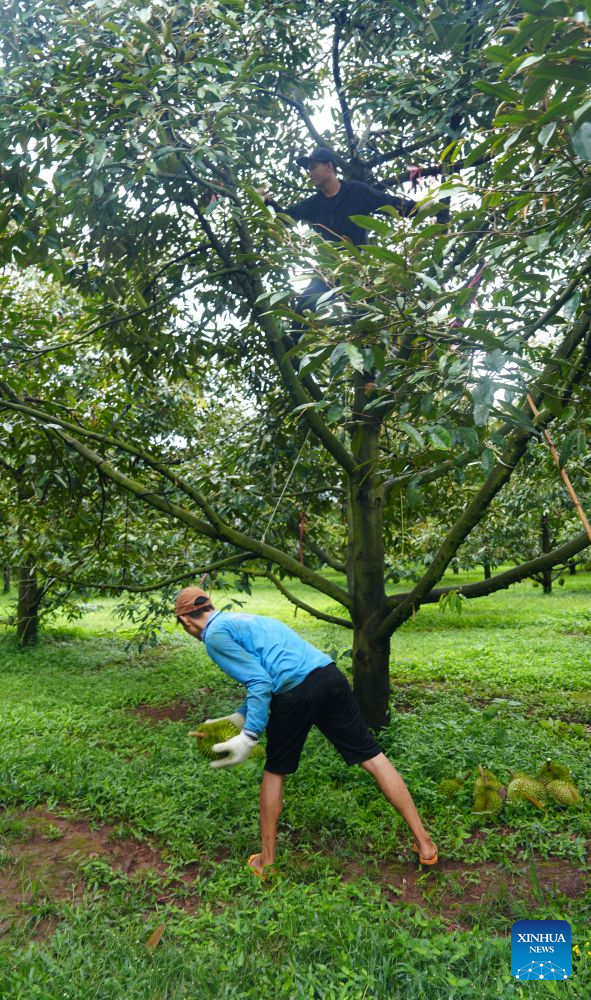
Two workers harvest durians in Dak Lak province, Vietnam, Sept. 10, 2026. (Xinhua/Hu Jiali)
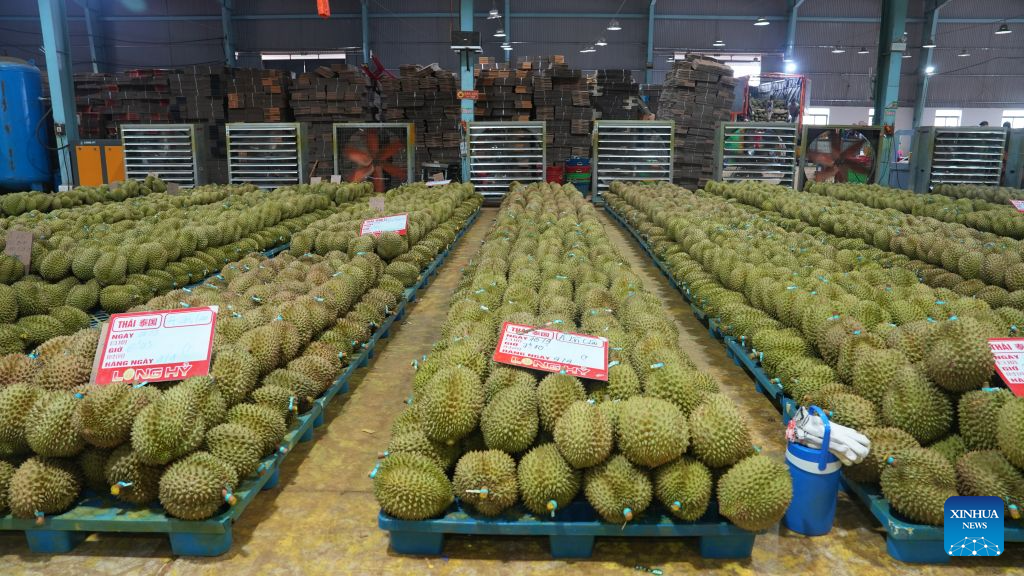
This photo taken on Sept. 10, 2026 shows durians for export to China at a durian processing factory in Dak Lak province, Vietnam. (Xinhua/Hu Jiali)
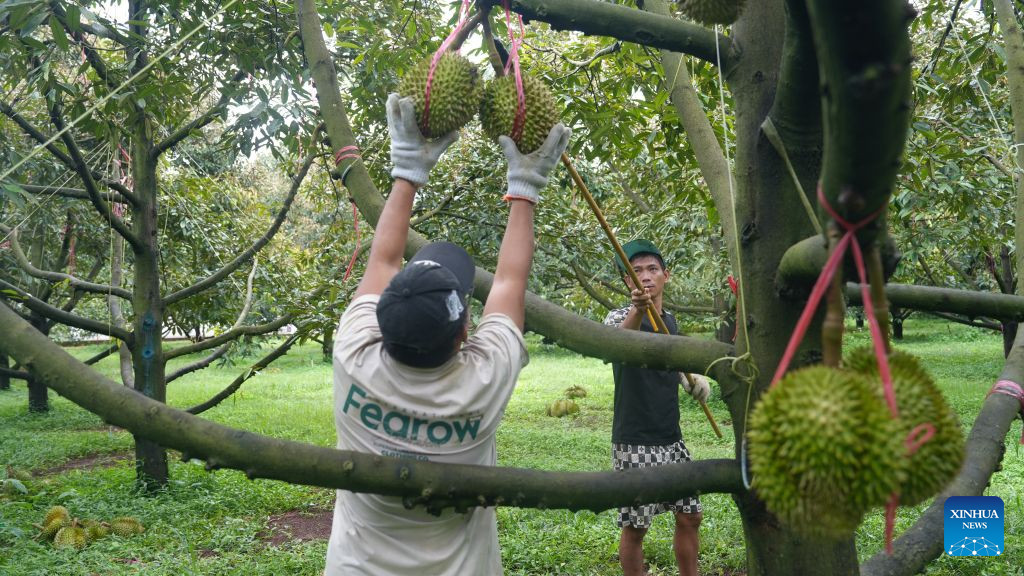
Two workers harvest durians in Dak Lak province, Vietnam, Sept. 10, 2026. (Xinhua/Hu Jiali)


