

BRUSSELS, Sept. 16 (Xinhua) -- More than a decade ago, Portugal, Italy, Greece and Spain stood at the center of Europe's sovereign debt crisis. High debt, fiscal imbalances and soaring unemployment turned southern Europe into a symbol of the continent's economic difficulties.
Today, the picture looks different. Spain's economy expanded 2.8 percent in 2025, well above the eurozone average. Greece and Portugal recorded government surpluses of 1.7 percent and 0.7 percent of gross domestic product (GDP), respectively. Italy continues to face the challenge of public debt, but its manufacturing and export base has shown resilience.
As the continent grapples with a new competitiveness challenge, southern Europe's experience offers an interesting reference point: Recovery has depended not only on improving domestic conditions, but also on remaining connected to wider markets and sources of growth.
The debt crisis exposed structural problems that had accumulated for years in southern Europe. Under enormous economic and political pressure, countries across the region began tackling long-standing structural challenges embedded in their own economies.
Spain overhauled its labor market, giving firms greater flexibility while drawing on immigration to expand its workforce. Portugal cut red tape and streamlined licensing requirements for businesses. Greece consolidated its fragmented pension system and strengthened tax collection. Italy has sought to tackle cumbersome public administration through judicial and administrative reforms.
The process was painful. But these countries sought to restore competitiveness by repairing public finances, improving domestic institutions and reducing structural inefficiencies instead of looking abroad for scapegoats.
At the same time, southern Europe remained closely connected to the outside world.
Southern Europe's rebound has drawn strength from tourism, foreign investment, migration and access to the international market. Against a backdrop of rising protectionism globally, southern European economies have remained open to mutually beneficial cooperation, as illustrated by Volkswagen's multibillion-euro electric-vehicle push in Spain and Microsoft's investments in artificial intelligence (AI) and cloud infrastructure in Italy.
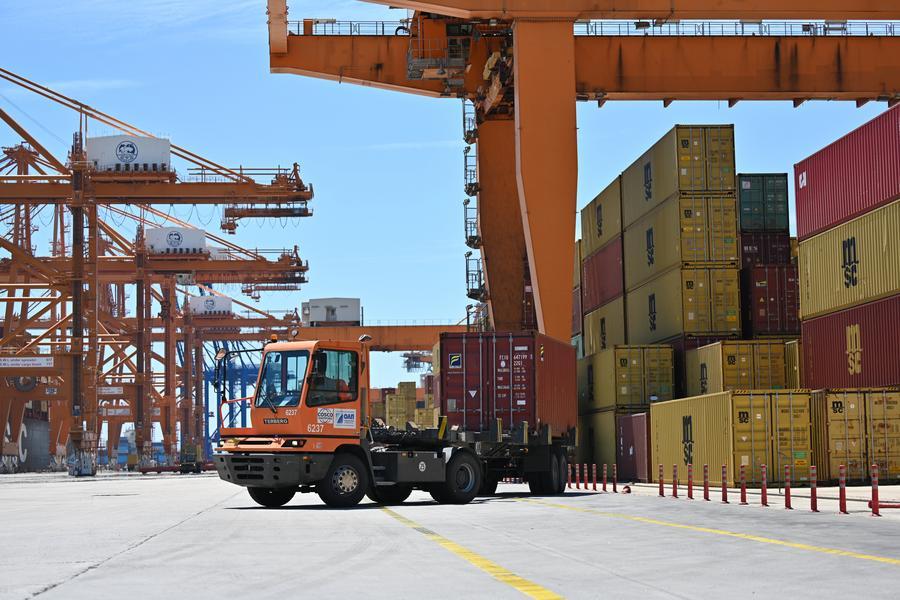
China has also played a role in this recovery story. At Greece's Piraeus port, Chinese investment and management have helped develop the port into a major European container hub. In Spain, CATL and Stellantis are investing up to 4.1 billion euros (4.72 billion U.S. dollars) in a battery gigafactory in Zaragoza, while Chinese automaker Chery has partnered with Spain's Ebro to revive vehicle production in Barcelona.
These examples matter as Europe confronts a new competitiveness challenge.
The EU today faces weak productivity growth, high energy costs, insufficient investment, demographic pressures and persistent fragmentation of its single market. At the same time, the policy debate has increasingly focused on tariffs, trade defenses, investment restrictions and reducing dependence on foreign suppliers, particularly China.
These defensive policies may offer an illusion of security, but in the long run they only drain the dynamism an economy needs to prosper.
The more fundamental approach is to create the conditions for European businesses to become more productive, innovative and competitive. That means tackling high costs, weak investment and regulatory barriers, while continuing to engage with global markets and make the most of the opportunities for international cooperation.
A decade ago, southern Europe, in the face of the debt crisis, decided not to erect walls of protection, but to accelerate reforms while keeping the door open for cooperation. That experience offers a timely reminder for today's struggling Europe.■