
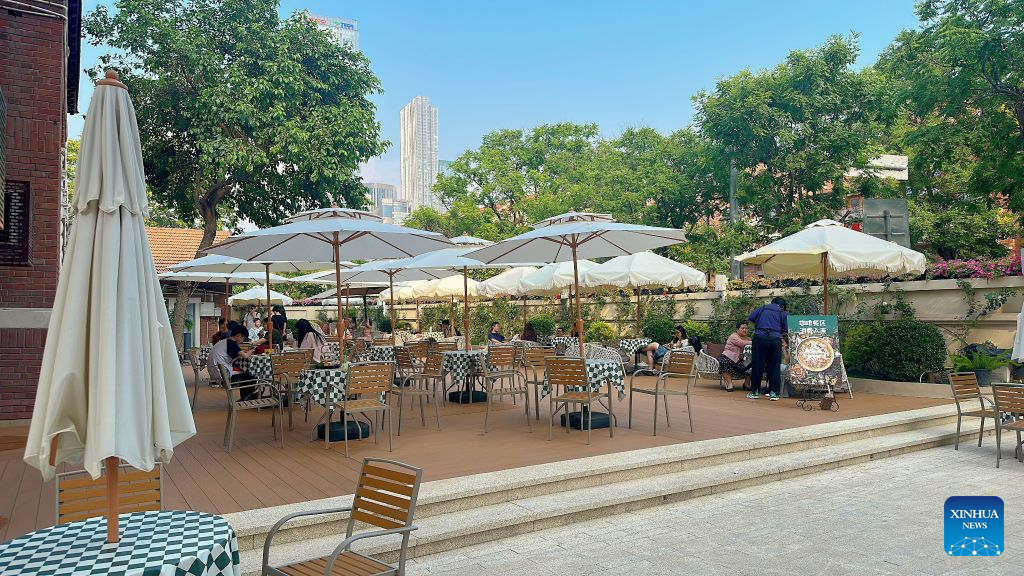
This photo taken on Aug. 7, 2026 shows an exterior view of the renovated former residence of renowned modern Chinese diplomat Wellington Koo in north China's Tianjin Municipality. (Xinhua)
TIANJIN, Sept. 15 (Xinhua) -- As visitors push open the vermilion gate at 267 Hebei Road in the Heping District of north China's Tianjin Municipality, the former residence of renowned modern Chinese diplomat Wellington Koo comes into view through the trees.
Inside, the first-floor reception room traces Koo's diplomatic career. On the second floor, qipao, jewelry and period-costume photography recreate scenes from the life of Koo's wife. Upstairs, a study recreates a period office setting.
The aroma of coffee wafts up from below, mingling with visitors' footsteps and tour guides' voices inside the century-old Western-style building.
Just over a year ago, the house stood almost empty.
Built in 1921, Koo's former residence is part of the modern architectural complex in Tianjin's Wudadao historical urban area, or the Five Great Avenues, which was included in the seventh batch of China's national key cultural relic protection units.
The building was later used as office space for many years. On an architecture-themed tourist route released by Tianjin's culture and tourism authorities in 2025, Koo's former residence was still marked as "exterior viewing only."
"When we first took over, the place was basically empty," recalled Jin Qianwen, curator of Koo's former residence. From planning and positioning the exhibition to sorting through historical stories, attracting businesses, and setting up facilities, the team gradually filled the space.
Revitalizing the building did not simply mean moving commercial ventures into an old house. The team reorganized the space around Koo and his family's stories. His wife's fondness for qipao and jewelry, for example, inspired the introduction of clothing and jewelry offerings, as well as period-costume photography experiences.
Jin said that by weaving the stories of historical figures into products and creating distinctive offerings, businesses can add narrative appeal and value while fostering a healthier commercial cycle.
The team has also continued to explore new ways to enrich the visitor experience. In April this year, nearly 100 students from primary schools, middle schools and universities visited the residence, recreating scenes from the 1919 Paris Peace Conference through dramatized performances, where Koo fought to uphold national sovereignty.
During the May Day holiday, interactive performances at the residence drew more than 300 visits in a single day. In June, the protection and utilization of Koo's former residence in the Wudadao modern architectural complex was named one of Tianjin's outstanding cases of cultural heritage building protection and utilization for 2026.
A tourist surnamed Ma from Beijing recalled that during previous visits to the Five Great Avenues, some Western-style buildings could only be viewed from outside.
"This time, I found that quite a few former residences of notable figures are open to visitors. You can also have coffee, dress up in period costumes and take photos. The experience feels much richer," she said.
Leaving Hebei Road and walking along the neighborhood lanes toward Anshan Road, visitors come upon an old building with exposed brick walls and a red-tiled roof. Built in 1915, it is Zhangyuan, or Zhang's Garden.
Today, the century-old building has become a stage in its own right. Guides dress in period costumes and lead visitors from room to room, blending historical narration, character dialogue and live performance.
In 2023, Zhangyuan was selected for the first batch of China's national pilot projects under an "immersive city storytelling" program launched by the national public culture development center at the Ministry of Culture and Tourism. Its immersive show has been staged more than 2,000 times.
"Every Western-style building has its own cultural story. We hope to make Tianjin's Western-style buildings 'speak,'" said Guo Hongbin, who runs the Zhangyuan.
Farther along, on Tai'an Road, stands the former Kailuan Mining Bureau Building. Beyond a broad flight of steps, more than 10 tall columns support an imposing colonnade, while the interior retains the solemn character of classical architecture.
Completed in 1921, the building now welcomes not only visitors but also employees of financial institutions and business clients. Following two years of revitalization, it opened in 2024 as Tianjin's financial exhibition center and financial institution service center.
Rich in historical and cultural resources, Tianjin is home to 16 historical and cultural blocks, 877 historic buildings and more than 1,000 protected buildings of various types. In recent years, the city has drawn up a conservation plan for its historical and cultural heritage, established committees and expert advisory bodies to protect historic buildings, and encouraged social capital to participate in the protection and use of historic buildings and blocks.
According to the Tianjin Housing and Urban-Rural Construction Commission, the city has revitalized more than 100 Western-style buildings in recent years. This year, Tianjin has moved to a "one building, one plan" approach, targeting the revitalization of 21 such buildings.
Tianjin's efforts offer a glimpse of China's broader push to advance urban renewal while strengthening the protection and inheritance of historical and cultural heritage.
China has proposed to broaden historical and cultural heritage protection from single-building repairs to block renewal, and from preserving physical structures to introducing suitable new functions, integrating it ever more deeply into urban development.
"We will continue to tap the potential of historical and cultural resources, explore more approaches to adaptive reuse suited to the architectural features of these buildings, breathe new life into old buildings, and carry the city's cultural legacy forward in contemporary life," said Peng Peng, director of the Culture and Tourism Bureau of Heping District in Tianjin. ■
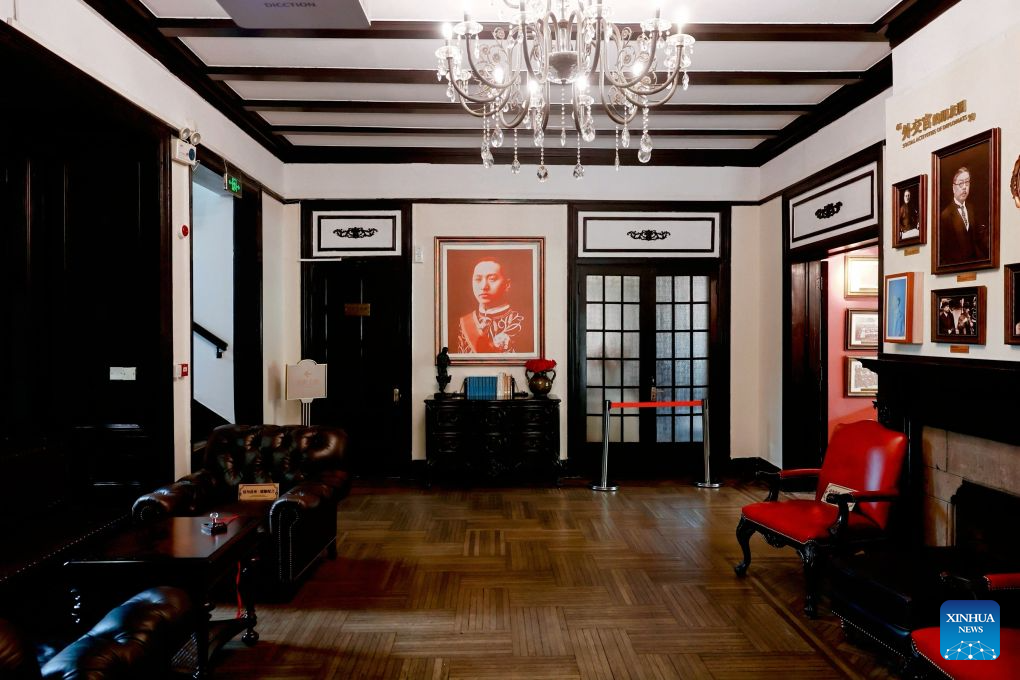
This photo taken on Aug. 7, 2026 shows an interior view of the renovated former residence of renowned modern Chinese diplomat Wellington Koo in north China's Tianjin Municipality. (Xinhua)
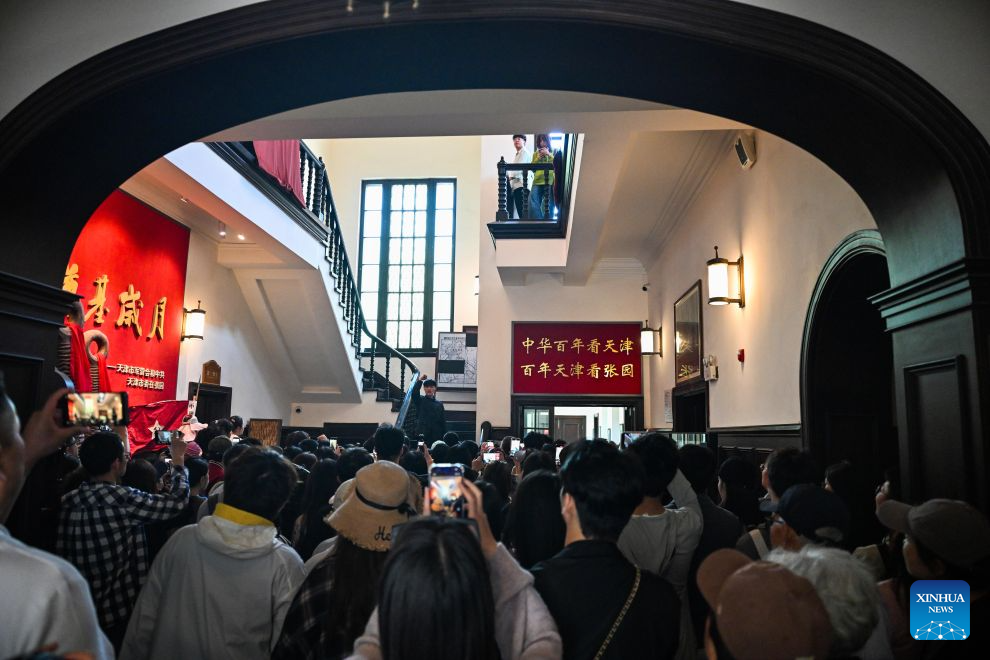
Visitors watch an immersive performance at Zhangyuan, or Zhang's Garden, in north China's Tianjin Municipality on May 5, 2026. (Xinhua/Zhao Zishuo)


