

A panoramic aerial drone photo taken on Aug. 19, 2026 shows the city view and the Pinglu Canal in Qinzhou City, south China's Guangxi Zhuang Autonomous Region. Pinglu Canal in south China's Guangxi Zhuang Autonomous Region will become operational on Sept. 16. The 134.2-km canal links the Xijiang River shipping route in the north with the Beibu Gulf in the south. It is China's first major river-to-sea canal project that has been planned and coordinated at the national level since 1949.
Centering the Pinglu Canal Economic Belt as its main artery, Guangxi focuses on large-capacity, port and waterway-related industries. It builds port-adjacent parks along the canal tailored to local conditions, forming industrial clusters that support upstream and downstream industries and foster collaboration among large, medium, and small enterprises.
Across Guangxi, localities leverage their own resources to position themselves within a maritime-oriented industrial layout, advancing the high-quality development of the marine economy. (Xinhua/Cao Yiming)
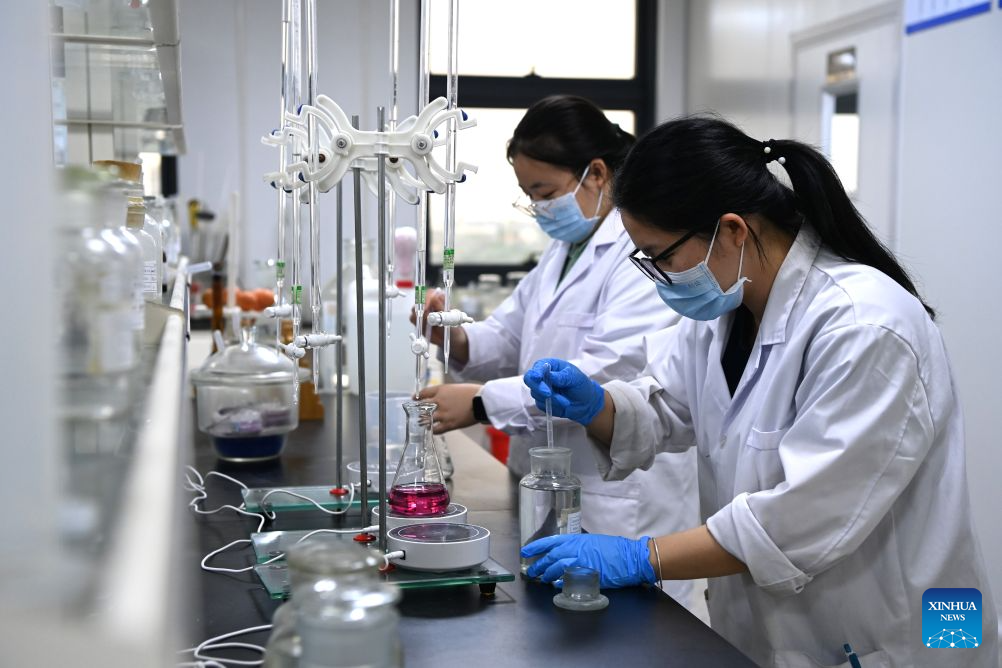
Staff members check product quality at an export-oriented food additive manufacturing enterprise at the China-Malaysia Qinzhou Industrial Park in Qinzhou City, south China's Guangxi Zhuang Autonomous Region, Sept. 4, 2026. Pinglu Canal in south China's Guangxi Zhuang Autonomous Region will become operational on Sept. 16. The 134.2-km canal links the Xijiang River shipping route in the north with the Beibu Gulf in the south. It is China's first major river-to-sea canal project that has been planned and coordinated at the national level since 1949.
Centering the Pinglu Canal Economic Belt as its main artery, Guangxi focuses on large-capacity, port and waterway-related industries. It builds port-adjacent parks along the canal tailored to local conditions, forming industrial clusters that support upstream and downstream industries and foster collaboration among large, medium, and small enterprises.
Across Guangxi, localities leverage their own resources to position themselves within a maritime-oriented industrial layout, advancing the high-quality development of the marine economy. (Xinhua/Cao Yiming)
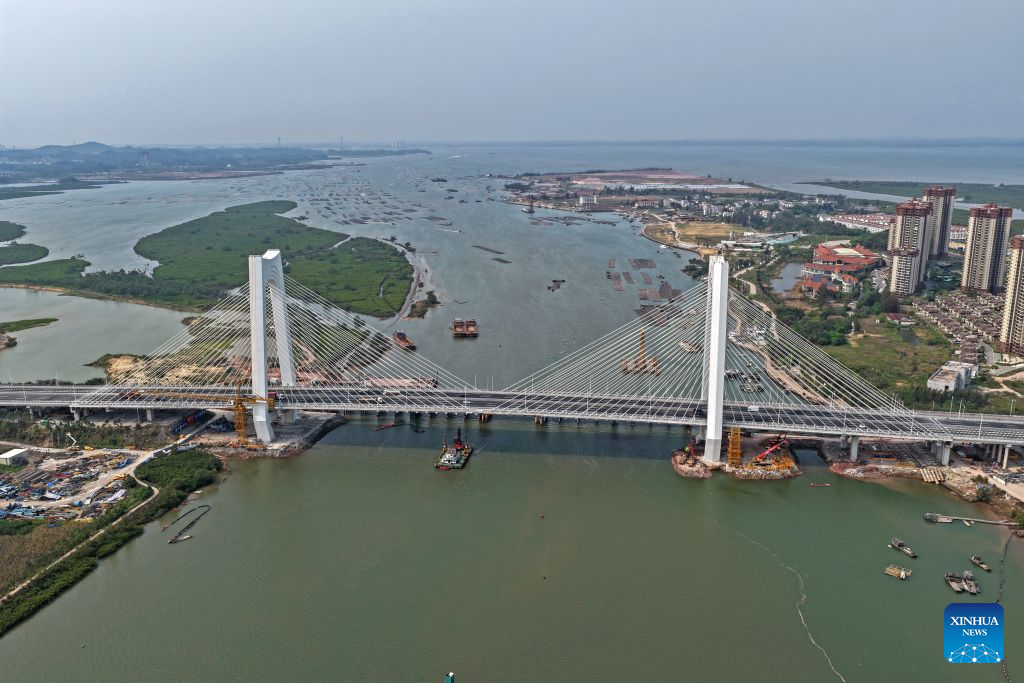
An aerial drone photo taken on March 31, 2026 shows a bridge near the estuary of the Pinglu Canal in Qinzhou City, south China's Guangxi Zhuang Autonomous Region. Pinglu Canal in south China's Guangxi Zhuang Autonomous Region will become operational on Sept. 16. The 134.2-km canal links the Xijiang River shipping route in the north with the Beibu Gulf in the south. It is China's first major river-to-sea canal project that has been planned and coordinated at the national level since 1949.
Centering the Pinglu Canal Economic Belt as its main artery, Guangxi focuses on large-capacity, port and waterway-related industries. It builds port-adjacent parks along the canal tailored to local conditions, forming industrial clusters that support upstream and downstream industries and foster collaboration among large, medium, and small enterprises.
Across Guangxi, localities leverage their own resources to position themselves within a maritime-oriented industrial layout, advancing the high-quality development of the marine economy. (Xinhua/Zhou Hua)
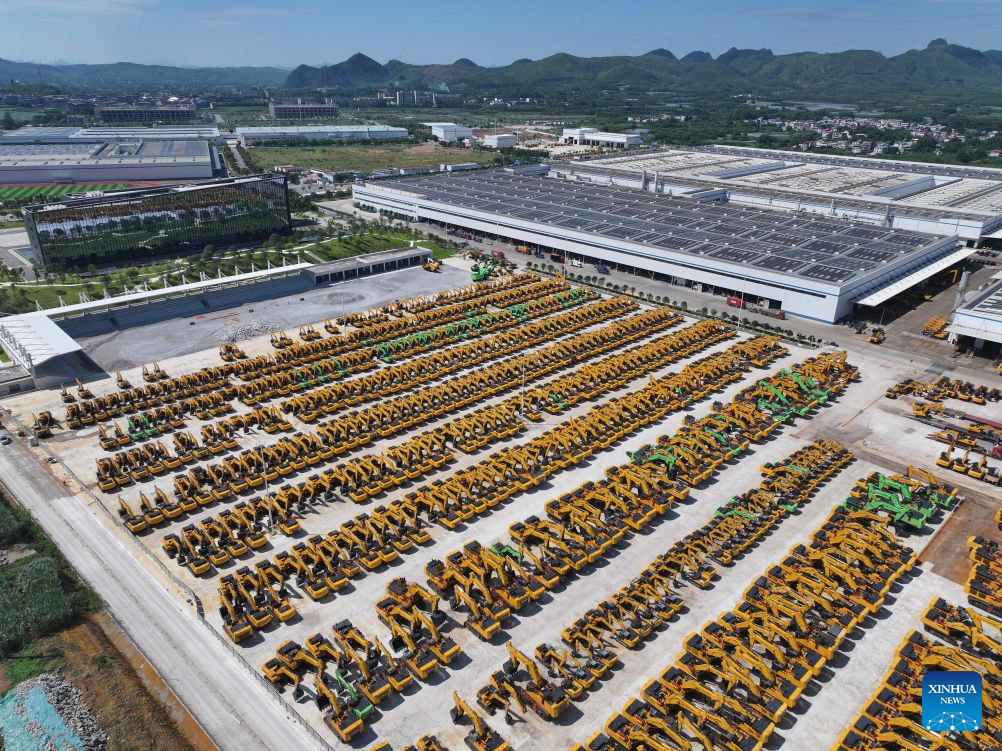
An aerial drone photo taken on Sept. 2, 2026 shows an exterior view of Liugong Excavators Intelligent Factory in Liuzhou City, south China's Guangxi Zhuang Autonomous Region. Pinglu Canal in south China's Guangxi Zhuang Autonomous Region will become operational on Sept. 16. The 134.2-km canal links the Xijiang River shipping route in the north with the Beibu Gulf in the south. It is China's first major river-to-sea canal project that has been planned and coordinated at the national level since 1949.
Centering the Pinglu Canal Economic Belt as its main artery, Guangxi focuses on large-capacity, port and waterway-related industries. It builds port-adjacent parks along the canal tailored to local conditions, forming industrial clusters that support upstream and downstream industries and foster collaboration among large, medium, and small enterprises.
Across Guangxi, localities leverage their own resources to position themselves within a maritime-oriented industrial layout, advancing the high-quality development of the marine economy. (Xinhua/Huang Xiaobang)
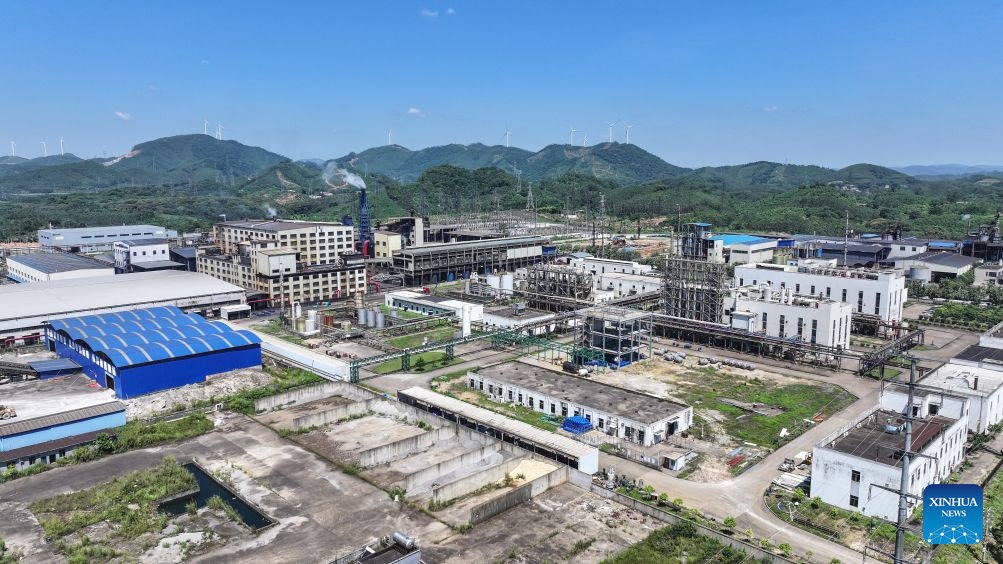
An aerial drone photo taken on Sept. 3, 2026 shows an industrial park in Qinzhou City, south China's Guangxi Zhuang Autonomous Region. Pinglu Canal in south China's Guangxi Zhuang Autonomous Region will become operational on Sept. 16. The 134.2-km canal links the Xijiang River shipping route in the north with the Beibu Gulf in the south. It is China's first major river-to-sea canal project that has been planned and coordinated at the national level since 1949.
Centering the Pinglu Canal Economic Belt as its main artery, Guangxi focuses on large-capacity, port and waterway-related industries. It builds port-adjacent parks along the canal tailored to local conditions, forming industrial clusters that support upstream and downstream industries and foster collaboration among large, medium, and small enterprises.
Across Guangxi, localities leverage their own resources to position themselves within a maritime-oriented industrial layout, advancing the high-quality development of the marine economy. (Xinhua/Zhang Ailin)
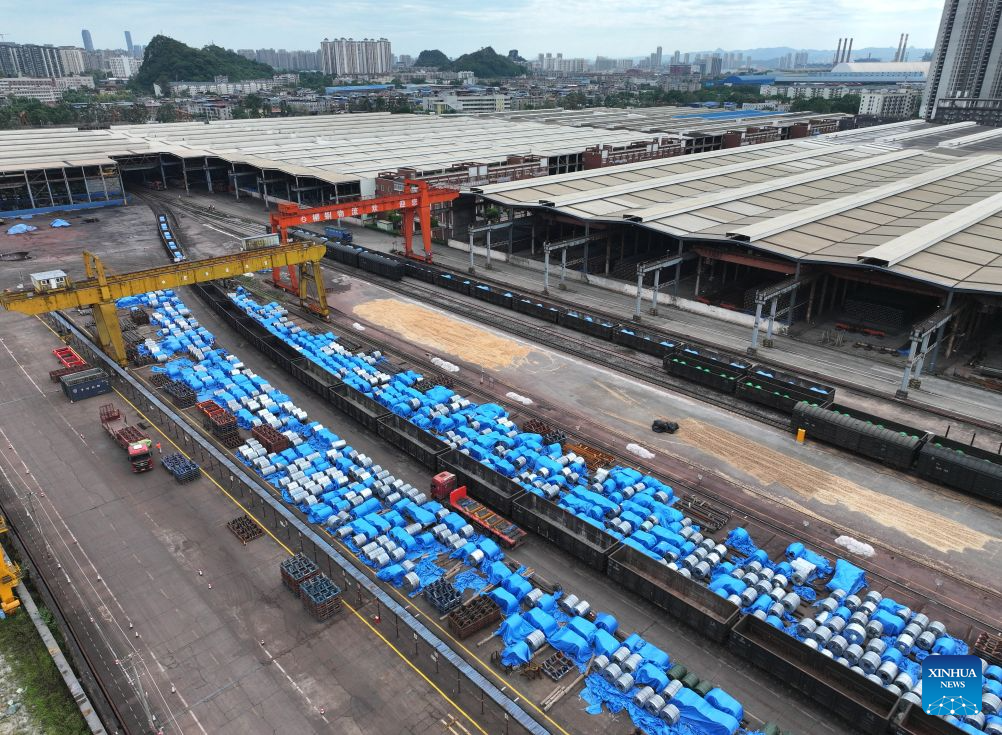
An aerial drone photo taken on Sept. 3, 2026 shows products awaiting loading at a steel deep processing and logistics industrial park in Liuzhou City, south China's Guangxi Zhuang Autonomous Region. Pinglu Canal in south China's Guangxi Zhuang Autonomous Region will become operational on Sept. 16. The 134.2-km canal links the Xijiang River shipping route in the north with the Beibu Gulf in the south. It is China's first major river-to-sea canal project that has been planned and coordinated at the national level since 1949.
Centering the Pinglu Canal Economic Belt as its main artery, Guangxi focuses on large-capacity, port and waterway-related industries. It builds port-adjacent parks along the canal tailored to local conditions, forming industrial clusters that support upstream and downstream industries and foster collaboration among large, medium, and small enterprises.
Across Guangxi, localities leverage their own resources to position themselves within a maritime-oriented industrial layout, advancing the high-quality development of the marine economy. (Xinhua/Huang Xiaobang)
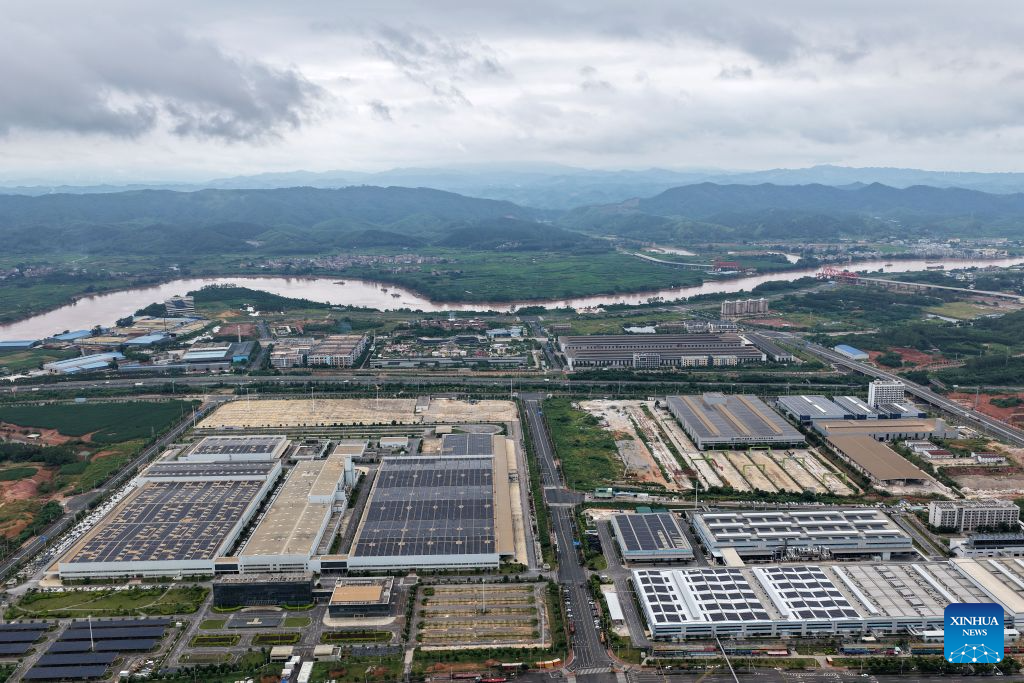
An aerial drone photo taken on Sept. 5, 2026 shows a view of the Qingxiu industrial park in Nanning City, south China's Guangxi Zhuang Autonomous Region. Pinglu Canal in south China's Guangxi Zhuang Autonomous Region will become operational on Sept. 16. The 134.2-km canal links the Xijiang River shipping route in the north with the Beibu Gulf in the south. It is China's first major river-to-sea canal project that has been planned and coordinated at the national level since 1949.
Centering the Pinglu Canal Economic Belt as its main artery, Guangxi focuses on large-capacity, port and waterway-related industries. It builds port-adjacent parks along the canal tailored to local conditions, forming industrial clusters that support upstream and downstream industries and foster collaboration among large, medium, and small enterprises.
Across Guangxi, localities leverage their own resources to position themselves within a maritime-oriented industrial layout, advancing the high-quality development of the marine economy. (Xinhua/Lu Boan)
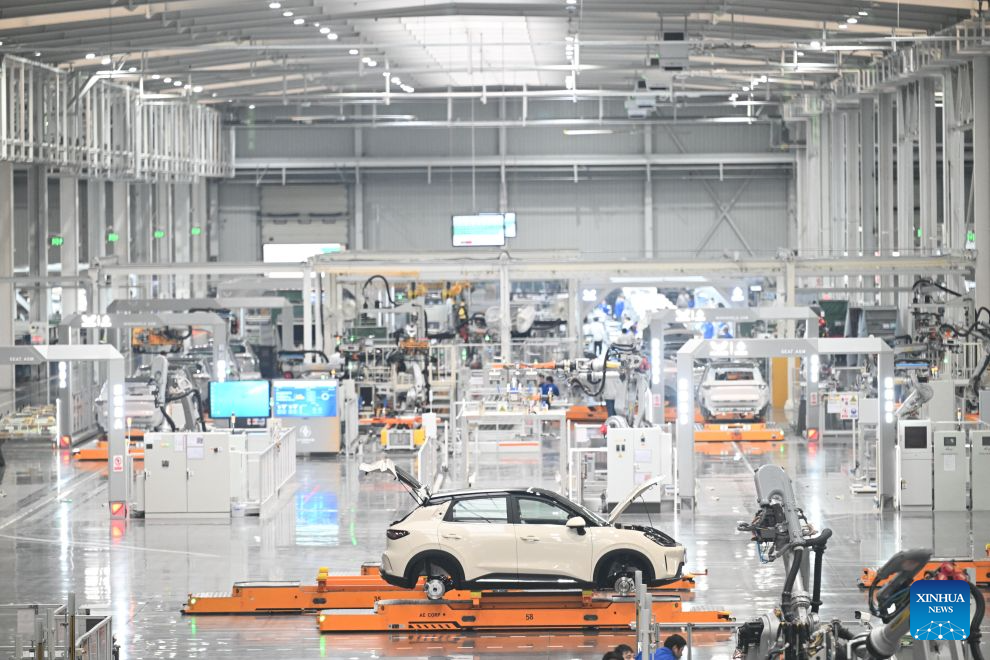
This photo shows an interior view of the intelligent workshop of Chinese automaker SAIC-GM-Wuling (SGMW) in Liuzhou City, south China's Guangxi Zhuang Autonomous Region, Jan. 30, 2026. Pinglu Canal in south China's Guangxi Zhuang Autonomous Region will become operational on Sept. 16. The 134.2-km canal links the Xijiang River shipping route in the north with the Beibu Gulf in the south. It is China's first major river-to-sea canal project that has been planned and coordinated at the national level since 1949.
Centering the Pinglu Canal Economic Belt as its main artery, Guangxi focuses on large-capacity, port and waterway-related industries. It builds port-adjacent parks along the canal tailored to local conditions, forming industrial clusters that support upstream and downstream industries and foster collaboration among large, medium, and small enterprises.
Across Guangxi, localities leverage their own resources to position themselves within a maritime-oriented industrial layout, advancing the high-quality development of the marine economy. (Photo by Zheng Changhao/Xinhua)
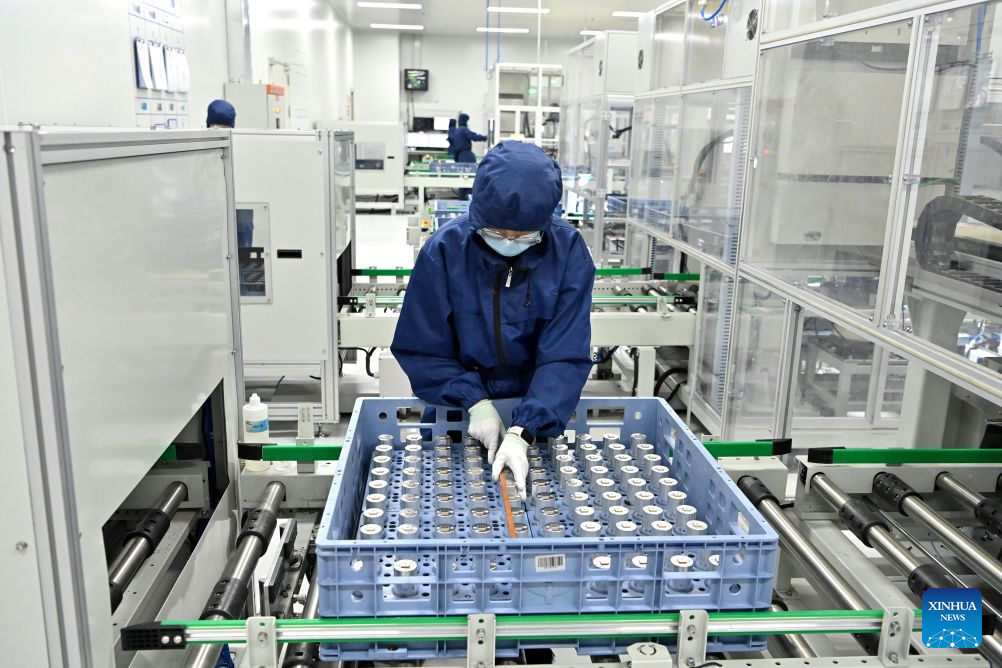
A worker works on the new energy vehicle battery production line at the Qingxiu industrial park in Nanning City, south China's Guangxi Zhuang Autonomous Region, Sept. 5, 2026. Pinglu Canal in south China's Guangxi Zhuang Autonomous Region will become operational on Sept. 16. The 134.2-km canal links the Xijiang River shipping route in the north with the Beibu Gulf in the south. It is China's first major river-to-sea canal project that has been planned and coordinated at the national level since 1949.
Centering the Pinglu Canal Economic Belt as its main artery, Guangxi focuses on large-capacity, port and waterway-related industries. It builds port-adjacent parks along the canal tailored to local conditions, forming industrial clusters that support upstream and downstream industries and foster collaboration among large, medium, and small enterprises.
Across Guangxi, localities leverage their own resources to position themselves within a maritime-oriented industrial layout, advancing the high-quality development of the marine economy. (Xinhua/Lu Boan)
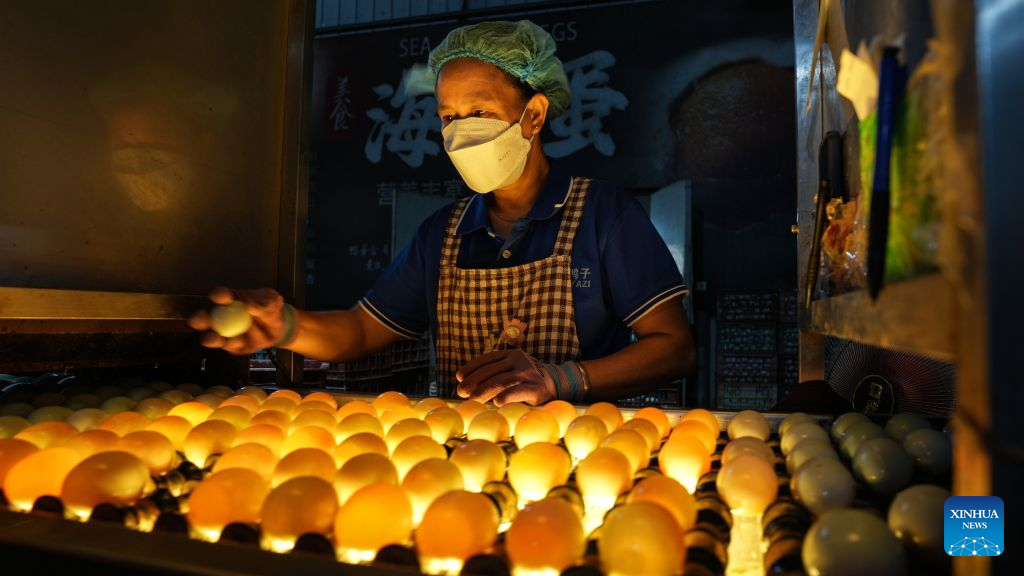
A worker sorts out duck eggs at the workshop of an agricultural product processing enterprise in Qinzhou City, south China's Guangxi Zhuang Autonomous Region, Sept. 3, 2026. Pinglu Canal in south China's Guangxi Zhuang Autonomous Region will become operational on Sept. 16. The 134.2-km canal links the Xijiang River shipping route in the north with the Beibu Gulf in the south. It is China's first major river-to-sea canal project that has been planned and coordinated at the national level since 1949.
Centering the Pinglu Canal Economic Belt as its main artery, Guangxi focuses on large-capacity, port and waterway-related industries. It builds port-adjacent parks along the canal tailored to local conditions, forming industrial clusters that support upstream and downstream industries and foster collaboration among large, medium, and small enterprises.
Across Guangxi, localities leverage their own resources to position themselves within a maritime-oriented industrial layout, advancing the high-quality development of the marine economy. (Xinhua/Zhang Ailin)
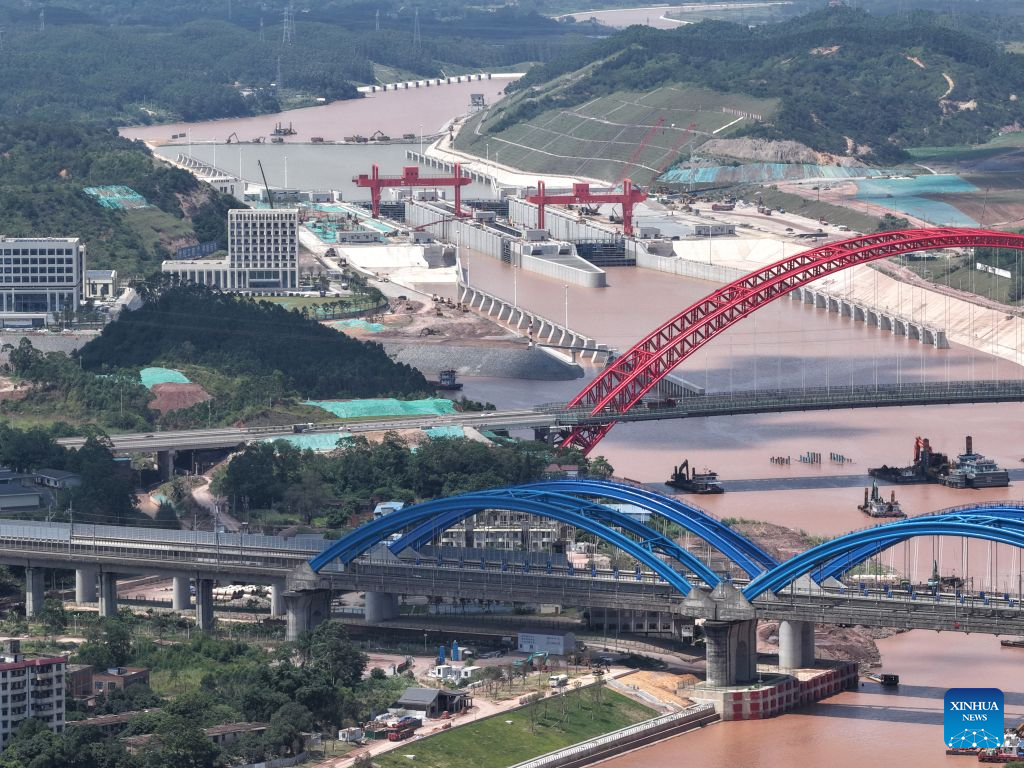
An aerial drone photo taken on June 2, 2026 shows the Qingnian Hub along the Pinglu Canal and bridges at the lower reaches of the canal in Qinzhou City, south China's Guangxi Zhuang Autonomous Region. Pinglu Canal in south China's Guangxi Zhuang Autonomous Region will become operational on Sept. 16. The 134.2-km canal links the Xijiang River shipping route in the north with the Beibu Gulf in the south. It is China's first major river-to-sea canal project that has been planned and coordinated at the national level since 1949.
Centering the Pinglu Canal Economic Belt as its main artery, Guangxi focuses on large-capacity, port and waterway-related industries. It builds port-adjacent parks along the canal tailored to local conditions, forming industrial clusters that support upstream and downstream industries and foster collaboration among large, medium, and small enterprises.
Across Guangxi, localities leverage their own resources to position themselves within a maritime-oriented industrial layout, advancing the high-quality development of the marine economy. (Xinhua/Zhou Hua)
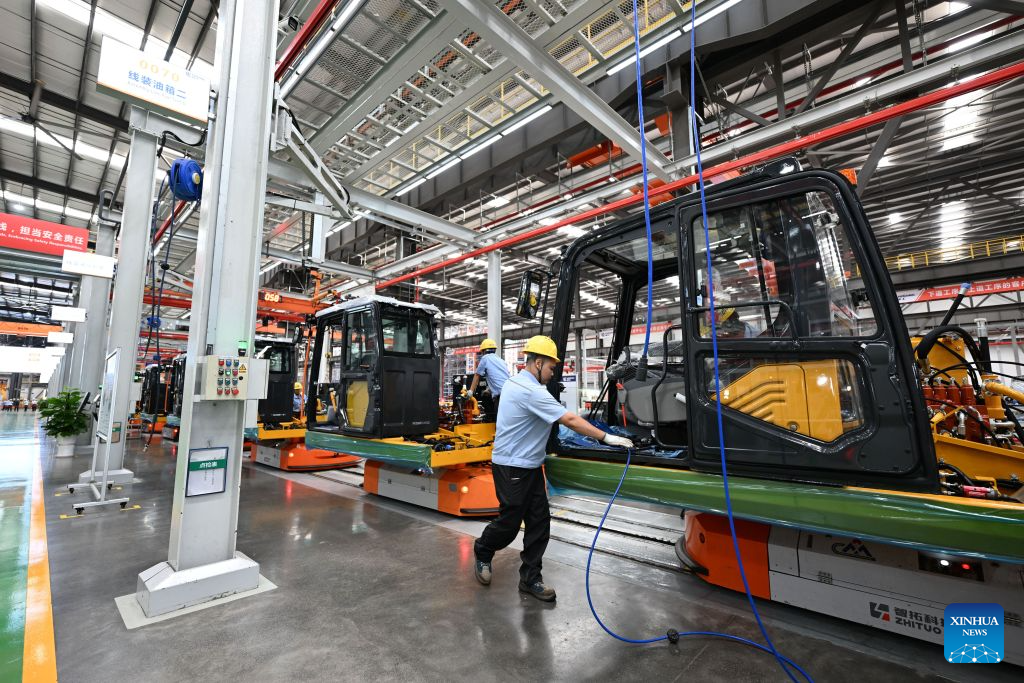
Staff members work on the production lines at Liugong Excavators Intelligent Factory in Liuzhou City, south China's Guangxi Zhuang Autonomous Region, Sept. 2, 2026. Pinglu Canal in south China's Guangxi Zhuang Autonomous Region will become operational on Sept. 16. The 134.2-km canal links the Xijiang River shipping route in the north with the Beibu Gulf in the south. It is China's first major river-to-sea canal project that has been planned and coordinated at the national level since 1949.
Centering the Pinglu Canal Economic Belt as its main artery, Guangxi focuses on large-capacity, port and waterway-related industries. It builds port-adjacent parks along the canal tailored to local conditions, forming industrial clusters that support upstream and downstream industries and foster collaboration among large, medium, and small enterprises.
Across Guangxi, localities leverage their own resources to position themselves within a maritime-oriented industrial layout, advancing the high-quality development of the marine economy. (Photo by Zheng Changhao/Xinhua)
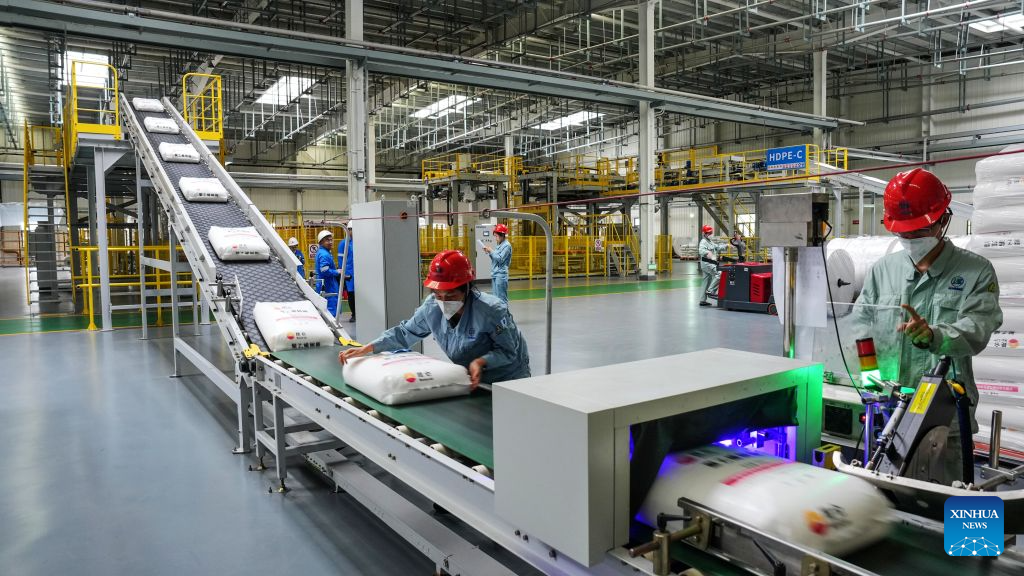
Staff work on the production line of a petrochemical enterprise at the China-Malaysia Qinzhou Industrial Park in Qinzhou City, south China's Guangxi Zhuang Autonomous Region, Sept. 4, 2026. Pinglu Canal in south China's Guangxi Zhuang Autonomous Region will become operational on Sept. 16. The 134.2-km canal links the Xijiang River shipping route in the north with the Beibu Gulf in the south. It is China's first major river-to-sea canal project that has been planned and coordinated at the national level since 1949.
Centering the Pinglu Canal Economic Belt as its main artery, Guangxi focuses on large-capacity, port and waterway-related industries. It builds port-adjacent parks along the canal tailored to local conditions, forming industrial clusters that support upstream and downstream industries and foster collaboration among large, medium, and small enterprises.
Across Guangxi, localities leverage their own resources to position themselves within a maritime-oriented industrial layout, advancing the high-quality development of the marine economy. (Xinhua/Zhang Ailin)

Humanoid robots are seen under training at an intelligent manufacturing plant for commercial vehicles of the Dongfeng Liuzhou Motor in Liuzhou City, south China's Guangxi Zhuang Autonomous Region, Jan. 30, 2026. Pinglu Canal in south China's Guangxi Zhuang Autonomous Region will become operational on Sept. 16. The 134.2-km canal links the Xijiang River shipping route in the north with the Beibu Gulf in the south. It is China's first major river-to-sea canal project that has been planned and coordinated at the national level since 1949.
Centering the Pinglu Canal Economic Belt as its main artery, Guangxi focuses on large-capacity, port and waterway-related industries. It builds port-adjacent parks along the canal tailored to local conditions, forming industrial clusters that support upstream and downstream industries and foster collaboration among large, medium, and small enterprises.
Across Guangxi, localities leverage their own resources to position themselves within a maritime-oriented industrial layout, advancing the high-quality development of the marine economy. (Photo by Zheng Changhao/Xinhua)
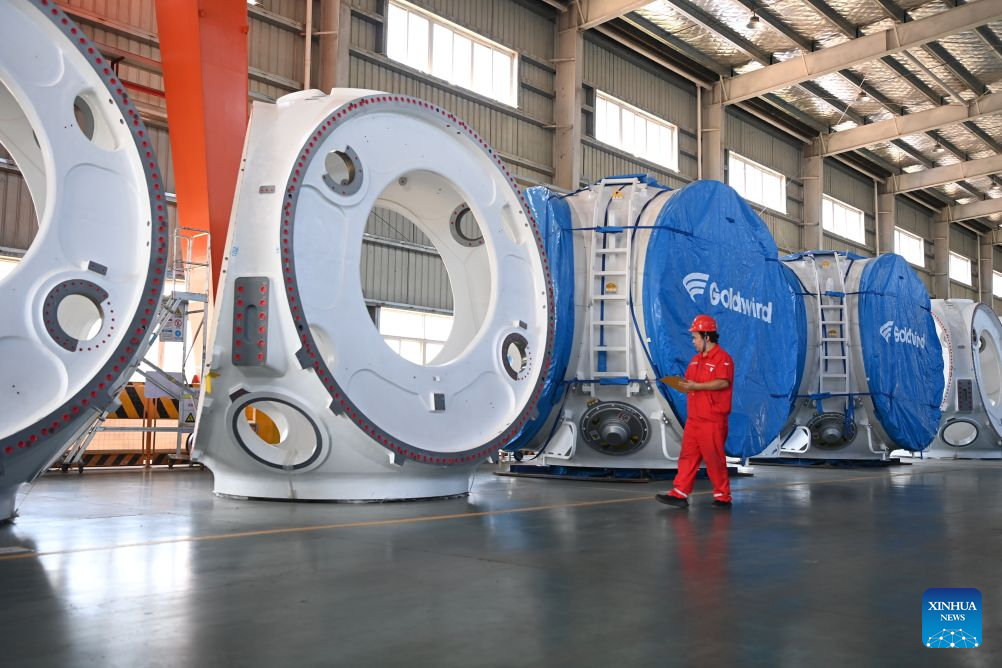
A staff member registers products at a wind power equipment manufacturing enterprise in Qinzhou City, south China's Guangxi Zhuang Autonomous Region, Sept. 3, 2026. Pinglu Canal in south China's Guangxi Zhuang Autonomous Region will become operational on Sept. 16. The 134.2-km canal links the Xijiang River shipping route in the north with the Beibu Gulf in the south. It is China's first major river-to-sea canal project that has been planned and coordinated at the national level since 1949.
Centering the Pinglu Canal Economic Belt as its main artery, Guangxi focuses on large-capacity, port and waterway-related industries. It builds port-adjacent parks along the canal tailored to local conditions, forming industrial clusters that support upstream and downstream industries and foster collaboration among large, medium, and small enterprises.
Across Guangxi, localities leverage their own resources to position themselves within a maritime-oriented industrial layout, advancing the high-quality development of the marine economy. (Xinhua/Cao Yiming)
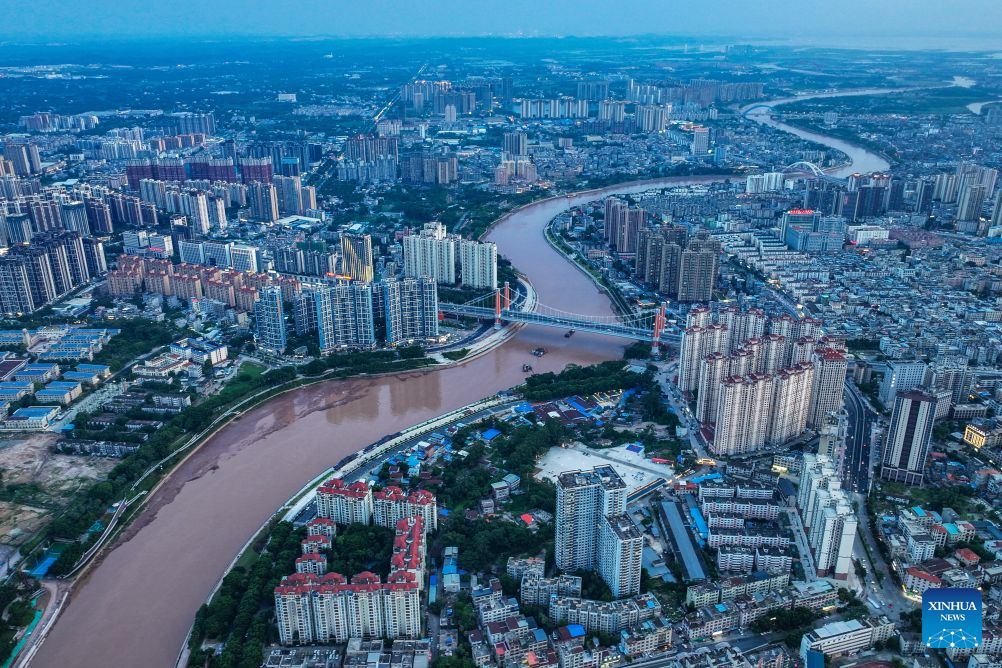
An aerial drone photo taken on Aug. 19, 2026 shows the city view and the Pinglu Canal in Qinzhou City, south China's Guangxi Zhuang Autonomous Region. Pinglu Canal in south China's Guangxi Zhuang Autonomous Region will become operational on Sept. 16. The 134.2-km canal links the Xijiang River shipping route in the north with the Beibu Gulf in the south. It is China's first major river-to-sea canal project that has been planned and coordinated at the national level since 1949.
Centering the Pinglu Canal Economic Belt as its main artery, Guangxi focuses on large-capacity, port and waterway-related industries. It builds port-adjacent parks along the canal tailored to local conditions, forming industrial clusters that support upstream and downstream industries and foster collaboration among large, medium, and small enterprises.
Across Guangxi, localities leverage their own resources to position themselves within a maritime-oriented industrial layout, advancing the high-quality development of the marine economy. (Xinhua/Cao Yiming)
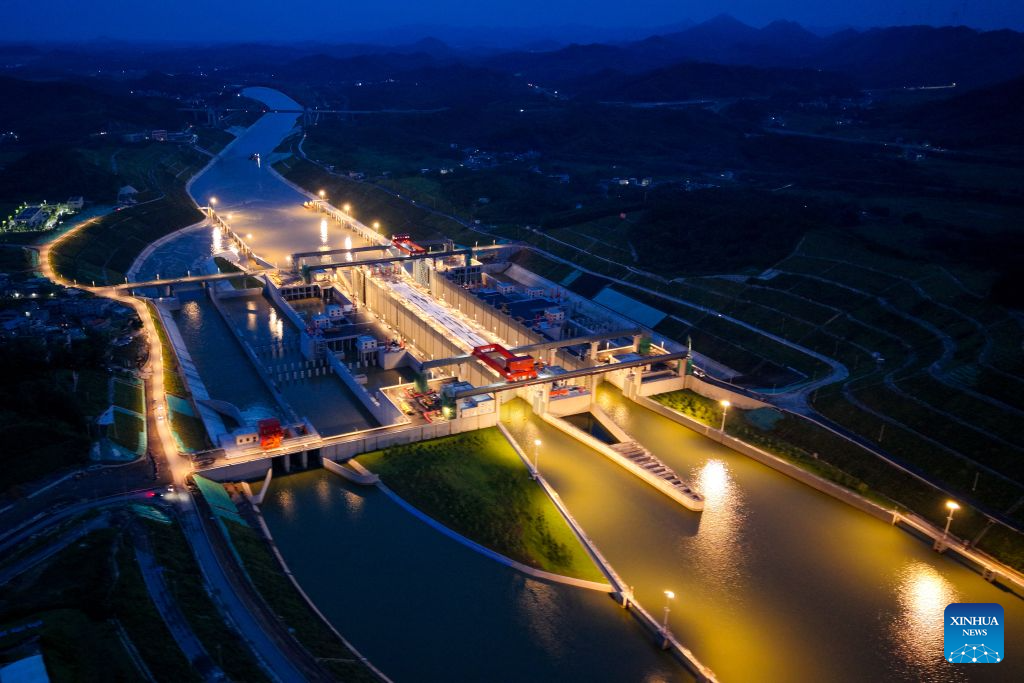
An aerial drone photo taken on Aug. 18, 2026 shows the Madao Hub along the Pinglu Canal in Qinzhou City, south China's Guangxi Zhuang Autonomous Region. Pinglu Canal in south China's Guangxi Zhuang Autonomous Region will become operational on Sept. 16. The 134.2-km canal links the Xijiang River shipping route in the north with the Beibu Gulf in the south. It is China's first major river-to-sea canal project that has been planned and coordinated at the national level since 1949.
Centering the Pinglu Canal Economic Belt as its main artery, Guangxi focuses on large-capacity, port and waterway-related industries. It builds port-adjacent parks along the canal tailored to local conditions, forming industrial clusters that support upstream and downstream industries and foster collaboration among large, medium, and small enterprises.
Across Guangxi, localities leverage their own resources to position themselves within a maritime-oriented industrial layout, advancing the high-quality development of the marine economy. (Xinhua/Wang Liang)
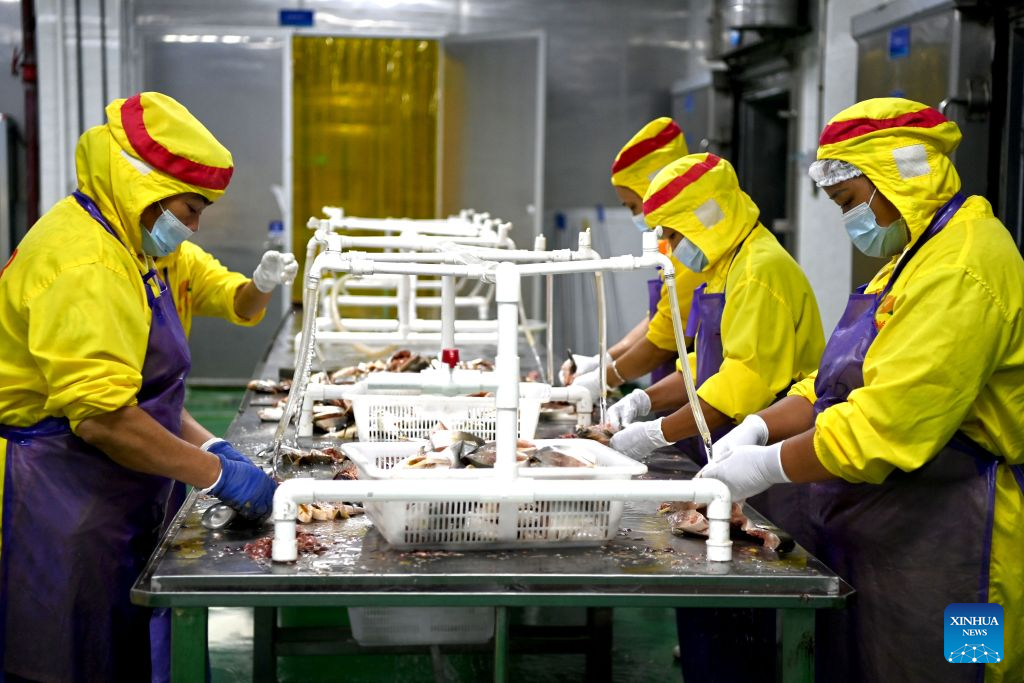
Workers process seafood at a cold chain enterprise in Qinzhou City, south China's Guangxi Zhuang Autonomous Region, Sept. 3, 2026. Pinglu Canal in south China's Guangxi Zhuang Autonomous Region will become operational on Sept. 16. The 134.2-km canal links the Xijiang River shipping route in the north with the Beibu Gulf in the south. It is China's first major river-to-sea canal project that has been planned and coordinated at the national level since 1949.
Centering the Pinglu Canal Economic Belt as its main artery, Guangxi focuses on large-capacity, port and waterway-related industries. It builds port-adjacent parks along the canal tailored to local conditions, forming industrial clusters that support upstream and downstream industries and foster collaboration among large, medium, and small enterprises.
Across Guangxi, localities leverage their own resources to position themselves within a maritime-oriented industrial layout, advancing the high-quality development of the marine economy. (Xinhua/Cao Yiming)
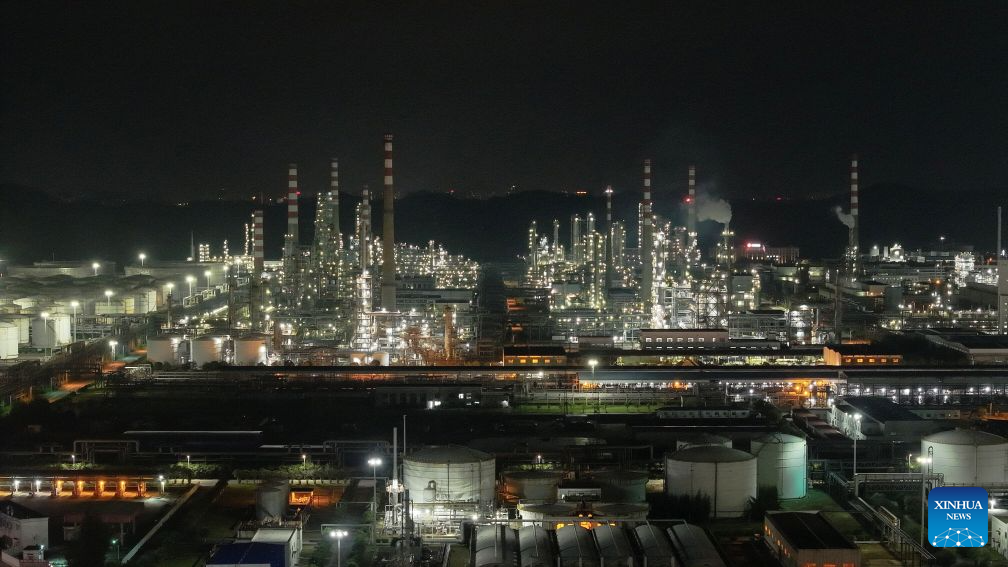
An aerial drone photo taken on Sept. 3, 2026 shows a petrochemical enterprise in Qinzhou City, south China's Guangxi Zhuang Autonomous Region. Pinglu Canal in south China's Guangxi Zhuang Autonomous Region will become operational on Sept. 16. The 134.2-km canal links the Xijiang River shipping route in the north with the Beibu Gulf in the south. It is China's first major river-to-sea canal project that has been planned and coordinated at the national level since 1949.
Centering the Pinglu Canal Economic Belt as its main artery, Guangxi focuses on large-capacity, port and waterway-related industries. It builds port-adjacent parks along the canal tailored to local conditions, forming industrial clusters that support upstream and downstream industries and foster collaboration among large, medium, and small enterprises.
Across Guangxi, localities leverage their own resources to position themselves within a maritime-oriented industrial layout, advancing the high-quality development of the marine economy. (Xinhua/Zhang Ailin)
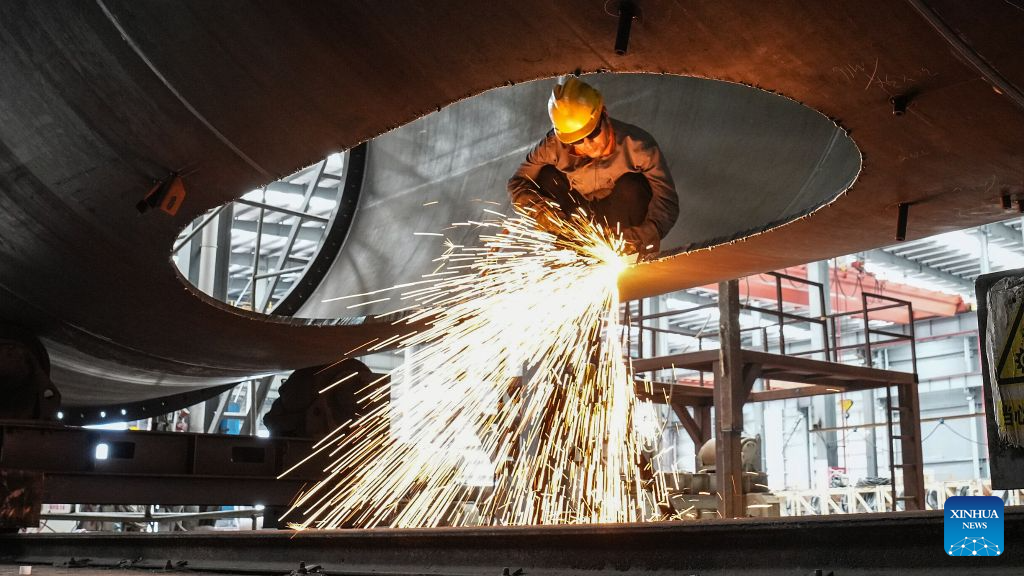
A staff member works at the workshop of a wind power equipment manufacturing enterprise at the China-Malaysia Qinzhou Industrial Park in Qinzhou City, south China's Guangxi Zhuang Autonomous Region, Sept. 4, 2026. Pinglu Canal in south China's Guangxi Zhuang Autonomous Region will become operational on Sept. 16. The 134.2-km canal links the Xijiang River shipping route in the north with the Beibu Gulf in the south. It is China's first major river-to-sea canal project that has been planned and coordinated at the national level since 1949.
Centering the Pinglu Canal Economic Belt as its main artery, Guangxi focuses on large-capacity, port and waterway-related industries. It builds port-adjacent parks along the canal tailored to local conditions, forming industrial clusters that support upstream and downstream industries and foster collaboration among large, medium, and small enterprises.
Across Guangxi, localities leverage their own resources to position themselves within a maritime-oriented industrial layout, advancing the high-quality development of the marine economy. (Xinhua/Zhang Ailin)


