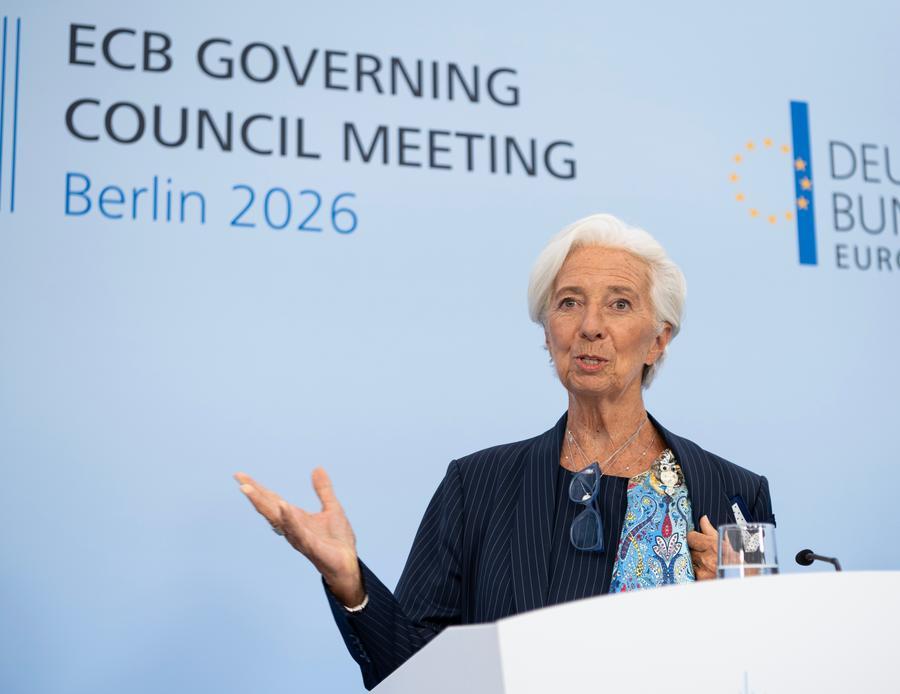
BERLIN, Sept. 10 (Xinhua) -- The European Central Bank (ECB) announced on Thursday that it will raise the key interest rates by 25 basis points, marking its second rate hike this year amid rising inflationary pressures.
The latest rate hike will push the interest rate on the deposit facility through which the ECB steers its monetary policy up to 2.5 percent. The interest rates on the main refinancing operations and the marginal lending facility will be increased to 2.65 percent and 2.9 percent respectively.
"The conflict in the Middle East continues to generate inflation pressures, and inflation is set to remain well above target for an extended period," said the ECB in a statement.
In the latest staff projections unveiled on Thursday, the ECB now expects headline inflation to average 3 percent in 2026, 2.5 percent in 2027 and 2.1 percent in 2028. The inflation projection for 2026 remains unchanged while that for 2027 and 2028 have been revised up compared with June.
Meanwhile, the baseline projections for economic growth in 2026 and 2027 have been lifted to 0.9 percent and 1.4 percent respectively.
"The outlook remains highly uncertain, with risks to the upside for inflation and to the downside for economic growth."
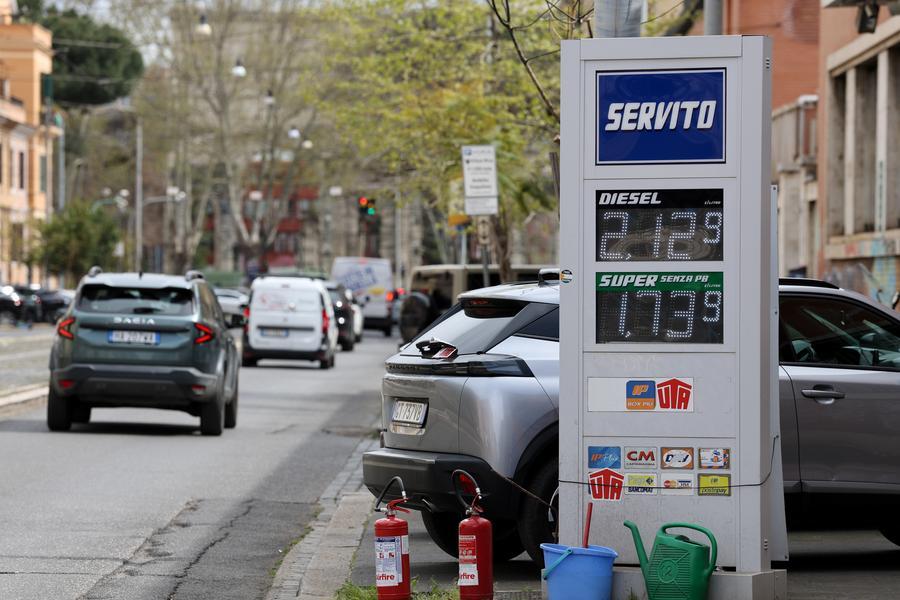
The euro area inflation edged up to 3.3 percent in August from 2.9 percent in July, according to the statistical office of the European Union.
The inflation surge was attributed largely to energy prices, which soared by 14.3 percent in August on an annual basis and 2.9 percent compared with July.
The euro area economy grew by 0.4 percent in the second quarter compared with the first quarter, beating estimates.
The latest upward revision of the economic growth projections by the ECB reflected "the greater-than-expected resilience of the euro area economy," said the ECB statement.
Commenting on the ECB rate hike, economists with ING bank wrote in a note on Thursday that "the hawkish bar is set high for the ECB."
Describing the hike as "an insurance move", the economists warn that "further hikes would push policy further into restrictive territory." ■