
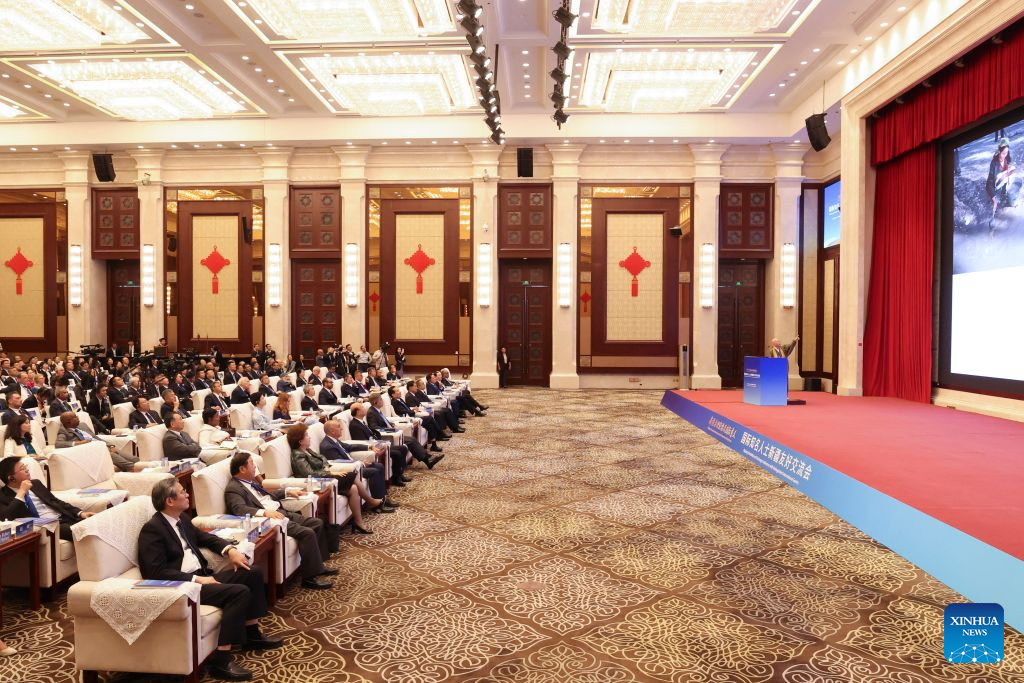
This photo taken on Sept. 8, 2026 shows a view at the Xinjiang Friendship and Exchange Conference with Distinguished International Guests held in Urumqi, northwest China's Xinjiang Uygur Autonomous Region. (Xinhua/Wang Fei)
URUMQI, Sept. 8 (Xinhua) -- More than 300 government officials, scholars, business representatives and journalists from 33 countries gathered in Urumqi, capital of northwest China's Xinjiang Uygur Autonomous Region, on Tuesday for discussions on the region's experience in security, development and social governance.
The gathering, namely Xinjiang Friendship and Exchange Conference with Distinguished International Guests, also brought together representatives from the Shanghai Cooperation Organization (SCO) and the International Labour Organization. It was held under the theme "Xinjiang's Governance Experience and Its International Significance."
SCO Secretary-General Nurlan Yermekbayev said that during his numerous visits to Xinjiang he has seen immense changes in the region firsthand.
Yermekbayev said security and economic cooperation reinforce each other, helping create the conditions for sustained cross-border exchanges and local cooperation. He also called for more practical projects with the potential to deliver mutual benefits.
Mark Levine, an American sociologist and professor at Minzu University of China, drew on his three earlier visits to Xinjiang, including in-depth experiences in Kashgar, in discussing the region's governance practices.
"The most touching change I witnessed is the shift from insecurity to lasting peace and vitality," he said.
Many regions worldwide are plagued by extremism, ethnic conflicts, unbalanced development and regional instability, lacking practical and replicable governance solutions, Levine said, noting that Xinjiang's practices provide a valuable new paradigm for global governance, especially for developing countries and regions with similar challenges.
A white paper released in 2025, when the region marked its 70th anniversary, said Xinjiang has achieved a historic transformation from chaos to stability and from stability to good governance. It said solid steps have been taken to govern Xinjiang in accordance with the law, maintain stability through ethnic unity, strengthen cultural identity and bonds, bring greater prosperity to the region and its people, and develop Xinjiang from a long-term perspective.
The document said Xinjiang's railways had reached a total operating length of 9,202 km by 2024, while its highway network extended about 230,000 km. Average life expectancy in the region reached 77 years in 2024, compared with 30 years in 1949.
The conference included four parallel sessions covering counter-terrorism, stability maintenance and human rights protection, ethnic unity and common development, social governance and improvement of people's livelihoods, and opposition to unilateral sanctions and power politics.
Participants also shared their impressions from visiting Xinjiang and talked about the potential for closer cooperation in areas such as industry, logistics and trade, culture and tourism, as well as education and healthcare.
They also described Xinjiang as an important development and opening-up hub on the Eurasian continent and expressed willingness to promote deeper exchanges and cooperation with the region.
On Monday, Chen Xiaojiang, secretary of the Communist Party of China Xinjiang Uygur Autonomous Regional Committee, and Erkin Tuniyaz, chairman of the regional government, met with representatives attending the event.
Chen said Xinjiang's door remained open to the world and welcomed more people from overseas to visit the region and see its development firsthand. ■
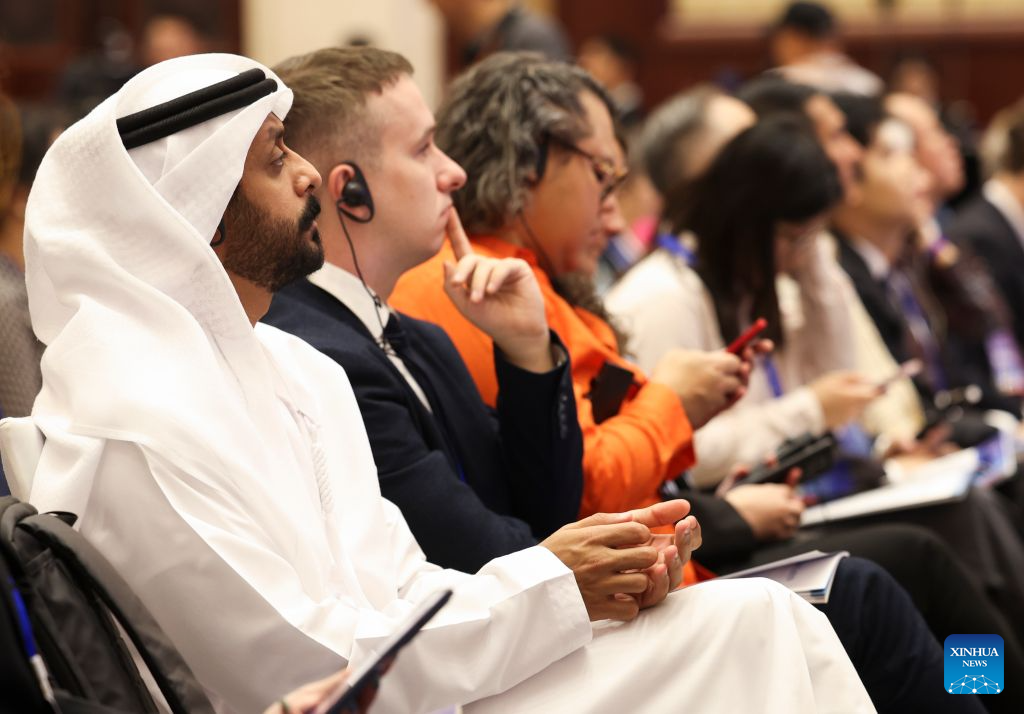
This photo taken on Sept. 8, 2026 shows guests attending the Xinjiang Friendship and Exchange Conference with Distinguished International Guests in Urumqi, northwest China's Xinjiang Uygur Autonomous Region. (Xinhua/Wang Fei)


