
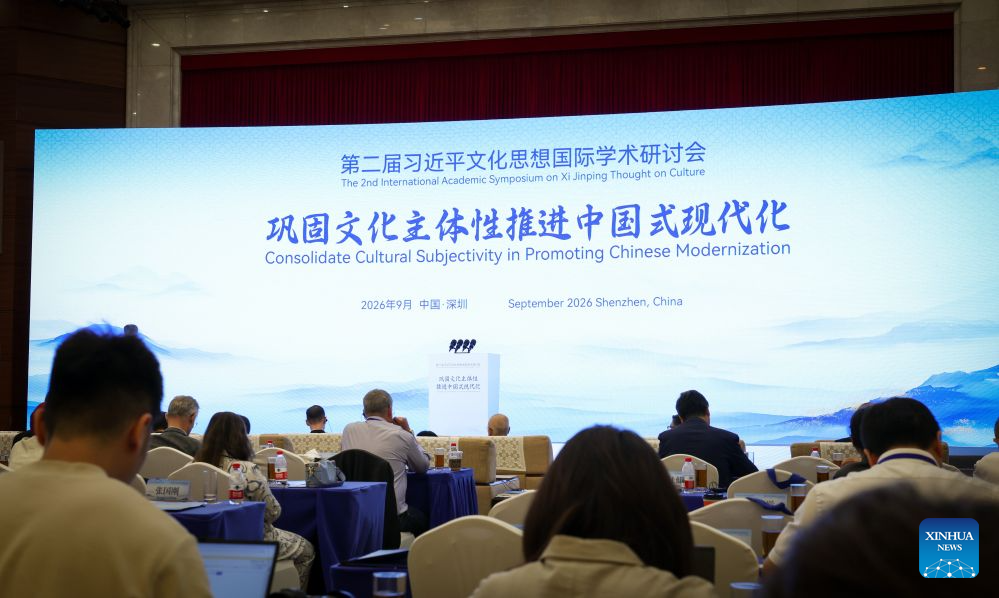
An international symposium themed "Consolidate Cultural Subjectivity in Promoting Chinese Modernization" is held in Shenzhen, south China's Guangdong Province, Sept. 6, 2026. The symposium brought together about 130 experts, scholars and guests from home and abroad. (Xinhua/Mao Siqian)
SHENZHEN, Sept. 6 (Xinhua) -- New popular literature and art, characterized by broad public participation in the era of the internet and AI, are helping China better express itself and contribute to a fairer global cultural order, according to a think tank report released on Sunday.
Titled "The Flourishing Development and Global Influence of New Popular Literature and Art," the report was issued by the National High-Level Think Tank of Xinhua News Agency at an international symposium held in Shenzhen, a tech hub in south China's Guangdong Province.
The report said new popular literature and art refer to "a brand-new, composite literary and artistic ecosystem that has emerged in the realm of literature and art, driven by the scientific and technological revolution encompassing the internet, big data and AI."
This ecosystem features broad public participation in creation, dissemination and sharing, and reflects the voice of the people and the themes of the times, according to the report.
"Rooted in everyday life, it responds to the aesthetic needs of the people...and is increasingly showcasing Chinese characteristics, style and manner in global cultural exchanges," the report noted.
At a time when globalization and digitalization converge, the report emphasized that new popular literature and art are employing a multiplicity of narratives to shift China's image from one "defined by others" to one "expressed by itself."
They draw on Eastern wisdom to offer a value reference for the shared dilemmas confronting humanity, the report stated. Through openness and collaboration, they help break up the concentrated structure of the global cultural industry. By harnessing technology, they contribute to building a fairer global cultural order.
Themed "Consolidate Cultural Subjectivity in Promoting Chinese Modernization," the symposium brought together about 130 experts, scholars and guests from home and abroad.
Hong Dayong, deputy head of the Publicity Department of the CPC Central Committee, said in his opening speech that China's efforts to strengthen its cultural subjectivity have offered insights for countries around the world to preserve their cultural characteristics and identities and explore development paths suited to their own civilizations.
Lyu Yansong, editor-in-chief of Xinhua News Agency, said in his address that Xinhua will further explore new ways of communication and expression, thus enabling countries around the world to gain a deeper understanding of the historical richness, intellectual depth and vitality of Chinese civilization through the vivid practice of Chinese modernization.
Four parallel sessions were held during the symposium, respectively themed "the humanomics in the new era," "promote new forms of literature and art for the general public in the internet age," "deepen exchanges and mutual learning among civilizations," and "build Chinese intellectual system in philosophy and social sciences." ■
The Flourishing Development and Global Influence of New Popular Literature and Art
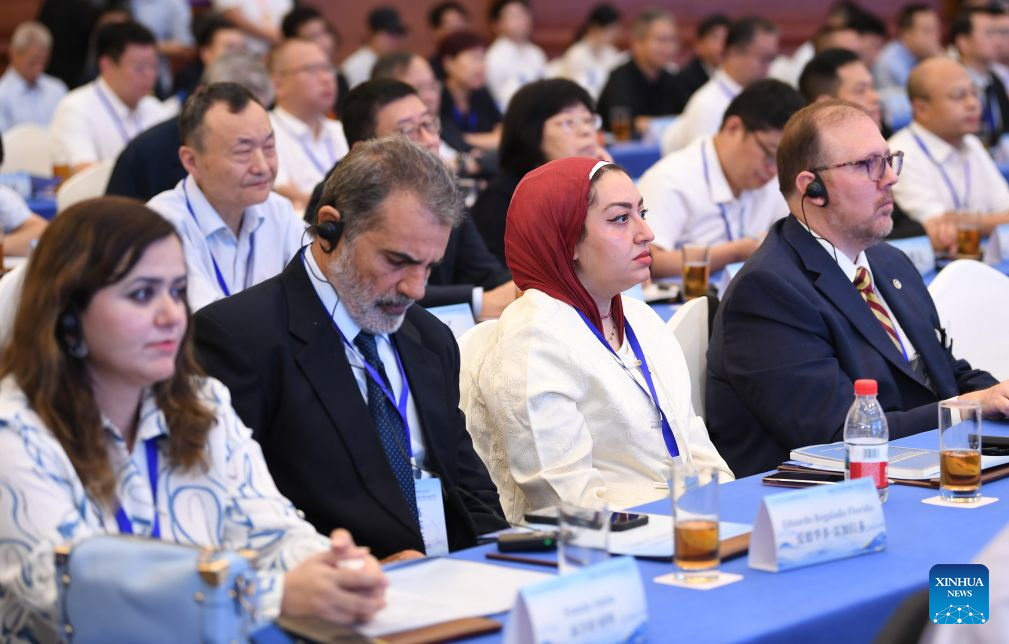
An international symposium themed "Consolidate Cultural Subjectivity in Promoting Chinese Modernization" is held in Shenzhen, south China's Guangdong Province, Sept. 6, 2026. The symposium brought together about 130 experts, scholars and guests from home and abroad. (Xinhua/Deng Hua)


