
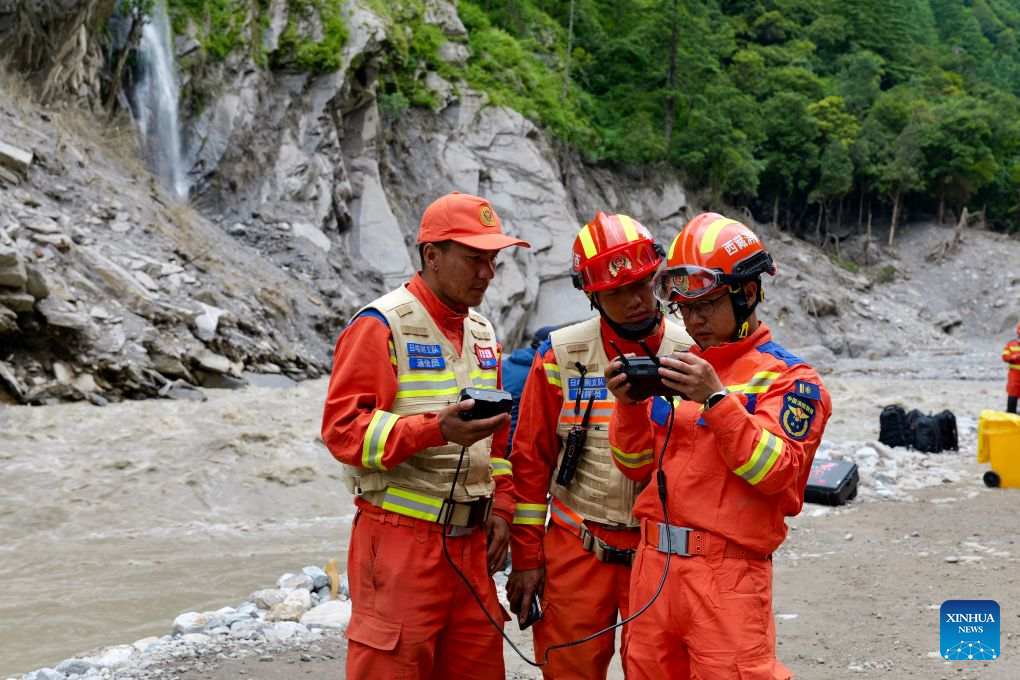
Rescuers inspect the mudslide-hit G216 national highway and its surrounding area via a drone in Gyirong County, southwest China's Xizang Autonomous Region, Sept. 2, 2026. (Xinhua/Zhou Yulong)
by Xinhua writer Zhou Yulong
GYIRONG, Xizang, Sept. 5 (Xinhua) -- A Chinese national flag stood above the ruins of Gyirong Port, rising from a layer of debris-flow deposits about four meters thick.
Several bouquets of flowers were placed at the foot of the flagpole.
When I arrived at the site, the joint inspection building that once stood there had disappeared. The flag was the only thing that remained visible above the ruins.
I stood beside a firefighter during his short break from rescue operations. We looked up at the flag in silence, with tears in our eyes.
Months earlier, when I first visited Gyirong in southwest China's Xizang Autonomous Region, I saw a peaceful border town surrounded by snow-capped mountains, deep gorges and green valleys. In Tibetan, "Gyirong" means "a place of comfort."
At that time, Gyirong was also a busy border gateway between China and Nepal. Agricultural products, textiles, household goods and new energy vehicles passed through the port toward Nepal, while spices, medicinal herbs and traditional handicrafts entered China.
Months later, I returned to a different Gyirong.
A fast-moving chain mudslide, triggered by a high-altitude glacier collapse in Nepal, struck Gyirong Port on Aug. 26, claiming 31 lives and leaving 531 others missing as of 6 p.m. Friday.
The disaster struck suddenly. Many people had no chance to say goodbye.
A relative of one missing person wrote online: "She only sent one message: 'I think there has been an earthquake.' We never heard from her again."
After the disaster, rescue teams from across China rushed to Gyirong. But a three-kilometer section of G216 national highway near the border crossing was completely destroyed, temporarily blocking access to the core area of the port.
The rescue operation continued along multiple routes.
Rescue boats searched the river for missing people. Ground teams trekked for more than 10 hours along rugged mountain paths to reach the affected area. Firefighters rappelled down from a village on the east side, while helicopters transported rescuers, equipment and supplies into the valley.
When heavy machinery approached areas where victims were believed to be buried, operators slowed down. Rescuers carrying hand tools then moved forward carefully.
Before digging by hand, they poured a cup of liquor onto the ground as a gesture of respect and said softly:
"We're here to take you home."
The sentence was simple, but it reflected the care shown throughout the search operations.
From the debris, rescuers recovered personal belongings left behind by those affected by the disaster, including a Spider-Man T-shirt covered in mud and a damaged stuffed bunny. Each item was carefully cleaned, recorded and preserved.
As the search continued, another challenge emerged for those waiting for news.
Some people stayed awake through the night. Some felt anxious whenever they heard the sound of rain. Others kept their phones close at all times, afraid of missing a call about a loved one.
Every night at 9 p.m. in the past few days, Doje Cering, a doctor from the Xigaze Tibetan Hospital, began his rounds at a temporary shelter in a hotel in Gyirong Town.
The shelter housed dozens of people evacuated from Laojiang and Risur villages. Several elderly residents had struggled to sleep for days after the disaster.
To help ease their anxiety and improve their sleep, medical workers used Horme therapy, a traditional Tibetan treatment similar to moxibustion. Herbal compresses were warmed with yak butter melted over a small alcohol lamp, then gently applied to specific points on the head, chest and palms.
While providing treatment, Doje Cering talked with the evacuees about everyday matters.
"We can only rest easy when they can sleep soundly," he said.
Support also extended to rescue workers who had spent days working under intense pressure.
With support from China's National Health Commission and authorities in other regions, more than 210 psychological professionals arrived in Gyirong in three batches. Some counselors with foreign-language skills provided psychological support for families of foreign nationals reported missing in the disaster.
Specialists also assessed the psychological well-being of frontline rescuers, providing group counseling and individual support. A psychological care handbook prepared for frontline workers carried a message: "As you protect the lives of others, remember to take care of yourself, too."
Standing among the ruins of Gyirong Port, I saw both the destructive force of nature and the efforts people made in response.
The disaster destroyed roads, buildings and familiar landscapes. But during the days of rescue and recovery, every careful search, every preserved belonging and every gesture of care showed the importance placed on every life. ■
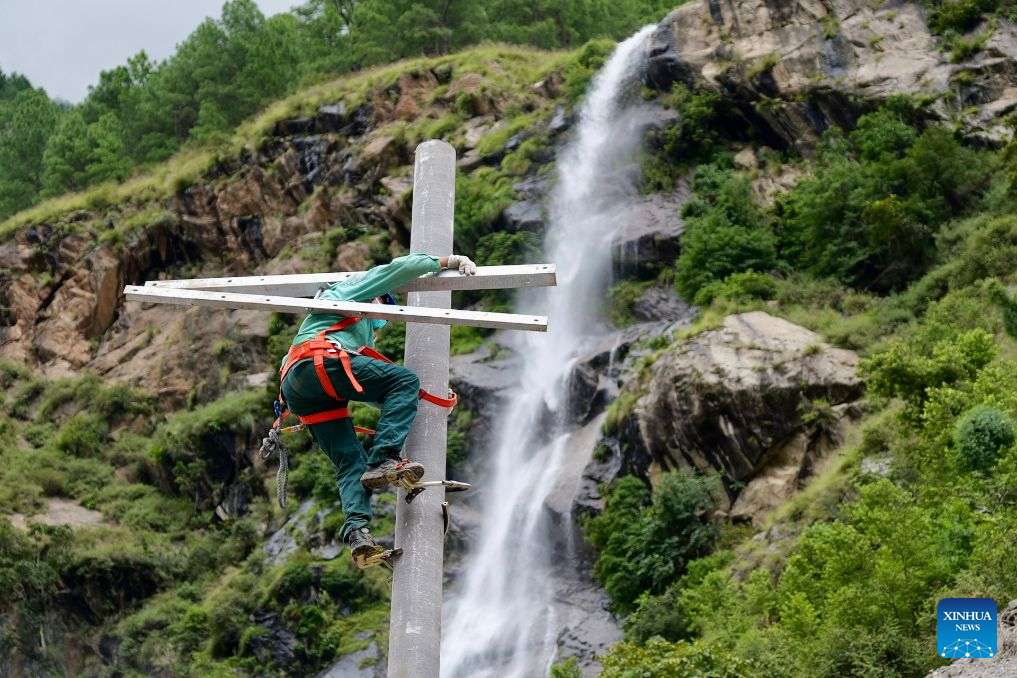
A technician of State Grid sets up a utility pole at the core affected zone of the mudslide-hit Gyirong Port in southwest China's Xizang Autonomous Region, Sept. 2, 2026. (Xinhua/Zhou Yulong)
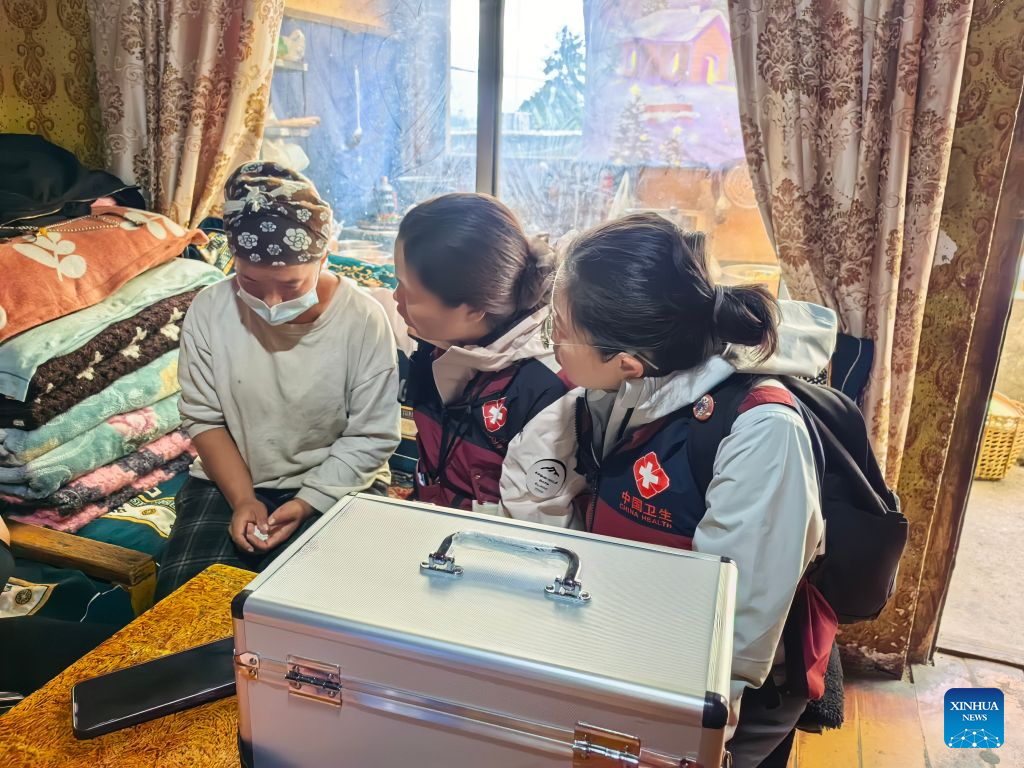
Counselors provide psychological support for a villager in Gyirong County, southwest China's Xizang Autonomous Region, Sept. 3, 2026. (Mental Health Center of West China Hospital of Sichuan University/Handout via Xinhua)


