KATHMANDU, Sept. 2 (Xinhua) -- Faced with the catastrophic mudslide disaster battering Nepal's border regions, China has stood firmly with its long-time neighbor with timely assistance and professional rescue support, turning bilateral friendship into tangible life-saving actions and showcasing the spirit of mutual assistance amid adversity.
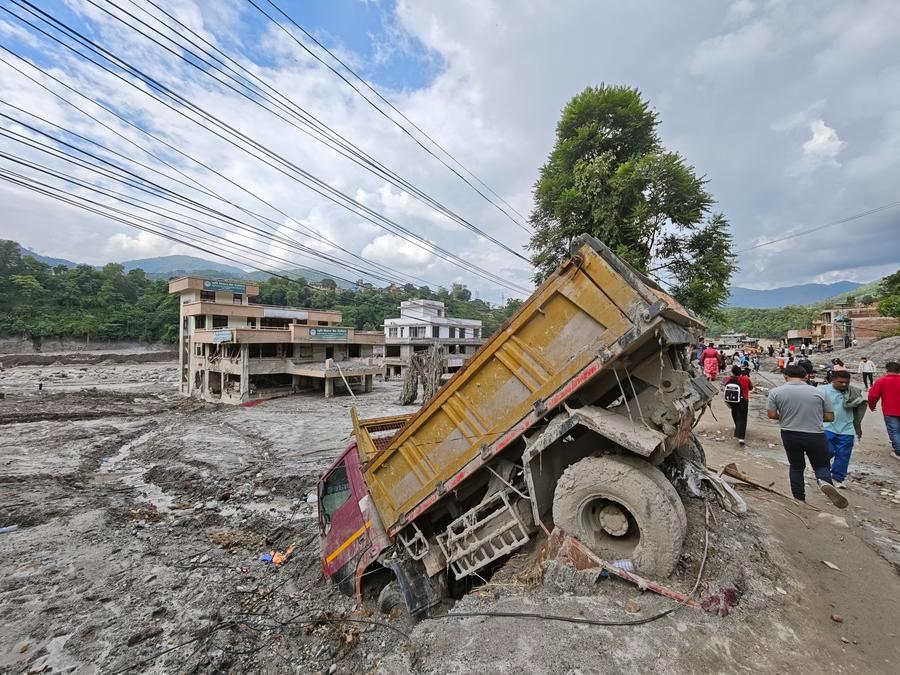
A fast-moving chain mudslide, triggered by a high-altitude glacier collapse in Nepal, buried tunnels, destroyed roads, cut off transportation links, and left over 1,200 dead and more than 4,200 people missing by 6 p.m. local time Wednesday in Nepal.
The unprecedented scale of silt deposition and complex underground environments have posed unprecedented challenges to search and rescue operations, making the disaster far more difficult to tackle than conventional geological catastrophes.
"The situation in the mudslide-hit area has far exceeded expectations -- more severe than any disaster I have seen before," Pan Jiangyuan, who has been engaged in tunnel rescue for over 15 years, told Xinhua. "The tunnel is almost completely blocked by silt -- a situation that is unheard of and extremely rare in tunnel rescue."
Pan is one of the nine Chinese tunnel rescue experts sent to Nepal by the Chinese government, along with four DNA identification experts.
As a team member, Pan worked alongside Nepalese military rescue personnel for several consecutive days, conducting reconnaissance and search missions in designated rescue areas.
"We used a flotation device -- a raft -- with rescuers lying on it and moving forward bit by bit. We also used drones for reconnaissance," he said, explaining that in some areas the silt was so deep that personnel couldn't go in alone on foot.
Reshmi, the press officer at the Nepalese rescue command camp, said that the Chinese rescue team was one of the first international rescue teams that came to Nepal to assist in the search and rescue operations.
"We are working very closely together. This is a joint operation, and we are making joint efforts. We have also exchanged liaison officers to strengthen communication and coordination," he said.
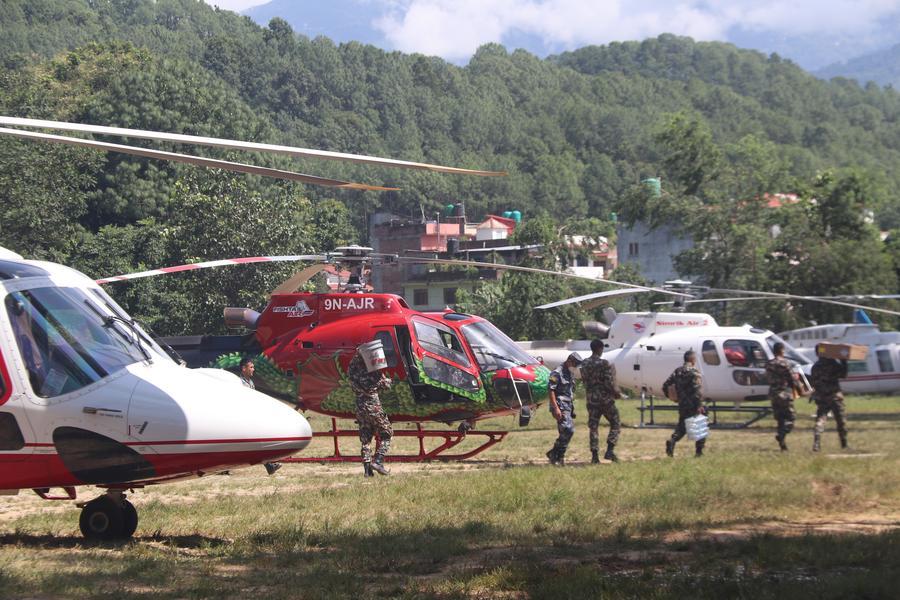
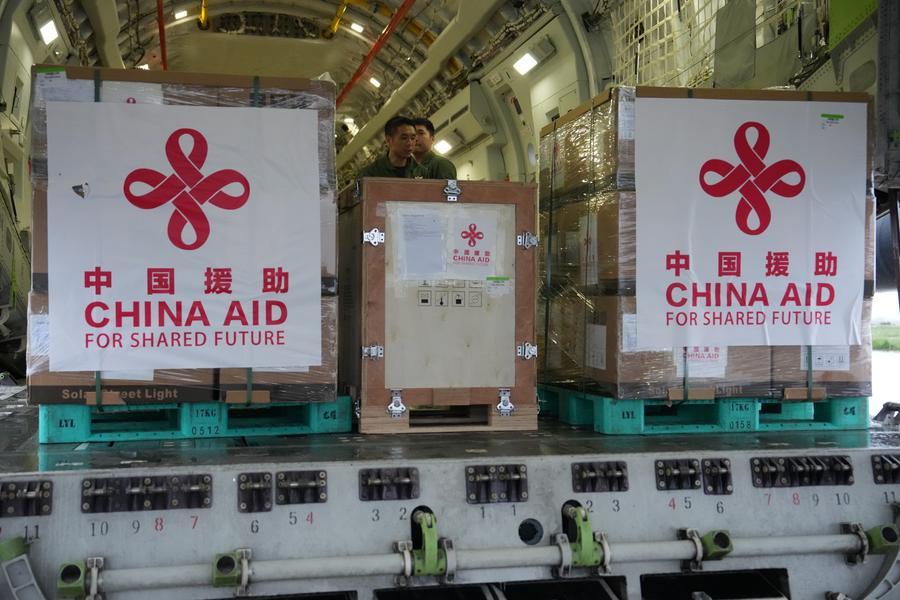
As the relief operation unfolds in phases, China has continued to deliver multi-dimensional, all-round support to Nepal's disaster relief and post-disaster recovery. Since the disaster erupted, China has sent two batches of relief supplies to Nepal, continuously shared real-time meteorological and hydrological data, and provided professional technical consultations and early risk warnings to assist Nepal's risk assessment and emergency response.
Chinese social organizations, enterprises and overseas Chinese communities in Nepal have also actively joined the relief campaign.
The China Foundation for Rural Development has set up a forward operating base along the Trisuli River in Nuwakot, leveraging a local hospital as a comprehensive platform for material storage, personnel scheduling and follow-up medical support.
Zou Zhiqiang, director of the foundation's Nepal office, said that the relief work is being carried out in a scientific, phased manner tailored to evolving disaster needs. The current priority remains life-saving search and rescue. The subsequent stage will focus on recovering the deceased and relevant follow-up arrangements, while the third phase will center on resident resettlement, medical services and livelihood restoration.
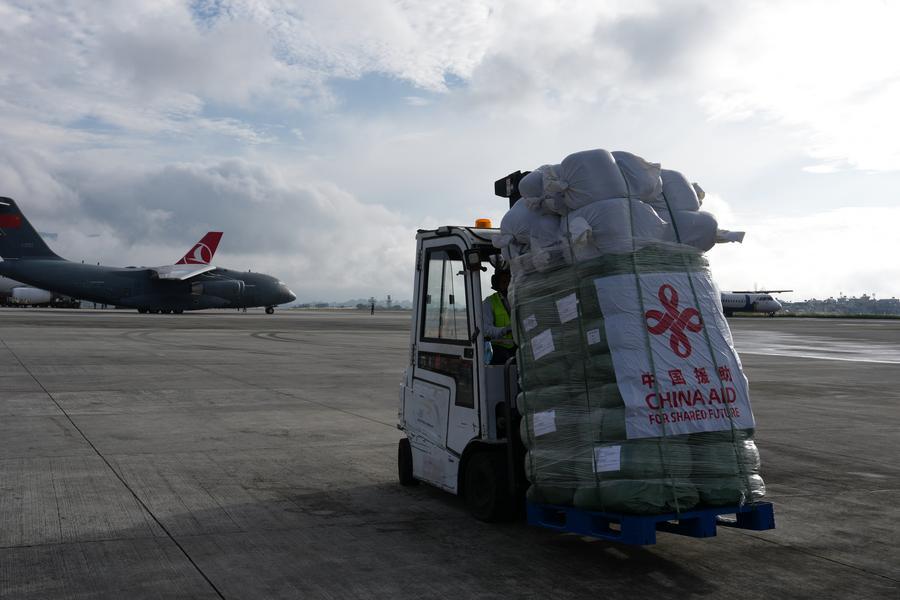
"The foundation is preparing materials in advance according to the different needs of each phase. We plan to ship some 22 tonnes of relief supplies from China so that they can be put into use as soon as the follow-up work is fully launched," Zou said.
Huawei, together with local Nepalese operators, immediately launched communication network restoration work to ensure basic communication needs in the affected areas. The Nepal Overseas Chinese Association also initiated a fundraising campaign to aid affected residents.
"In this hour of national grief, PRC's prompt support once again reaffirms the enduring strength of our time-tested bilateral friendship," Nepali President Ram Chandra Poudel wrote on social media.
China's foreign ministry said Wednesday that the country is preparing a third batch of emergency relief supplies to Nepal, including Bailey bridges, epidemic prevention materials and emergency communications equipment, adding that China is ready to send a second group of DNA identification experts based on Nepal's needs.
"This is more than humanitarian assistance. It is a powerful expression of good neighbourliness, solidarity and the longstanding friendship between Nepal and China," Pushpa Raj Pradhan, editor-in-chief of People's Review, said.■