
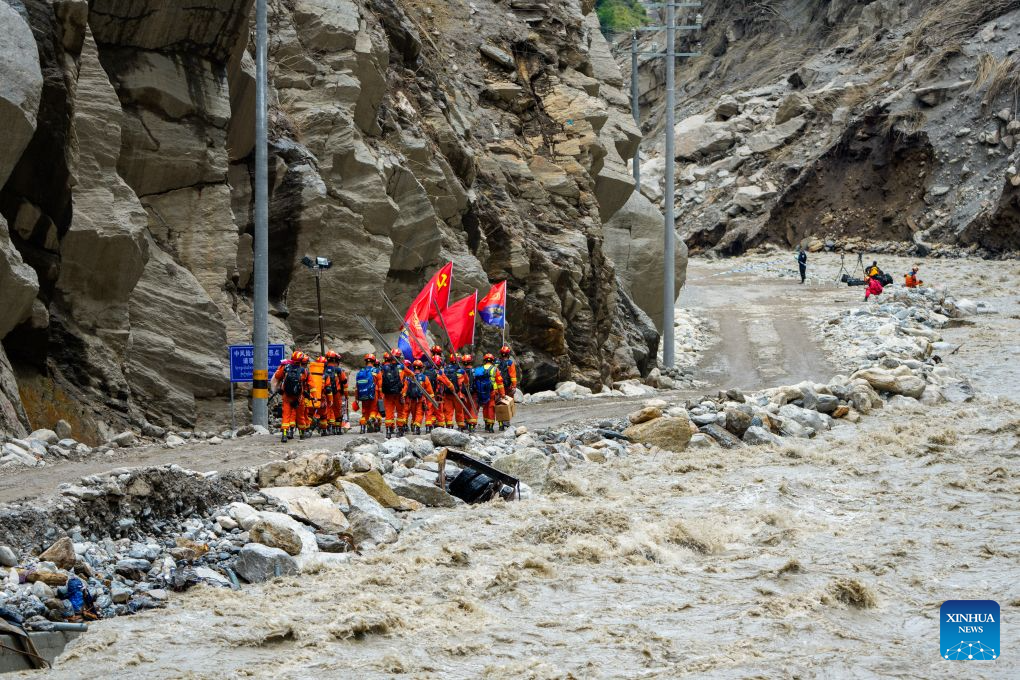
Rescuers walk towards the core area of the mudslide-hit Gyirong Port in southwest China's Xizang Autonomous Region, Sept. 2, 2026. Road access to the core area of the mudslide-hit Gyirong Port in southwest China's Xizang Autonomous Region was basically restored at 10 a.m. Wednesday after days of round-the-clock repair work on the damaged G216 national highway. Rescue teams, relief supplies and some rescue equipment have entered the core rescue area via the road, rescuers said. (Xinhua/Tenzin Nyida)
GYIRONG, Xizang, Sept. 2 (Xinhua) -- Road access to the core area of the mudslide-hit Gyirong Port in southwest China's Xizang Autonomous Region was basically restored at 10 a.m. on Wednesday after days of round-the-clock repair work on the damaged G216 national highway.
Rescue teams, relief supplies and some rescue equipment have entered the core rescue area via this road, rescuers said.
A section of the G216 national highway, the only land route to Gyirong Port, was severely damaged by the mudslide carrying huge boulders, with the restoration of road access critically important in aiding large-scale search operations in the core disaster area.
The repair operation, notably, posed formidable challenges.
"Conditions vary from one section of the road to another," said Zhou Gang from China Anneng, a state-owned engineering and rescue enterprise. The original roadbed remained usable in some sections, but most of it had been severely damaged.
The work zone lay in a narrow mountain gorge, with steep mountainsides on one side and a fast-flowing river on the other. This confined space made it difficult for multiple pieces of heavy machinery to operate simultaneously, severely hampering the work, Zhou added.
An even greater challenge came from the unpredictable conditions inside the gorge, featuring fast-flowing water and lingering risks of rockfalls, landslides and other secondary hazards.
Crews responded by adapting their methods. Along narrow sections, multiple excavators worked in relay, lining up one behind another to dig and pass debris from one machine to the next.
In sections with the strongest currents, excavators pushed into the water to open the way, while crews built diversion structures and used rock-filled steel cages to stabilize the roadbed, advancing section by section.
The mudslide, caused by an ice-rock avalanche in Nepal, hit Gyirong Port on Aug. 26, claiming 16 lives and leaving 546 people missing at the border port as of 6 p.m. on Saturday, according to the regional government's latest update.
Following the disaster, Xizang swiftly activated its highest-level emergency response for natural disasters, mobilizing rescue forces from across the region for search and rescue operations, road clearance and other relief work in Gyirong. ■
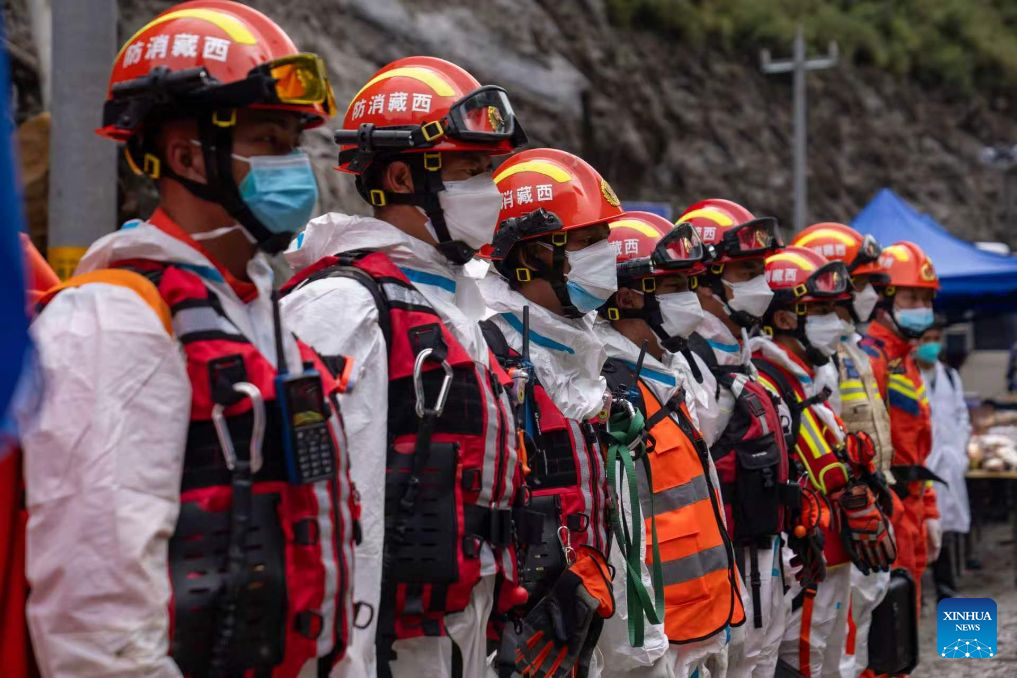
Rescuers gather to enter the core area of the mudslide-hit Gyirong Port to conduct disinfection work in southwest China's Xizang Autonomous Region, Sept. 2, 2026. Road access to the core area of the mudslide-hit Gyirong Port in southwest China's Xizang Autonomous Region was basically restored at 10 a.m. Wednesday after days of round-the-clock repair work on the damaged G216 national highway.
Rescue teams, relief supplies and some rescue equipment have entered the core rescue area via the road, rescuers said. (Xinhua/Tenzing Nima Qadhup)
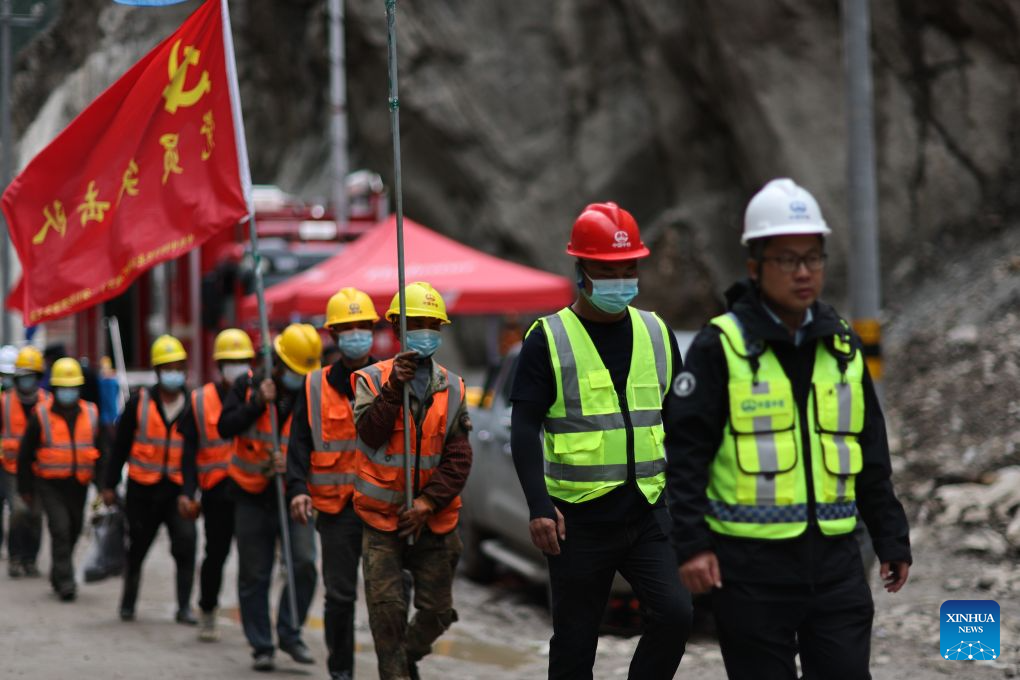
Rescuers walk towards the core area of the mudslide-hit Gyirong Port in southwest China's Xizang Autonomous Region, Sept. 2, 2026. Road access to the core area of the mudslide-hit Gyirong Port in southwest China's Xizang Autonomous Region was basically restored at 10 a.m. Wednesday after days of round-the-clock repair work on the damaged G216 national highway.
Rescue teams, relief supplies and some rescue equipment have entered the core rescue area via the road, rescuers said. (Xinhua/Jiang Fan)
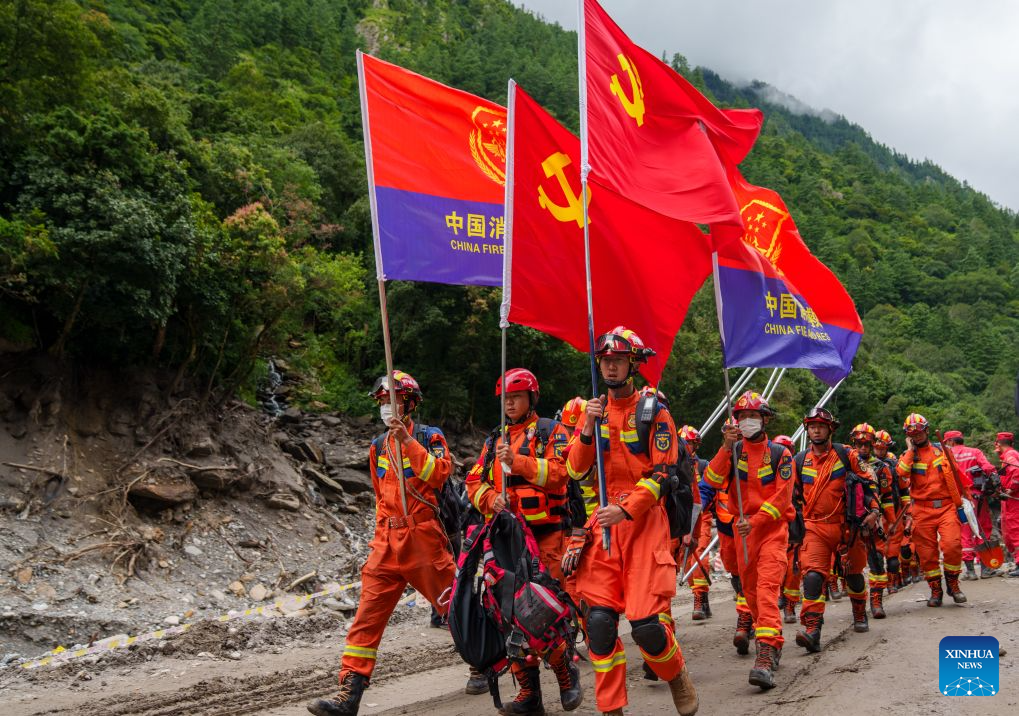
Rescuers walk towards the core area of the mudslide-hit Gyirong Port in southwest China's Xizang Autonomous Region, Sept. 2, 2026. Road access to the core area of the mudslide-hit Gyirong Port in southwest China's Xizang Autonomous Region was basically restored at 10 a.m. Wednesday after days of round-the-clock repair work on the damaged G216 national highway.
Rescue teams, relief supplies and some rescue equipment have entered the core rescue area via the road, rescuers said. (Xinhua/Tenzin Nyida)
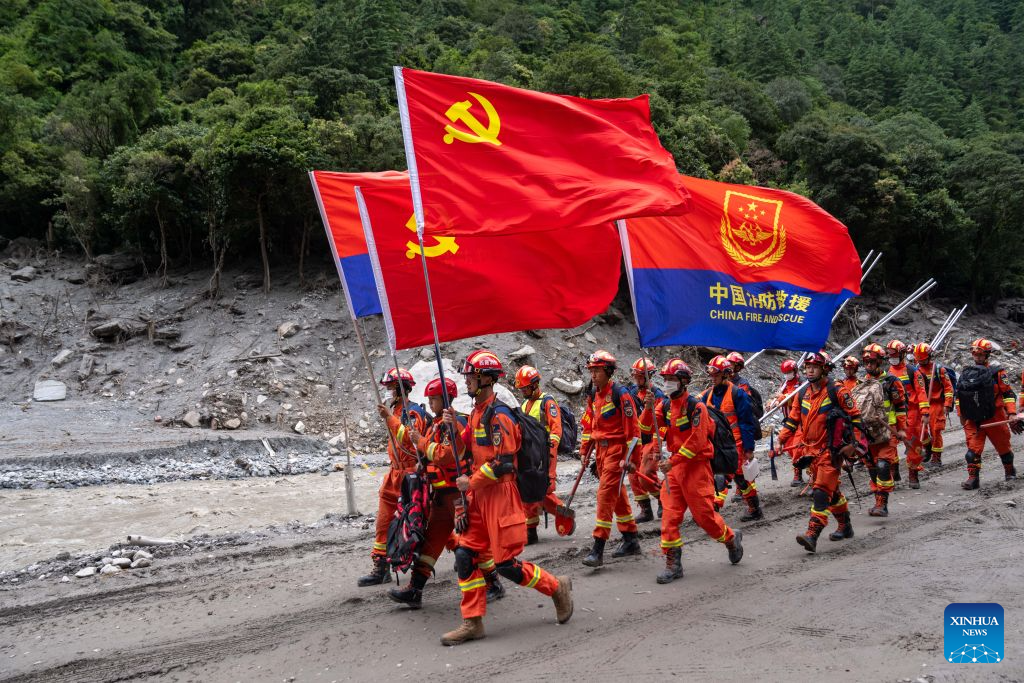
Rescuers walk towards the core area of the mudslide-hit Gyirong Port in southwest China's Xizang Autonomous Region, Sept. 2, 2026. Road access to the core area of the mudslide-hit Gyirong Port in southwest China's Xizang Autonomous Region was basically restored at 10 a.m. Wednesday after days of round-the-clock repair work on the damaged G216 national highway.
Rescue teams, relief supplies and some rescue equipment have entered the core rescue area via the road, rescuers said. (Xinhua/Tenzing Nima Qadhup)
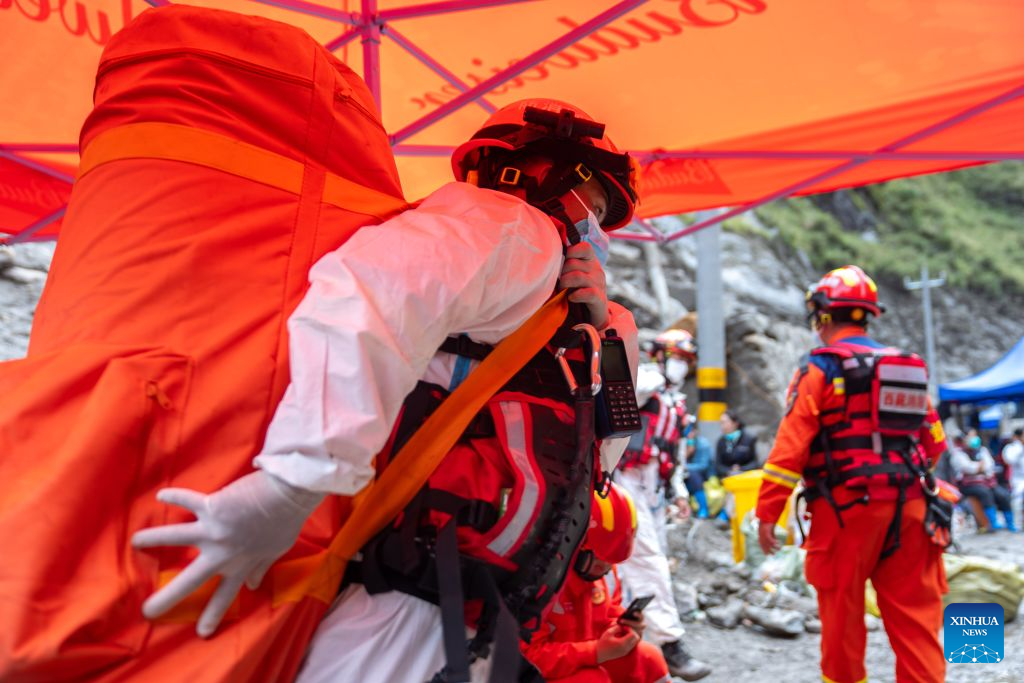
Rescuers gather to enter the core area of the mudslide-hit Gyirong Port to conduct disinfection work in southwest China's Xizang Autonomous Region, Sept. 2, 2026. Road access to the core area of the mudslide-hit Gyirong Port in southwest China's Xizang Autonomous Region was basically restored at 10 a.m. Wednesday after days of round-the-clock repair work on the damaged G216 national highway.
Rescue teams, relief supplies and some rescue equipment have entered the core rescue area via the road, rescuers said. (Xinhua/Tenzing Nima Qadhup)


