HANGZHOU, Sept. 2 (Xinhua) -- From startup struggles to cross-cultural community building, Indian entrepreneur Tanmay Gokani and his compatriots have carved out a unique life path for themselves in east China's economic powerhouse Zhejiang Province.
A WHOLESALE MARKET TRANSFORMED BY AI
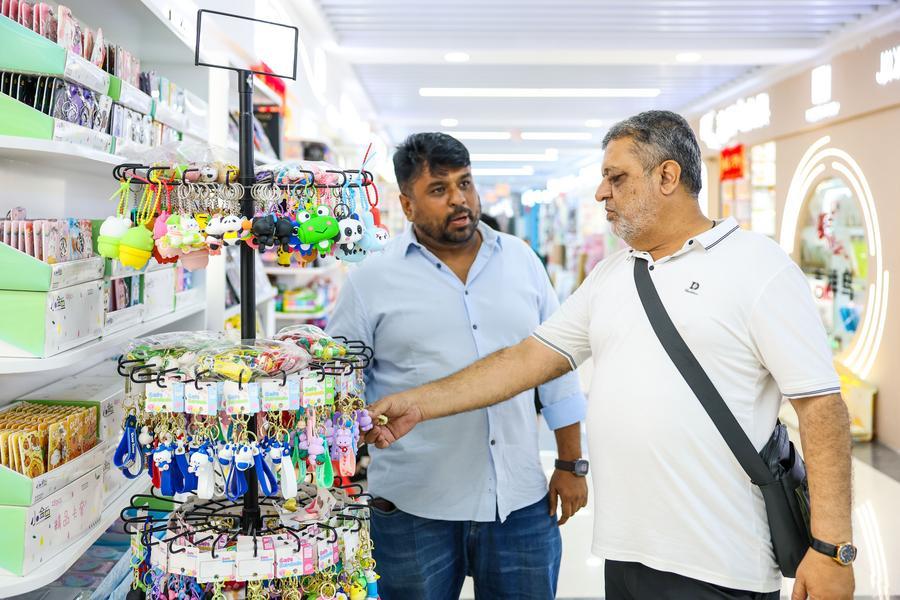
Coming to China in 2002, Gokani worked at a Hong Kong firm's Shenzhen office before shifting his focus to Zhejiang's Yiwu, a county-level city and a basic wholesale center for hardware, toys and daily goods with limited urban facilities. "It was even hard to find bread back then," he said.
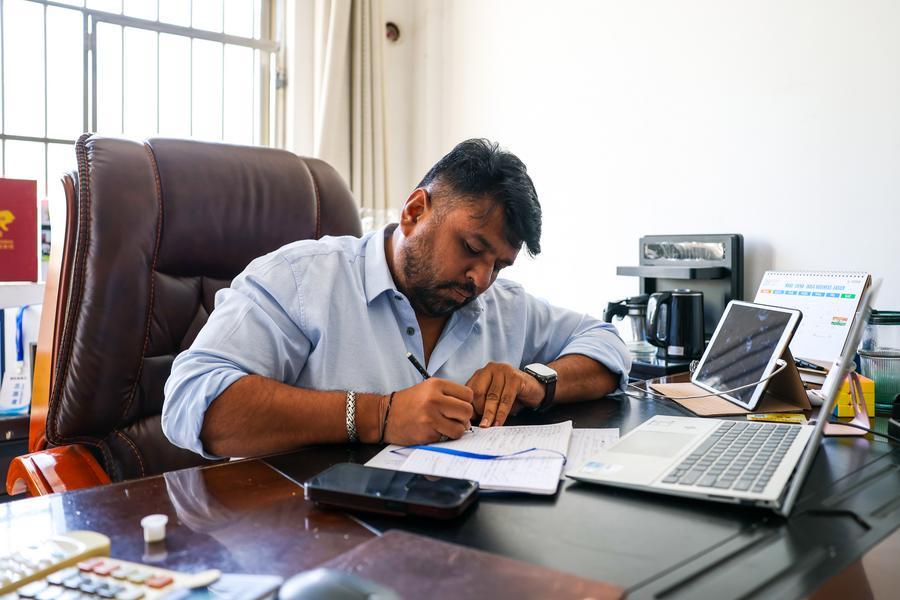
To fund his startup venture between 2009 and 2011, Gokani scouted markets for suppliers by day and taught English after work. "I would spend about two hours every night teaching, just to cover the costs of getting my business off the ground," he recalled.
He registered his consumer goods trading company in 2009, relying entirely on offline inquiries and manual price and quality comparisons.
Fellow Indian trade manager Udit Madhwani arrived in Yiwu in 2012 under the same primitive business conditions. Without digital tools, he navigated the sprawling market by consulting local vendors to verify every unfamiliar product.
The transformation since then has been remarkable. "Yiwu is like a child growing bigger and more handsome every year," said Madhwani, whose company mainly does business with South American countries, including Guatemala, Paraguay, Argentina, Brazil and Peru.
Now home to the world's largest small-commodity wholesale market, Yiwu hosts over 38,000 permanent foreign merchants and more than 10,000 foreign-funded enterprises. It has over 1.26 million business entities and supports employment for more than 32 million people.
A key symbol of China's reform and opening-up, it has upgraded from a low-cost bulk trading hub into a digital marketplace where technology, branding and data match industrial scale in importance.
"Many foreign clients who have never been to China are shocked by product quality and design capabilities here," Madhwani noted. "The goods offer great value, and the market has moved from having few local brands to having numerous ones."
Gokani stressed China's ultra-efficient supply chain, further empowered by AI, as its core advantage. He offered a striking example of an Indian client who confirmed a glass bowl order on a Saturday, with complete samples and quotation sheets ready the following Monday, and full shipments delivered by the month's end.
Now, Gokani's firm ships 100 to 200 forty-foot containers yearly across thousands of products, with 90 percent of exports going to India, mostly ornaments and daily-use goods such as stationery, toys, hardware and other product categories, and the rest to the United States and Africa.
"Yiwu's respect for difference and embrace of diversity have created a space where people of varied backgrounds can meet, do business, and gradually understand one another," said Jiang Jiajiang, director of the Institute of Public Policy at the Zhejiang Academy of Social Sciences.
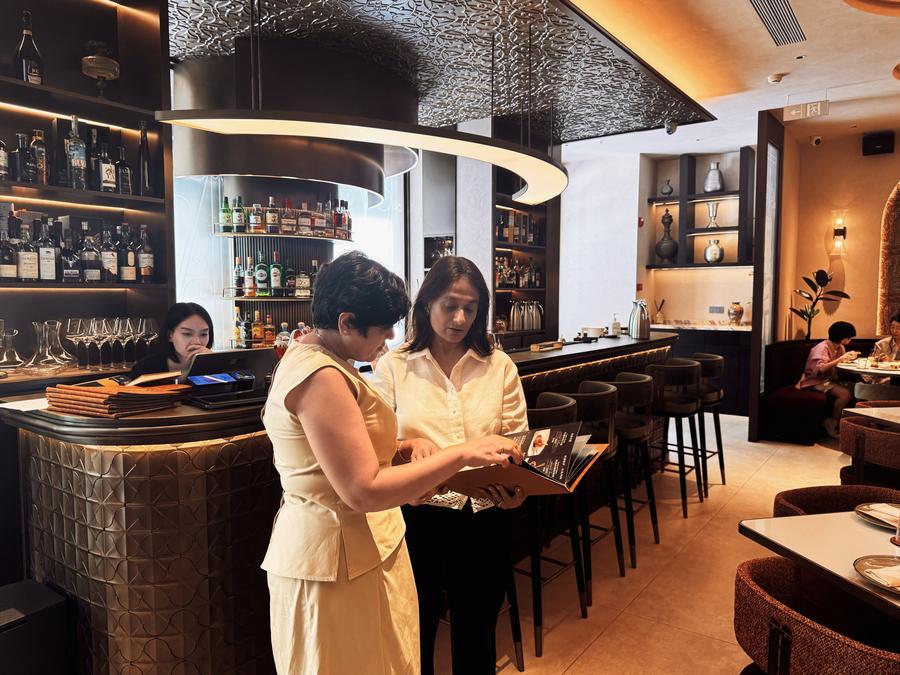
PITAS, TABLA, HOLI AND DIWALI SHARED WITH CHINESE
For Indian entrepreneurs Mona Bapna and Rajni Aggarwal, life in Hangzhou, Zhejiang's capital city over 100 km from Yiwu, extends far beyond business. The pair moved there in 2004 and launched their Indian restaurant Pita's & Tika's in 2016.
Bapna came to Hangzhou with her husband and children as a stay-at-home mother, while textile engineer Aggarwal relocated with her family to run textile-related ventures. Strangers before arriving in China, the two built a close friendship and business partnership, brought together by fate in a foreign land.
Language barriers were their biggest early challenge. "When we came, we couldn't communicate well and couldn't read Chinese. All documents were in Chinese," Bapna recalled. With support from the Zhejiang International Investment Service Center, they overcame regulatory hurdles to launch their catering business.
Now with three branches in Hangzhou and Shanghai, the duo opened the upmarket Indian fine-dining restaurant Benaras in late 2025. For them, the eateries are cultural bridges between two ancient civilizations. "We opened the restaurant because we want to share Indian culture with China," Bapna said.
Over two decades, they have witnessed a striking shift in local attitudes toward foreign food. "Ten years ago, people didn't know much about Indian food. Now Chinese people are better educated, better traveled, and more open to trying new things," Bapna added.
Their venues regularly host cultural events celebrating India's Holi and Diwali festivals. During recent cultural nights, Chinese guests played Indian musical instruments and a young Shanghai performer played the tabla.
"Music is more than rhythm and melody. It's a way to connect cultures, share tradition and celebrate the spirit of India together," Aggarwal said. The pair also embrace Chinese traditions, hosting special celebrations for Chinese Valentine's Day to honor local culture.
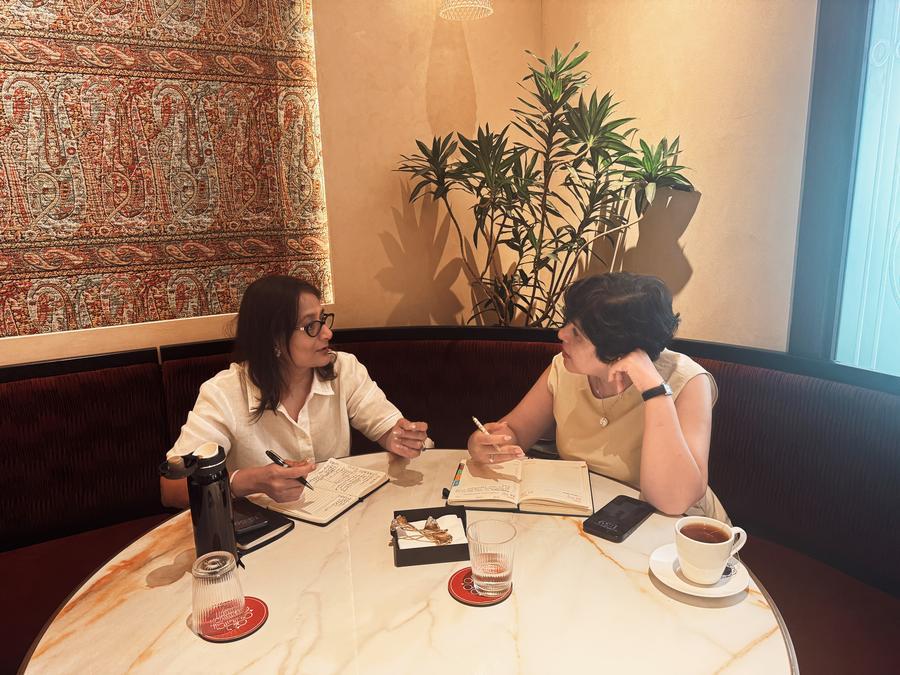
MUTUAL GIVING AND COMMUNITY INTEGRATION
The Indian community in Zhejiang has deeply integrated into society, which they often call their "adopted hometown."
Bapna participates in a local women's organization and once spoke at Asian Games community events, while Aggarwal joins her son's school bilingual book club for cross-cultural exchanges. The two also launch regular charity drives to fund migrant children's education and medical insurance. "We believe we have a good life, so we should give back to society," Bapna said.
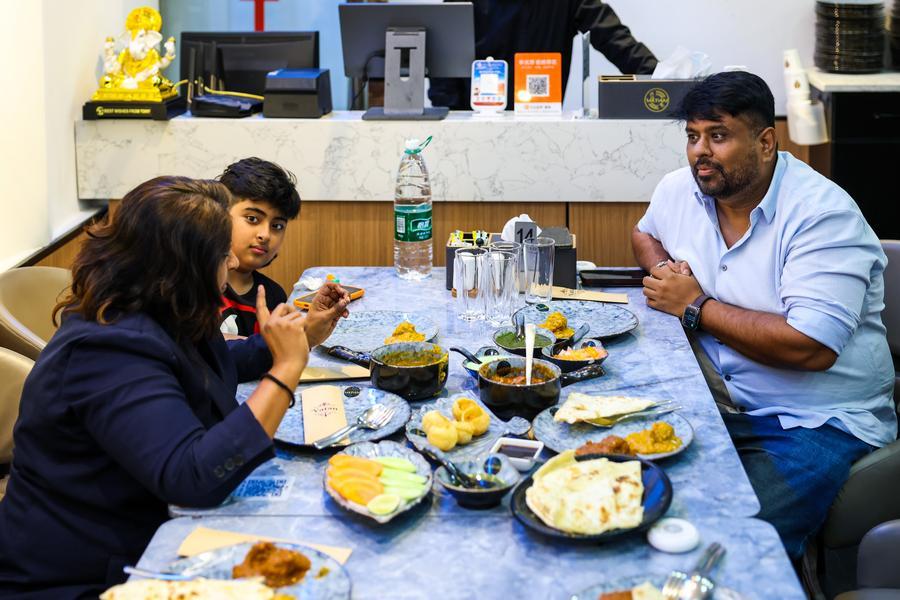
Gokani assists foreign residents' integration by facilitating international students' enrollment and joining multicultural festival activities, such as traditional sticky rice food zongzi-making for China's Dragon Boat Festival. Madhwani joined a local community volunteer team along with expatriates from more than 10 countries, including India, Pakistan and Nepal.
An Indian restaurant owner once delivered food to thank Madhwani, while a foreign resident's passport issue, which had puzzled him for days, was resolved in two hours with Madhwani's assistance.
For new Indian entrepreneurs, Bapna offered her advice: "Be patient. China is a country of opportunities. If you come with an open mind, you will find that this country is very easy to do business or live in." ■