by Maya Majueran
When the Shanghai Cooperation Organization (SCO) was founded in 2001, the international system was still largely dominated by a single center of power. For many developing countries, global governance appeared heavily shaped by Western institutions and priorities, leaving limited space for alternative voices and perspectives.
Today, the picture looks very different. The SCO has grown far beyond its original regional purpose. Its expansion reflects the rising confidence, influence, and strategic weight of the Global South in international affairs.
With member states and partners spanning much of Asia, the Middle East and Eurasia, the organization has become an important platform for developing countries to coordinate policies, deepen economic cooperation, and amplify their collective voice on the global stage.
What makes the SCO particularly significant is that it emerged at a time when many developing nations were seeking greater representation in global governance. For years, countries across the Global South have argued that international institutions often fail to reflect contemporary economic and geopolitical realities. The SCO offers an alternative space for dialogue and cooperation: one based on mutual respect, sovereign equality and consensus-building rather than bloc politics or ideological confrontation.
Beyond security cooperation, the SCO has steadily expanded its focus to sectors that include trade, connectivity, energy, digital development, cultural exchange and people-to-people ties. Through initiatives linking transport corridors, energy networks and regional markets, SCO members are working to enhance economic connectivity and create new opportunities for growth across some of the world's most dynamic regions.
Equally important, the SCO provides a platform for developing countries to collectively address shared challenges, from terrorism and regional security to food security, energy transition and sustainable development. As global power becomes more widely distributed, the organization is helping its members navigate an increasingly complex international environment while preserving strategic autonomy.
In many ways, the evolution of the SCO mirrors the broader rise of the Global South itself. It reflects a world in which emerging economies are no longer content to simply adapt to decisions made elsewhere. Instead, they are increasingly participating in shaping regional and global agendas, contributing new ideas, institutions and approaches to international cooperation.
The SCO's expansion is not about creating a new military bloc or replicating Cold War-style alliances. Rather, it reflects something the Global South has long sought: cooperation without coercion, dialogue without domination, and partnership without political conditionality.
Over the past 25 years, the SCO has expanded to a 27-nation family, bringing together countries with diverse cultures, political systems, economic models and historical experiences. That diversity is precisely what makes the SCO distinctive. Unlike Western-style alliances built around ideological conformity, the SCO demonstrates that cooperation can emerge despite differences rather than because of uniformity.
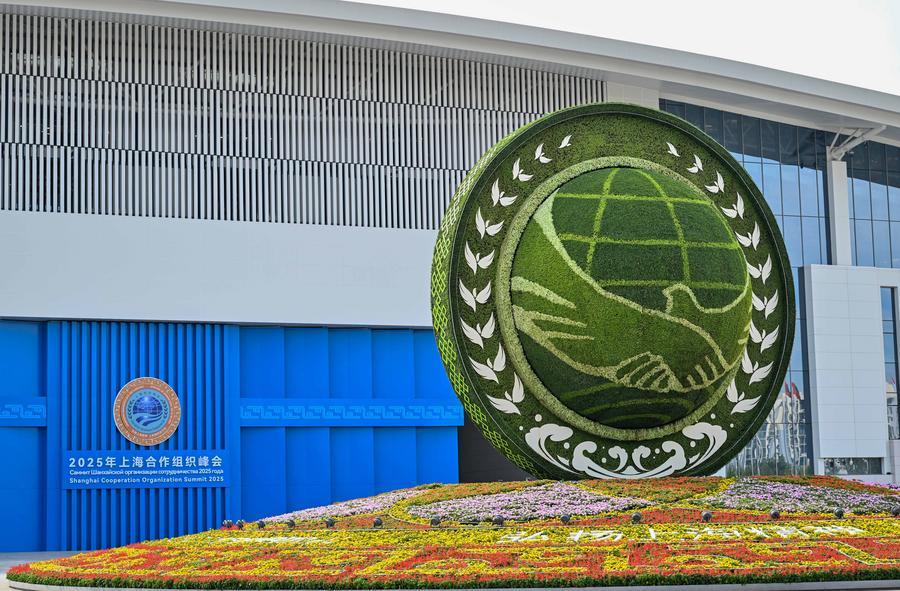
At the heart of this approach lies the Shanghai Spirit -- a philosophy grounded in mutual trust, mutual benefit, equality, consultation, respect for diversity of civilizations and pursuit of common development.
For many nations across Asia, Africa, the Middle East, Latin America and beyond, this approach is especially appealing. For decades, developing countries often found themselves navigating partnerships that came with political conditions, governance prescriptions, or expectations of strategic alignment. The SCO offers a different model, one that emphasizes consultation rather than instruction and cooperation rather than pressure.
The SCO members do not agree on every issue, nor do they share identical strategic interests. Yet the SCO's ability to bring together countries with differing perspectives is one of its greatest strengths. It demonstrates that multilateralism does not require uniformity; it requires a willingness to engage, consult, and find common ground.
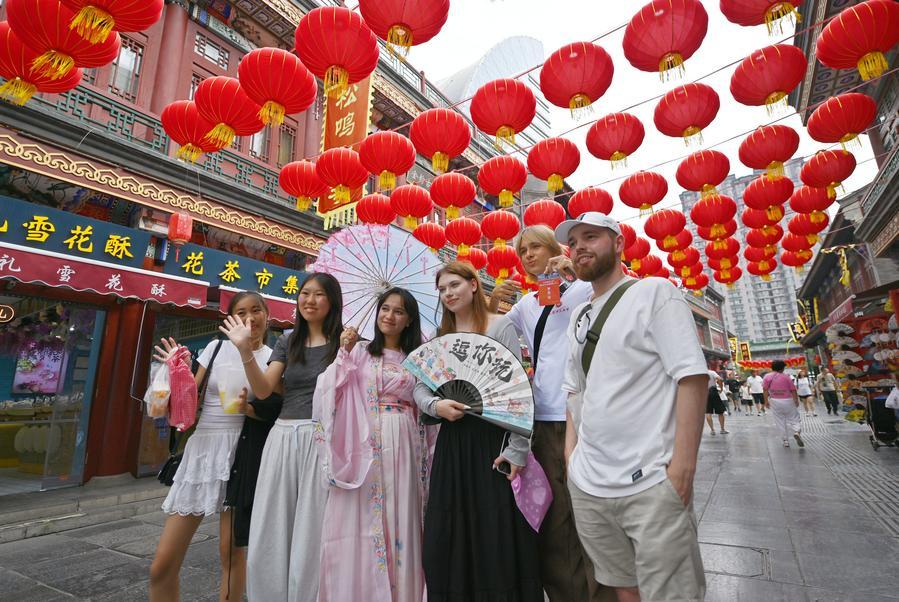
Meanwhile, the SCO's most important contribution is its approach to global governance. For many countries across the Global South, international institutions have too often been perceived as reflecting the interests of a limited number of powerful states. The SCO offers an alternative vision that emphasizes consultation, inclusiveness, and shared participation in international affairs.
By advocating extensive consultation, joint contribution and shared benefits, the organization seeks to create greater space for developing nations in global decision-making. Its support for sovereign equality, multilateralism, and opposition to unilateral measures resonates with countries that have long sought a stronger voice in shaping international rules and priorities.
The SCO has therefore evolved beyond its original regional role. It has become a platform through which countries of the Global South can express their priorities and aspirations with greater confidence. Its vision resonates because it emphasizes respect for diversity, common development and sovereign choice. For many nations, the goal is not to replace one center of power with another, but to build an international system where countries can pursue their own development paths without being forced into geopolitical rivalries.
After 25 years, the Shanghai Spirit is not a fading slogan. Its continued relevance lies in the fact that it answers a deep need shared across the Global South: the desire for partnerships based on equality, mutual respect, and common development rather than hierarchy and dependency.
At a time when the world appears increasingly divided by rivalry and competing blocs, the SCO demonstrates that cooperation remains possible. Its emphasis on consultation, mutual benefit and respect for diversity offers a different path -- one that expands opportunities rather than imposes choices.
For billions of people across the Global South, that vision is more than a diplomatic concept. It is a source of optimism about a more equitable, balanced and multipolar future.
Editor's note: Maya Majueran serves as the director of the Belt and Road Initiative Sri Lanka, an independent and pioneering organization with strong expertise in Belt and Road Initiative advice and support.
The views expressed in this article are those of the author and do not necessarily reflect the positions of Xinhua News Agency.■