
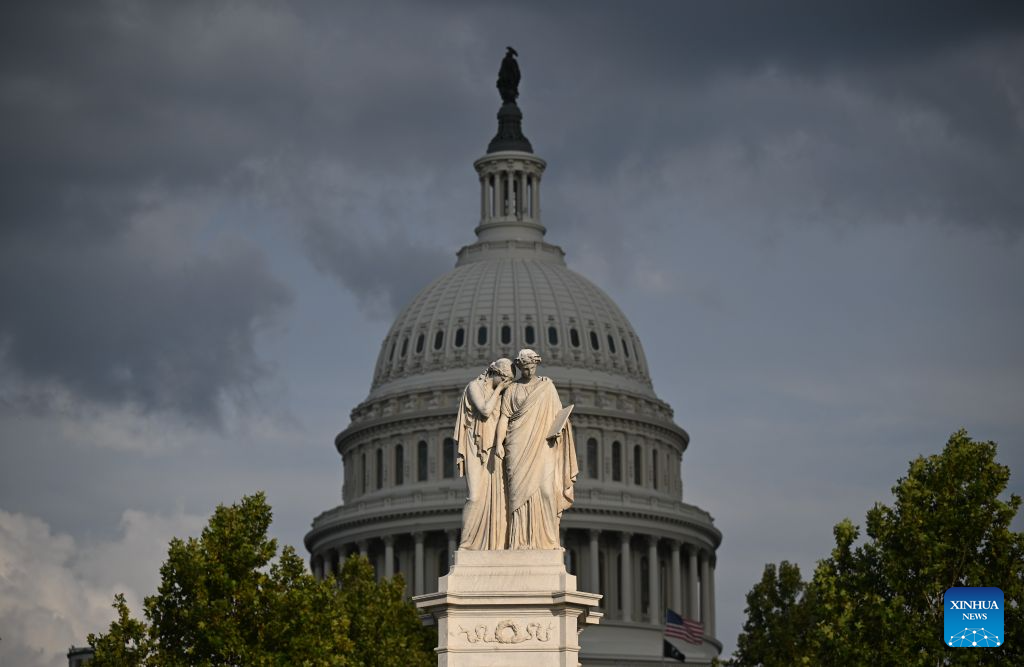
This photo taken on Aug. 28, 2026 shows the Peace Monument with the U.S. Capitol building in the background in Washington, D.C., the United States. (Xinhua/Li Rui)
CAIRO, Aug. 28 (Xinhua) -- Friday marks six months since the outbreak of the U.S.-Israeli war with Iran.
Although the United States and Iran signed a memorandum of understanding (MoU) in June, raising hopes for a diplomatic breakthrough, negotiations aimed at resolving differences and ending the conflict have since stalled. Last month's escalation in fighting, coupled with new U.S. sanctions on Iran, has further reduced the likelihood of a near-term resolution.
The following is a timeline of the conflict starting from Feb. 28:
Feb. 28:
--- The United States and Israel launched joint military strikes against Iran, killing Iran's then Supreme Leader Ali Khamenei and other senior officials.
-- The Islamic Revolution Guard Corps (IRGC) launched retaliatory operation, firing missiles and drones at U.S. military bases in the Middle East and targets in Israel.
March 2:
-- Lebanon's Hezbollah said it had launched rockets and drones toward Israel. The Israel Defense Forces said it launched "forceful" airstrikes across Lebanon in response, noting it began operating "against Hezbollah's decision to join the campaign."
March 3:
-- Deputy Commander of IRGC's Navy Mohammad Akbarzadeh said the Strait of Hormuz was under Iran's full control.
March 8:
-- Iran's Assembly of Experts announced that Mojtaba Khamenei, son of Ali Khamenei, was selected as Iran's new supreme leader.
March 12:
-- In his first public remarks, Mojtaba Khamenei called for the continued closure of the Strait of Hormuz and urged neighboring countries to shut down U.S. bases.
March 13:
-- U.S. President Donald Trump said the U.S. military carried out bombing raids against military targets on Iran's Kharg Island, a key oil export hub that handles most of the country's crude shipments.
March 21:
-- Trump threatened to hit Iran's energy infrastructure unless Tehran fully reopened the Strait of Hormuz within 48 hours. He then twice postponed the attacks, first by five days and then by 10 days, on March 23 and 26, respectively.
-- The United States and Israel attacked Iran's Natanz uranium enrichment facility, while Iranian missiles struck targets in southern Israel.
March 24:
-- Israel's Channel 12 reported the United States had sent Tehran a 15-point peace plan, via Pakistan, in an attempt to end the war.
March 28:
-- Yemen's Houthi armed forces said they had launched a barrage of ballistic missiles targeting "sensitive Israeli military sites" in southern Israel. Local observers said the attacks appeared to signal the Houthis' formal entry into the widening regional conflict.
April 3:
-- Iranian forces shot down a U.S. F-15E Strike Eagle over southwestern Iran, triggering a large-scale U.S. combat search-and-rescue operation involving special forces and aircraft. One crew member was rescued quickly, while the second was recovered after an extended search, with additional U.S. aircraft lost during the operation.
April 6:
-- Iran rejected the 15-point peace plan, but delivered its response via Pakistan in a 10-point document, while calling for a permanent end to the conflict.
April 8:
-- Iran and the United States agreed to a two-week ceasefire. Israeli Prime Minister Benjamin Netanyahu later said the arrangement did not include Lebanon. Israel launched its heaviest bombardment of Lebanon since the start of the war.
April 11:
-- Senior U.S. and Iranian officials held talks in Islamabad, Pakistan. Despite intensive talks, the two sides failed to reach an agreement.
April 12:
-- Trump said that the U.S. Navy would start to blockade ships attempting to enter or leave the Strait of Hormuz.
April 16:
-- Lebanon and Israel reached a 10-day ceasefire agreement brokered by the United States. The deal marked the first pause in more than a month of fighting between Israel and Hezbollah that had killed over 2,000 people.
April 23:
-- Trump ordered the U.S. Navy to destroy any Iranian boats laying mines in the Strait of Hormuz.
May 3:
-- The United States launched "Project Freedom" to escort commercial vessels through the Strait of Hormuz. The operation was later suspended by Trump, citing progress in negotiations with Iran.
May 15:
-- Israel and Lebanon agreed to extend their ceasefire by 45 days.
May 23:
-- Iranian Foreign Ministry spokesman Esmaeil Baghaei said Iran and the United States are working to finalize an MoU, after Trump said his administration was "in final stages of" peace talks with Iran.
June 3:
-- Israel and Lebanon agreed to implement a ceasefire. The two sides also agreed to advance the creation of "pilot zones" in Lebanon where Hezbollah will be excluded.
June 7:
-- Israel launched airstrikes on the southern suburb of Beirut, Lebanon's capital. Iran responded by firing multiple waves of missiles at Israeli targets.
June 11:
-- Iran's main military command, Khatam al-Anbiya Central Headquarters, announced the full closure of the Strait of Hormuz.
-- Iran launched missile and drone attacks against U.S. military targets in Bahrain, Kuwait and Jordan, in retaliation for the U.S. attacks.
June 14:
-- Pakistan announced that the United States and Iran had reached a peace agreement following intensive negotiations, with both sides later confirming the deal.
June 18:
-- The United States and Iran signed an MoU, launching a 60-day negotiation period aimed at reaching a final agreement.
June 26:
-- The U.S. Central Command conducted strikes against Iran as "a powerful response" to the alleged Iranian drone attack on a commercial vessel transiting the Strait of Hormuz a day earlier.
June 28:
-- IRGC fired ballistic missiles and drones at U.S. military facilities in Kuwait and Bahrain in response to U.S. airstrikes.
July 1:
-- An informed source told Xinhua that indirect talks between the United States and Iran were underway in Doha under the mediation of Qatar and Pakistan, focusing on the implementation of the MoU.
July 8:
-- The United States launched strikes against 80 Iranian targets, and in response, Iran's IRGC attacked 85 U.S. military sites in Bahrain and Kuwait, in a new round of escalation of regional tensions.
-- Trump said that the ceasefire with Iran "is over," and he did not want to deal with Iran anymore.
July 18:
-- Iranian Deputy Foreign Minister for Legal and International Affairs Kazem Gharibabadi said that Iran ceased the fulfillment of its obligations under the MoU.
Aug. 3:
-- Trump said talks with Iran are "going on right now," adding that "this is a last chance."
Aug. 17:
-- The 60-day window that Washington and Tehran set for themselves to hammer out a final peace agreement expired.
Aug. 19:
-- Trump announced what he described as "the most crushing economic operation ever taken" against any country providing a lifeline to Iran after reportedly instructing his top envoys to halt their conversations with Iran the day before.
Aug. 23:
-- Iran's senior security official Mohsen Rezaei warned that the country will consider any state's participation in or support for the U.S. anti-Iran economic operation as an "act of war."
Aug. 24:
-- U.S. Treasury Secretary Scott Bessent threatened Iran with "an economic D-Day," announcing a wave of new sanctions aimed at further isolating the country.
Aug. 28:
Iran's Foreign Minister Seyed Abbas Araghchi said that diplomacy with the United States can get back on track if Washington realizes that pressure against Tehran does not work. ■
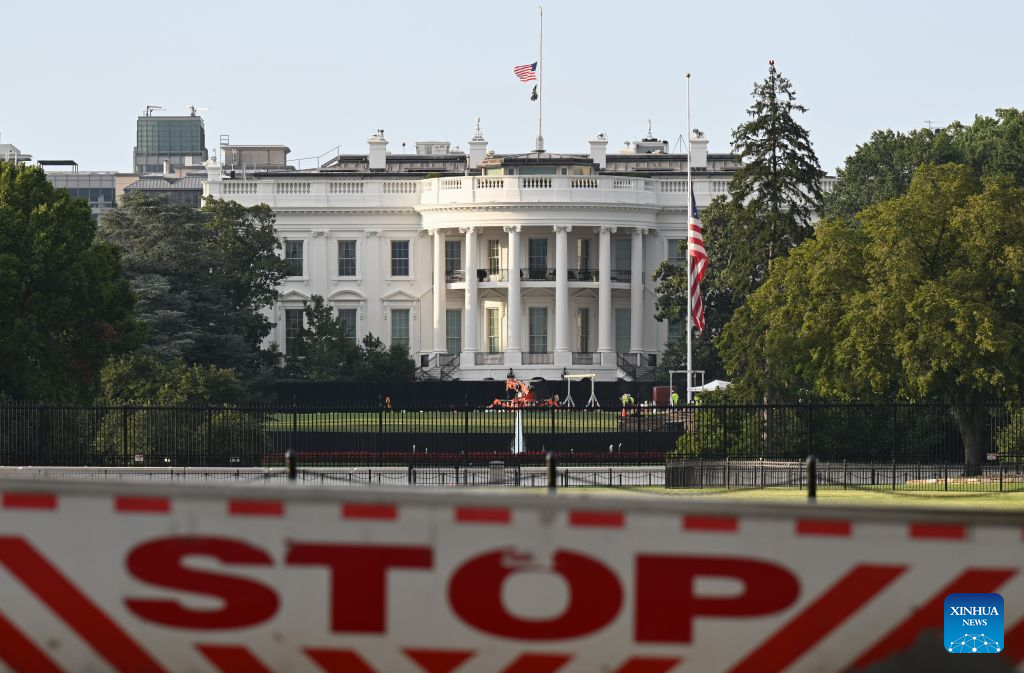
This photo taken on Aug. 28, 2026 shows the White House behind a barrier in Washington, D.C., the United States. (Xinhua/Li Rui)
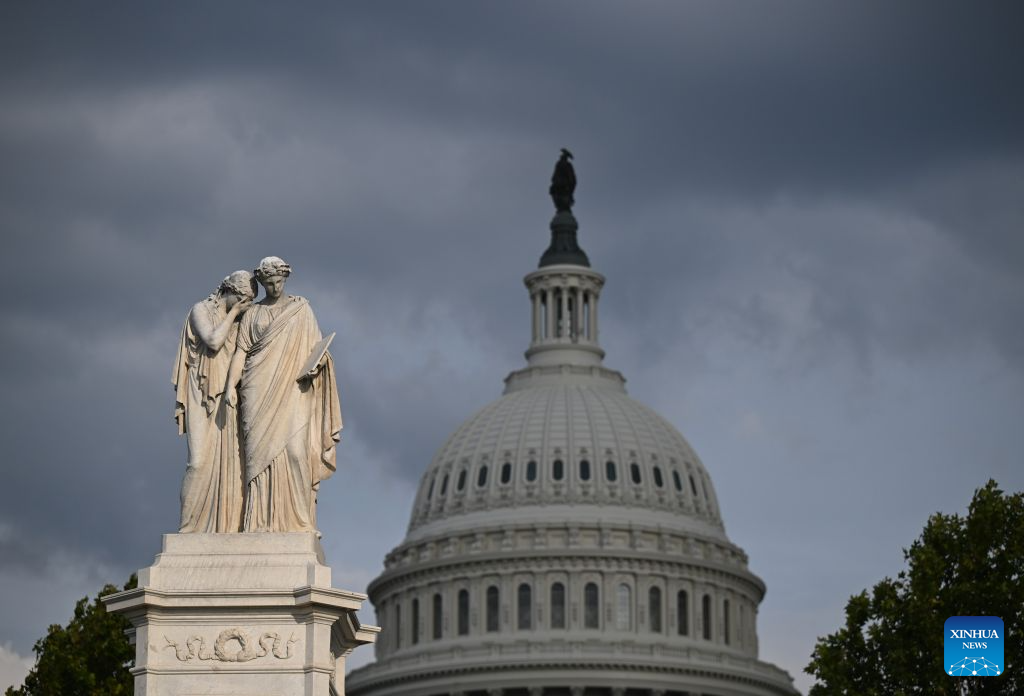
This photo taken on Aug. 28, 2026 shows the Peace Monument with the U.S. Capitol building in the background in Washington, D.C., the United States. (Xinhua/Li Rui)
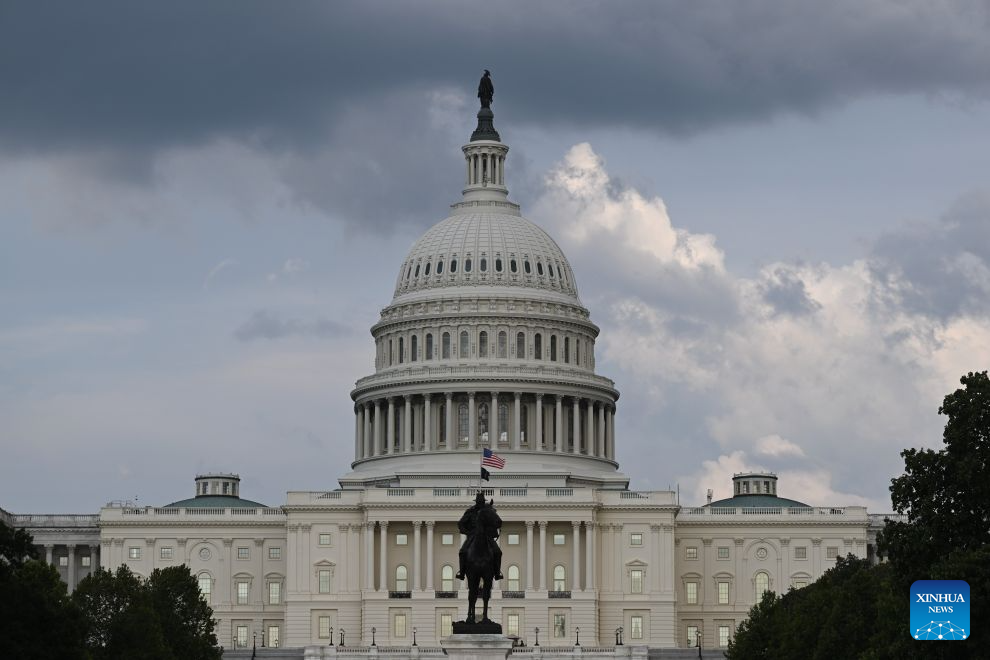
This photo taken on Aug. 28, 2026 shows the U.S. Capitol building in Washington, D.C., the United States. (Xinhua/Li Rui)
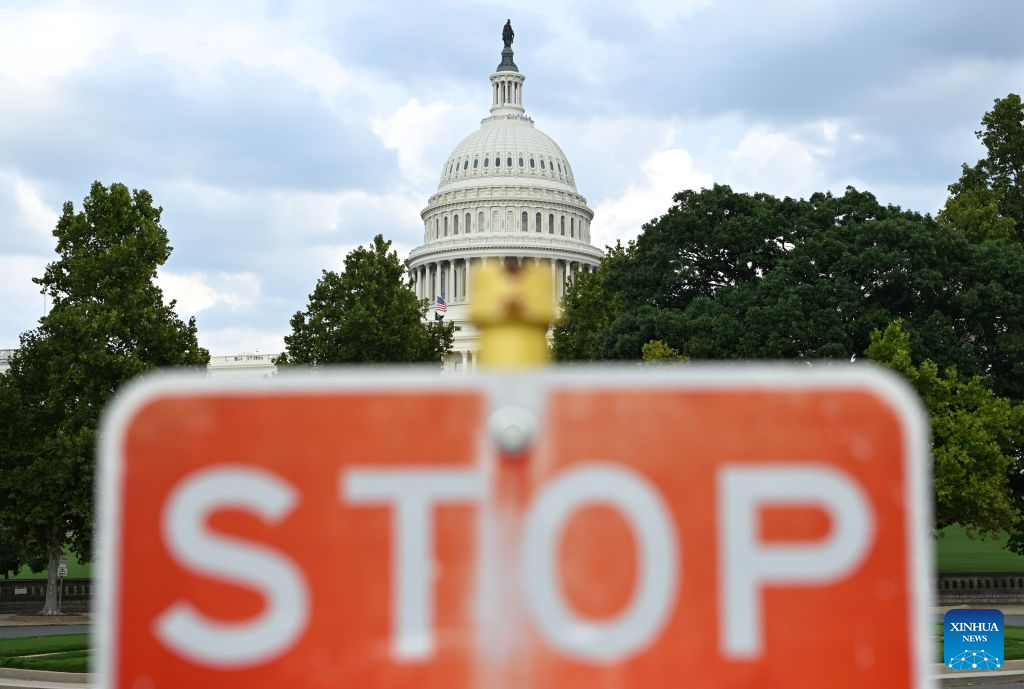
This photo taken on Aug. 28, 2026 shows a stop sign with the U.S. Capitol building in the background in Washington, D.C., the United States. (Xinhua/Li Rui)
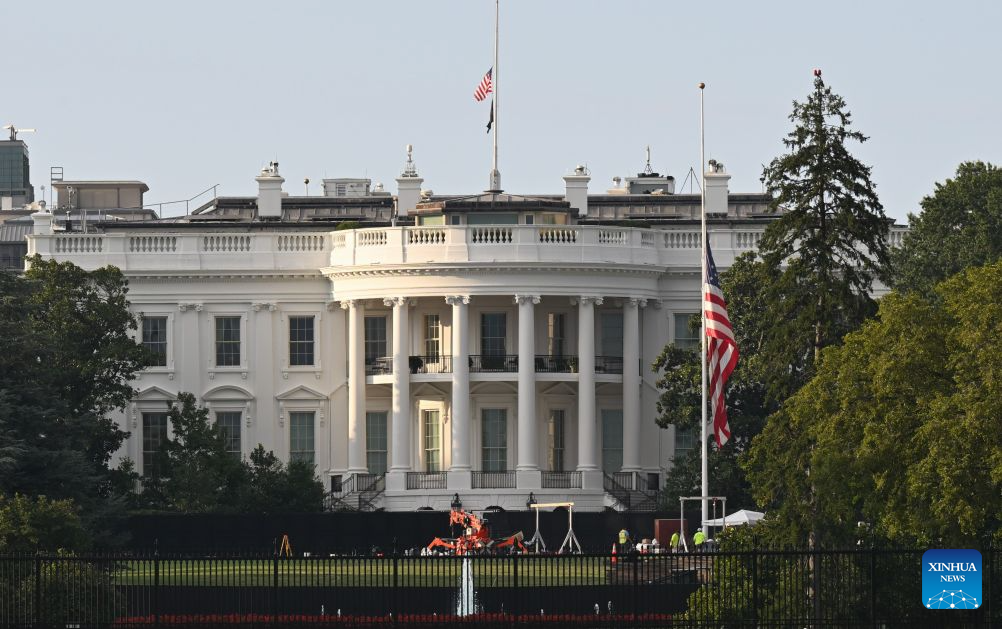
This photo taken on Aug. 28, 2026 shows the White House in Washington, D.C., the United States. (Xinhua/Li Rui)


