* As Chinese-developed games gain wider attention from players worldwide, their distinctive Chinese cultural elements and perspectives are becoming key factors that set them apart from other games.
* Chinese game companies are expanding their presence across the global gaming ecosystem. Beyond bringing more titles to international audiences, they are increasingly working with global teams and incorporating international perspectives into game development, technology and market operations.
COLOGNE, Germany, Aug. 27 (Xinhua) -- Gamescom, the world's largest trade fair for computer and video games, opened on Wednesday, drawing a record number of Chinese game companies.
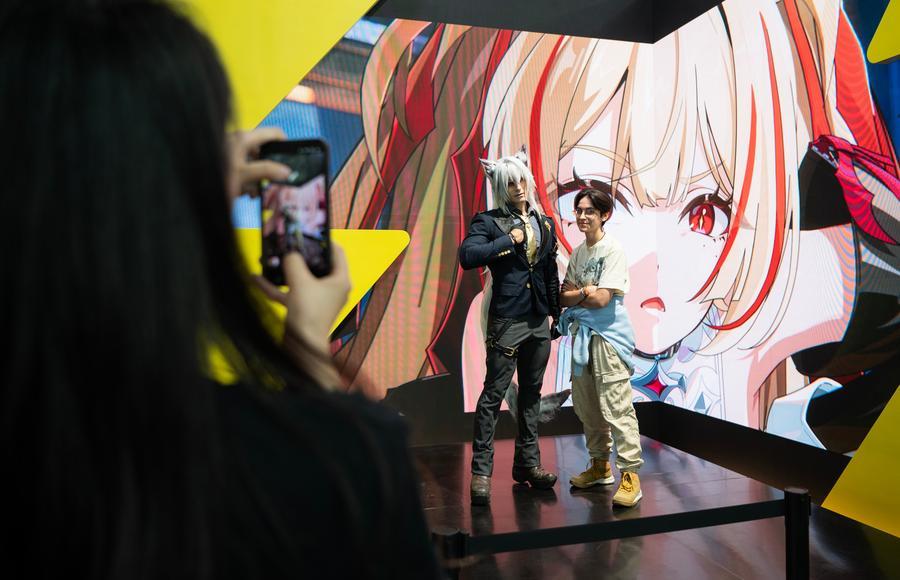
A total of 60 Chinese companies are showcasing games and innovations at Gamescom 2026. Beyond exhibiting new creations, they are highlighting a transition from simply "going global" to genuinely "creating globally," demonstrating a deeper and more sophisticated integration into the international market.
WINDOW FOR CHINESE GAMES
Chinese exhibitors are presenting an expanding lineup of new products at Gamescom.
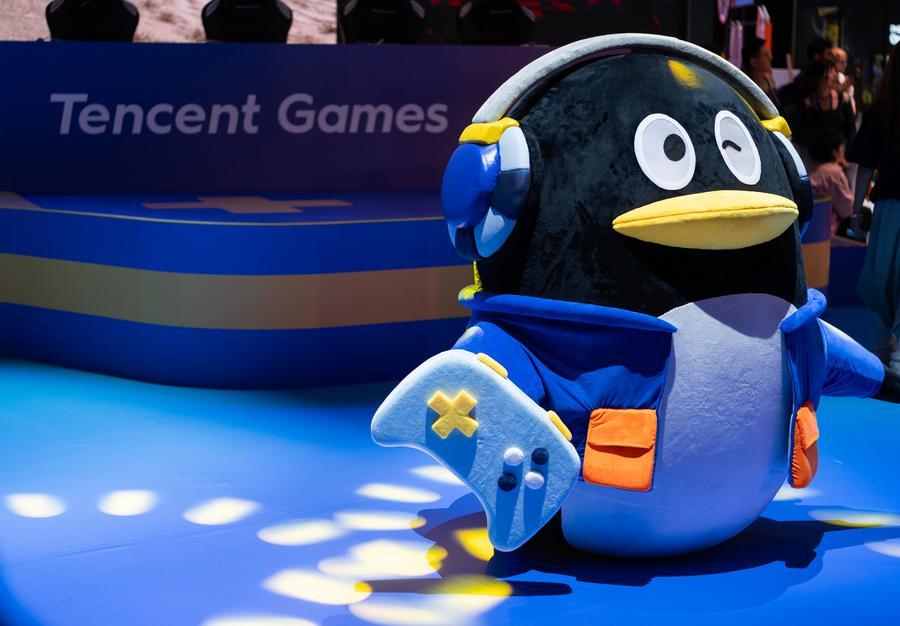
Partnering with leading game studios from around the world, Tencent Games hosted an immersive game art exhibition titled "Worlds of Play," showcasing over 40 game titles, including the Chinese hit Black Myth: Wukong, as well as artworks, videos, models and interactive installations.
Chinese developer NetEase Games presented its largest-ever lineup to Gamescom. Among its five self-developed titles were ANANTA, an urban open-world role-playing game, and Sea of Remnants, an ocean fantasy role-playing game, both making their global debut at the event.
NetEase Games said it hopes to gather more direct feedback from overseas players, media and industry partners via Gamescom, which will help guide future development and content optimization.
"Internationalization is not a single distribution step after a product is finished, but should run throughout the entire process -- from R&D and product design to localization and long-term operations," said Riten Huang, general manager of marketing at NetEase Games.
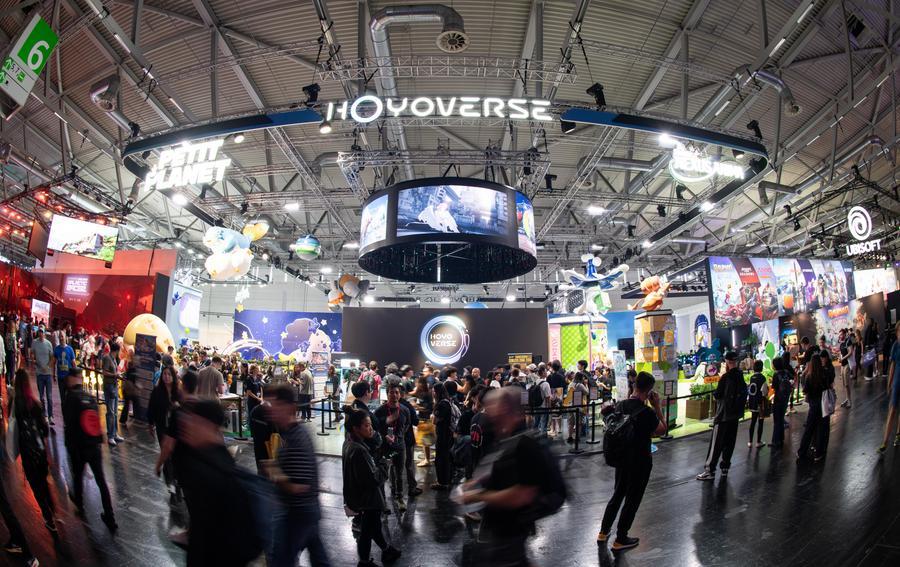
During Gamescom Opening Night Live, HoYoverse unveiled Nodusfall, a cooperative action game set in a fantasy world inspired by mythologies from different cultures, including Chinese mythology documented in the ancient Classic of Mountains and Seas.
Game publisher 4Divinity showcased four games in the player zone, three of which were made by Chinese studios, including The Defiant, Showa American Story and Genigods: Nezha.
These games cover a wide range of genres, highlighting the diverse capabilities of Chinese game developers, said Tan Chor Yong, chief operating officer of 4Divinity.
"Players now realize that Chinese games can bring highly valuable experiences to global audiences, and the next wave is heading our way," Tan said, adding that this wave of new experiences is expected to grow stronger and arrive faster in the years ahead.
SHIFT TOWARD HOMEGROWN GLOBAL HITS
As Chinese-developed games gain wider attention from players worldwide, their distinctive Chinese cultural elements and perspectives are becoming key factors that set them apart from other games.
Igor Osadchev, a senior Unity developer at Volk Team, told Xinhua that Chinese culture is a major draw. "When I see a Chinese building or something like that, I am already interested in the game by default," he said.
Chris Hewish, president of Xsolla, a global video game commerce company, has also noticed a broader transformation in the industry. Chinese studios are increasingly creating standalone hits and original intellectual property (IP) for global audiences, he said.
Hewish added that many of the successful new games released over the past year have come from China rather than Western developers, marking a significant shift from the industry's historical pattern.
Wanzi, head of the Hypergryph global marketing center, told Xinhua that another significant shift is underway as the global market moves from simply "seeing" Chinese games to genuinely "understanding" them.
She said international audiences are increasingly looking beyond individual titles to their gameplay, storytelling, art design and technical performance, while also showing greater interest in the cultural influences and creative ideas behind them.
Steve Heng, a game industry professional, believes China's mythology and ancient stories offer rich material for games with international appeal. "If you have the courage to create cool games and tell cool stories, that will resonate internationally as well," he said.
More Chinese companies are transitioning from behind-the-scenes contributions to global game production to creating original IP and reaching global audiences directly, Tan said. "Further success along this path will only inspire more talent to follow suit, and this will indeed shape the global gaming market in the years to come."
DEEPER GLOBAL INTEGRATION
Chinese game companies are expanding their presence across the global gaming ecosystem. Beyond bringing more titles to international audiences, they are increasingly working with global teams and incorporating international perspectives into game development, technology and market operations.
Grace Pan, senior project manager at Cologne Exhibition Center, noted that Chinese game companies have accelerated their global expansion after several years of adapting to international markets.
She said Chinese game companies are increasingly involving international teams and incorporating perspectives at earlier stages of development, helping their games better connect with global players from the start and facilitating faster overseas expansion.
"The companies are not just making great games and bringing them to global markets, but they're starting to adopt a very global development approach," Hewish said.
Hewish pointed to Chinese companies setting up local offices in cities such as Toronto and Los Angeles, allowing them to stay closer to players in different markets.
Technology is becoming another area where Chinese developers are contributing to the wider gaming industry.
Hewish said Chinese studios have embraced artificial intelligence not only for game development but also for creating tools that can be shared across the sector. He cited Tencent's open-source AI development tools as an example.
Meanwhile, the boundaries between regional gaming markets are becoming increasingly blurred. Sebastian Szczepanski, a game industry professional, said the Chinese and Western markets, once relatively separate, are now moving closer together, with publishers increasingly operating across both.
Eric de Brocart, director and founder of GamerGen.com, said he hopes to establish direct ties with Chinese developers at Gamescom so that he can introduce more Chinese titles to French audiences through his website and videos.
For him, perceptions are already changing. Chinese games are no longer viewed as "obscure, complicated, or too Asian to be embraced." Instead, he sees a growing number of titles that remain relatively unknown overseas but deserve wider recognition.■