
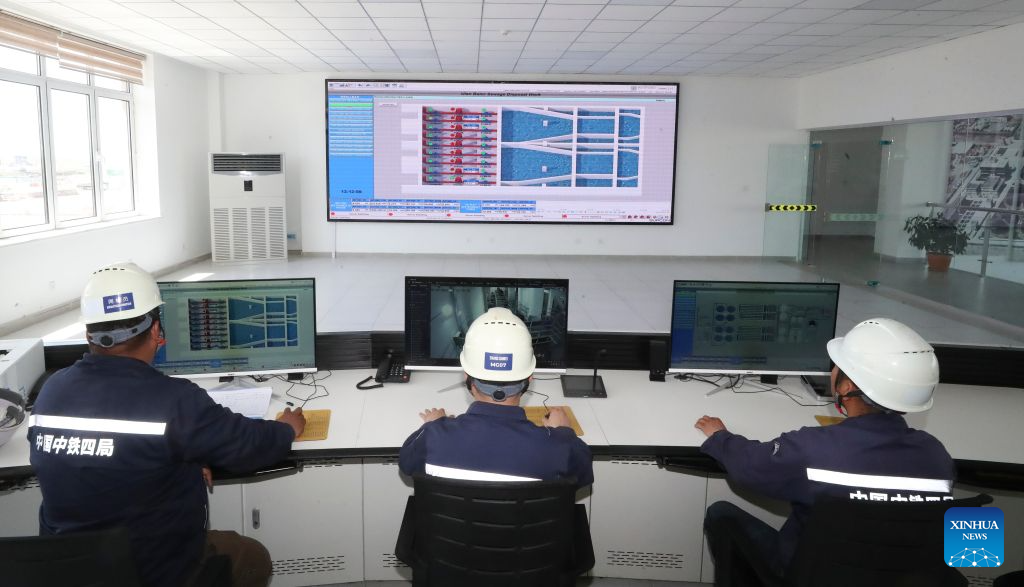
Staff members monitor the operating status of wastewater treatment equipment at the Ulan Bator central sewage treatment plant in Ulan Bator, Mongolia, July 1, 2026. (Xinhua/Yao Qilin)
ULAN BATOR, Aug. 26 (Xinhua) -- Ulan Bator's Tuul River, long choked by untreated sewage and plagued by acrid odors, has seen a remarkable environmental turnaround thanks to a landmark Chinese-Mongolian wastewater treatment facility, with local staff like Urnaa devoting years to preparing for its full handover to local operators.
Urnaa works as the chief translator at the Ulan Bator central sewage treatment plant, the nation's largest and most advanced sewage plant that began construction in early 2019 and was inaugurated on June 15 this year.
Every working day, she shuttles across the sprawling facility's workshops, providing real-time interpretation for Mongolian technical teams and compiling operation and maintenance manuals to smooth the handover process to the local team. Over the past year, she has watched how the plant, built entirely to Chinese standards and using Chinese technology by China Railway No. 4 Engineering Group Co., Ltd., has evolved from early construction to full operation.
Standing on the rooftop on the fourth floor of the plant's comprehensive service building, eight massive secondary sedimentation tanks stretch outward like polished mirrors, their clear treated water reflecting Mongolia's boundless blue skies and white clouds.
Covering a total area of 178,000 square meters with 55 standalone buildings, the plant boasts a daily treatment capacity of 250,000 cubic meters. It can process nearly all residential and industrial wastewater produced in Ulan Bator, serving roughly half of Mongolia's entire population.
Two side-by-side display boards in the facility's lobby lay bare the capital's decades-long sewage crisis, drawing a stark contrast between this modern, recycling-focused new plant and its outdated predecessor.
Constructed back in the 1960s and expanded three times over the years, the aging plant only handled 160,000 to 170,000 cubic meters of wastewater each day. As the capital's population exploded, sewage output surged, triggering equipment malfunctions.
For years, vast volumes of inadequately treated wastewater were discharged directly into the Tuul, Ulan Bator's mother river -- a foul reality Urnaa remembers all too clearly from her early career. Ten years ago, while working on a Mongolian disabled children's rehabilitation project run by the same Chinese contractor, the stench from the polluted river lingered constantly around the work compound. Today, stable operation of the new treatment plant has delivered visible improvements to surrounding air quality and the river's water clarity.
Lyu Haiyun, project manager from China Railway No. 4 Engineering Group Co., Ltd, noted that the plant's value stretches far beyond simply producing clean discharged water, as it delivers a complete low-carbon circular development concept tailored for Mongolia. Its integrated design unifies wastewater treatment, clean energy production and resource recycling.
Design teams took full account of Mongolia's sludge, which contains high organic matter, installing four large medium-temperature anaerobic reactors on-site to ferment sludge into biogas for power and heating. Once fully operational, the biogas system will meet 25 to 30 percent of the plant's electricity and heating demands, slashing long-term operating expenses.
Beyond filling Mongolia's critical domestic sewage treatment technology gap, the project prioritizes cultivating independent local operational capacity through systematic training. Starting in 2023, around 70 Mongolian operation and maintenance technicians have traveled to China for specialized training courses. In July, Urnaa accompanied local regulatory officials to Beijing to attend training sessions on biogas power generation.
"Many Mongolian engineers have learned so much through this project," Urnaa said. "For me personally, all the training and on-site practice have given me full confidence to work for similar infrastructure projects in the future." ■
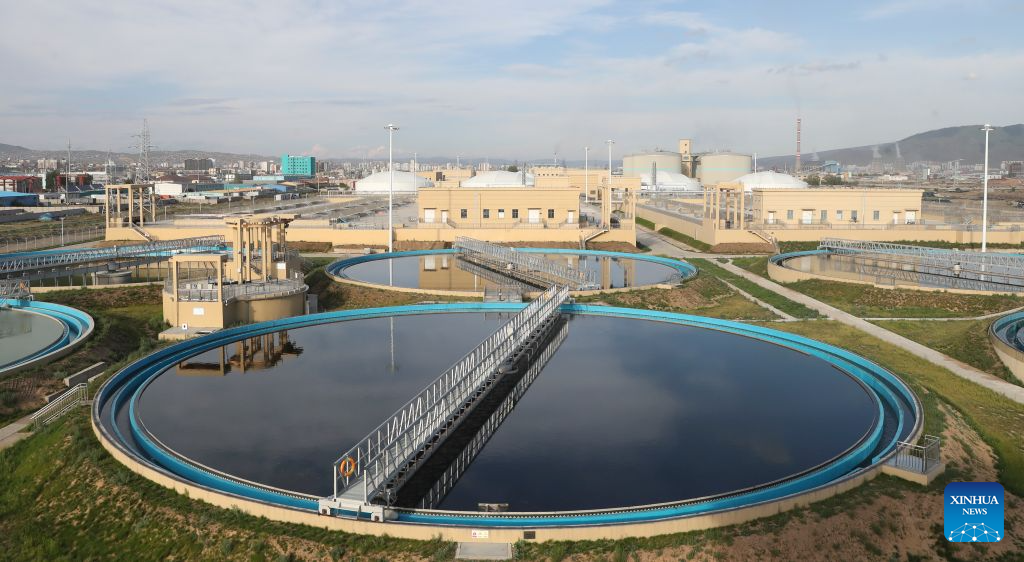
This photo taken on July 1, 2026 shows secondary sedimentation tanks at the Ulan Bator central sewage treatment plant in Ulan Bator, Mongolia.(Xinhua/Yao Qilin)
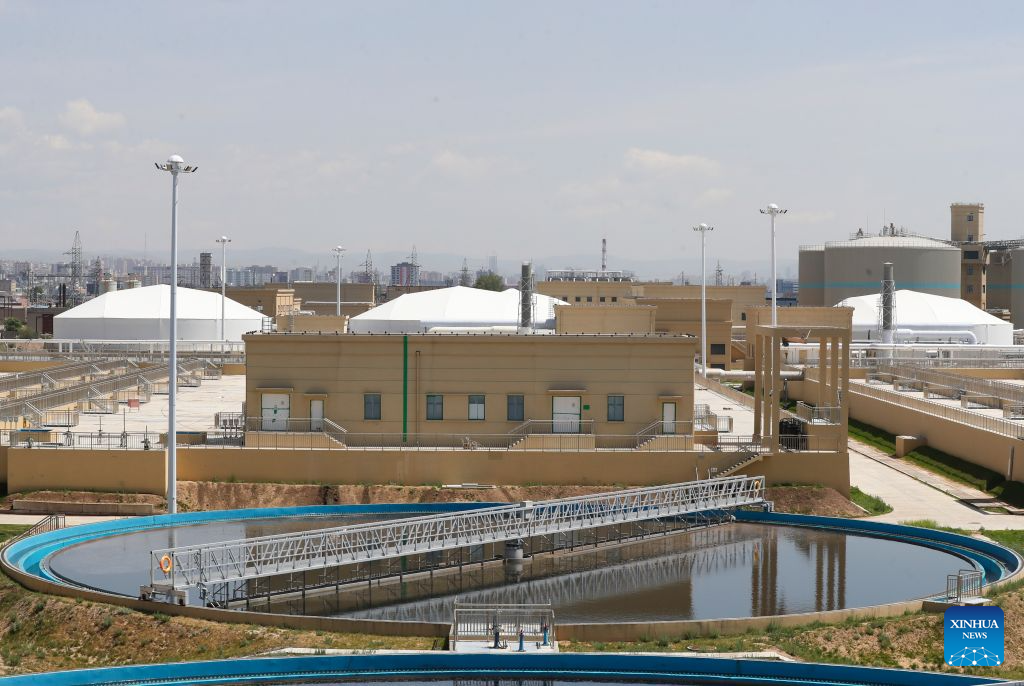
This photo taken on July 1, 2026 shows a secondary sedimentation tank at the Ulan Bator central sewage treatment plant in Ulan Bator, Mongolia.(Xinhua/Yao Qilin)
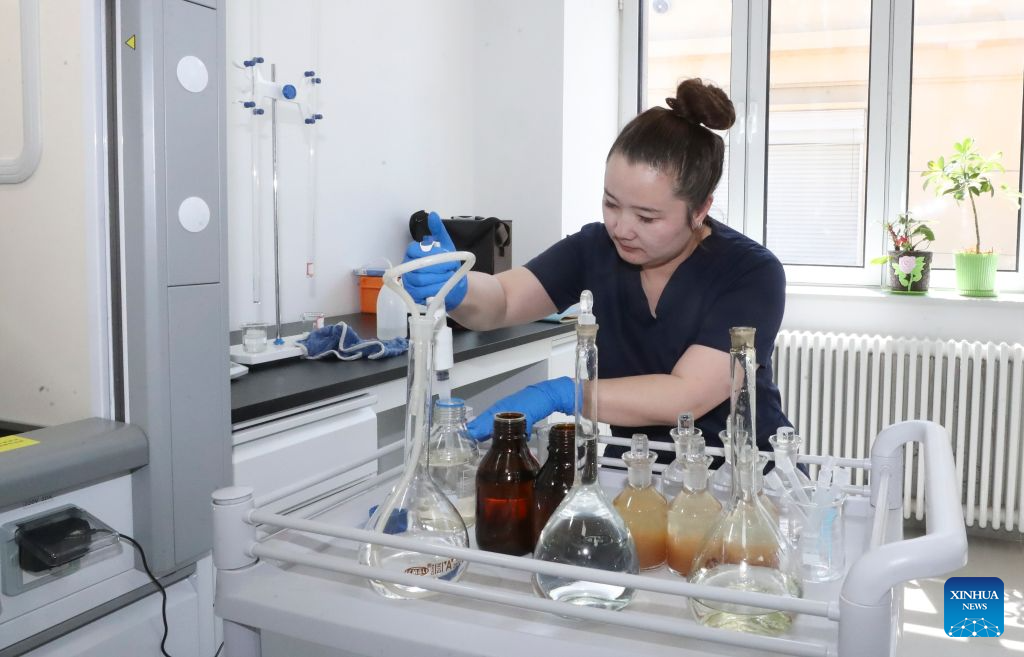
A Mongolian staff member tests wastewater samples at a laboratory of the Ulan Bator central sewage treatment plant in Ulan Bator, Mongolia, July 1, 2026.(Xinhua/Yao Qilin)
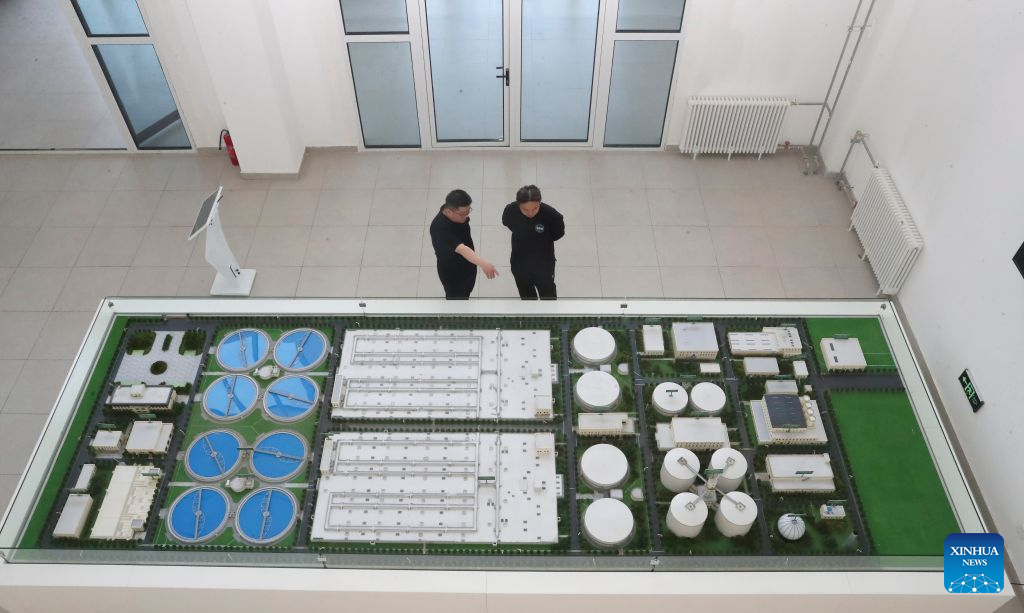
Staff members of China Railway No. 4 Engineering Group Co., Ltd. communicate with each other in front of a sand table model of the Ulan Bator central sewage treatment plant in Ulan Bator, Mongolia, July 1, 2026.(Xinhua/Yao Qilin)
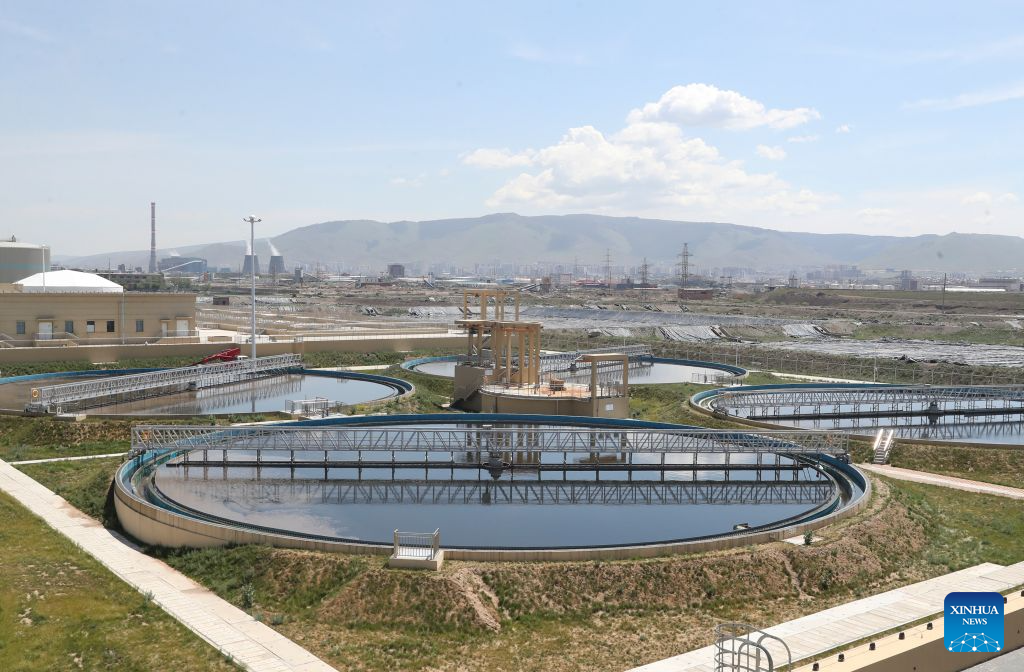
This photo taken on July 1, 2026 shows secondary sedimentation tanks at the Ulan Bator central sewage treatment plant in Ulan Bator, Mongolia.(Xinhua/Yao Qilin)
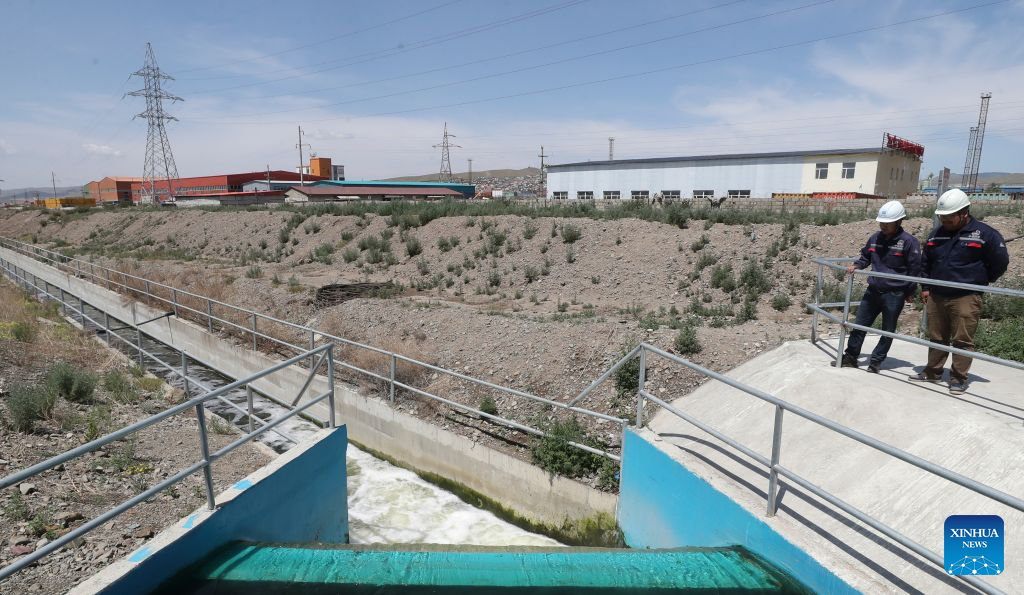
Staff members check treated wastewater from the Ulan Bator central sewage treatment plant in Ulan Bator, Mongolia, July 1, 2026.(Xinhua/Yao Qilin)


