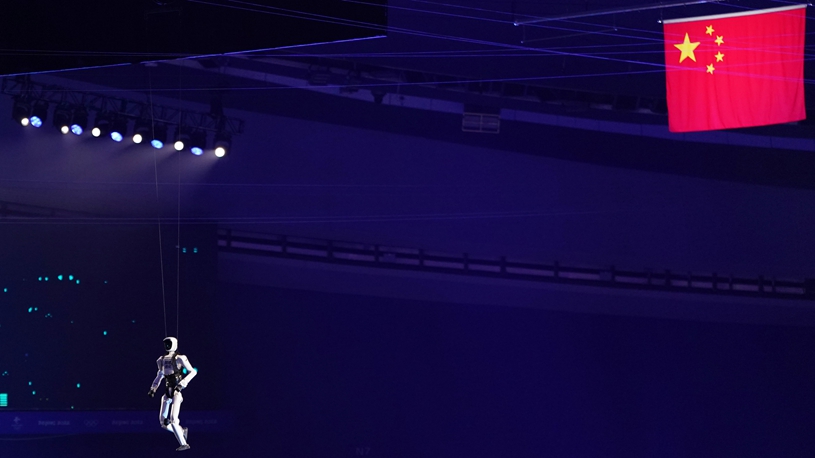
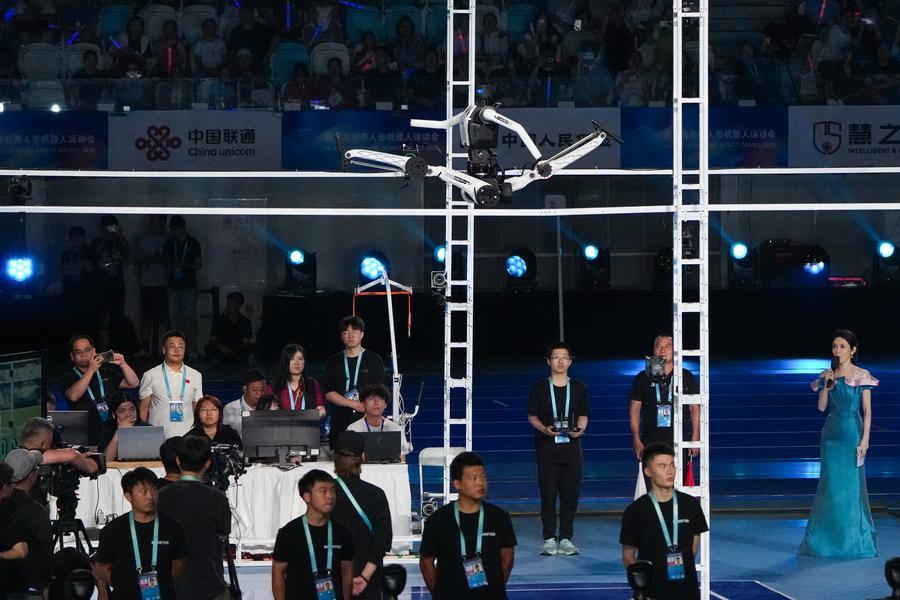
BEIJING, Aug. 23 (Xinhua) -- Inside Beijing's iconic oval "Ice Ribbon" arena on Saturday night, a wire-suspended humanoid robot glided through the air, echoing the dramatic torch-lighting moment that captivated the world at the 2008 Beijing Olympics.
The stunt opened the second World Humanoid Robot Games, capping a week that included the World Robot Conference and Unitree Robotics' blockbuster IPO -- events that collectively underscore the breakneck pace of China's robotics industry.
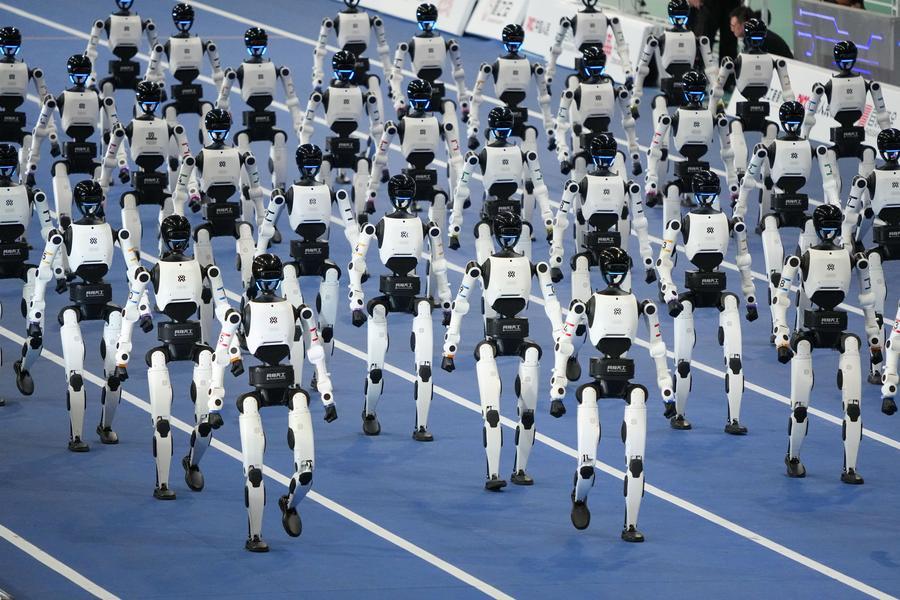
Watching a phalanx of 80 Booster T2 robots marching across the track in parade-perfect formation, I joined the stands full of spectators raising their phones to capture the sight, in awe at how fast the robot revolution in the country is progressing.
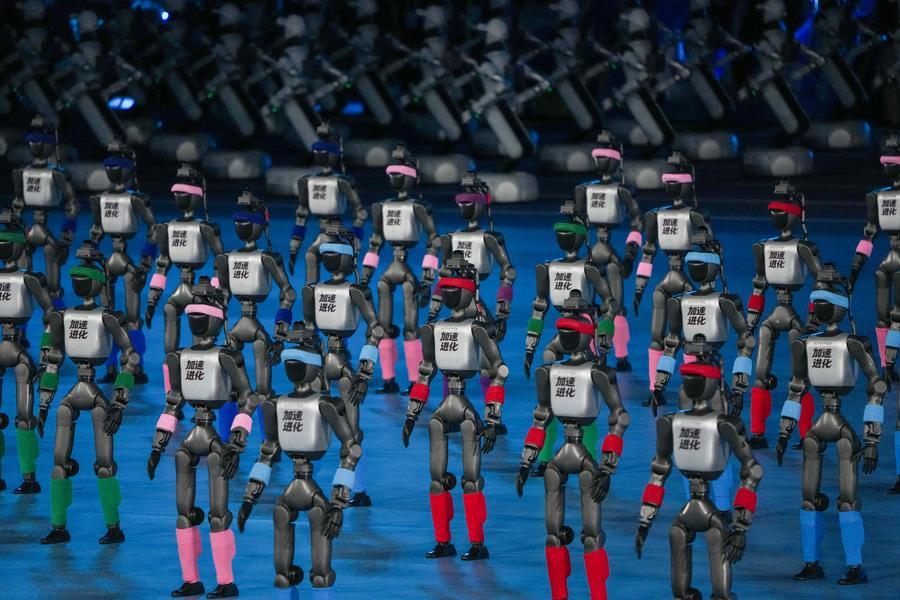
In the opening show, a troupe of 36 humanoid robots captivated the audience with their five-fingered dexterous hands, coaxing music from electronic wind instruments, as well as the piano, drums, marimba and guitar.
This wonderment was soon amplified by new world records. The Beijing-based humanoid robot Tien Kung Ultra clocked 9.39 seconds at the finish line -- not only eclipsing its rival robot Honor after it claimed record-breaking victory in the robot half-marathon this past April, but also shattering the 9.58-second men's 100-meter world record held by Usain Bolt.
Speed in a machine is nothing new -- automobiles and bullet trains leave human athletes in the dust. What is genuinely challenging, however, is making a machine move with human-like locomotion.
That requires not only improved structural configurations and stronger joint actuators, but also sophisticated advances in embodied AI algorithms -- a tech frontier that is now a hot pursuit within China's tech startup ecosystem.
At the 2026 World Robot Conference, which concluded on Sunday, a host of Chinese-made AI-powered robots demonstrated complex tasks, ranging from factory-floor operations to household chores.
China's latest five-year development roadmap has placed embodied intelligence among its priority future industries, positioning them to become new growth momentum for the economy.
In this sense, the athletic performances of robots, while eye-catching, might be more of a spectacle and an entertaining harbinger of the tech revolution to come.
In a separate exhibition match, Tien Kung Ultra soared to 2.8843 meters, shattering the men's high jump record set by human athletes. The night's highlights also included human-robot ping-pong duels and robot fighting competitions.
Guo Yijie, technical lead of Tien Kung Ultra, said that sporting feats don't mean the technology is ready. "The real challenge lies in turning peak performance into consistent reliability, while high-speed, long-distance running will expose structural fatigue, joint cooling, and drivetrain durability issues that must be addressed for long-term deployment," he said.
Also, Galbot's humanoid tennis player delivered another stunning performance, competing against a professional player with autonomous chase-and-return capabilities: forehands, backhands, serves and net play. It moved with human-like fluency while relying on its onboard "brain" to make split-second strategic decisions.
Over the days ahead, the games will feature 666 teams and 2,056 robots from across the world, vying for glory in 51 events and 1,301 matches -- with new additions that include weightlifting, tug-of-war and table tennis.
The games' participation has increased notably since the inaugural event last year, with the number of teams up by 138 percent and the robot count more than quadrupling.
The competition program has also been expanded to include events that reflect real-world environments, with tasks ranging from packing and warehousing to assembly and retail service. The goal is to ensure that robot capabilities are not just showcased but rigorously tested in practical applications.
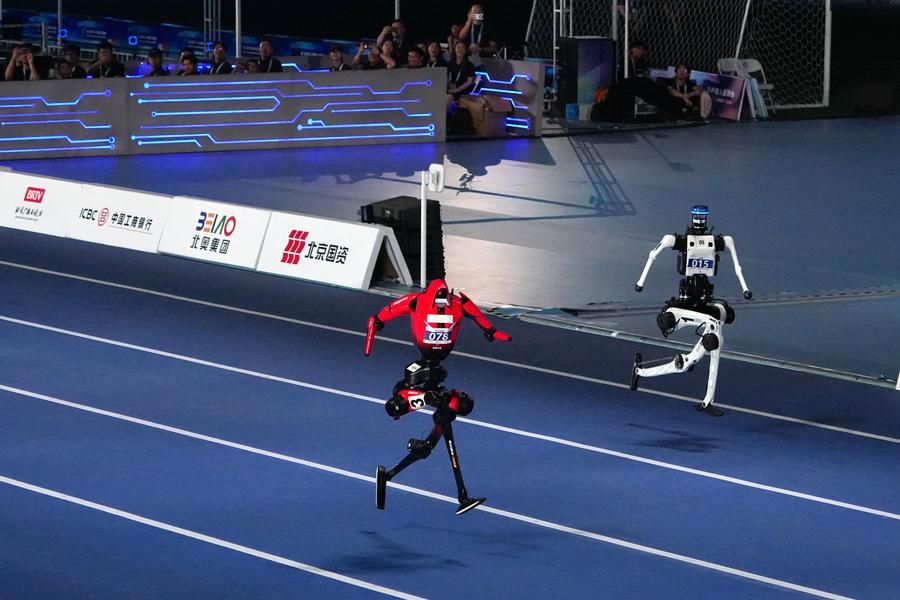
Amid skepticism from some who dismiss Chinese robots as remote-controlled toys, this year's games have raised the bar significantly. Except for the 100-meter and 400-meter obstacle races, all track events and other competitive disciplines required robots to perform on their own, without human intervention.
China's tech evolution is accelerating alongside its growing humanoid robot industry. A report by California-based research firm Smart Analytics Global indicates that global humanoid robot shipments totaled approximately 19,100 units in the first half of 2026, with Chinese-made units accounting for over 97 percent of the total. ■