* Wuhan is tapping water from the Yangtze River to cool buildings while reducing energy use and carbon emissions.
* Chinese cities are exploring lower-carbon cooling solutions based on local conditions and resources.
* Extreme heat is posing a growing challenge worldwide, highlighting the need for more sustainable cooling.
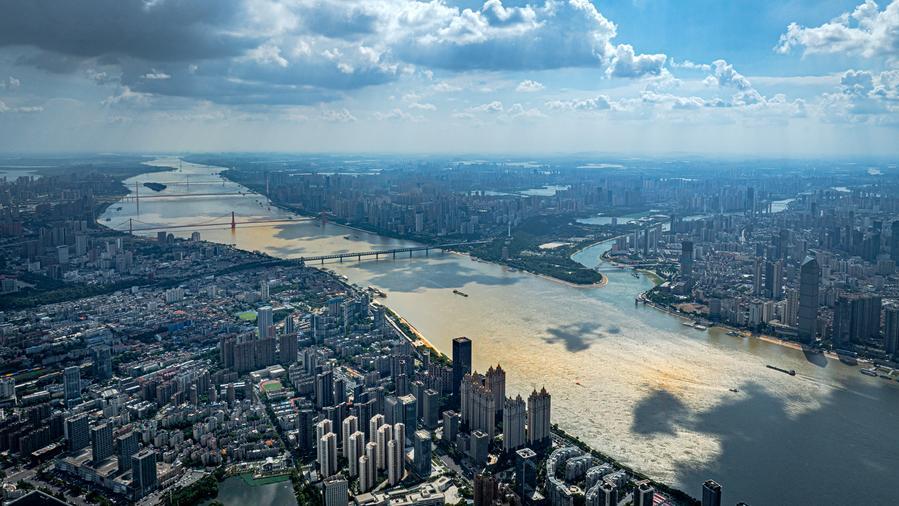
WUHAN, Aug. 21 (Xinhua) -- As the summer sun blazes over Wuhan, a city in central China known for its intense heat, gym operator Wu Jing has found an unlikely source of cooling: the Yangtze River.
Wu used to spend about 15,000 yuan (about 2,212 U.S. dollars) a month on electricity to cool his 1,200-square-meter fitness club. The bill fell to about 10,000 yuan last month after the gym switched from conventional air conditioning to a centralized river-water cooling system.
Wu said the new system also keeps temperatures more consistent throughout the gym, so club members don't have to deal with sudden changes when moving to the stretching area after working up a sweat.
The gym is among several buildings cooled by a river-water energy station that began trial operations this summer. As a government-backed low-carbon demonstration project, the station currently supplies cooling to about 260,000 square meters of building space, including a primary school and a commercial complex, and is eventually expected to cover more than 2.1 million square meters.
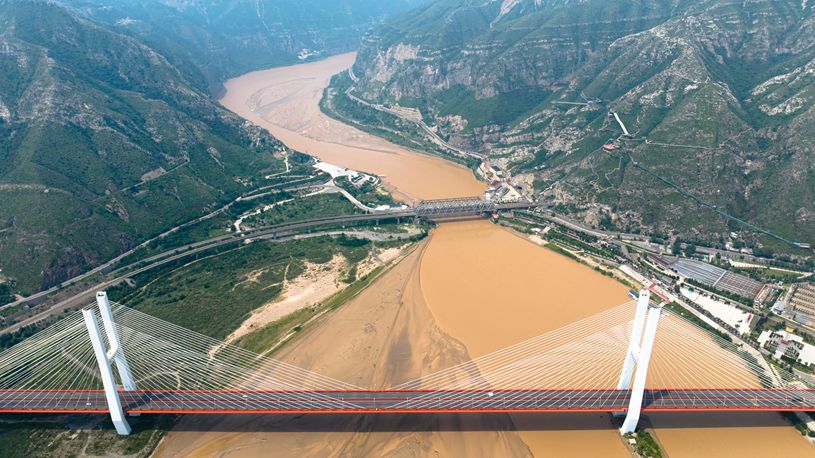
Water is drawn from about five meters above the bed of the Yangtze, China's longest river. At that depth, the water temperature ranges from 23 to 29 degrees Celsius, well below summer air temperatures, which can exceed 35 degrees Celsius, said Xiao Haixi, executive deputy general manager of the project company.
After filtration, heat pumps use the temperature difference to cool buildings in summer and heat them in winter before returning the water to the Yangtze.
According to Xiao, the system uses the river water only for heat exchange and does not consume it, and river water, water circulating inside the energy station and water used in buildings are kept in three separate systems.
The water volume drawn from and returned to the Yangtze amounts to less than 0.01 percent of the river's flow, thus the water's temperature fluctuates only slightly after heat exchange, said Xiao. "The ecological impact is therefore limited and meets relevant standards."
Once fully operational, the project is expected to save 7,374 tonnes of standard coal and cut carbon dioxide emissions by 18,000 tonnes annually -- equivalent to planting 1.05 million trees, Xiao added.
The main structure of a 30,000-cubic-meter energy storage pool has also been completed. It will use cheaper off-peak electricity at night to store cooling or heating energy for use during the day, further lowering operating costs.
GREENER ALTERNATIVES TO AIR CONDITIONERS
Unlike central heating using hot water, which is widely used across northern China, centralized cooling using chilled water remains a niche solution in the country -- largely limited to office buildings and commercial complexes.
Fu Lin, a professor at Tsinghua University's School of Architecture, wrote in China Science Daily that central cooling has been explored in China for over two decades, yet its adoption has been hampered by challenges including difficult access to cooling sources and high distribution costs.
Nevertheless, Fu sees potential in combining central cooling with seasonal cold storage, including using surplus electricity in winter and spring to make ice and storing the resulting cooling energy for summer use. The existing networks of heating pipelines can also be utilized to distribute cooling.
Such new cooling systems have been launched in several Chinese cities. In Xuzhou, east China's Jiangsu Province, the country's first residential central cooling project using water from an abandoned coal mine began operations in July. It cuts energy consumption by about half compared with conventional air conditioning, according to the project operator.
In Jinan, capital of east China's Shandong Province, an energy station 21 meters underground provides centralized cooling to about 1 million square meters of building space. Chilled water is delivered through an underground pipe network that is also used for heating in winter.
The station's centrifugal water chillers used for producing chilled water boast significantly higher efficiency than conventional split air conditioners, while also substantially reducing the use of refrigerants that contribute to global warming.
These low-carbon cooling projects align well with China's commitment to achieving its dual carbon goals -- peaking carbon dioxide emissions before 2030, and achieving carbon neutrality before 2060. According to a national climate change plan for the 15th Five-Year Plan period (2026-2030), China aims to reduce carbon dioxide emissions per unit of GDP by 17 percent by 2030 from 2025 levels.
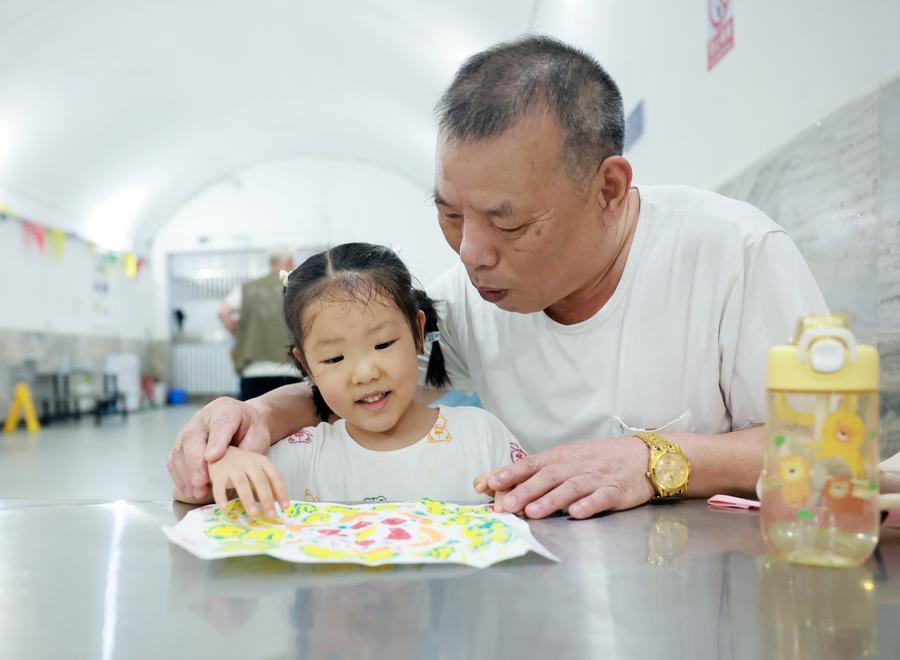
But not all green solutions to summer heat require complex cooling systems. In Wuhan and Chongqing, civil-defense facilities such as air-raid shelters have been opened as public cooling spaces in summer. In Wuhan alone, five such shelters can provide cooling to more than 9,000 people a day.
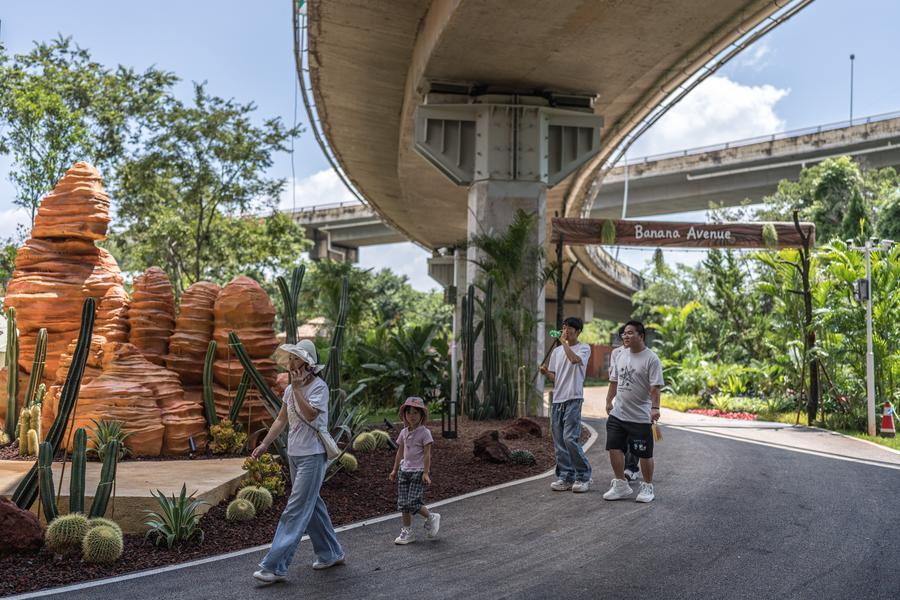
Above ground, many Chinese cities have built a constellation of pocket parks, many of which are small and previously underused urban spaces. Statistics suggest that more than 18,000 such parks were built across China between 2021 and 2025 to help cities cushion against the heat island effect.
Extreme heat poses a growing challenge worldwide. The World Meteorological Organization said this July was the world's second warmest July on record, with extreme heat, persistent drought and wildfires affecting large parts of the Northern Hemisphere.
UN Secretary-General Antonio Guterres has called extreme heat a "society-wide threat" and urged countries to expand access to sustainable cooling.
Chen Yanhua, a senior engineer with CITIC General Institute of Architectural Design and Research Co., Ltd., said the growing use of river water, mine water, green spaces and other locally available resources reflects a broader shift in how Chinese cities respond to extreme heat.
It marks a shift away from heavy reliance on energy-intensive air conditioning toward greater use of natural cooling sources and green infrastructure, which is more environmentally friendly and sustainable, said Chen.
"These measures bring tangible benefits to residents," he added. ■
(Reporting by Cheng Lu, Yue Wenwan, Yao Yuan, Gong Liankang and Bai Xu; Video reporters: Xiong Xianghe; Video editors: Zhang Yueyuan, Roger Lott, Zheng Qingbin and Zhang Ning.)