by Hummam Sheikh Ali
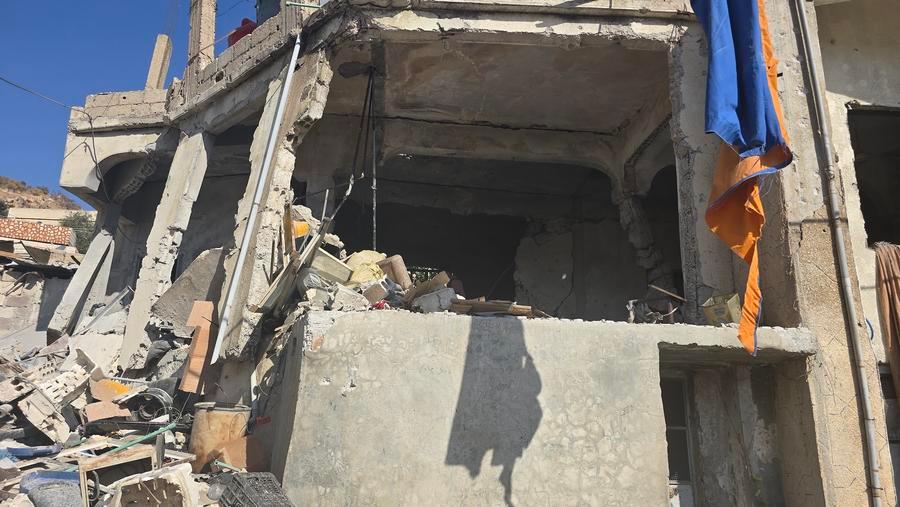
DAMASCUS, Aug. 19 (Xinhua) -- Israeli warplanes carried out eight airstrikes early Tuesday on the runway of the Abu al-Duhur military airport in Idlib province in northwestern Syria, drawing condemnation from Damascus and Ankara and an unusually critical response from Washington.
Analysts say the strikes go beyond the fate of a single airfield, highlighting competing Israeli and Turkish security interests and raising questions over how Syria can navigate the conflicting security demands of Türkiye and Israel while preserving its strategic autonomy.
STRIKES DEEP INSIDE SYRIA
Abu al-Duhur lies in eastern Idlib, close to the border with Aleppo province and far from the southern Syrian areas where Israeli incursions and military activity have been concentrated in recent months. The facility suffered extensive damage during Syria's conflict and had remained largely out of operation for years.
The Britain-based Syrian Observatory for Human Rights said Turkish machinery and equipment had recently been involved in rehabilitating the long-disused air base and that a Turkish military delegation had visited the facility shortly before the strikes.
Tuesday's attack was therefore significant both because of its location deep inside northwestern Syria and because it came amid expanding military cooperation between Damascus and Ankara.
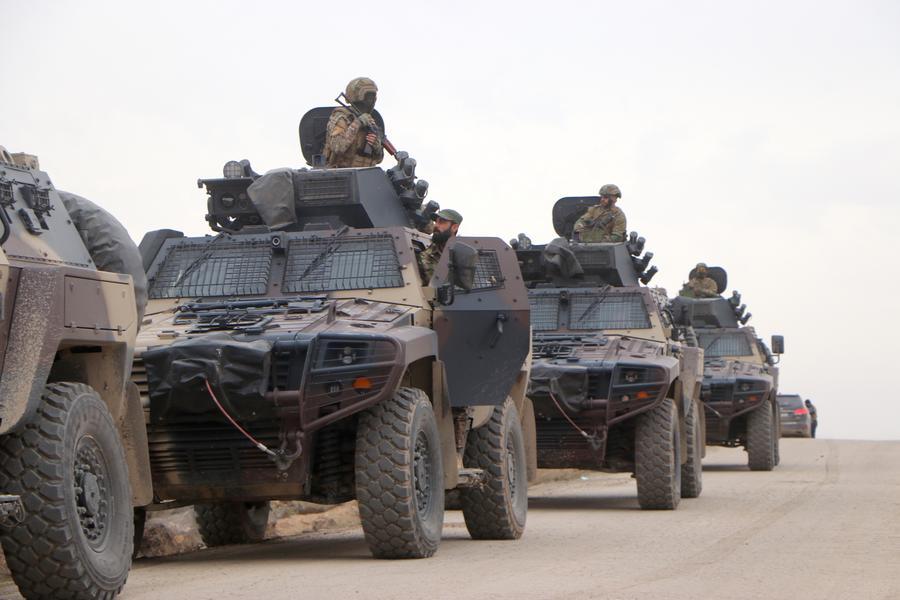
Türkiye has emerged as one of the principal supporters of Syria's interim authorities following the fall of Bashar al-Assad's government in December 2024 and has been assisting Damascus with military training and efforts to rebuild its armed forces.
Israel, meanwhile, has repeatedly struck military infrastructure across Syria since the former government collapsed, saying it will not tolerate any security threats emerging from Syria.
On Wednesday, the Israeli prime minister's office said Israel had repeatedly warned Syria that the anticipated Turkish deployment at Abu al-Duhur would pose a threat to its security, accusing Damascus of ignoring those warnings. Israel would welcome a return to what it described as the previous "status quo," the office said.
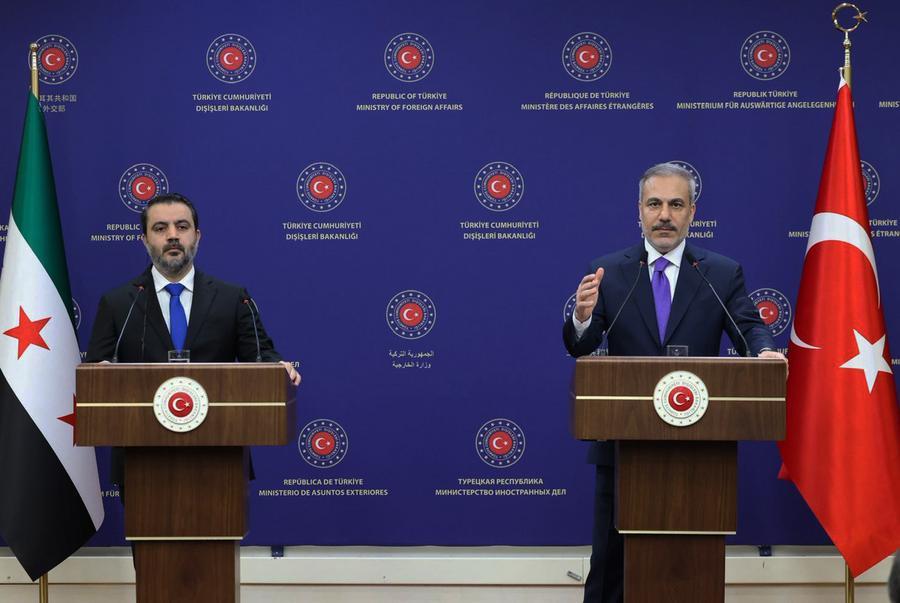
Syria has rejected the Israeli position. The country's foreign chief Asaad al-Shaibani on Tuesday condemned the attack as a violation of Syrian sovereignty and a direct threat to the country's security and independence.
Türkiye also strongly condemned the strikes, saying they undermined efforts to establish stability in the country.
BROADER STRUGGLE OVER SECURITY BALANCE
Analysts say the strike should be viewed within a broader struggle over the security architecture taking shape in Syria, rather than simply as an attack on an airfield.
"What is happening goes beyond the issue of Turkish forces deploying at a base near Aleppo," Syrian political analyst Maher Ihsan told Xinhua. "It reflects a broader struggle over the shape of the security balance in the new Syria."
According to Ihsan, Israel sees an advanced Turkish military presence in Syria, particularly one involving radar or air-defense systems, as potentially limiting its freedom of action in Syrian airspace. Damascus, meanwhile, regards its choice of military partners as a matter of sovereignty, while Ankara sees its role in Syria as serving its strategic interests.
That creates a fundamental question over who determines the security rules in Syria. "Legally and in terms of sovereignty, the decision belongs to Damascus, but the balance of power on the ground makes Israel and Türkiye major players," Ihsan said.
Mohammad Nader al-Omari, a Syrian writer and researcher in international relations, said the strike reflected Israel's efforts to prevent Syria from rebuilding substantial military capabilities and preserve its freedom of action, as well as emerging competition for influence between Türkiye and Israel.
Israeli concerns about Türkiye's expanding military footprint in Syria are not new. Last year, Turkish Foreign Minister Hakan Fidan confirmed that Türkiye maintained technical contacts with Israel in Syria to prevent military misunderstandings.
The Abu al-Duhur episode, however, suggests that those mechanisms may be insufficient as the two countries' interests increasingly overlap, al-Omari said.
MISCALCULATION MAY FUEL ESCALATION
Despite the sharpening rhetoric, analysts do not see a direct military confrontation between Israel and Türkiye as the most likely outcome.
The greater danger, Ihsan said, is miscalculation. An Israeli strike on a facility where Turkish personnel are present could trigger a Turkish response and an escalation neither side intended. He said a security understanding, potentially facilitated by Washington, could help clarify Turkish deployments and prevent unintended encounters between Turkish and Israeli forces.
That possibility gained weight after U.S. Special Envoy for Syria Tom Barrack said Tuesday that Washington was working on a deconfliction mechanism among all three parties. According to the U.S. envoy, Türkiye was not warned about the Israeli strikes and could have responded militarily, highlighting the risks posed by inadequate communication.
For Damascus, however, the dispute also raises a broader question of sovereignty. Syria has repeatedly demanded an end to Israeli attacks and called for Israeli forces to withdraw to positions held before December 2024, while Israel has sought security arrangements along its northern frontier. The Abu al-Duhur strike has now added the Turkish factor more explicitly to that equation.
For Ihsan, the fundamental question is who will ultimately define the limits of military power and foreign influence in Syria -- Damascus itself, Ankara, Israel, or a broader regional and international understanding capable of balancing their competing interests.■