
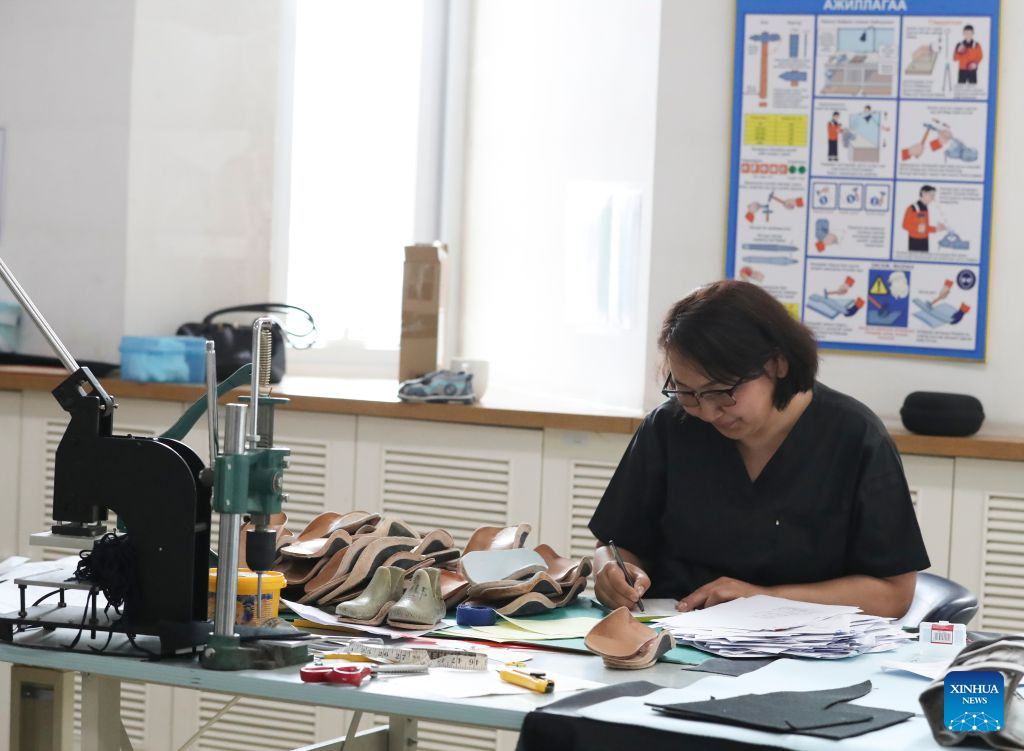
A staff member designs supportive devices for child patients at a rehabilitation and development center for children with disabilities in Ulan Bator, Mongolia, July 1, 2026. On the western outskirts of Ulan Bator, beside the gentle Tuul River, stands a whimsical building striped with bright multicolored panels. This is Mongolia's largest, best-equipped rehabilitation and development center for children with disabilities, a humanitarian landmark funded and constructed by the Chinese government.(Xinhua/Yao Qilin)
ULAN BATOR, Aug. 20 (Xinhua) -- On the western outskirts of Ulan Bator, beside the gentle Tuul River, stands a whimsical building striped with bright multicolored panels. This is Mongolia's largest, best-equipped rehabilitation and development center for children with disabilities, a humanitarian landmark funded and constructed by the Chinese government.
Since opening its doors in May 2019, the facility has delivered rehabilitation, education and psychological counseling to more than 70,000 disabled Mongolian children, evolving into a warm sanctuary that restores hope to countless struggling families.
Spanning roughly two hectares with a construction area of nearly 15,000 square meters, the center houses 250 inpatient beds and brims with thoughtful, child-centered design touches.
Playfully painted walls, yurt-style lounge nooks for rest, spacious sunlit lobbies and animal-shaped outdoor installations soften the stark clinical feel typical of medical institutions. Children from across Mongolia receive one-stop care here, including physical rehabilitation, autism intervention, speech and language therapy and professional psychological counseling.
Amarjargal Myangaa, the center's director and a former neurologist, has visited small children's rehabilitation facilities in many countries. She spoke candidly about how rare it is to find a comprehensive rehabilitation complex of this scale.
"Few integrated pediatric rehabilitation facilities of this size exist worldwide," Amarjargal said. "We are deeply grateful that China fully recognized Mongolia's massive unmet demand for children's rehabilitation and built this fully functional center for us."
Day after day, cross-border kindness and professional expertise unfold inside its therapy rooms, healing young bodies and minds little by little.
In the art therapy studio, veteran art therapist Erdenesuren pulls out drawings by a seven-year-old girl with cerebral palsy. Over just one week, the child's work transformed from faint, abstract lines to vivid, fully realized scenes bursting with rich color -- tangible proof of her growing expressive ability. A dedicated exhibition space in the main hall showcases a rotating selection of the children's artwork each month.
In the speech and social therapy room, language instructor Solongo uses picture flashcards to lead training sessions; many nonverbal children say their first words within these walls.
Advanced hardware and sustained technical support from China have rewritten the fates of many ordinary Mongolian families.
Oyuntsetseg sits in the inpatient ward with her grandson, who is attending his 23rd round of rehabilitation therapy. When the boy first arrived in early 2020 with cerebral palsy, he could only move with a wheelchair. After consistent training, he now walks independently.
China's backing has never ended after construction wrapped up; ongoing multi-layered support continues to fuel the center's development.
Last year, the Chinese Embassy in Mongolia donated a set of medical and teaching equipment and inaugurated an on-site clinical skills training room. China Railway No. 4 Engineering Group Co., Ltd., the project's general contractor, has regularly donated supplies and equipment to the facility for years.
In addition, Chinese authorities have also organized two training exchanges for the center's medical staff at a major public children's hospital in central China's Hunan Province, with Erdenesuren and Solongo among those who took part and gained valuable professional experience.
"Investment in people is the most valuable investment of all, and personnel exchanges are our most precious form of cooperation," Amarjargal said.
In April, Amarjargal led a delegation to pay a field visit to the Inner Mongolia rehabilitation center for disabled children, where she was deeply impressed by China's intelligent rehabilitation gear. One system in particular captured her attention -- an AI motion analysis platform that captures children's body movements via multiple cameras and automatically generates personalized rehabilitation training regimens.
"Every year, we look forward to new exchange programs," Amarjargal said. "We hope to visit and study in China more often, and we also welcome teams of Chinese specialists to Mongolia to share expertise with us." ■
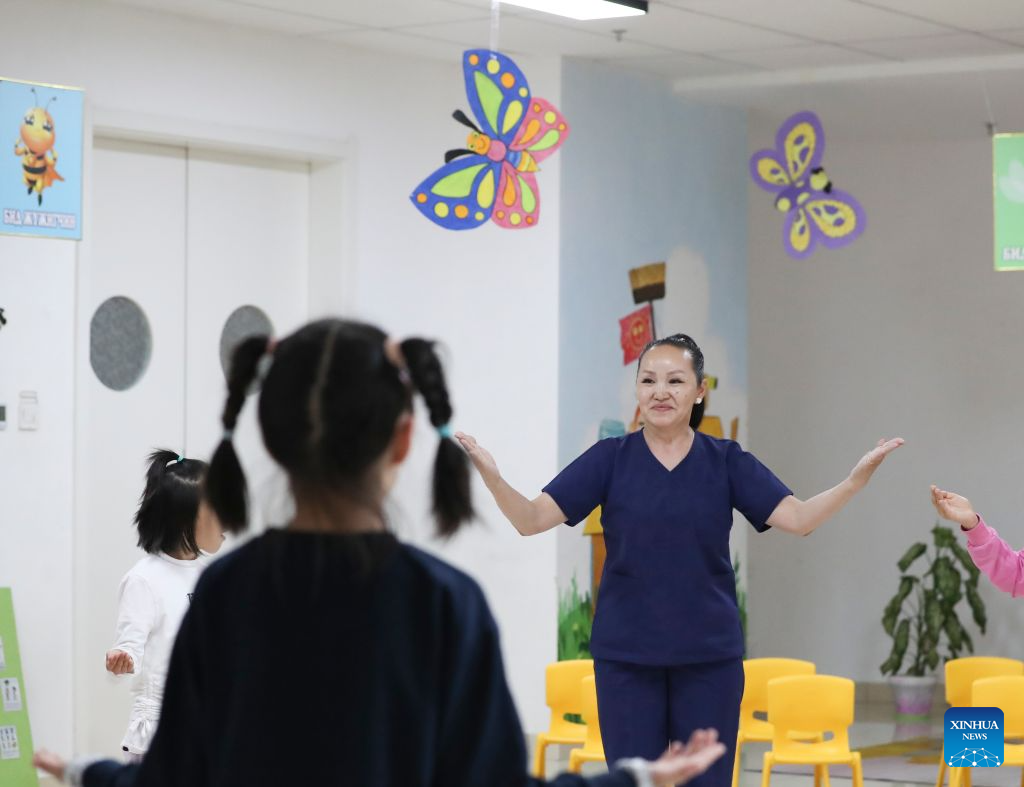
A teacher conducts music training for children at a rehabilitation and development center for children with disabilities in Ulan Bator, Mongolia, July 1, 2026. On the western outskirts of Ulan Bator, beside the gentle Tuul River, stands a whimsical building striped with bright multicolored panels. This is Mongolia's largest, best-equipped rehabilitation and development center for children with disabilities, a humanitarian landmark funded and constructed by the Chinese government.(Xinhua/Yao Qilin)
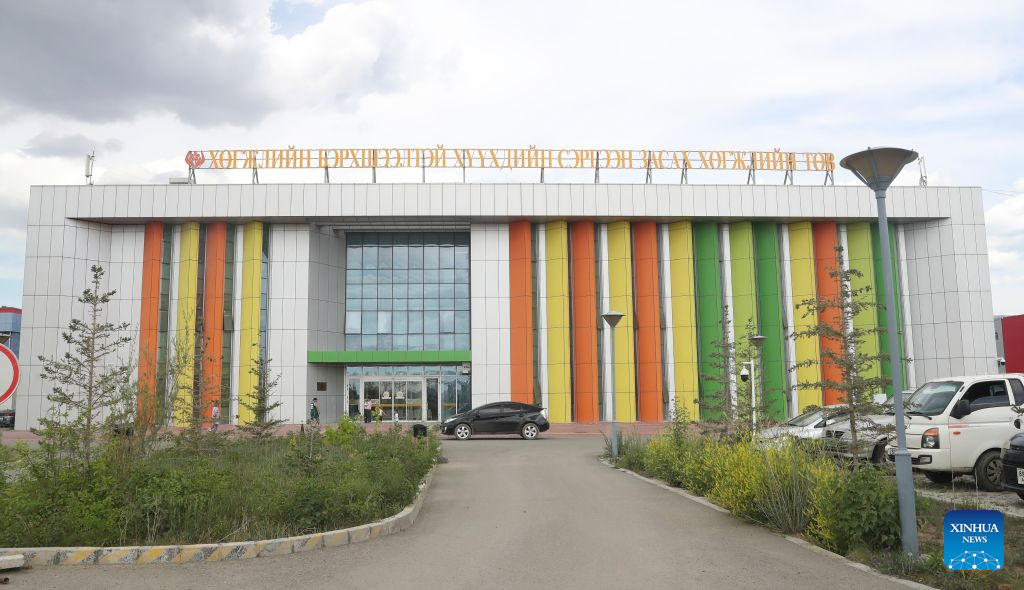
This photo taken on July 1, 2026 shows an exterior view of a rehabilitation and development center for children with disabilities in Ulan Bator, Mongolia. On the western outskirts of Ulan Bator, beside the gentle Tuul River, stands a whimsical building striped with bright multicolored panels. This is Mongolia's largest, best-equipped rehabilitation and development center for children with disabilities, a humanitarian landmark funded and constructed by the Chinese government.(Xinhua/Yao Qilin)
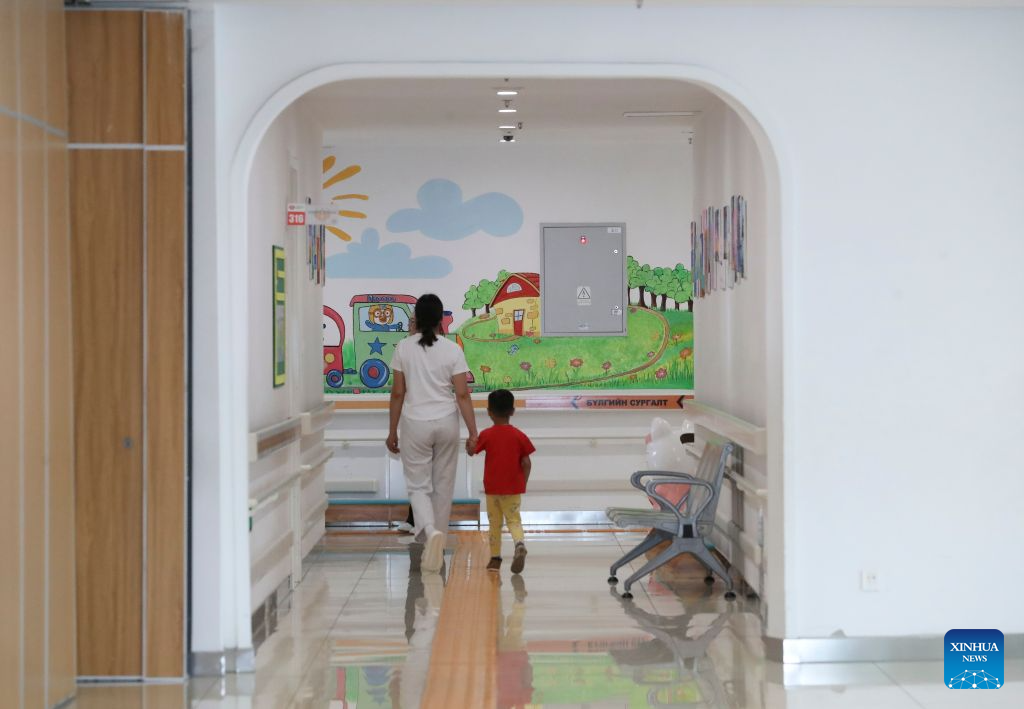
A parent and her child walk at a rehabilitation and development center for children with disabilities in Ulan Bator, Mongolia, July 1, 2026. On the western outskirts of Ulan Bator, beside the gentle Tuul River, stands a whimsical building striped with bright multicolored panels. This is Mongolia's largest, best-equipped rehabilitation and development center for children with disabilities, a humanitarian landmark funded and constructed by the Chinese government.(Xinhua/Yao Qilin)
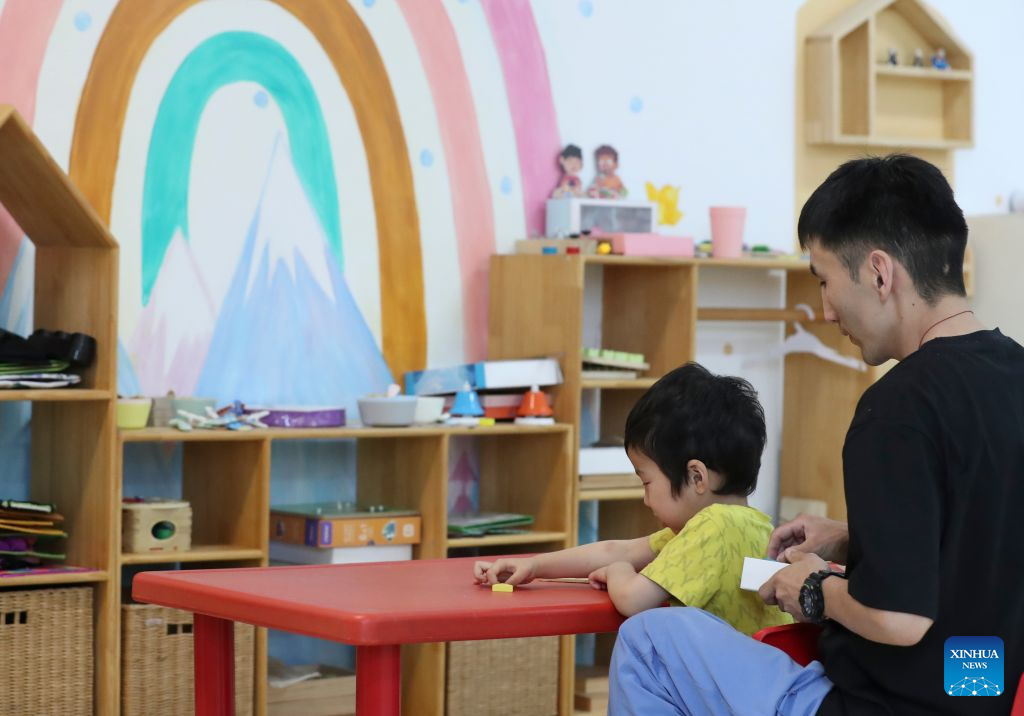
A child receives cognitive training at a rehabilitation and development center for children with disabilities in Ulan Bator, Mongolia, July 1, 2026. On the western outskirts of Ulan Bator, beside the gentle Tuul River, stands a whimsical building striped with bright multicolored panels. This is Mongolia's largest, best-equipped rehabilitation and development center for children with disabilities, a humanitarian landmark funded and constructed by the Chinese government.(Xinhua/Yao Qilin)
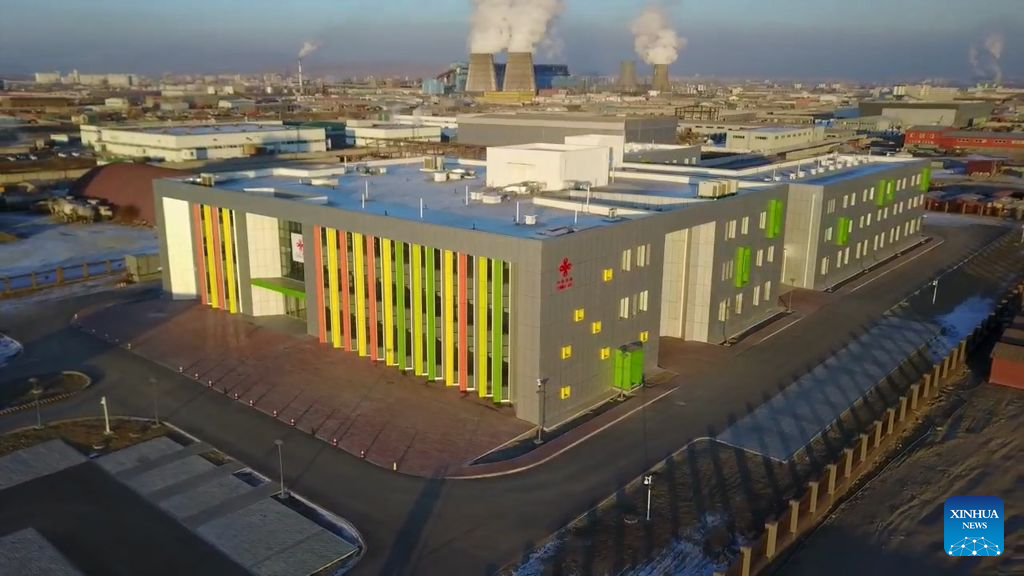
A drone photo taken on July 1, 2026 shows an exterior view of a rehabilitation and development center for children with disabilities in Ulan Bator, Mongolia. On the western outskirts of Ulan Bator, beside the gentle Tuul River, stands a whimsical building striped with bright multicolored panels. This is Mongolia's largest, best-equipped rehabilitation and development center for children with disabilities, a humanitarian landmark funded and constructed by the Chinese government.(Xinhua/Yao Qilin)
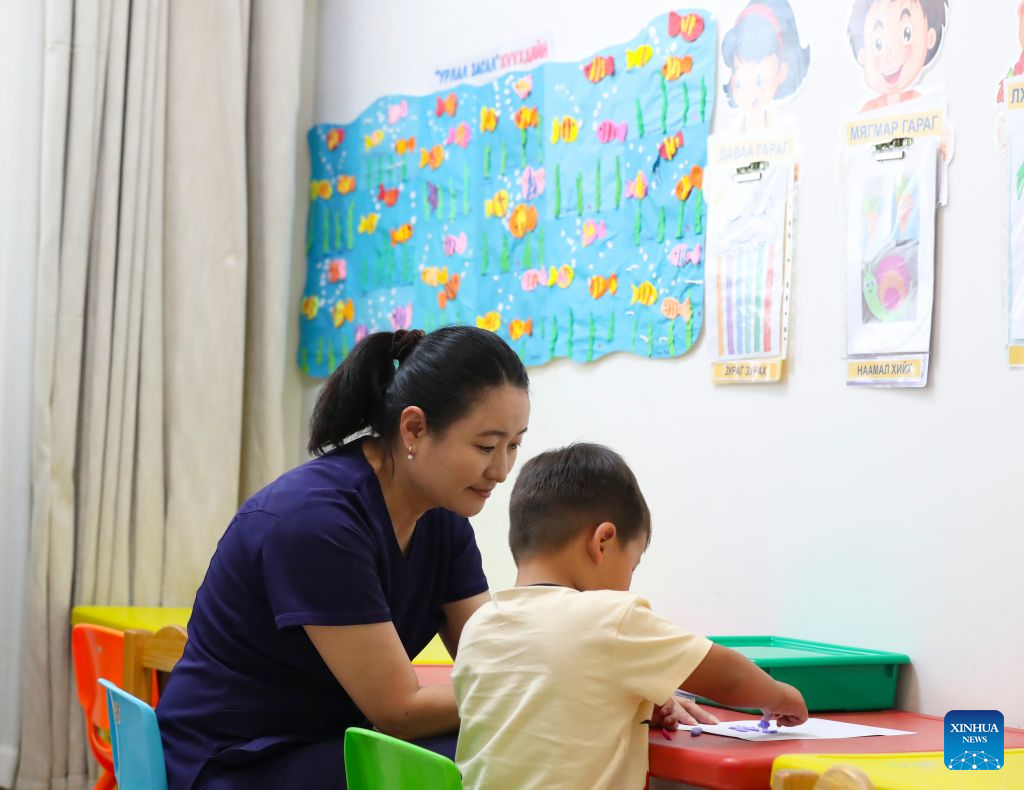
A child receives cognitive training under the guidance of a teacher at a rehabilitation and development center for children with disabilities in Ulan Bator, Mongolia, July 1, 2026. On the western outskirts of Ulan Bator, beside the gentle Tuul River, stands a whimsical building striped with bright multicolored panels. This is Mongolia's largest, best-equipped rehabilitation and development center for children with disabilities, a humanitarian landmark funded and constructed by the Chinese government.(Xinhua/Yao Qilin)
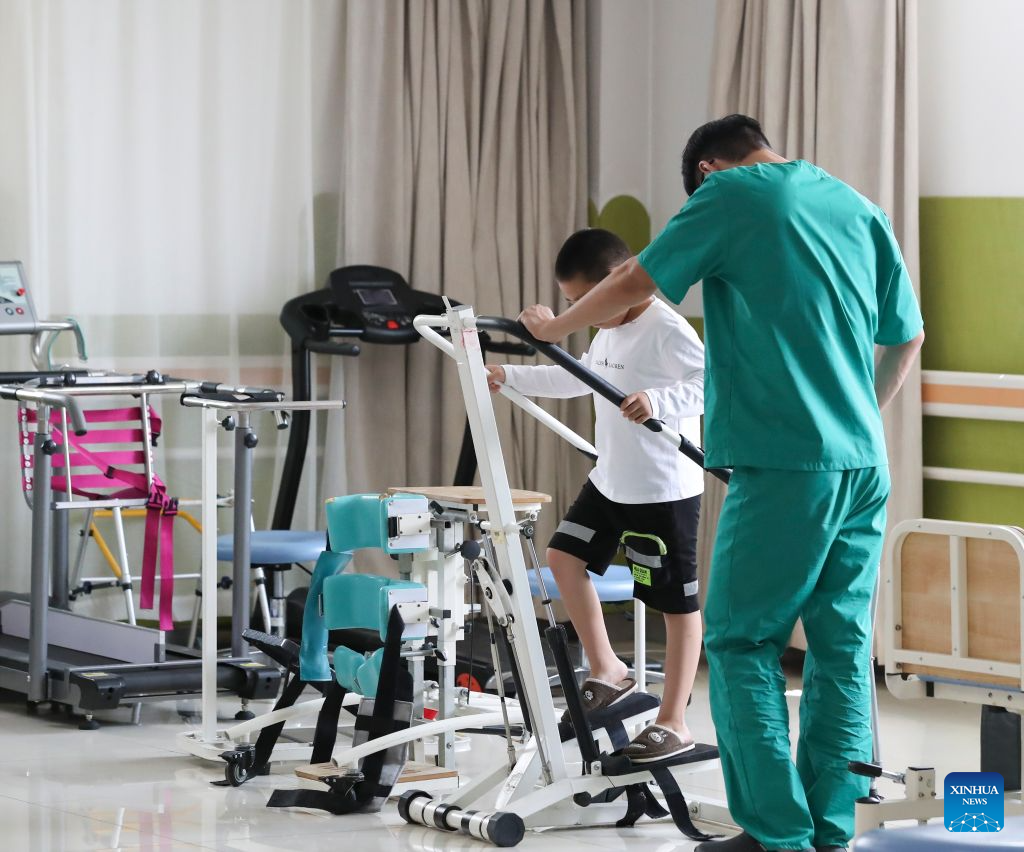
A child conducts rehabilitation training under the guidance of a teacher at a rehabilitation and development center for children with disabilities in Ulan Bator, Mongolia, July 1, 2026. On the western outskirts of Ulan Bator, beside the gentle Tuul River, stands a whimsical building striped with bright multicolored panels. This is Mongolia's largest, best-equipped rehabilitation and development center for children with disabilities, a humanitarian landmark funded and constructed by the Chinese government.(Xinhua/Yao Qilin)
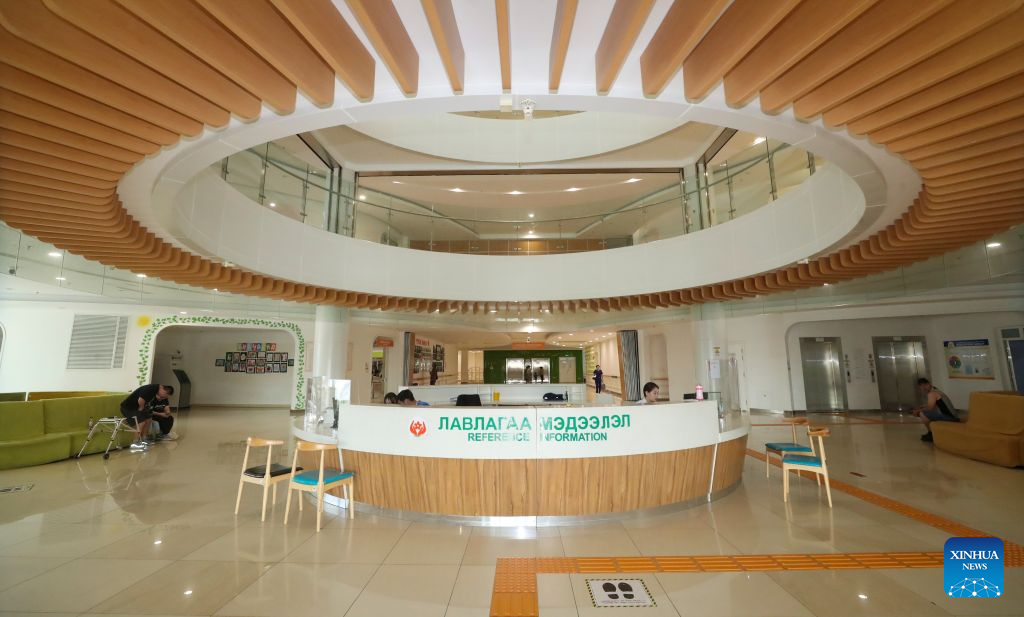
This photo taken on July 1, 2026 shows the reception hall of a rehabilitation and development center for children with disabilities in Ulan Bator, Mongolia. On the western outskirts of Ulan Bator, beside the gentle Tuul River, stands a whimsical building striped with bright multicolored panels. This is Mongolia's largest, best-equipped rehabilitation and development center for children with disabilities, a humanitarian landmark funded and constructed by the Chinese government.(Xinhua/Yao Qilin)
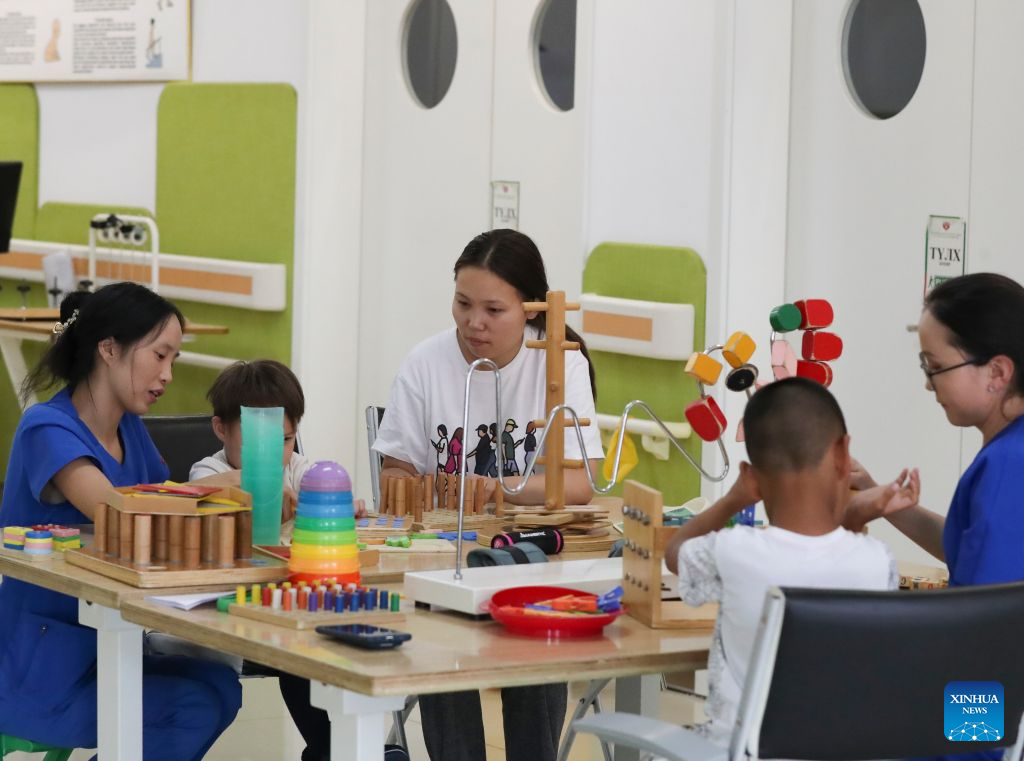
Children receive rehabilitation training under the guidance of their teachers at a rehabilitation and development center for children with disabilities in Ulan Bator, Mongolia, July 1, 2026. On the western outskirts of Ulan Bator, beside the gentle Tuul River, stands a whimsical building striped with bright multicolored panels. This is Mongolia's largest, best-equipped rehabilitation and development center for children with disabilities, a humanitarian landmark funded and constructed by the Chinese government.(Xinhua/Yao Qilin)


