UNITED NATIONS, Aug. 18 (Xinhua) -- The increasing suffering of Palestinians in the West Bank due to stepped-up Israeli military and settler activity is alarming, said a UN spokesman on Tuesday.
"I can tell you that we are deeply alarmed by the continued deterioration of the security and humanitarian situation for Palestinians in the occupied West Bank," said Stephane Dujarric, chief spokesperson for UN Secretary-General Antonio Guterres.
Dujarric said that escalating violence, expanding settler presence, severe restrictions on movement and access for Palestinians, and shrinking economic opportunities have become the norm in the West Bank.
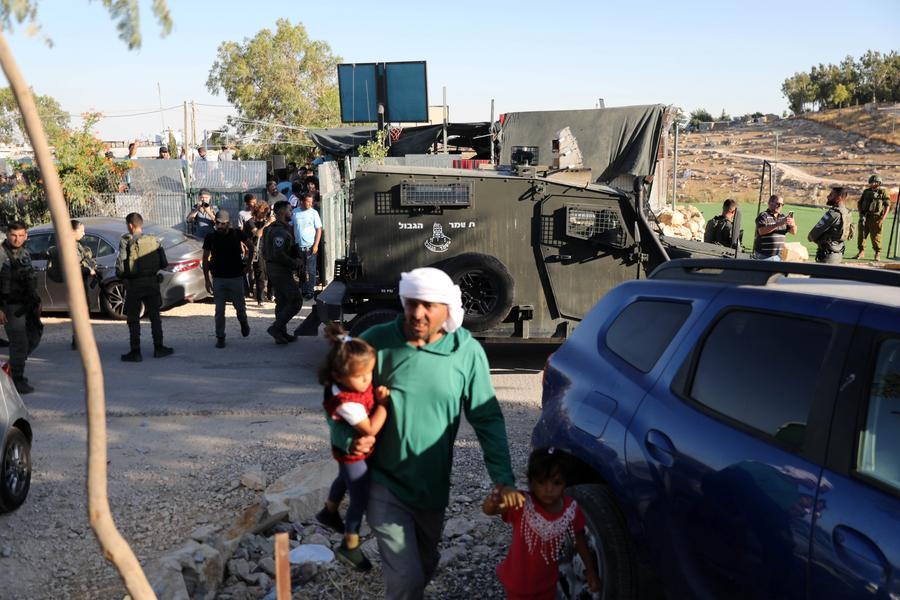
The UN Office for the Coordination of Humanitarian Affairs (OCHA) said that Israeli forces on Monday instructed about 10 Palestinian families in Jabal An Nasr neighborhood in Tulkarm in the northern West Bank to leave their homes for seven hours, due to military activities near the adjacent Nur Shams camp for Palestine refugees.
"Israeli military bulldozers excavated part of a road, damaging water and sewage networks, and carried out excavation works on Palestinian land before withdrawing," OCHA said. "Families reportedly returned to their homes, and municipal crews repaired the damaged infrastructure once Israeli security forces withdrew."
In Gaza, OCHA said its partners are also concerned about the impact of continued military activities on civilians.
The office said its partners reported airstrikes, shelling, gunfire and naval fire, primarily west of the so-called Yellow Line, where most of Gaza's 2.1 million people are confined within less than half of the strip's land.
The Food and Agriculture Organization warned on Monday that Gaza's agricultural capacity has been devastated. A new assessment found that only 3 percent of cropland remains both accessible and undamaged, further undermining local food production and farmers' livelihoods.
Despite ongoing military activities and restrictions, the United Nations and its partners continue to deliver aid, support essential services and facilitate critical humanitarian operations wherever possible, OCHA said. ■