SHANGHAI, Aug. 18 (Xinhua) -- French vlogger Yisa recently invited her parents to China for a summer trip, who were duly impressed by the cool and comfortable environment they encountered throughout their journey, even finding modern air-conditioning systems installed inside traditional yurts on the vast grasslands of north China's Inner Mongolia Autonomous Region.
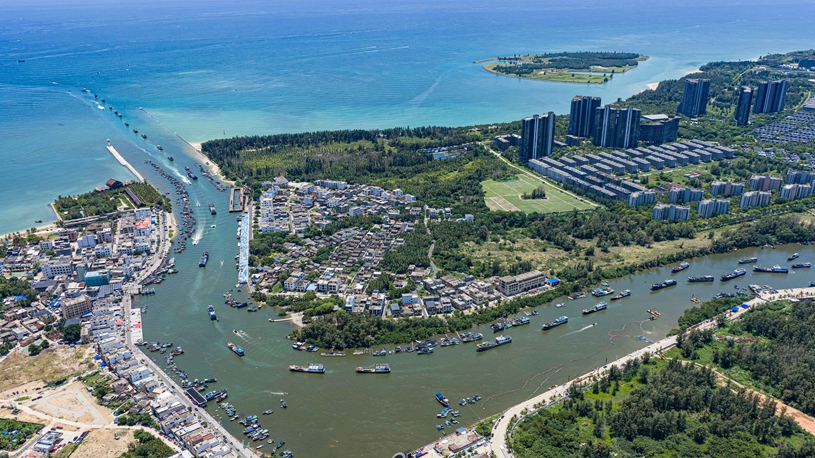
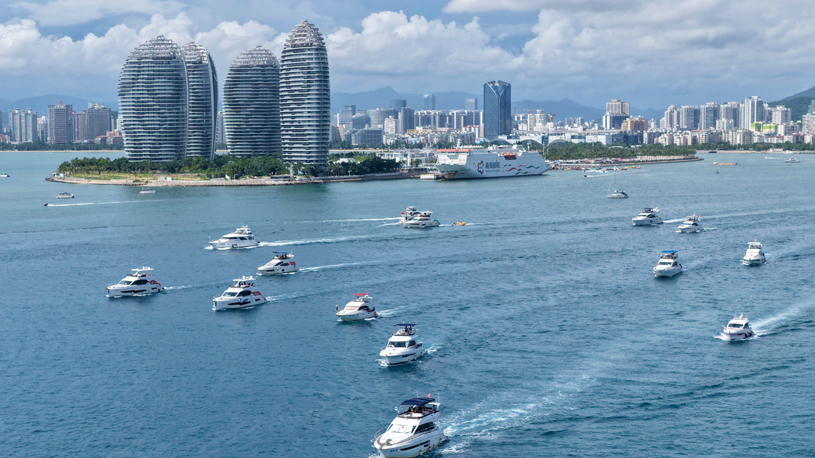
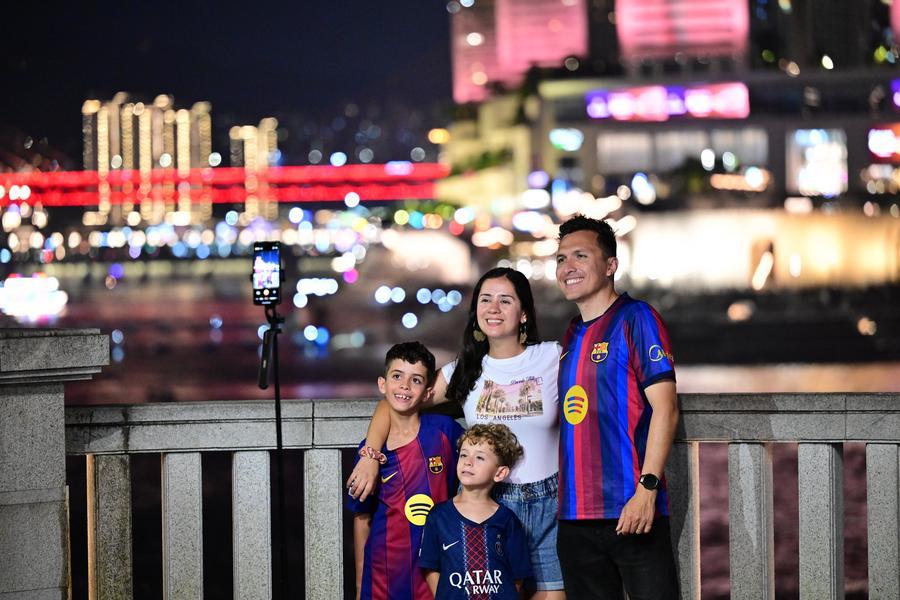
Like Yisa's family, who wanted to escape heatwaves sweeping Europe, an increasing number of overseas visitors are coming to China not only to explore its history and culture, but also to seek respite from the summer heat.
The trend is giving rise to a new dimension of inbound tourism, as international travelers discover that China's "summer retreat" is supported not only by its diverse natural landscapes, but also by technological innovation, green energy infrastructure and an extensive transportation network.
It is also being witnessed in China's major cities.
American vlogger Jenna Knapp recently visited Shanghai, where she sought refuge from a 36.7-degree-Celsius summer day in an indoor snow and ski resort.
"If you know anything about Shanghai summer and you're looking to get away from the heat, this place is a dream," Knapp said in a video, noting that visitors could enjoy an artificial winter environment and ski rentals for less than 100 U.S. dollars.
Her destination, Shanghai L+SNOW Indoor Skiing Theme Resort, is certified by Guinness World Records as the world's largest indoor ski facility. In subtropical Shanghai, where summer temperatures often exceed 30 degrees Celsius, the resort maintains an indoor temperature of around minus 5 degrees Celsius across a 98,000-square-meter snow area, with a vertical drop of 60 meters.
Behind such a cooling experience is an extensive effort to improve energy efficiency.
The resort has adopted a range of energy-saving technologies, including photovoltaic power generation, an upgraded thermal insulation system, carbon dioxide refrigeration, waste heat recovery, ice thermal storage and dehumidification heating.
Some 37,000 square meters of photovoltaic panels have been installed on the roof of the resort, reducing carbon dioxide emissions by more than 2,000 tonnes annually, according to the resort.
The facility is more than a novel destination for summer visitors. It also provides a showcase of China's efforts to integrate energy-saving technologies with emerging forms of service consumption, while promoting the application of new thermal insulation materials, refrigeration equipment and other technologies.
Yet the energy supporting such cooling experiences -- from grassland yurts to indoor entertainment venues -- comes from a much larger power network.
"The 'air-conditioning freedom' stems from China's ultra-high-voltage power transmission networks and the rapid expansion of wind and photovoltaic power generation," said Cheng Haozhong, a distinguished professor at the School of Electrical Engineering of Shanghai Jiao Tong University.
The cooling enjoyed by tourists in eastern China, Cheng said, is also supported by green electricity transmitted from the country's renewable-rich western regions.
China's power supply has remained stable even during the peak summer season, when electricity demand has repeatedly reached record highs.
According to the 15th Five-Year Plan for the Construction of a New Power System, jointly released by the National Development and Reform Commission and the National Energy Administration on Aug. 3, China's annual electricity consumption is expected to increase by about 600 billion kilowatt-hours during the 15th Five-Year Plan period (2026-2030). To meet rising demand, China is building a diversified power supply system featuring coal, gas, nuclear power and renewable energy.
The growth of green electricity is also helping cities meet rising summer demand, while advancing the country's energy transition.
As of July 15, Shanghai had consumed more than 11 billion kilowatt-hours of green electricity this year, about 25 percent more than its total consumption of green electricity last year and a record high for the fourth consecutive year. Of the more than 5 million kilowatts of additional midday peak power procured through market mechanisms to meet summer demand, 3.2 million kilowatts came from green electricity.
The combination of a stable power supply and growing green electricity consumption is helping provide the energy foundation for China's increasingly diverse summer tourism experiences.
Beyond the power grid, China's extensive transportation network is making it easier for overseas visitors to reach cooler destinations across the country.
While major cities remain popular with international travelers, more visitors are exploring summer destinations such as southwest China's Tengchong, northwest China's Kashgar and north China's Qinhuangdao, attracted by their cooler climates and distinctive landscapes.
The trend has been facilitated by China's expanding civil aviation network and high-speed railway system, which accounts for more than 70 percent of the world's total high-speed rail mileage.
"This upgraded transportation network has turned the idea of having morning dim sum in a furnace-like city and enjoying the cool air at the foot of a snow-capped mountain in the afternoon into an everyday reality for travelers," said Cao Yixia, a research fellow at the Institute of Applied Economics of the Shanghai Academy of Social Sciences.
The growing popularity of China's summer destinations among overseas visitors is thus more than a seasonal tourism phenomenon. It offers an everyday perspective on the country's modernization -- from green electricity and advanced infrastructure to convenient transportation and increasingly diverse forms of consumption.
As more international travelers experience China's "summer retreat," they are gaining a closer and more tangible understanding of the country's development, helping foster more authentic and organic exchanges between China and the rest of the world, said Cao. ■