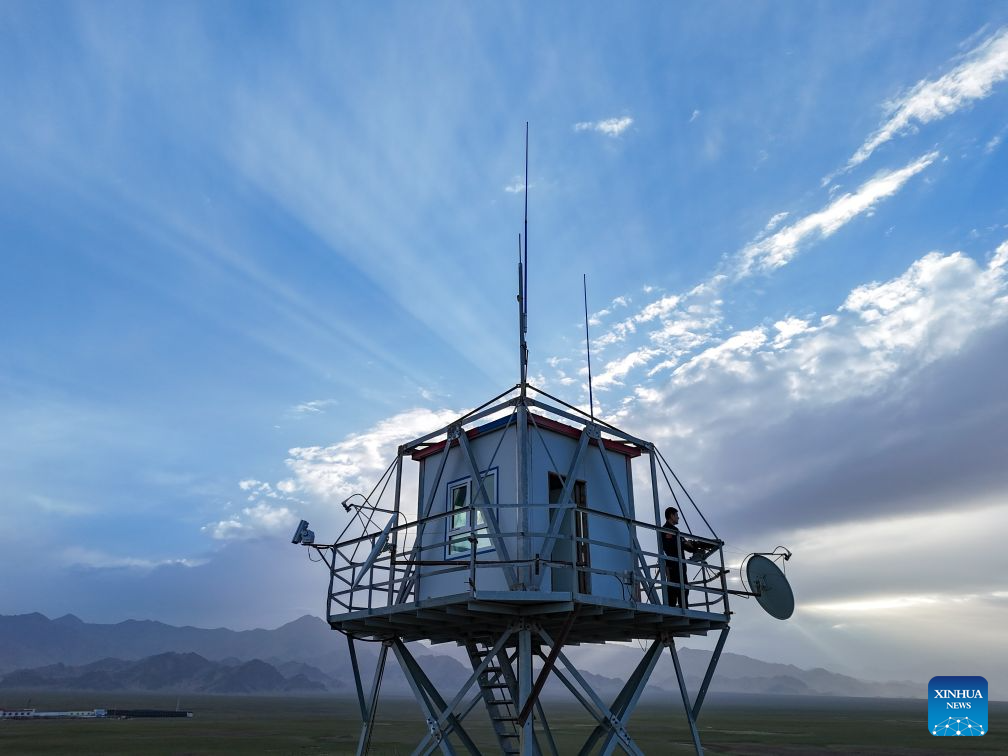
A drone photo taken on Aug. 10, 2026 shows a ranger observing on a watchtower near a management station within the Altun Mountain National Nature Reserve in northwest China's Xinjiang Uygur Autonomous Region. Averaging 4,500 meters in elevation, the Altun Mountain National Nature Reserve, a 45,000-square-kilometer haven situated in the southeastern corner of Xinjiang, is subject to harsh environmental conditions.
In early August, a patrol team comprising nature reserve staff, local township officials and police officers ventured into this remote plateau wilderness for a monthly routine patrol.
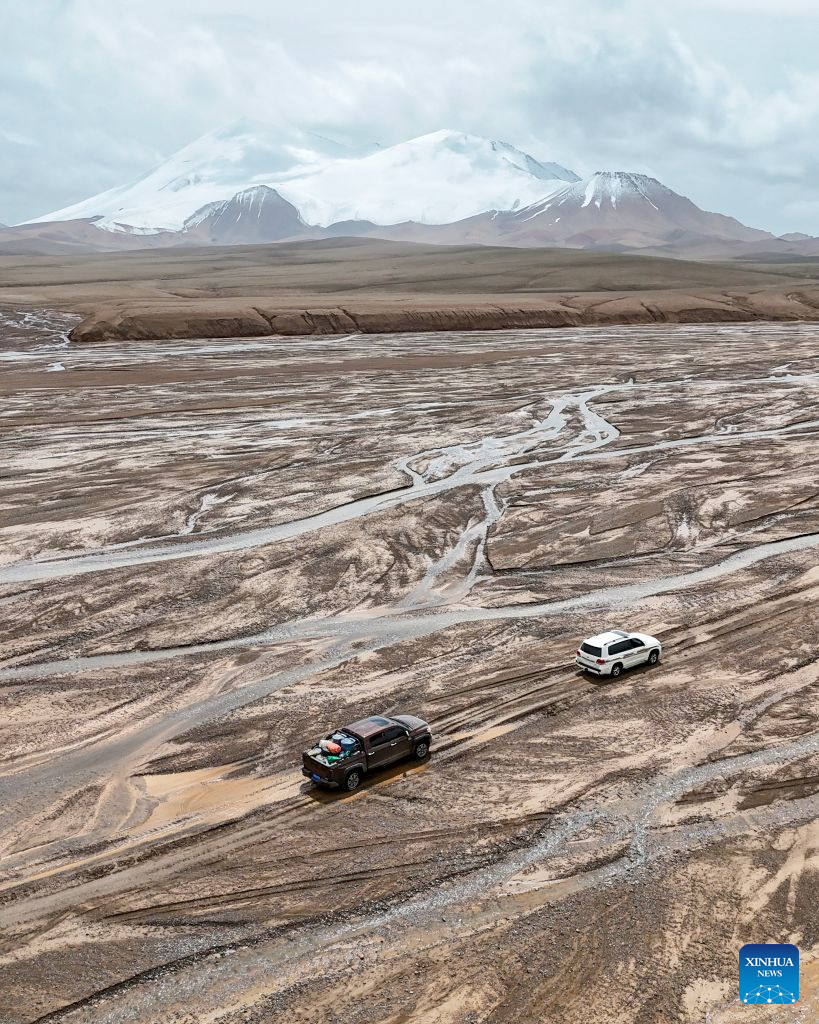
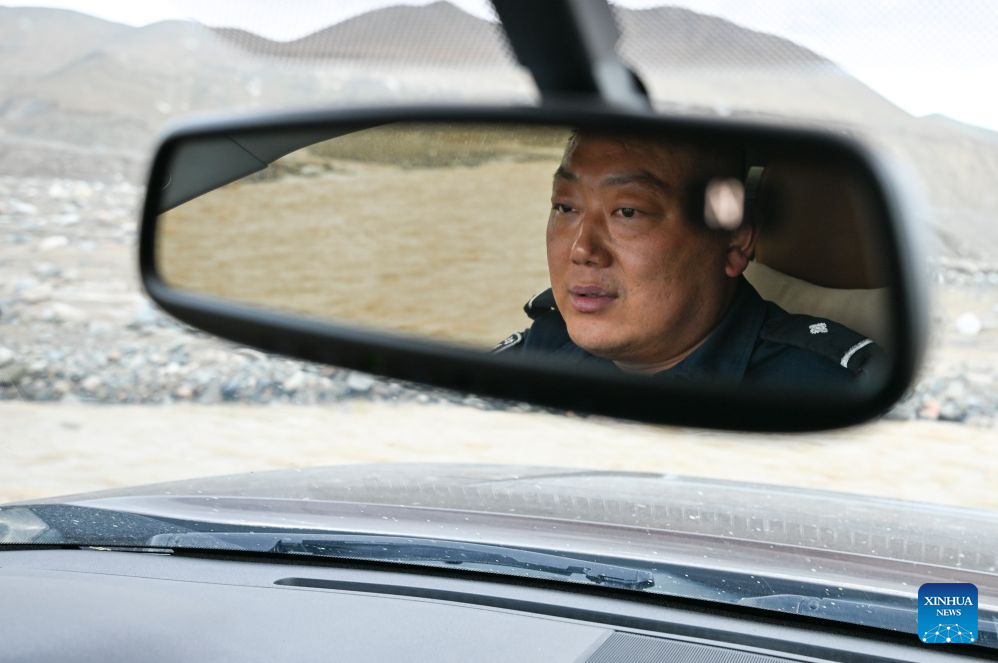
Bumping along a dry river valley winding through the mountains, the team members checked for suspicious signs, observed wildlife, and maintained management station facilities. They conducted routine inspections within the reserve supported by advanced technological equipment, including high-altitude surveillance cameras, infrared cameras and drones. Their main mission was to curb illegal activities to ensure protection of one of China's most remote and ecologically vital sanctuaries.
At nearly 4,800 meters above sea level, almost every member of the team suffered from altitude sickness like headaches and insomnia, but their firm conviction to protect this reserve gave them strength to overcome challenges and carry on with their work.
Established in 1983, the reserve is managed by a team of about 70 people. Over the past 40 years, generation after generation of patrollers have devoted themselves to protecting this land with stark contrasts and rich biodiversity. (Xinhua/Hu Huhu)
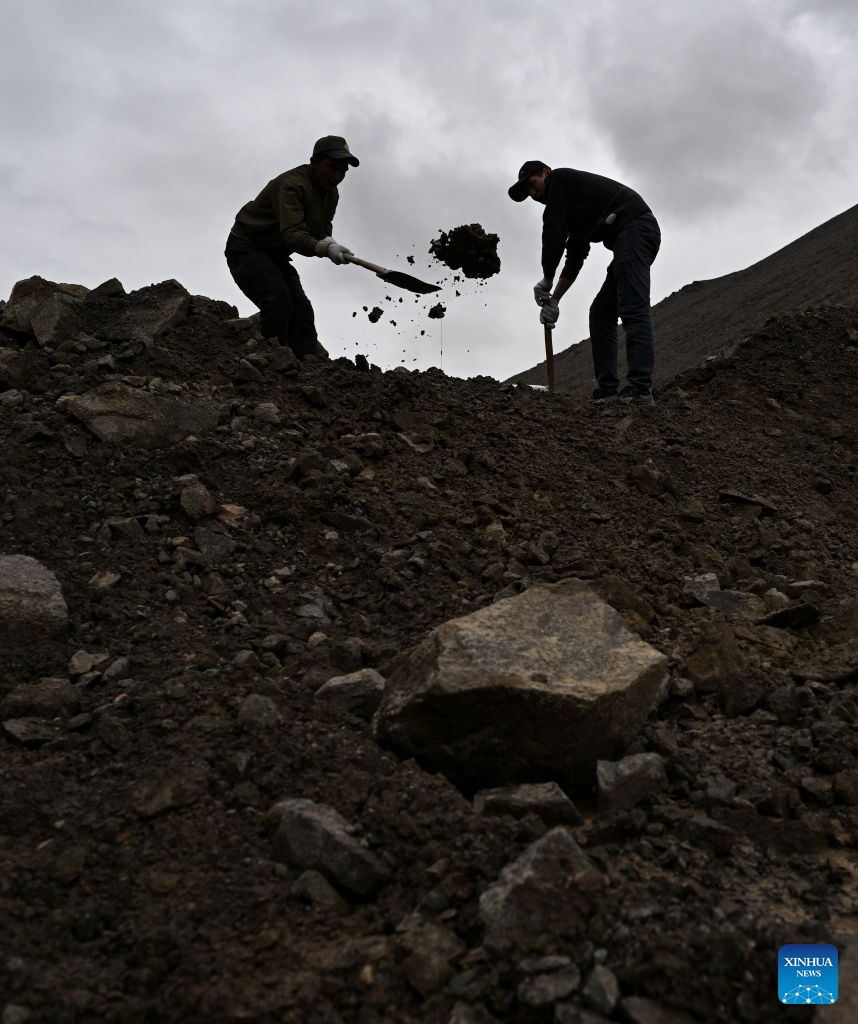
Rangers repair a mountain road in the Altun Mountain National Nature Reserve in northwest China's Xinjiang Uygur Autonomous Region, on Aug. 8, 2026. Averaging 4,500 meters in elevation, the Altun Mountain National Nature Reserve, a 45,000-square-kilometer haven situated in the southeastern corner of Xinjiang, is subject to harsh environmental conditions.
In early August, a patrol team comprising nature reserve staff, local township officials and police officers ventured into this remote plateau wilderness for a monthly routine patrol.
Bumping along a dry river valley winding through the mountains, the team members checked for suspicious signs, observed wildlife, and maintained management station facilities. They conducted routine inspections within the reserve supported by advanced technological equipment, including high-altitude surveillance cameras, infrared cameras and drones. Their main mission was to curb illegal activities to ensure protection of one of China's most remote and ecologically vital sanctuaries.
At nearly 4,800 meters above sea level, almost every member of the team suffered from altitude sickness like headaches and insomnia, but their firm conviction to protect this reserve gave them strength to overcome challenges and carry on with their work.
Established in 1983, the reserve is managed by a team of about 70 people. Over the past 40 years, generation after generation of patrollers have devoted themselves to protecting this land with stark contrasts and rich biodiversity. (Xinhua/Hu Huhu)

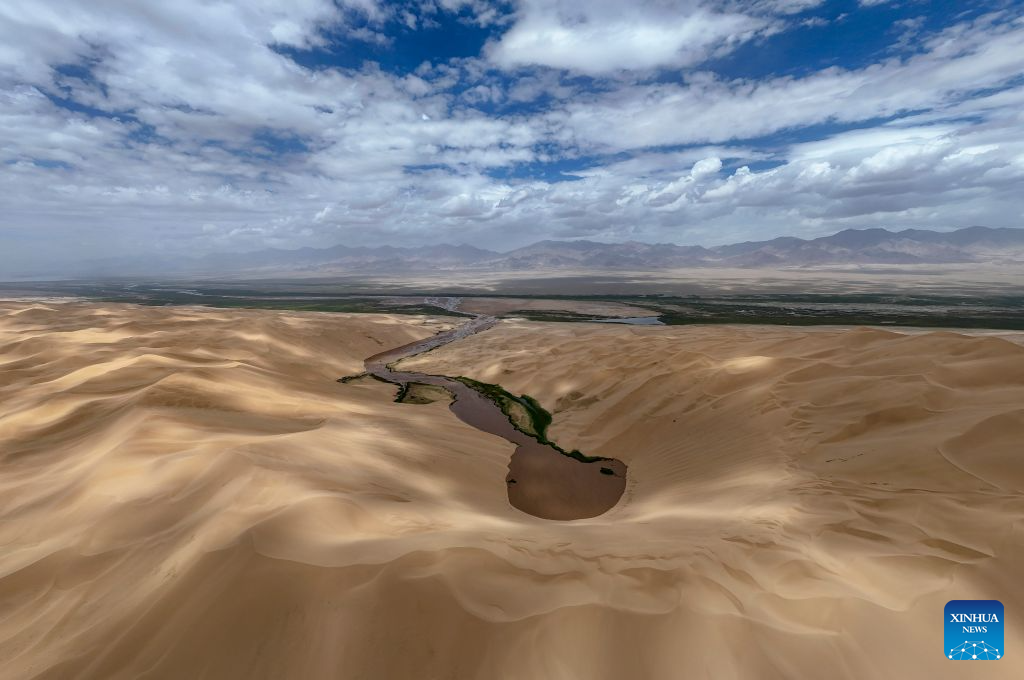
A drone photo taken on Aug. 10, 2026 shows a view of the Altun Mountain National Nature Reserve in northwest China's Xinjiang Uygur Autonomous Region. Averaging 4,500 meters in elevation, the Altun Mountain National Nature Reserve, a 45,000-square-kilometer haven situated in the southeastern corner of Xinjiang, is subject to harsh environmental conditions.
In early August, a patrol team comprising nature reserve staff, local township officials and police officers ventured into this remote plateau wilderness for a monthly routine patrol.
Bumping along a dry river valley winding through the mountains, the team members checked for suspicious signs, observed wildlife, and maintained management station facilities. They conducted routine inspections within the reserve supported by advanced technological equipment, including high-altitude surveillance cameras, infrared cameras and drones. Their main mission was to curb illegal activities to ensure protection of one of China's most remote and ecologically vital sanctuaries.
At nearly 4,800 meters above sea level, almost every member of the team suffered from altitude sickness like headaches and insomnia, but their firm conviction to protect this reserve gave them strength to overcome challenges and carry on with their work.
Established in 1983, the reserve is managed by a team of about 70 people. Over the past 40 years, generation after generation of patrollers have devoted themselves to protecting this land with stark contrasts and rich biodiversity. (Xinhua/Hu Huhu)

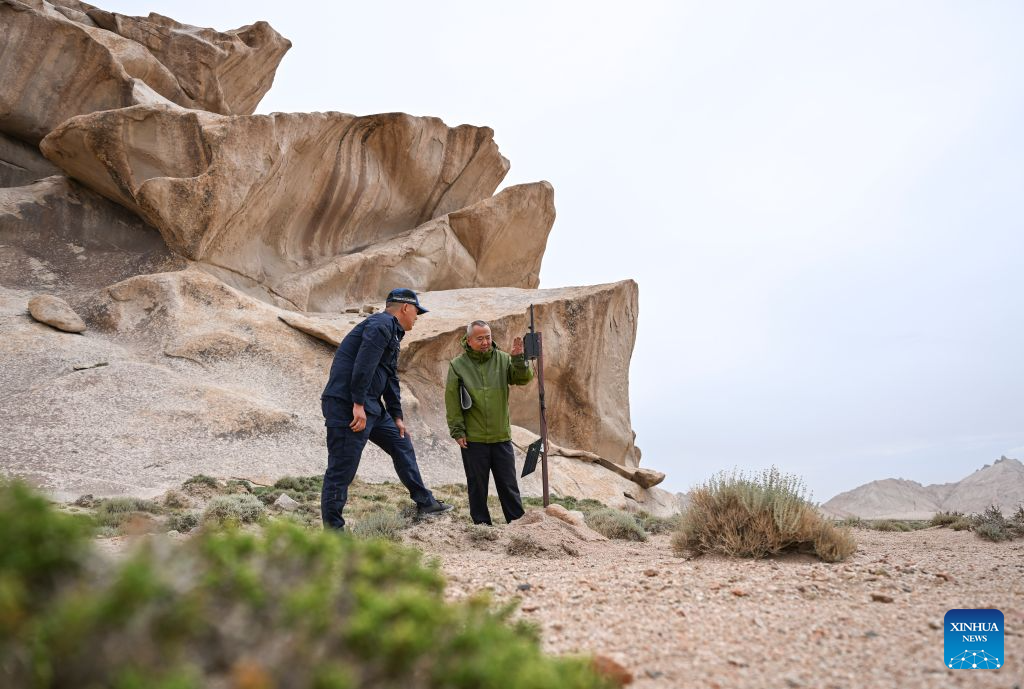
Rangers Chen Wei (R) and Li Jian check an infrared camera used to film wildlife in the Altun Mountain National Nature Reserve in northwest China's Xinjiang Uygur Autonomous Region, on Aug. 7, 2026. Averaging 4,500 meters in elevation, the Altun Mountain National Nature Reserve, a 45,000-square-kilometer haven situated in the southeastern corner of Xinjiang, is subject to harsh environmental conditions.
In early August, a patrol team comprising nature reserve staff, local township officials and police officers ventured into this remote plateau wilderness for a monthly routine patrol.
Bumping along a dry river valley winding through the mountains, the team members checked for suspicious signs, observed wildlife, and maintained management station facilities. They conducted routine inspections within the reserve supported by advanced technological equipment, including high-altitude surveillance cameras, infrared cameras and drones. Their main mission was to curb illegal activities to ensure protection of one of China's most remote and ecologically vital sanctuaries.
At nearly 4,800 meters above sea level, almost every member of the team suffered from altitude sickness like headaches and insomnia, but their firm conviction to protect this reserve gave them strength to overcome challenges and carry on with their work.
Established in 1983, the reserve is managed by a team of about 70 people. Over the past 40 years, generation after generation of patrollers have devoted themselves to protecting this land with stark contrasts and rich biodiversity. (Xinhua/Hu Huhu)

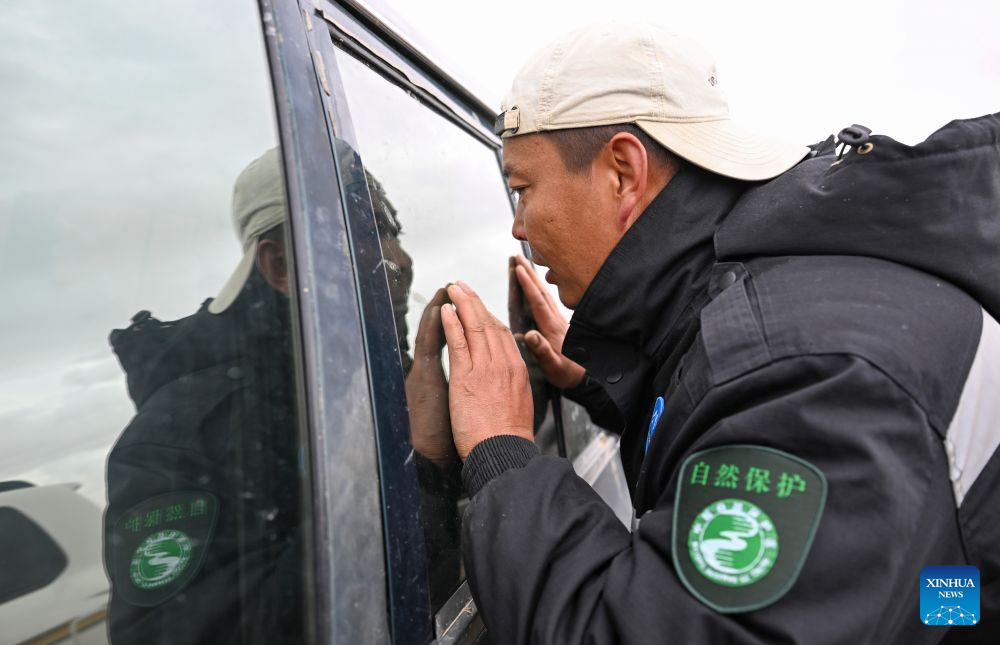
Ranger Airiqin checks an abandoned car left by illegal intruders in the Altun Mountain National Nature Reserve in northwest China's Xinjiang Uygur Autonomous Region, on Aug. 8, 2026. Averaging 4,500 meters in elevation, the Altun Mountain National Nature Reserve, a 45,000-square-kilometer haven situated in the southeastern corner of Xinjiang, is subject to harsh environmental conditions.
In early August, a patrol team comprising nature reserve staff, local township officials and police officers ventured into this remote plateau wilderness for a monthly routine patrol.
Bumping along a dry river valley winding through the mountains, the team members checked for suspicious signs, observed wildlife, and maintained management station facilities. They conducted routine inspections within the reserve supported by advanced technological equipment, including high-altitude surveillance cameras, infrared cameras and drones. Their main mission was to curb illegal activities to ensure protection of one of China's most remote and ecologically vital sanctuaries.
At nearly 4,800 meters above sea level, almost every member of the team suffered from altitude sickness like headaches and insomnia, but their firm conviction to protect this reserve gave them strength to overcome challenges and carry on with their work.
Established in 1983, the reserve is managed by a team of about 70 people. Over the past 40 years, generation after generation of patrollers have devoted themselves to protecting this land with stark contrasts and rich biodiversity. (Xinhua/Hu Huhu)

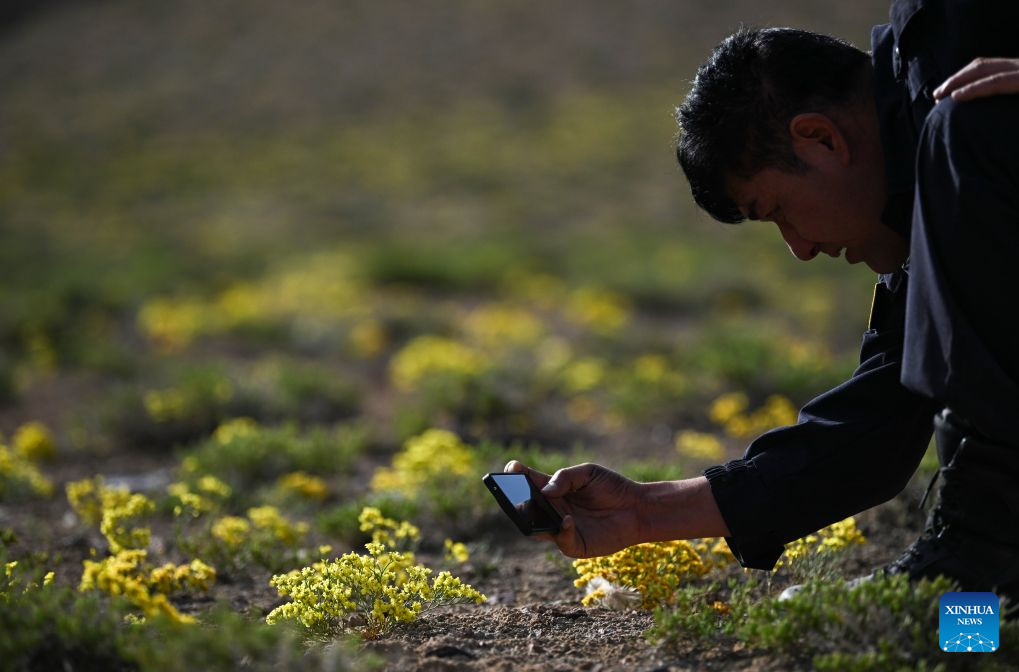
A ranger takes photos of Limonium aureum while patrolling the Altun Mountain National Nature Reserve in northwest China's Xinjiang Uygur Autonomous Region, on Aug. 10, 2026. Averaging 4,500 meters in elevation, the Altun Mountain National Nature Reserve, a 45,000-square-kilometer haven situated in the southeastern corner of Xinjiang, is subject to harsh environmental conditions.
In early August, a patrol team comprising nature reserve staff, local township officials and police officers ventured into this remote plateau wilderness for a monthly routine patrol.
Bumping along a dry river valley winding through the mountains, the team members checked for suspicious signs, observed wildlife, and maintained management station facilities. They conducted routine inspections within the reserve supported by advanced technological equipment, including high-altitude surveillance cameras, infrared cameras and drones. Their main mission was to curb illegal activities to ensure protection of one of China's most remote and ecologically vital sanctuaries.
At nearly 4,800 meters above sea level, almost every member of the team suffered from altitude sickness like headaches and insomnia, but their firm conviction to protect this reserve gave them strength to overcome challenges and carry on with their work.
Established in 1983, the reserve is managed by a team of about 70 people. Over the past 40 years, generation after generation of patrollers have devoted themselves to protecting this land with stark contrasts and rich biodiversity. (Xinhua/Hu Huhu)

Rangers search for suspicious vehicle tracks indicating illegal entry in the Altun Mountain National Nature Reserve in northwest China's Xinjiang Uygur Autonomous Region, on Aug. 9, 2026. Averaging 4,500 meters in elevation, the Altun Mountain National Nature Reserve, a 45,000-square-kilometer haven situated in the southeastern corner of Xinjiang, is subject to harsh environmental conditions.
In early August, a patrol team comprising nature reserve staff, local township officials and police officers ventured into this remote plateau wilderness for a monthly routine patrol.
Bumping along a dry river valley winding through the mountains, the team members checked for suspicious signs, observed wildlife, and maintained management station facilities. They conducted routine inspections within the reserve supported by advanced technological equipment, including high-altitude surveillance cameras, infrared cameras and drones. Their main mission was to curb illegal activities to ensure protection of one of China's most remote and ecologically vital sanctuaries.
At nearly 4,800 meters above sea level, almost every member of the team suffered from altitude sickness like headaches and insomnia, but their firm conviction to protect this reserve gave them strength to overcome challenges and carry on with their work.
Established in 1983, the reserve is managed by a team of about 70 people. Over the past 40 years, generation after generation of patrollers have devoted themselves to protecting this land with stark contrasts and rich biodiversity. (Xinhua/Hu Huhu)

A drone photo taken on Aug. 8, 2026 shows rangers driving cars to patrol the Altun Mountain National Nature Reserve in northwest China's Xinjiang Uygur Autonomous Region. Averaging 4,500 meters in elevation, the Altun Mountain National Nature Reserve, a 45,000-square-kilometer haven situated in the southeastern corner of Xinjiang, is subject to harsh environmental conditions.
In early August, a patrol team comprising nature reserve staff, local township officials and police officers ventured into this remote plateau wilderness for a monthly routine patrol.
Bumping along a dry river valley winding through the mountains, the team members checked for suspicious signs, observed wildlife, and maintained management station facilities. They conducted routine inspections within the reserve supported by advanced technological equipment, including high-altitude surveillance cameras, infrared cameras and drones. Their main mission was to curb illegal activities to ensure protection of one of China's most remote and ecologically vital sanctuaries.
At nearly 4,800 meters above sea level, almost every member of the team suffered from altitude sickness like headaches and insomnia, but their firm conviction to protect this reserve gave them strength to overcome challenges and carry on with their work.
Established in 1983, the reserve is managed by a team of about 70 people. Over the past 40 years, generation after generation of patrollers have devoted themselves to protecting this land with stark contrasts and rich biodiversity. (Xinhua/Hu Huhu)

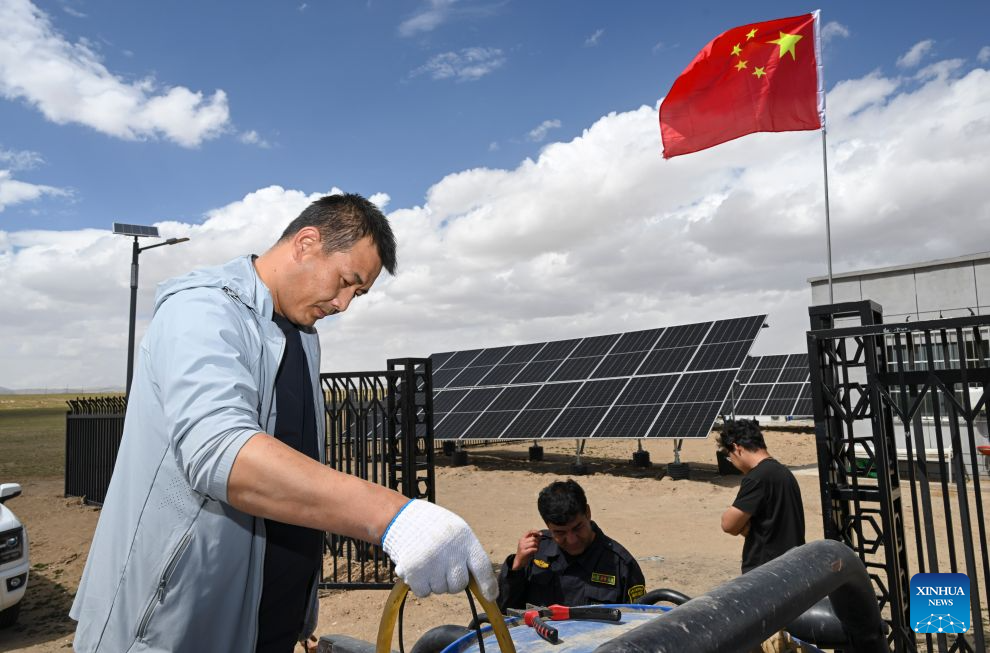
Ranger Chen Xiaobin (L) refills a vehicle at a management station in the Altun Mountain National Nature Reserve in northwest China's Xinjiang Uygur Autonomous Region, on Aug. 10, 2026. Averaging 4,500 meters in elevation, the Altun Mountain National Nature Reserve, a 45,000-square-kilometer haven situated in the southeastern corner of Xinjiang, is subject to harsh environmental conditions.
In early August, a patrol team comprising nature reserve staff, local township officials and police officers ventured into this remote plateau wilderness for a monthly routine patrol.
Bumping along a dry river valley winding through the mountains, the team members checked for suspicious signs, observed wildlife, and maintained management station facilities. They conducted routine inspections within the reserve supported by advanced technological equipment, including high-altitude surveillance cameras, infrared cameras and drones. Their main mission was to curb illegal activities to ensure protection of one of China's most remote and ecologically vital sanctuaries.
At nearly 4,800 meters above sea level, almost every member of the team suffered from altitude sickness like headaches and insomnia, but their firm conviction to protect this reserve gave them strength to overcome challenges and carry on with their work.
Established in 1983, the reserve is managed by a team of about 70 people. Over the past 40 years, generation after generation of patrollers have devoted themselves to protecting this land with stark contrasts and rich biodiversity. (Xinhua/Hu Huhu)

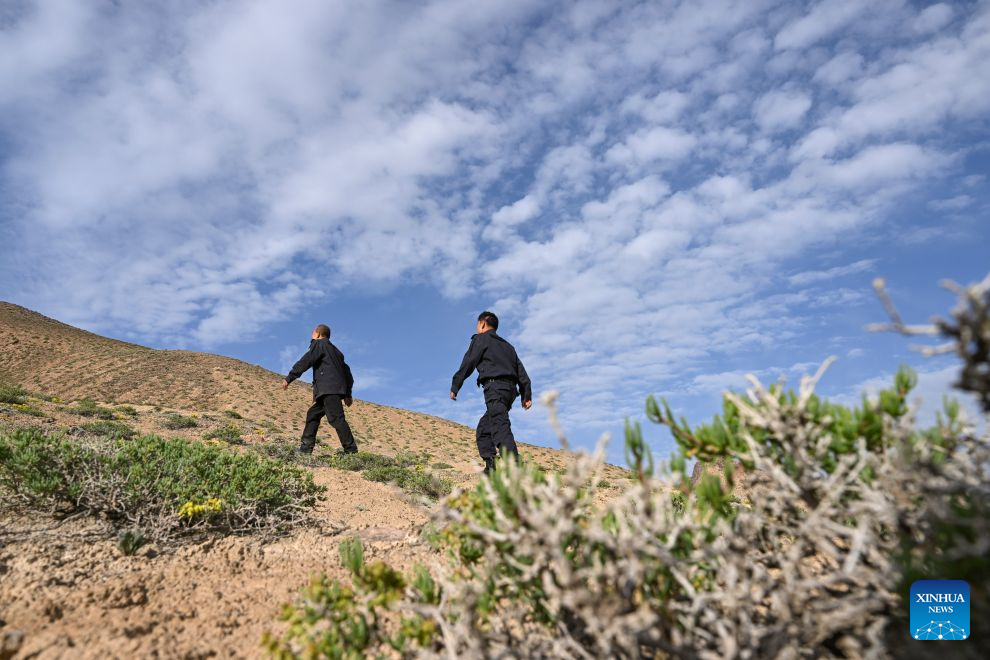
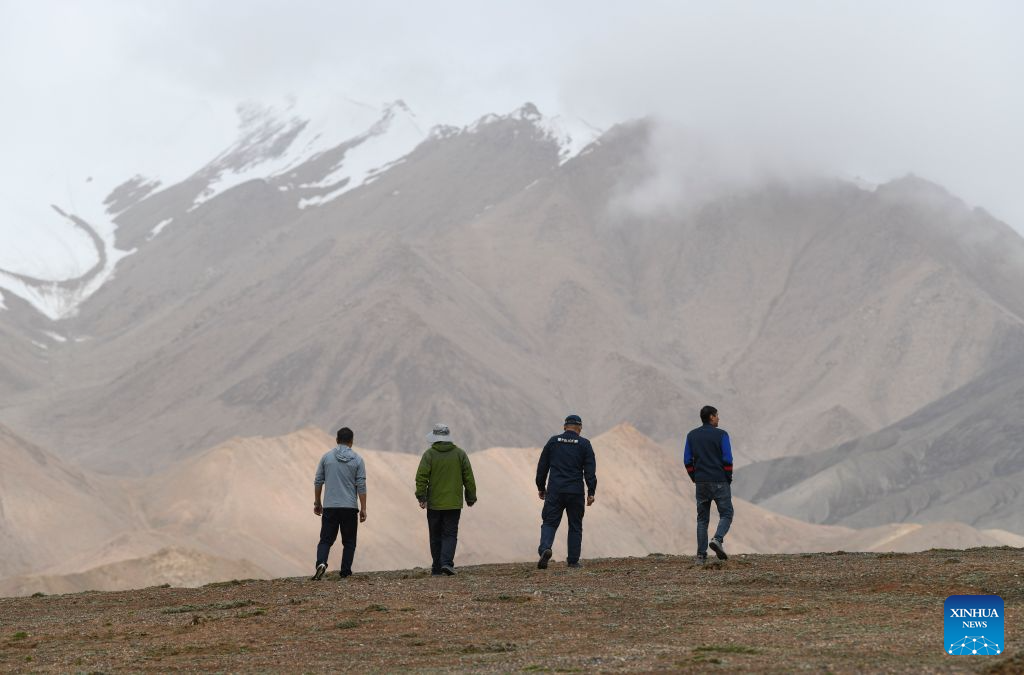
Rangers patrol near a management station in the Altun Mountain National Nature Reserve in northwest China's Xinjiang Uygur Autonomous Region, on Aug. 10, 2026. Averaging 4,500 meters in elevation, the Altun Mountain National Nature Reserve, a 45,000-square-kilometer haven situated in the southeastern corner of Xinjiang, is subject to harsh environmental conditions.
In early August, a patrol team comprising nature reserve staff, local township officials and police officers ventured into this remote plateau wilderness for a monthly routine patrol.
Bumping along a dry river valley winding through the mountains, the team members checked for suspicious signs, observed wildlife, and maintained management station facilities. They conducted routine inspections within the reserve supported by advanced technological equipment, including high-altitude surveillance cameras, infrared cameras and drones. Their main mission was to curb illegal activities to ensure protection of one of China's most remote and ecologically vital sanctuaries.
At nearly 4,800 meters above sea level, almost every member of the team suffered from altitude sickness like headaches and insomnia, but their firm conviction to protect this reserve gave them strength to overcome challenges and carry on with their work.
Established in 1983, the reserve is managed by a team of about 70 people. Over the past 40 years, generation after generation of patrollers have devoted themselves to protecting this land with stark contrasts and rich biodiversity. (Xinhua/Hu Huhu)

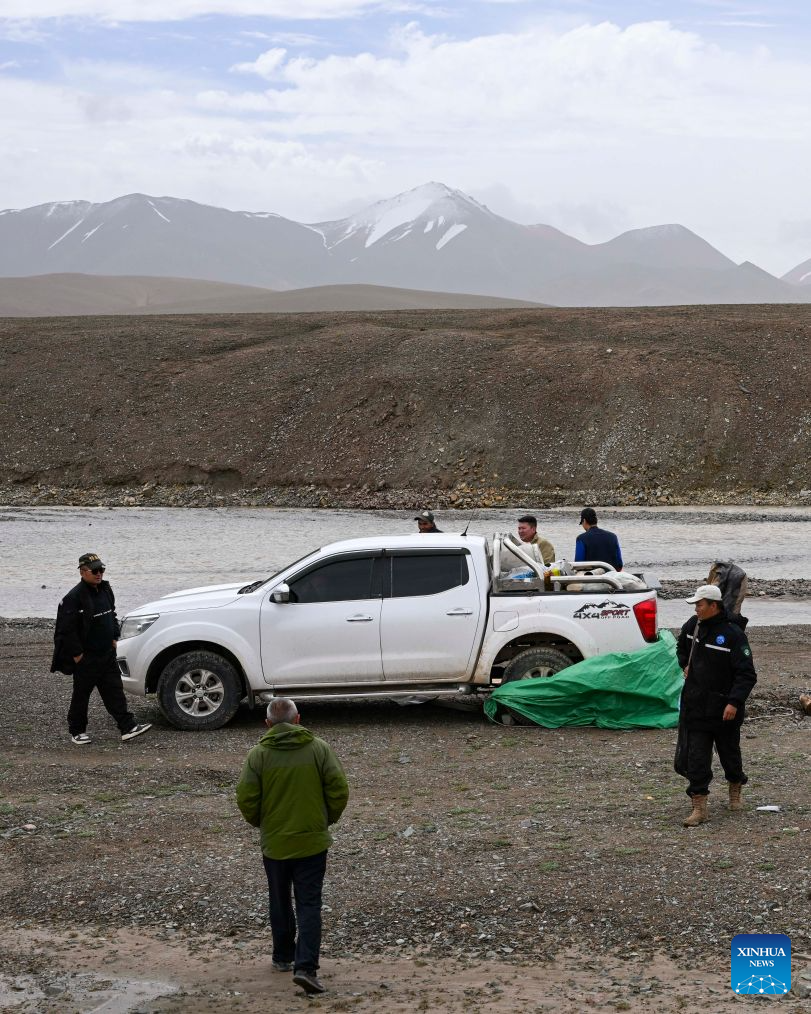
Ranger Li Jian drives across a river while patrolling the Altun Mountain National Nature Reserve in northwest China's Xinjiang Uygur Autonomous Region, on Aug. 8, 2026. Averaging 4,500 meters in elevation, the Altun Mountain National Nature Reserve, a 45,000-square-kilometer haven situated in the southeastern corner of Xinjiang, is subject to harsh environmental conditions.
In early August, a patrol team comprising nature reserve staff, local township officials and police officers ventured into this remote plateau wilderness for a monthly routine patrol.
Bumping along a dry river valley winding through the mountains, the team members checked for suspicious signs, observed wildlife, and maintained management station facilities. They conducted routine inspections within the reserve supported by advanced technological equipment, including high-altitude surveillance cameras, infrared cameras and drones. Their main mission was to curb illegal activities to ensure protection of one of China's most remote and ecologically vital sanctuaries.
At nearly 4,800 meters above sea level, almost every member of the team suffered from altitude sickness like headaches and insomnia, but their firm conviction to protect this reserve gave them strength to overcome challenges and carry on with their work.
Established in 1983, the reserve is managed by a team of about 70 people. Over the past 40 years, generation after generation of patrollers have devoted themselves to protecting this land with stark contrasts and rich biodiversity. (Xinhua/Hu Huhu)

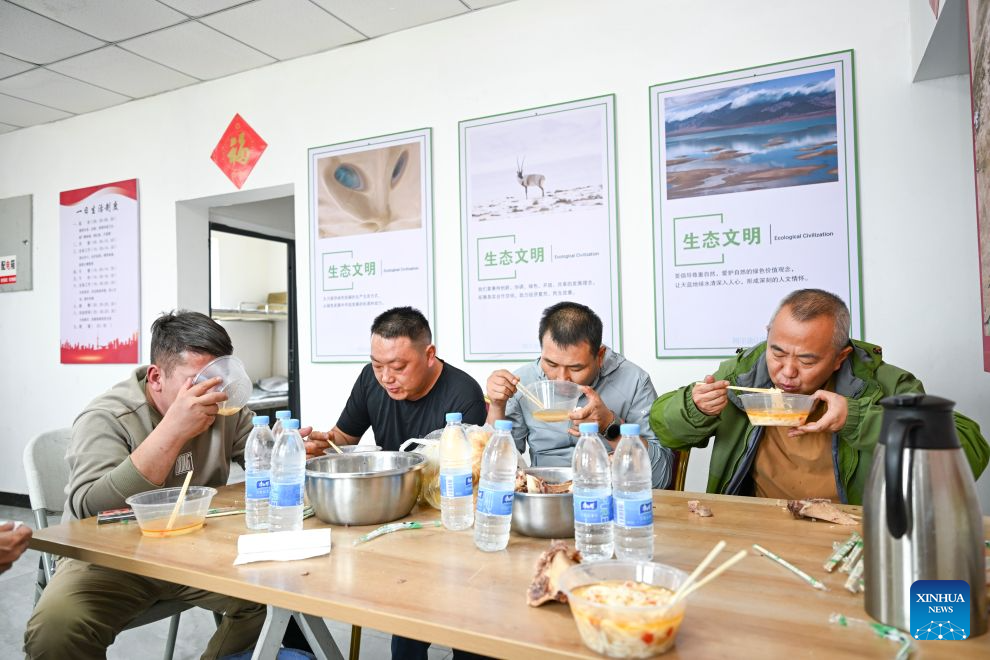
Rangers have meals after arriving at a management station in the Altun Mountain National Nature Reserve in northwest China's Xinjiang Uygur Autonomous Region, on Aug. 7, 2026. Averaging 4,500 meters in elevation, the Altun Mountain National Nature Reserve, a 45,000-square-kilometer haven situated in the southeastern corner of Xinjiang, is subject to harsh environmental conditions.
In early August, a patrol team comprising nature reserve staff, local township officials and police officers ventured into this remote plateau wilderness for a monthly routine patrol.
Bumping along a dry river valley winding through the mountains, the team members checked for suspicious signs, observed wildlife, and maintained management station facilities. They conducted routine inspections within the reserve supported by advanced technological equipment, including high-altitude surveillance cameras, infrared cameras and drones. Their main mission was to curb illegal activities to ensure protection of one of China's most remote and ecologically vital sanctuaries.
At nearly 4,800 meters above sea level, almost every member of the team suffered from altitude sickness like headaches and insomnia, but their firm conviction to protect this reserve gave them strength to overcome challenges and carry on with their work.
Established in 1983, the reserve is managed by a team of about 70 people. Over the past 40 years, generation after generation of patrollers have devoted themselves to protecting this land with stark contrasts and rich biodiversity. (Xinhua/Hu Huhu)

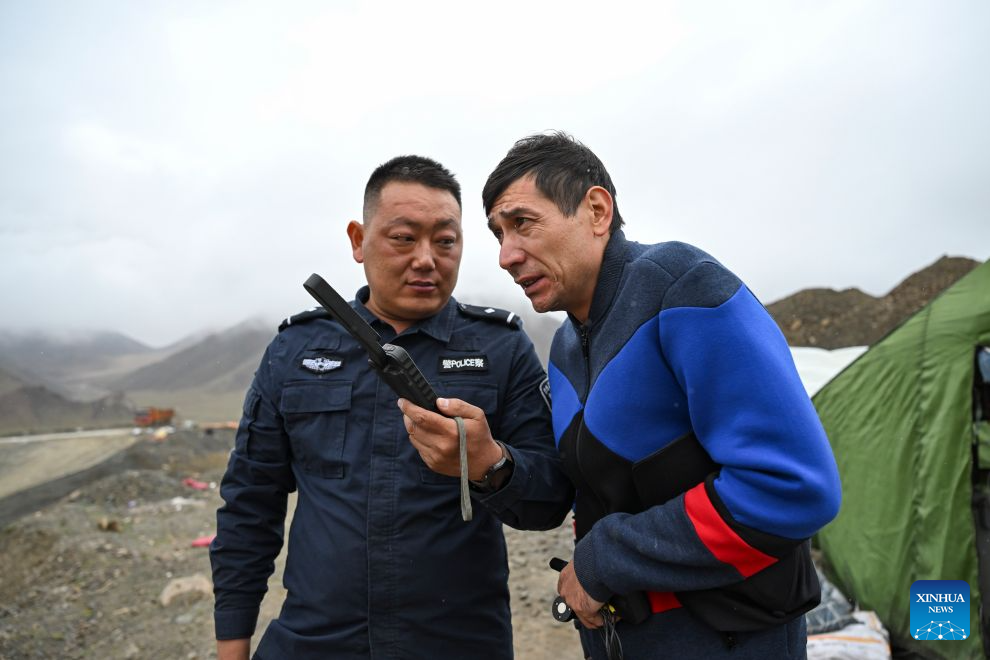
Rangers Turgun Pardi (R) and Li Jian keep in touch with the outside world via satellite phone while patrolling the Altun Mountain National Nature Reserve in northwest China's Xinjiang Uygur Autonomous Region, on Aug. 8, 2026. Averaging 4,500 meters in elevation, the Altun Mountain National Nature Reserve, a 45,000-square-kilometer haven situated in the southeastern corner of Xinjiang, is subject to harsh environmental conditions.
In early August, a patrol team comprising nature reserve staff, local township officials and police officers ventured into this remote plateau wilderness for a monthly routine patrol.
Bumping along a dry river valley winding through the mountains, the team members checked for suspicious signs, observed wildlife, and maintained management station facilities. They conducted routine inspections within the reserve supported by advanced technological equipment, including high-altitude surveillance cameras, infrared cameras and drones. Their main mission was to curb illegal activities to ensure protection of one of China's most remote and ecologically vital sanctuaries.
At nearly 4,800 meters above sea level, almost every member of the team suffered from altitude sickness like headaches and insomnia, but their firm conviction to protect this reserve gave them strength to overcome challenges and carry on with their work.
Established in 1983, the reserve is managed by a team of about 70 people. Over the past 40 years, generation after generation of patrollers have devoted themselves to protecting this land with stark contrasts and rich biodiversity. (Xinhua/Hu Huhu)

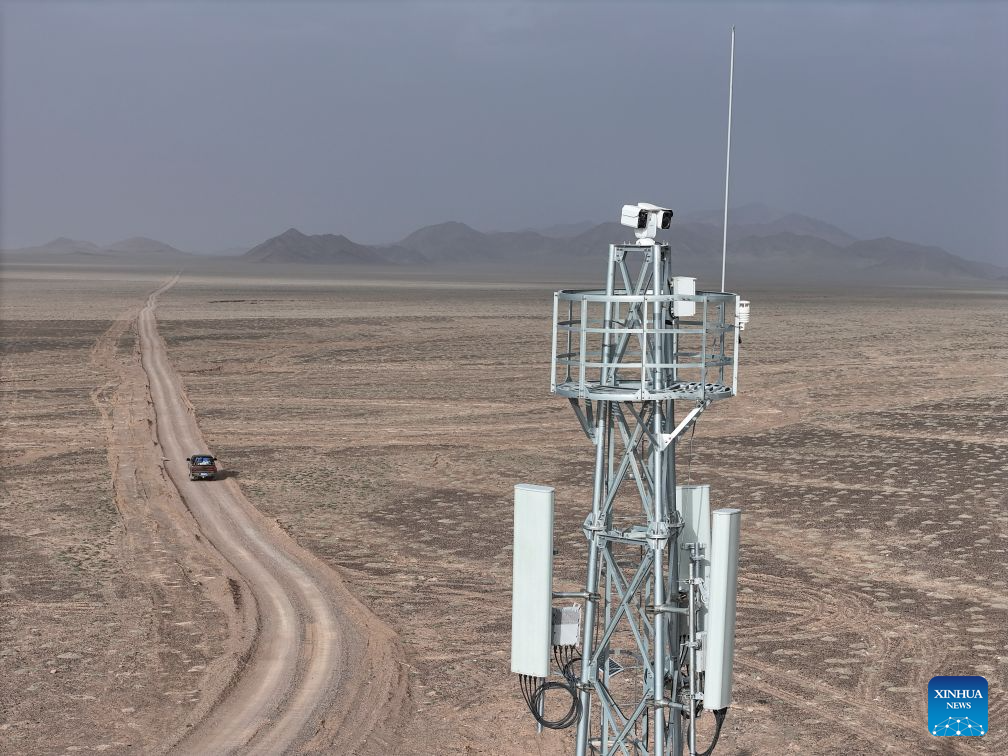
A drone photo taken on Aug. 9, 2026 shows rangers driving past a high-altitude surveillance camera used to monitor the Altun Mountain National Nature Reserve in northwest China's Xinjiang Uygur Autonomous Region. Averaging 4,500 meters in elevation, the Altun Mountain National Nature Reserve, a 45,000-square-kilometer haven situated in the southeastern corner of Xinjiang, is subject to harsh environmental conditions.
In early August, a patrol team comprising nature reserve staff, local township officials and police officers ventured into this remote plateau wilderness for a monthly routine patrol.
Bumping along a dry river valley winding through the mountains, the team members checked for suspicious signs, observed wildlife, and maintained management station facilities. They conducted routine inspections within the reserve supported by advanced technological equipment, including high-altitude surveillance cameras, infrared cameras and drones. Their main mission was to curb illegal activities to ensure protection of one of China's most remote and ecologically vital sanctuaries.
At nearly 4,800 meters above sea level, almost every member of the team suffered from altitude sickness like headaches and insomnia, but their firm conviction to protect this reserve gave them strength to overcome challenges and carry on with their work.
Established in 1983, the reserve is managed by a team of about 70 people. Over the past 40 years, generation after generation of patrollers have devoted themselves to protecting this land with stark contrasts and rich biodiversity. (Xinhua/Hu Huhu)

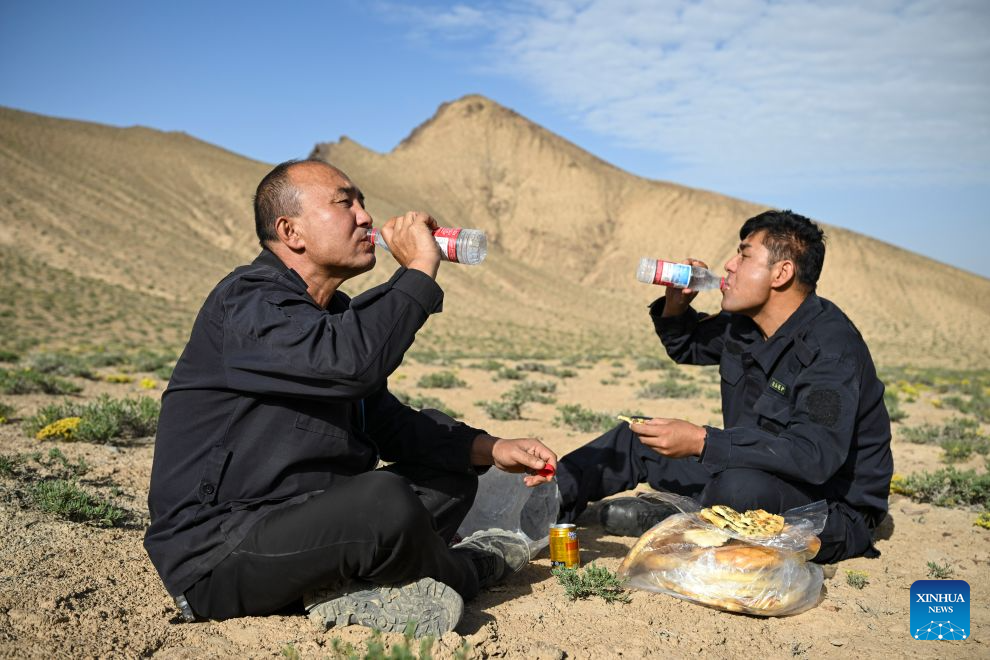
Rangers Arkin Juma (L) and Yusupjan Sulayman have meals while patrolling the Altun Mountain National Nature Reserve in northwest China's Xinjiang Uygur Autonomous Region, on Aug. 10, 2026. Averaging 4,500 meters in elevation, the Altun Mountain National Nature Reserve, a 45,000-square-kilometer haven situated in the southeastern corner of Xinjiang, is subject to harsh environmental conditions.
In early August, a patrol team comprising nature reserve staff, local township officials and police officers ventured into this remote plateau wilderness for a monthly routine patrol.
Bumping along a dry river valley winding through the mountains, the team members checked for suspicious signs, observed wildlife, and maintained management station facilities. They conducted routine inspections within the reserve supported by advanced technological equipment, including high-altitude surveillance cameras, infrared cameras and drones. Their main mission was to curb illegal activities to ensure protection of one of China's most remote and ecologically vital sanctuaries.
At nearly 4,800 meters above sea level, almost every member of the team suffered from altitude sickness like headaches and insomnia, but their firm conviction to protect this reserve gave them strength to overcome challenges and carry on with their work.
Established in 1983, the reserve is managed by a team of about 70 people. Over the past 40 years, generation after generation of patrollers have devoted themselves to protecting this land with stark contrasts and rich biodiversity. (Xinhua/Hu Huhu)

Rangers check an abandoned car left by illegal intruders in the Altun Mountain National Nature Reserve in northwest China's Xinjiang Uygur Autonomous Region, on Aug. 8, 2026. Averaging 4,500 meters in elevation, the Altun Mountain National Nature Reserve, a 45,000-square-kilometer haven situated in the southeastern corner of Xinjiang, is subject to harsh environmental conditions.
In early August, a patrol team comprising nature reserve staff, local township officials and police officers ventured into this remote plateau wilderness for a monthly routine patrol.
Bumping along a dry river valley winding through the mountains, the team members checked for suspicious signs, observed wildlife, and maintained management station facilities. They conducted routine inspections within the reserve supported by advanced technological equipment, including high-altitude surveillance cameras, infrared cameras and drones. Their main mission was to curb illegal activities to ensure protection of one of China's most remote and ecologically vital sanctuaries.
At nearly 4,800 meters above sea level, almost every member of the team suffered from altitude sickness like headaches and insomnia, but their firm conviction to protect this reserve gave them strength to overcome challenges and carry on with their work.
Established in 1983, the reserve is managed by a team of about 70 people. Over the past 40 years, generation after generation of patrollers have devoted themselves to protecting this land with stark contrasts and rich biodiversity. (Xinhua/Hu Huhu)

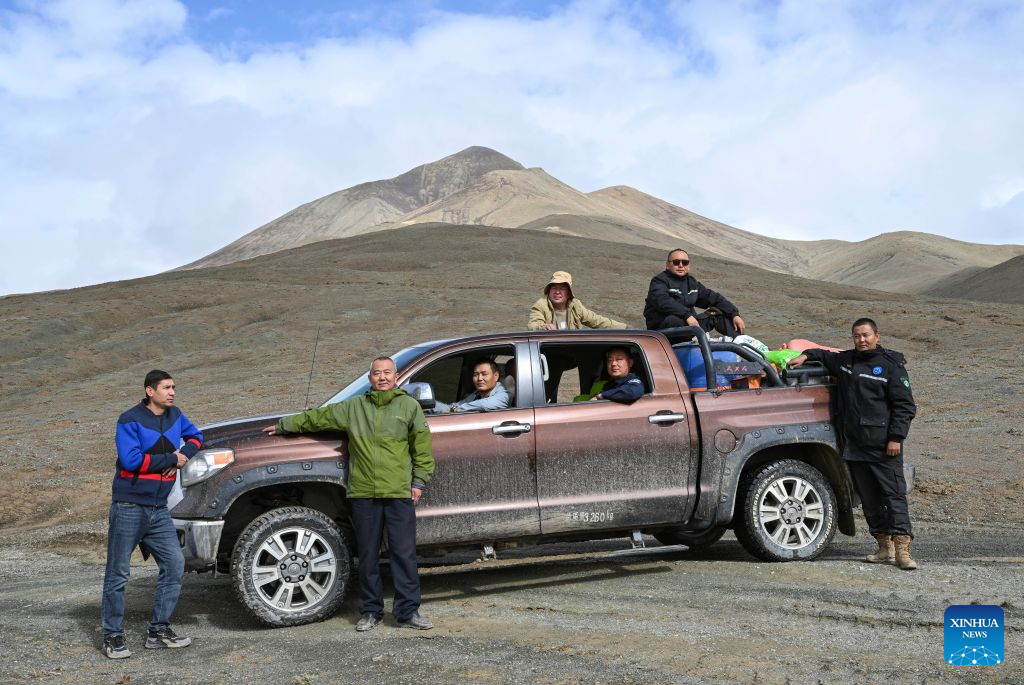
Patrol team members Turgun Pardi, Chen Wei, Chen Xiaobin, Hadi Yasen, Li Jian, Badumujiafu and Airiqin (L to R) pose for a group photo in the Altun Mountain National Nature Reserve in northwest China's Xinjiang Uygur Autonomous Region, on Aug. 9, 2026. Averaging 4,500 meters in elevation, the Altun Mountain National Nature Reserve, a 45,000-square-kilometer haven situated in the southeastern corner of Xinjiang, is subject to harsh environmental conditions.
In early August, a patrol team comprising nature reserve staff, local township officials and police officers ventured into this remote plateau wilderness for a monthly routine patrol.
Bumping along a dry river valley winding through the mountains, the team members checked for suspicious signs, observed wildlife, and maintained management station facilities. They conducted routine inspections within the reserve supported by advanced technological equipment, including high-altitude surveillance cameras, infrared cameras and drones. Their main mission was to curb illegal activities to ensure protection of one of China's most remote and ecologically vital sanctuaries.
At nearly 4,800 meters above sea level, almost every member of the team suffered from altitude sickness like headaches and insomnia, but their firm conviction to protect this reserve gave them strength to overcome challenges and carry on with their work.
Established in 1983, the reserve is managed by a team of about 70 people. Over the past 40 years, generation after generation of patrollers have devoted themselves to protecting this land with stark contrasts and rich biodiversity. (Xinhua/Hu Huhu)

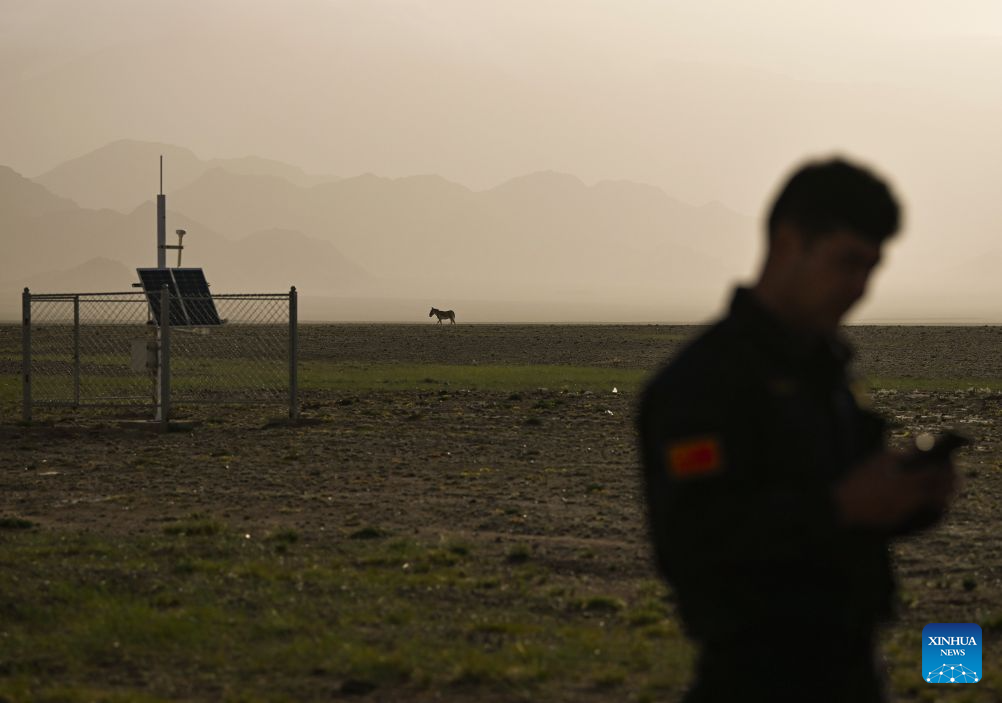
A ranger works when a Tibetan wild ass in the distance walks past near a management station in the Altun Mountain National Nature Reserve in northwest China's Xinjiang Uygur Autonomous Region, on Aug. 10, 2026. Averaging 4,500 meters in elevation, the Altun Mountain National Nature Reserve, a 45,000-square-kilometer haven situated in the southeastern corner of Xinjiang, is subject to harsh environmental conditions.
In early August, a patrol team comprising nature reserve staff, local township officials and police officers ventured into this remote plateau wilderness for a monthly routine patrol.
Bumping along a dry river valley winding through the mountains, the team members checked for suspicious signs, observed wildlife, and maintained management station facilities. They conducted routine inspections within the reserve supported by advanced technological equipment, including high-altitude surveillance cameras, infrared cameras and drones. Their main mission was to curb illegal activities to ensure protection of one of China's most remote and ecologically vital sanctuaries.
At nearly 4,800 meters above sea level, almost every member of the team suffered from altitude sickness like headaches and insomnia, but their firm conviction to protect this reserve gave them strength to overcome challenges and carry on with their work.
Established in 1983, the reserve is managed by a team of about 70 people. Over the past 40 years, generation after generation of patrollers have devoted themselves to protecting this land with stark contrasts and rich biodiversity. (Xinhua/Hu Huhu)

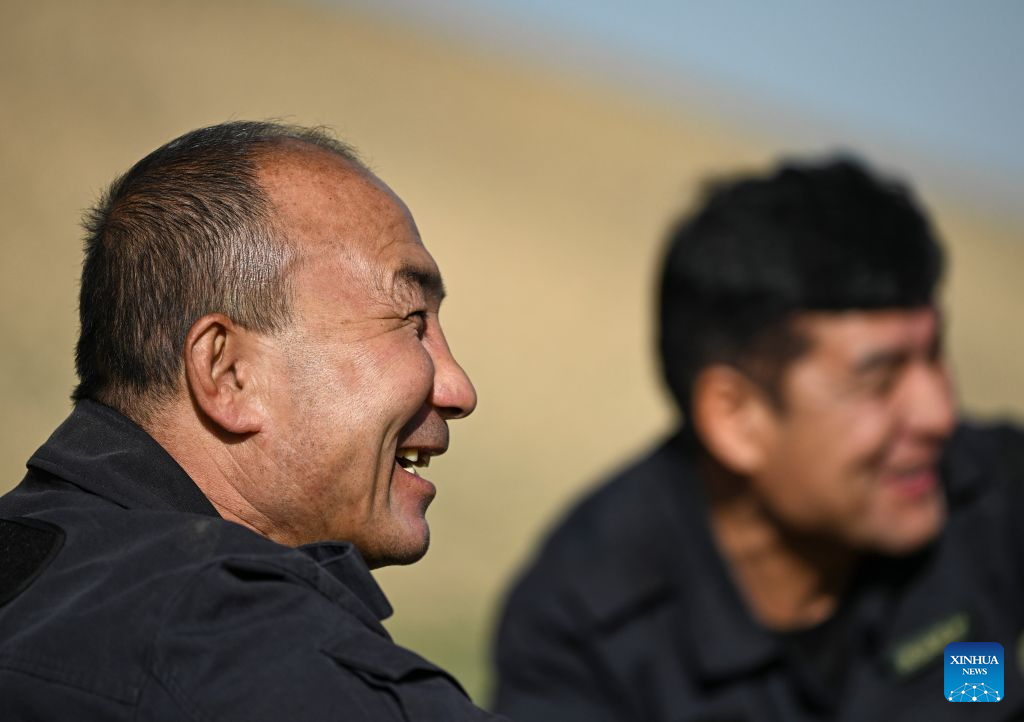
Ranger Arkin Juma (L) talks with his partner while patrolling the Altun Mountain National Nature Reserve in northwest China's Xinjiang Uygur Autonomous Region, on Aug. 10, 2026. Averaging 4,500 meters in elevation, the Altun Mountain National Nature Reserve, a 45,000-square-kilometer haven situated in the southeastern corner of Xinjiang, is subject to harsh environmental conditions.
In early August, a patrol team comprising nature reserve staff, local township officials and police officers ventured into this remote plateau wilderness for a monthly routine patrol.
Bumping along a dry river valley winding through the mountains, the team members checked for suspicious signs, observed wildlife, and maintained management station facilities. They conducted routine inspections within the reserve supported by advanced technological equipment, including high-altitude surveillance cameras, infrared cameras and drones. Their main mission was to curb illegal activities to ensure protection of one of China's most remote and ecologically vital sanctuaries.
At nearly 4,800 meters above sea level, almost every member of the team suffered from altitude sickness like headaches and insomnia, but their firm conviction to protect this reserve gave them strength to overcome challenges and carry on with their work.
Established in 1983, the reserve is managed by a team of about 70 people. Over the past 40 years, generation after generation of patrollers have devoted themselves to protecting this land with stark contrasts and rich biodiversity. (Xinhua/Hu Huhu)

Rangers Chen Wei (R) and Yusupjan Sulayman buy vegetables at a market in Ruoqiang County before starting their inspection work bound for the Altun Mountain National Nature Reserve in northwest China's Xinjiang Uygur Autonomous Region, on Aug. 6, 2026. Averaging 4,500 meters in elevation, the Altun Mountain National Nature Reserve, a 45,000-square-kilometer haven situated in the southeastern corner of Xinjiang, is subject to harsh environmental conditions.
In early August, a patrol team comprising nature reserve staff, local township officials and police officers ventured into this remote plateau wilderness for a monthly routine patrol.
Bumping along a dry river valley winding through the mountains, the team members checked for suspicious signs, observed wildlife, and maintained management station facilities. They conducted routine inspections within the reserve supported by advanced technological equipment, including high-altitude surveillance cameras, infrared cameras and drones. Their main mission was to curb illegal activities to ensure protection of one of China's most remote and ecologically vital sanctuaries.
At nearly 4,800 meters above sea level, almost every member of the team suffered from altitude sickness like headaches and insomnia, but their firm conviction to protect this reserve gave them strength to overcome challenges and carry on with their work.
Established in 1983, the reserve is managed by a team of about 70 people. Over the past 40 years, generation after generation of patrollers have devoted themselves to protecting this land with stark contrasts and rich biodiversity. (Xinhua/Hu Huhu)

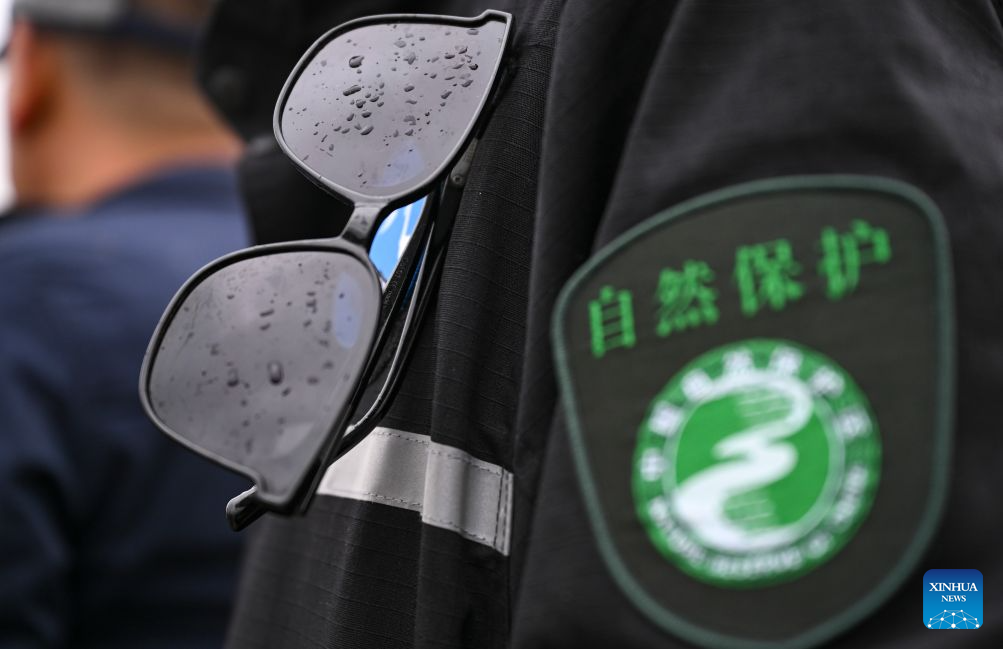
A pair of sunglasses of a patrol team member is pictured amid rain while rangers patrolling the Altun Mountain National Nature Reserve in northwest China's Xinjiang Uygur Autonomous Region, on Aug. 8, 2026. Averaging 4,500 meters in elevation, the Altun Mountain National Nature Reserve, a 45,000-square-kilometer haven situated in the southeastern corner of Xinjiang, is subject to harsh environmental conditions.
In early August, a patrol team comprising nature reserve staff, local township officials and police officers ventured into this remote plateau wilderness for a monthly routine patrol.
Bumping along a dry river valley winding through the mountains, the team members checked for suspicious signs, observed wildlife, and maintained management station facilities. They conducted routine inspections within the reserve supported by advanced technological equipment, including high-altitude surveillance cameras, infrared cameras and drones. Their main mission was to curb illegal activities to ensure protection of one of China's most remote and ecologically vital sanctuaries.
At nearly 4,800 meters above sea level, almost every member of the team suffered from altitude sickness like headaches and insomnia, but their firm conviction to protect this reserve gave them strength to overcome challenges and carry on with their work.
Established in 1983, the reserve is managed by a team of about 70 people. Over the past 40 years, generation after generation of patrollers have devoted themselves to protecting this land with stark contrasts and rich biodiversity. (Xinhua/Hu Huhu)