LHASA, Aug. 16 (Xinhua) -- Wild plateau red deer are instinctively wary of humans and always stay away.
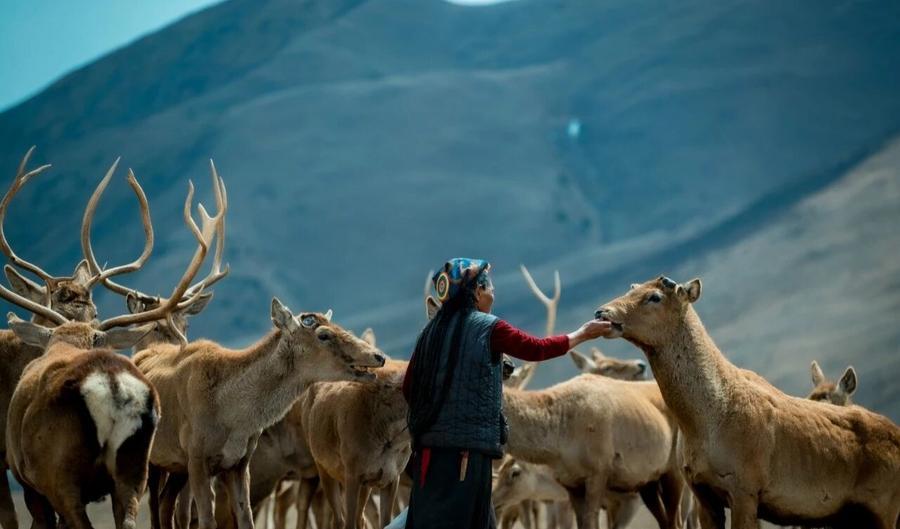
But at a nature reserve for the species under second-class national protection in southwest China's Xizang Autonomous Region, things are different. When reserve ranger Pema Tsewang kneels to offer them turnips mixed with coarse salt, a special treat for the tough seasons, the once-timid deer come close, gently rubbing against his arms.
Such intimate contact comes from 55 years of consistent company and protection passed down through the herder's family in Riwoqe County in the rural area of Qamdo.
The story traces back to Pema Tsewang's mother, Changchub Lhamo, who started the extraordinary wildlife protection journey in 1970.
At the age of 15, Changchub Lhamo rescued three helpless newborn red deer fawns on a freezing, snowy night. After waiting a long time without seeing their parents return, she decided to take the fawns home to protect them from predators and starvation.
At that time, local herders barely scraped by, relying on just a handful of yaks to survive.
"Even so, mother squeezed warm yak milk and fed them directly from her mouth," said Pema Tsewang, who grew up hearing the story from his mother. "At night, she tucked them beside her in bed to shield them from the bitter cold."
Knowing nature was their real home, Changchub Lhamo released the deer into the wild two years later, when the deer grew mature enough, despite her reluctance.
To her surprise, the following winter, the deer came back, this time with a few more in tow. Like her own kids, she named them, one of which was named after herself.
After learning about the story, in 1975, the local government allocated a pasture for the red deer to graze during winter and hired Changchub Lhamo as a ranger.
The Riwoqe red deer nature reserve was established in 1993 and upgraded to a national one in 2005.
For decades, Changchub Lhamo carried salt and turnips across rough mountain roads to feed the deer in dry seasons. In freezing winters when rivers froze solid, she chipped ice to fetch drinking water for the red deer. Her hands were permanently chapped and cracked from years of working in the bitter cold.
The harshest test came in early spring 2008, when a severe snowstorm buried the whole pasture under one meter of snow. Fearing hundreds of red deer would starve or freeze to death, Changchub Lhamo organized family members and villagers to deliver supplies deep into the snowfield.
"Days of backbreaking labor left my mother with severe frostbite in her legs. She could barely stand, but still refused to stop and rest," Pema Tsewang recalled. At the last remote feeding site, when the weak red deer gathered around and licked her swollen, frozen hands, the lifelong protector broke down in tears.
With consistent government and individual protection efforts, the red deer population on the 120,000-hectare reserve has grown from over 500 to more than 8,000.
China has continued to strengthen ecological conservation and environmental protection, with the landmark Ecological and Environmental Code taking effect on Saturday. It marks another major step in these efforts, providing stronger legal support for sustainable and environmentally friendly development.
As one of the regions with the healthiest ecosystems in the world, Xizang has always prioritized eco-environmental conservation. Official statistics show that the region has established 47 nature reserves of all kinds, covering 412,200 square kilometers, according to a government white paper issued last year.
Changchub Lhamo died in 2024. Yet her lifelong commitment lives on.
Her son Pema Tsewang works on the reserve as a ranger. Herdsmen in surrounding areas have greatly boosted their wildlife protection awareness by voluntarily keeping off red deer feeding pastures and reserving migration routes for the species. Inspired by her story, more than 80 volunteers have set up an ecological patrol team, with local villagers making up most of the members.
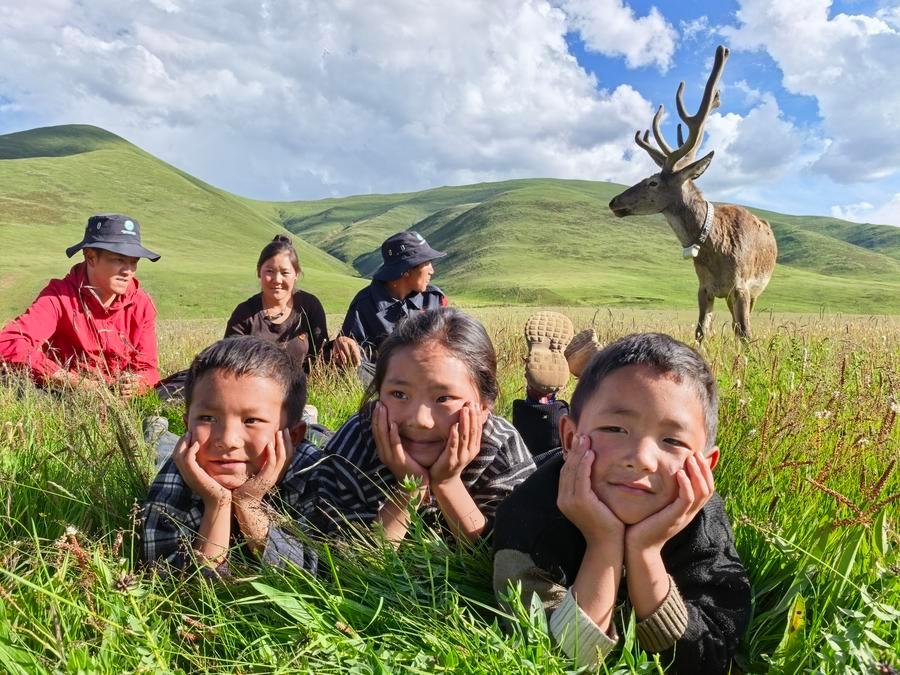
Now, the names of the rescued deer given by Changchub Lhamo have become part of the names of her three grandchildren. Every winter vacation, the children join their parents at the reserve, bringing turnips and salt, just as their grandmother used to.
"My oldest son loves softly touching the deer's hooves and treats them like friends. The bond between human and red deer will carry on," Pema Tsewang said. ■