*Launched in 2017, the rural revitalization strategy has paved the way for policies that support unique rural industries, greater integration of agriculture with other sectors and exciting new business models.
*As both the birthplace and a major hub of Huizhou culture, Huangshan has seamlessly woven its rich intangible heritage into village tourism. Visitors can try traditional crafts like woodcarving and seal engraving, or join locals in a lively bench dragon dance after nightfall.
*In the first quarter of 2026, rural tourism destinations across China received an estimated 793 million visits, up 12.2 percent year on year, generating 457 billion yuan (about 67.3 billion U.S. dollars) in revenue, up 10.9 percent, according to the Ministry of Culture and Tourism.
HEFEI, Aug. 15 (Xinhua) -- Six years ago, a small island in the Yangtze River in east China was very quiet and rarely visited by young people. Visitors arriving by ferry were greeted by little more than an empty pier and winding roads.
Today, the island in Xinzhou Township of east China's Anhui Province tells a different story. Upgraded roads cross the landscape, colorful murals brighten village homes, and cafes, boutique homestays and rural restaurants have popped up on the island.
With just over 1,000 people living there year-round, the island drew more than 8,000 visitors during this year's May Day holiday, many of them young people.
Among the island's top attractions is a coffee shop converted from a two-story village house. For Zhao Lei, who grew up in the city and now runs the cafe, it all began with her first visit to the island in May last year.
"The river breeze and the endless fields really struck me," she said. To her, they offered a distinctive beauty of the countryside and a slower pace of life that city life could not easily replicate.
She then reached out to the township government to discuss the idea, rented the village house and took on the design and renovation herself, gradually turning her vision into reality.
"What I saw was a place full of possibilities yet to be defined," Zhao said.

As China's rural revitalization strategy advances, the story of the once-forgotten island offers a glimpse into the broader changes taking place across the vast countryside, where more than 450 million people reside.
Launched in 2017, the rural revitalization strategy has paved the way for policies that support unique rural industries, greater integration of agriculture with other sectors and exciting new business models.
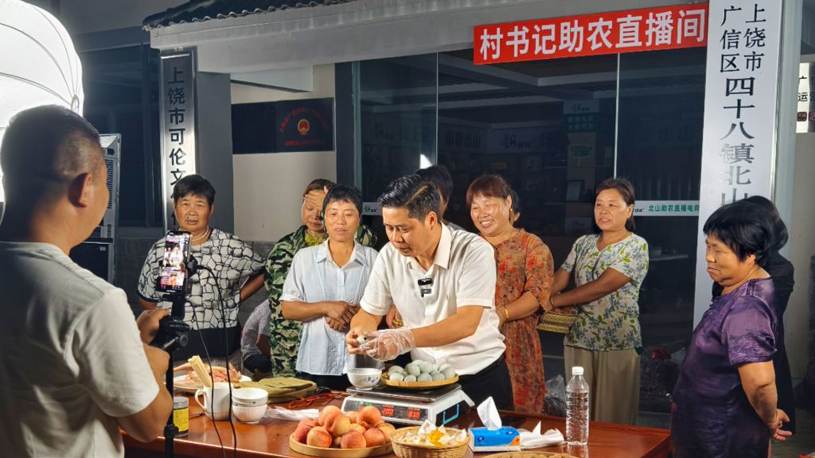
Football tournaments such as the village super league transform rural squares into a national sporting stage, village fashion shows reimagine traditional embroidery and ethnic dress in styles that resonate with younger audiences, and short-video creators bring village stories, crafts and cuisines to millions.
Increasingly, villages are tapping into their local cultural heritage to create new opportunities for development. To date, 8,155 villages have been included on the national list of protected traditional villages, while more than 12,900 intangible cultural heritage workshops have been established, directly creating jobs for more than 1 million people.
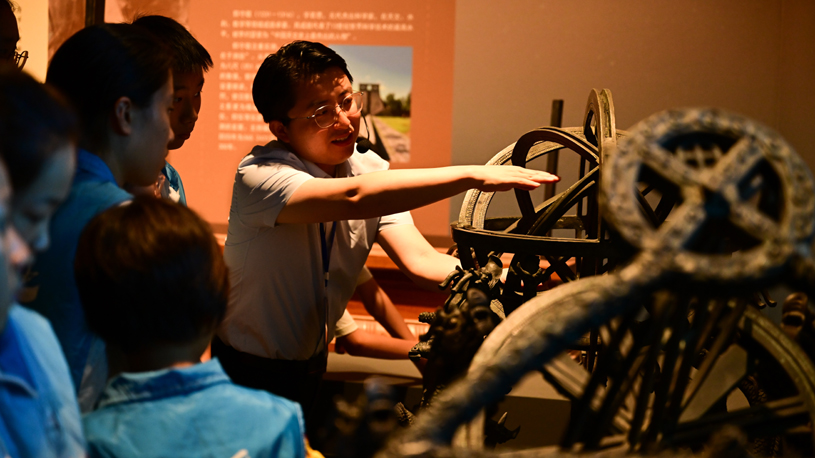
This summer, Xidi Village, a UNESCO World Heritage Site in the city of Huangshan in Anhui Province, has seen study tours become a major draw, offering children a hands-on way to explore its distinctive architecture and traditional culture.
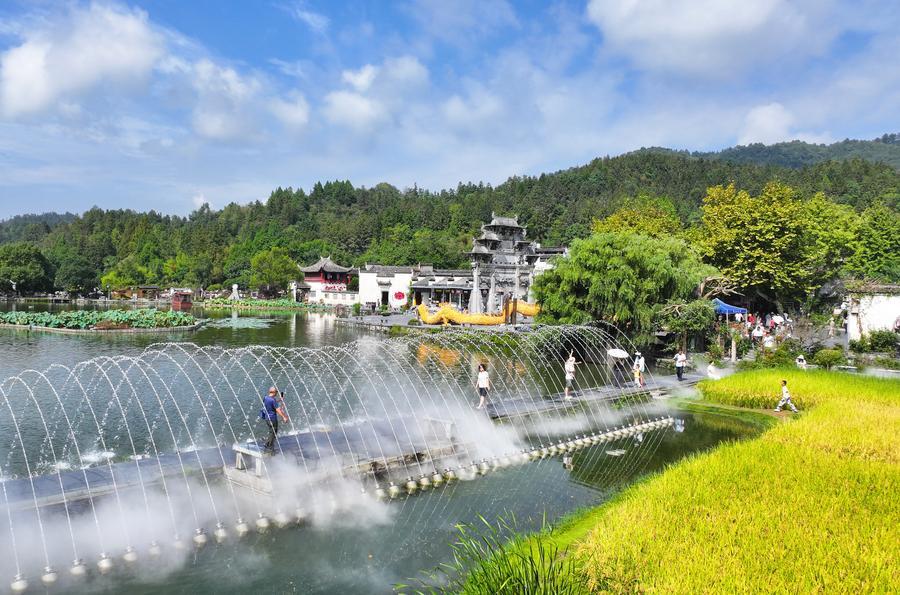
Known for its well-preserved residential architecture from the Ming and Qing dynasties (1368-1911), Xidi features ancient homes that have unique local style and are adorned with meaningful couplets that reflect centuries-old values of learning, morality and harmony.
"I came here and got to see the courtyards, horse-head walls and bluestone up close. It was such a unique experience," said Zou Ziyue, a student from Shenzhen in south China.
A recently aired TV drama centered on Huizhou ink-making, a craft with a history spanning more than 1,000 years and one of China's first national-level intangible cultural heritage items, has further drawn visitors to its filming locations in Xidi.
Visitors can pick up drama-themed souvenirs, dress in styles inspired by their favorite characters and pose for themed photo shoots, and even sample dishes featured in the drama.
"After finishing the drama, I couldn't wait to come to Xidi and experience it for myself. From traditional craftsmanship to family traditions, there is something uniquely Chinese and romantic about this place nestled among the mountains," one visitor wrote on Xiaohongshu, a Chinese lifestyle-sharing platform.
As both the birthplace and a major hub of Huizhou culture, Huangshan has seamlessly woven its rich intangible heritage into village tourism. Visitors can try traditional crafts like woodcarving and seal engraving, or join locals in a lively bench dragon dance after nightfall.
"Here the intangible cultural heritage is not an isolated cultural symbol. Ancient villages provide the best setting for it to thrive," said Shen Yixin, a representative inheritor of local intangible cultural heritage.
The growing demand for rural tourism is reflected in a broader market. In the first quarter of 2026, rural tourism destinations across China received an estimated 793 million visits, up 12.2 percent year on year, generating 457 billion yuan (about 67.3 billion U.S. dollars) in revenue, up 10.9 percent, according to the Ministry of Culture and Tourism.
"Villages in more developed areas are gradually shifting from primarily agricultural production toward tourism, study tours and other functions," said Chen Chen, a professor at the College of Architecture and Urban Planning of Tongji University, in a recent article. "This is unlocking the value of rural resources and creating market momentum for rural renewal."
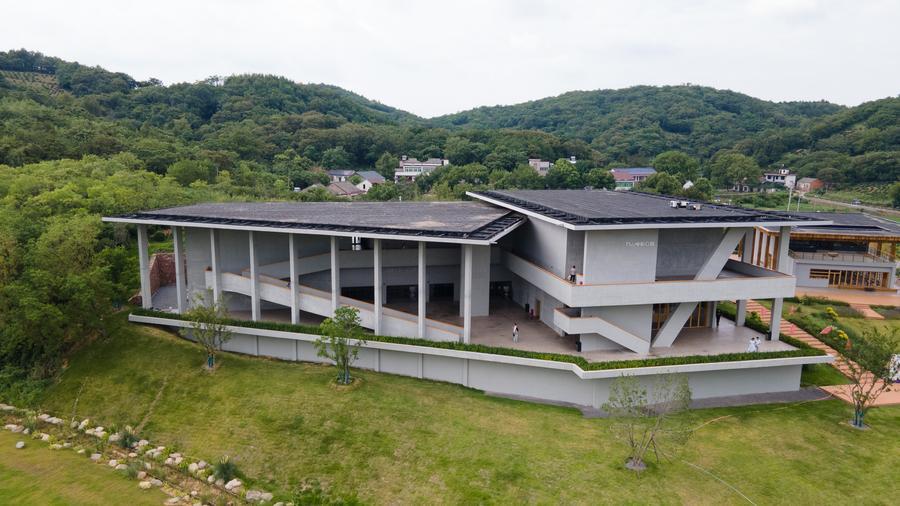
For local communities, this shift is forging closer ties with cities while creating more jobs and fresh opportunities to earn a living in the countryside.
In Wanshan Town of Hefei, the capital of Anhui Province, a cinema nestled in a green valley is part of a film-themed park that offers film screenings alongside tea, live music, local food and homestays, making it a popular weekend getaway for people from nearby cities.
"We screen more than 100 films a week, with weekend screenings often fully booked. The films are shown at the same time as those in urban theaters," said Qiu Xue, general manager of the movie park.
The park began operations in 2025. All the 15 employees are local villagers. It is expected to generate about 500,000 yuan in annual income for the village.
For 50-year-old Zhang Xiaoli, it brought her a chance to return home. After working in a factory in Shanghai earlier in her life, where she earned nearly 10,000 yuan a month but struggled to save, Zhang returned to her hometown and took a job as a cleaner at the movie park.
"My salary is lower than what I earned in Shanghai, but living costs are lower too. I am close to home, and after work I can meet up with my friends and relax," she said.
"Developing the multiple functions of agriculture" has also been incorporated as a measure in the outline of China's 15th Five-Year Plan (2026-2030), referring to efforts to ensure food security and supply while integrating agriculture with culture and tourism, and expanding the functions of rural areas in ecological conservation, leisure and recreation, and cultural heritage.
Experts believe the measure will encourage local governments over the next five years to tap the multiple functions of agriculture and unlock the diverse value of rural areas, creating stronger foundations for farmers to increase their incomes. ■