GUIYANG, Aug. 13 (Xinhua) -- With summer heatwaves sweeping across China, the country's southwestern karst areas are getting creative, offering unique tourism experiences in the depths of the cool caves.
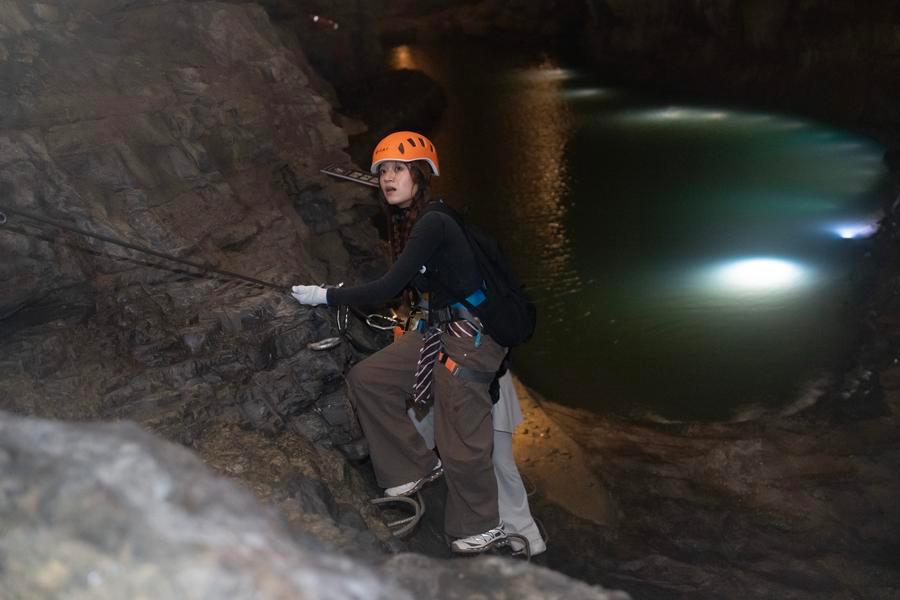
Following a guide, tourist Chang Ting ducked into a natural cave in Guizhou Province. After trekking about 100 meters along a narrow rocky path, her mobile signal disappeared.
"It felt like stepping into a crack in time, and all the noise faded away," said Chang, from Xi'an, capital city of northwestern Shaanxi Province.
This unique summer escape has emerged as a brand-new travel fad among young Chinese people during summer vacations. The fresh approach to cave-based sightseeing gives tourists more to explore while boosting summer spending.
Viral videos tagged "Guizhou cave exploration" have gained over 5 million likes on major lifestyle and short-video platforms, with related topics racking up hundreds of millions of views.
More than 60 percent of the mountainous Guizhou Province is covered by karst landforms, and a total of 42,800 karst cave entrances have been identified.
Leveraging these resources, the province has developed diverse experiential forms of cave tourism to cater to different groups of visitors. Options include outdoor cave adventures with challenging sports, in-depth underground river tours with social media-friendly photo ops, and relaxing cave visits featuring themed dining spaces.
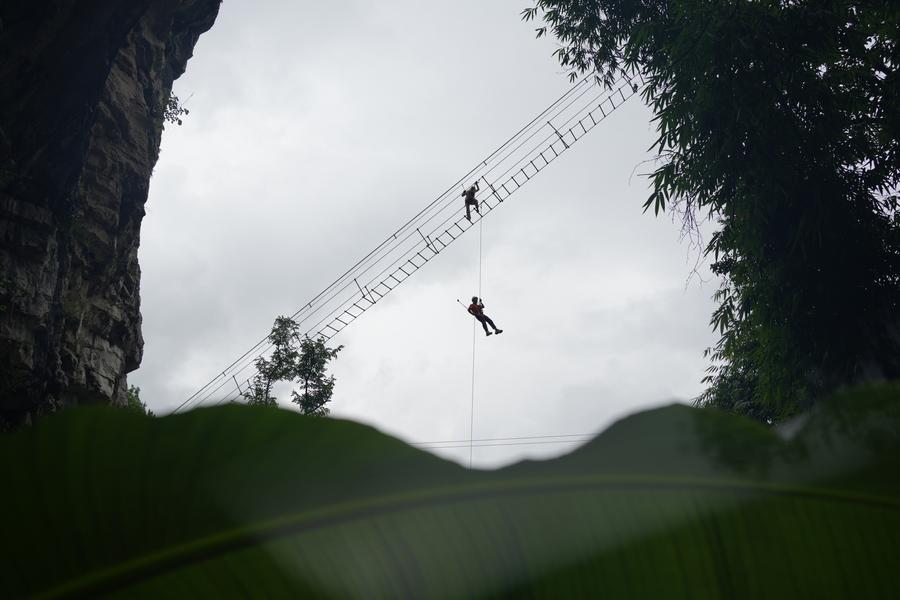
Song Yuanqiao and Zhao Fei, two veteran cave exploration lovers with rich cave rescue experience, run a cave adventure project in Yanzidong, or Sparrow Cave, in Guiding County. Relying on the original natural cave passages, they have designed outdoor challenge activities such as zip lines, tightrope bridges, and via ferrata climbing.
To turn this niche hobby into standardized commercial operations, Song and Zhao visited Hungary, Spain and other countries to learn cave route design, industrial codes and safety management standards.
Song recalled that back in 2018, cave exploration drew little public attention. In 2023, inquiries saw a dramatic spike as inexperienced tourists began asking about cave routes. "We never imagined it would become so popular now," Song said.
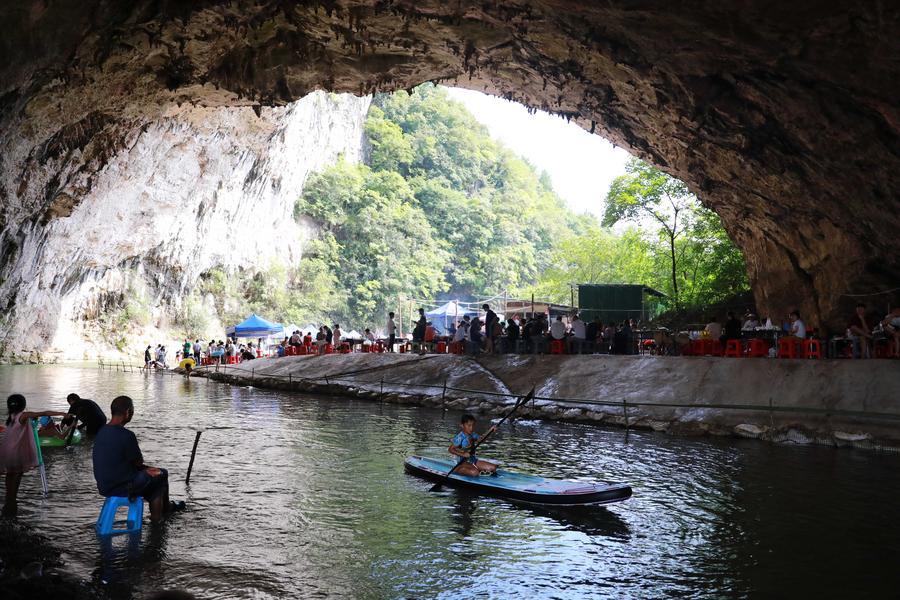
A cafe now stands at the cave entrance while thrilling rock climbing routes stretch deep inside. Since its trial operation in late April this year, the site has drawn more than 2,000 visitors.
The booming cave tourism has brought new job options for local young people. "Sports graduates like me only had jobs as ball coaches before, but now we have more choices," said Lei Yinggui, 23, a cave tour instructor.
The cave exploration trend has also inspired many migrant workers to return home and start their own businesses.
Returning from the southern metropolis of Shenzhen last year, Peng Wei opened a cave cafe with his former classmates in Xiuwen County.
"The longer I work away, the more I miss my hometown's scenery," Peng said.
They left the cave's natural landscape mostly untouched, adding minimal decoration. Now, tourists line up for their unique, waterfall-cooled coffee. The cafe sells up to 600 cups of coffee daily at peak time.
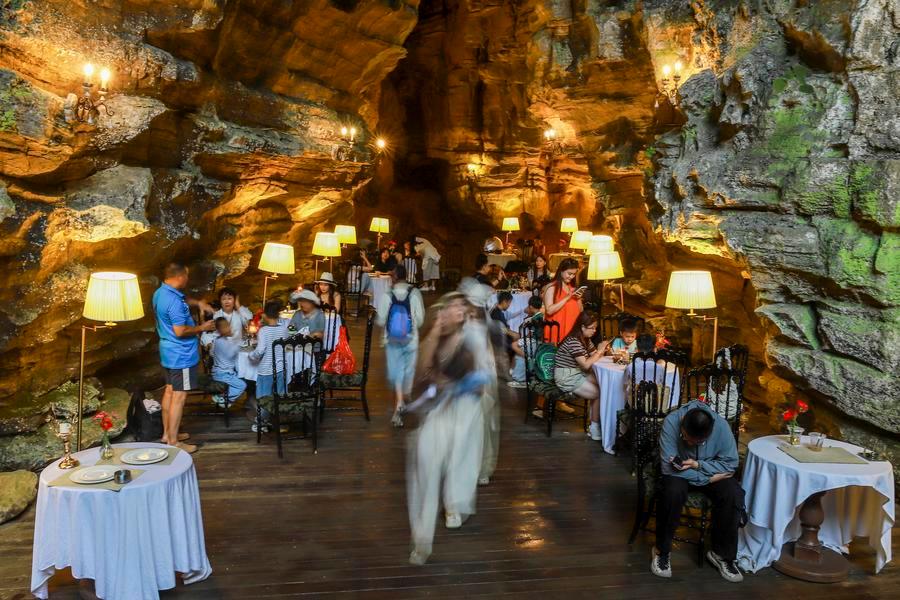
Beyond Guizhou's cave resorts, the northernmost Heilongjiang Province has developed forest summer getaways, the plateau region of Xizang rolled out high-altitude eco-retreats, and Xinjiang in the northwest launched grassland and mountain sightseeing, translating their distinctive cool climate resources into sustainable revenue through tourism.
The booming summer tourism aligns with the broader national top-level policy guidance to boost consumption.
Last month, China released the plan for expanding consumption for the 15th Five-Year Plan period (2026-2030), which encourages local governments to enrich distinctive tourism products such as summer cooling retreats, winter warm-weather getaways and coastal vacations.
To balance cave tourism with ecological protection, Guizhou has introduced a new management plan for its karst caves, covering cave classification and filing, ecological red line setting, orderly development and full-chain supervision.
"Karst caves are nonrenewable geological heritage. Proper resource management is the key to turning underground wonders into local benefits, and we must adhere to development within protection," said Zhang Zaijie, director of the green development strategy research institute at Guizhou University of Finance and Economics. ■