
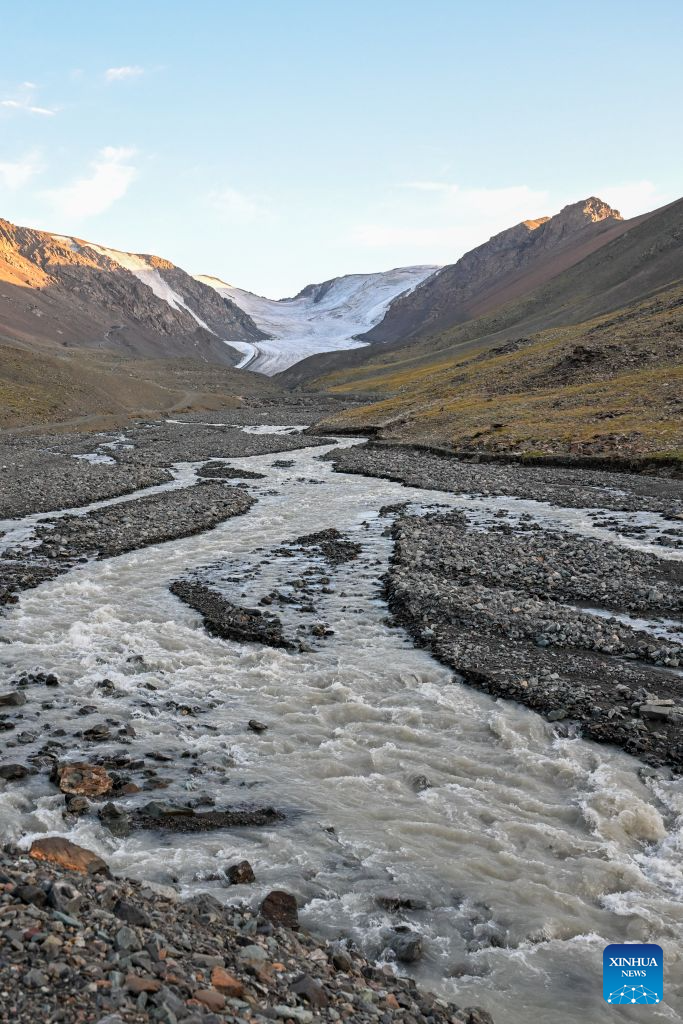
This photo taken on Aug. 10, 2026 shows a view of the Muz Taw Glacier in Altay, northwest China's Xinjiang Uygur Autonomous Region. In recent days, a scientific expedition to the Muz Taw Glacier in Altay was carried out by a research team from the Altay Mountains comprehensive observation and research station, in an effort to better understand the glacier's response to climate change and provide scientific data for glacier protection and water resources management in the region.
The team, affiliated with the Northwest Institute of Eco-Environment and Resources under the Chinese Academy of Sciences (CAS), conducted field observations at an altitude of 3,400 meters on the glacier, and systematically collected key data on meteorology, hydrology and glacier changes. (Xinhua/Ding Lei)
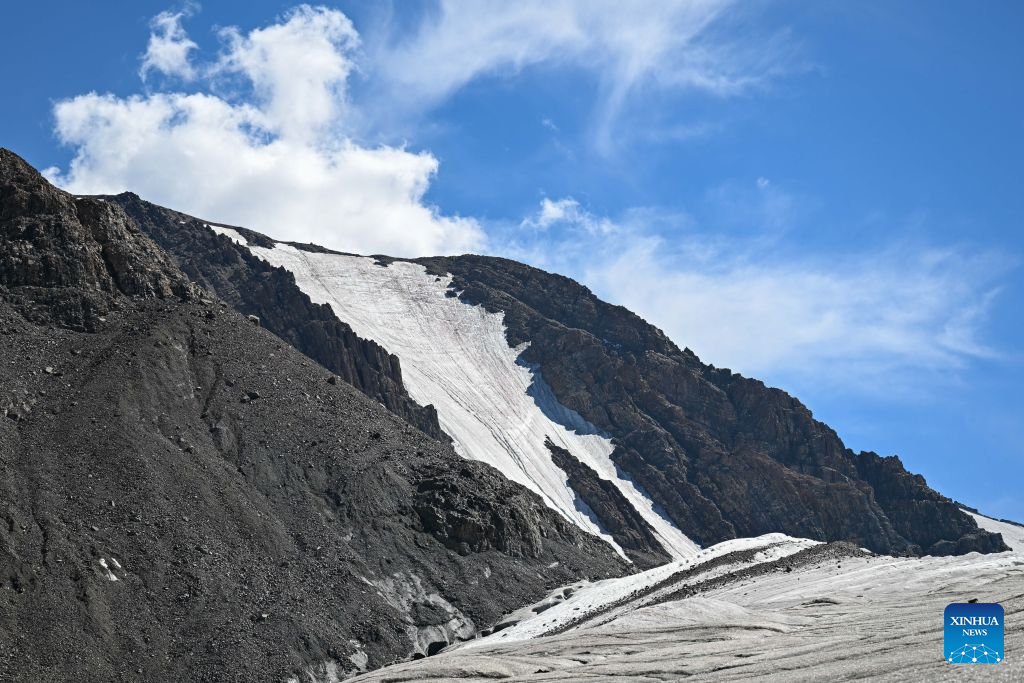
This photo taken on Aug. 10, 2026 shows a view of the Muz Taw Glacier in Altay, northwest China's Xinjiang Uygur Autonomous Region. In recent days, a scientific expedition to the Muz Taw Glacier in Altay was carried out by a research team from the Altay Mountains comprehensive observation and research station, in an effort to better understand the glacier's response to climate change and provide scientific data for glacier protection and water resources management in the region.
The team, affiliated with the Northwest Institute of Eco-Environment and Resources under the Chinese Academy of Sciences (CAS), conducted field observations at an altitude of 3,400 meters on the glacier, and systematically collected key data on meteorology, hydrology and glacier changes. (Xinhua/Ding Lei)
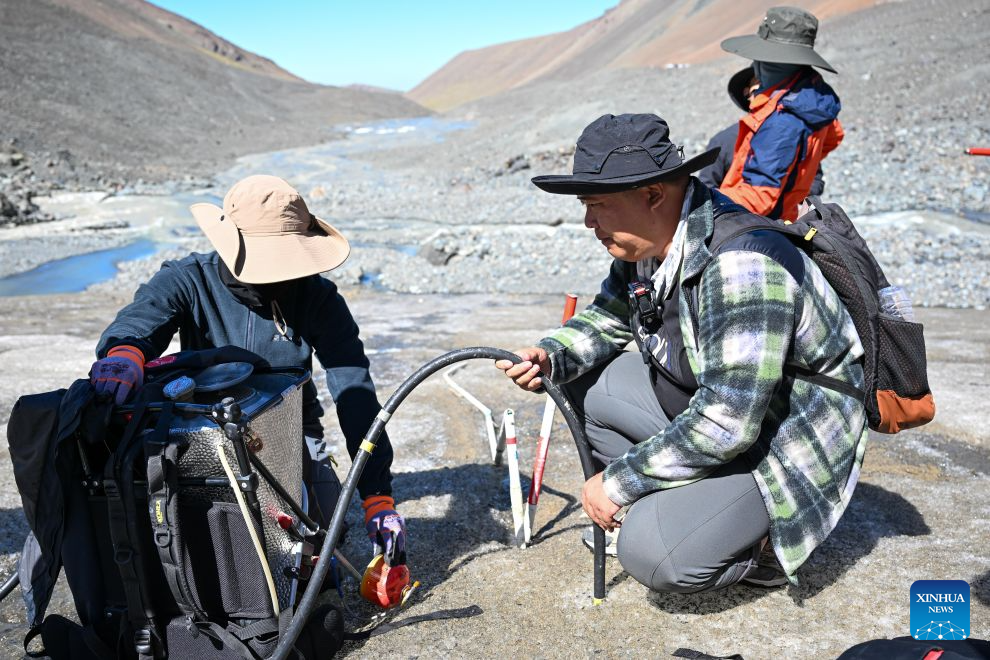
Researchers conduct scientific research on the Muz Taw Glacier in Altay, northwest China's Xinjiang Uygur Autonomous Region, Aug. 10, 2026. In recent days, a scientific expedition to the Muz Taw Glacier in Altay was carried out by a research team from the Altay Mountains comprehensive observation and research station, in an effort to better understand the glacier's response to climate change and provide scientific data for glacier protection and water resources management in the region.
The team, affiliated with the Northwest Institute of Eco-Environment and Resources under the Chinese Academy of Sciences (CAS), conducted field observations at an altitude of 3,400 meters on the glacier, and systematically collected key data on meteorology, hydrology and glacier changes. (Xinhua/Ding Lei)
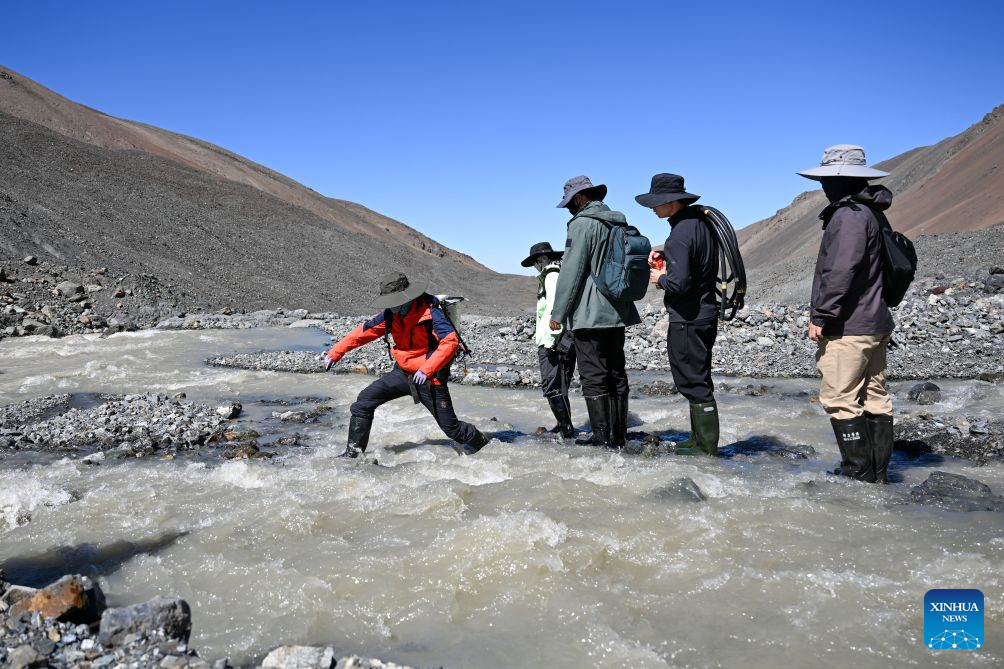
Researchers are pictured during a scientific expedition to the Muz Taw Glacier in Altay, northwest China's Xinjiang Uygur Autonomous Region, Aug. 10, 2026. In recent days, a scientific expedition to the Muz Taw Glacier in Altay was carried out by a research team from the Altay Mountains comprehensive observation and research station, in an effort to better understand the glacier's response to climate change and provide scientific data for glacier protection and water resources management in the region.
The team, affiliated with the Northwest Institute of Eco-Environment and Resources under the Chinese Academy of Sciences (CAS), conducted field observations at an altitude of 3,400 meters on the glacier, and systematically collected key data on meteorology, hydrology and glacier changes. (Xinhua/Ding Lei)
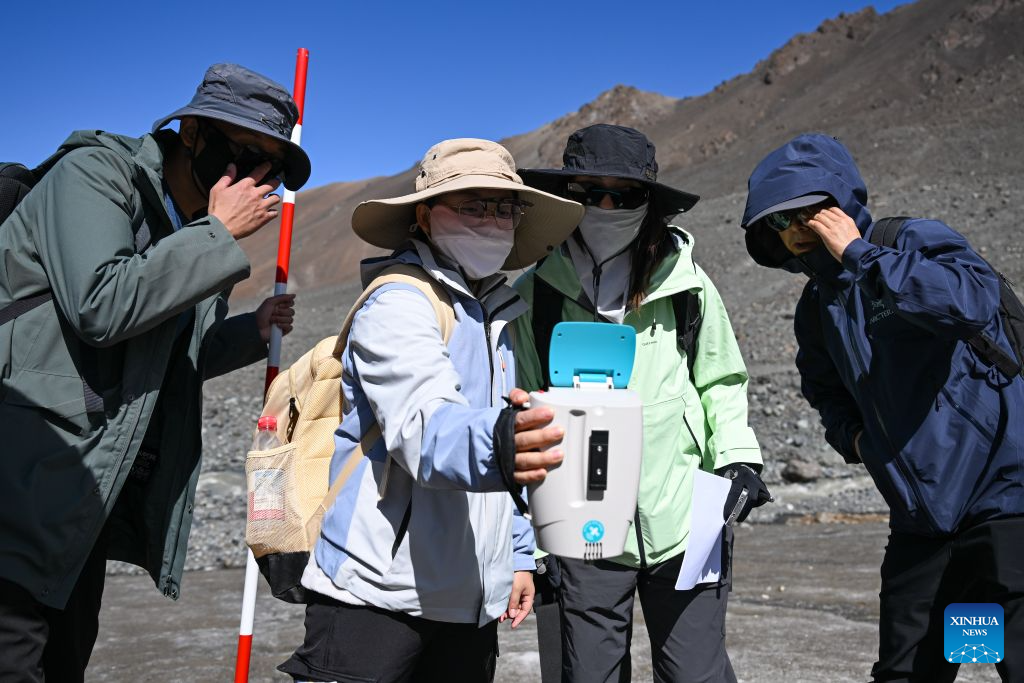
Researchers conduct scientific research on the Muz Taw Glacier in Altay, northwest China's Xinjiang Uygur Autonomous Region, Aug. 10, 2026. In recent days, a scientific expedition to the Muz Taw Glacier in Altay was carried out by a research team from the Altay Mountains comprehensive observation and research station, in an effort to better understand the glacier's response to climate change and provide scientific data for glacier protection and water resources management in the region.
The team, affiliated with the Northwest Institute of Eco-Environment and Resources under the Chinese Academy of Sciences (CAS), conducted field observations at an altitude of 3,400 meters on the glacier, and systematically collected key data on meteorology, hydrology and glacier changes. (Xinhua/Ding Lei)
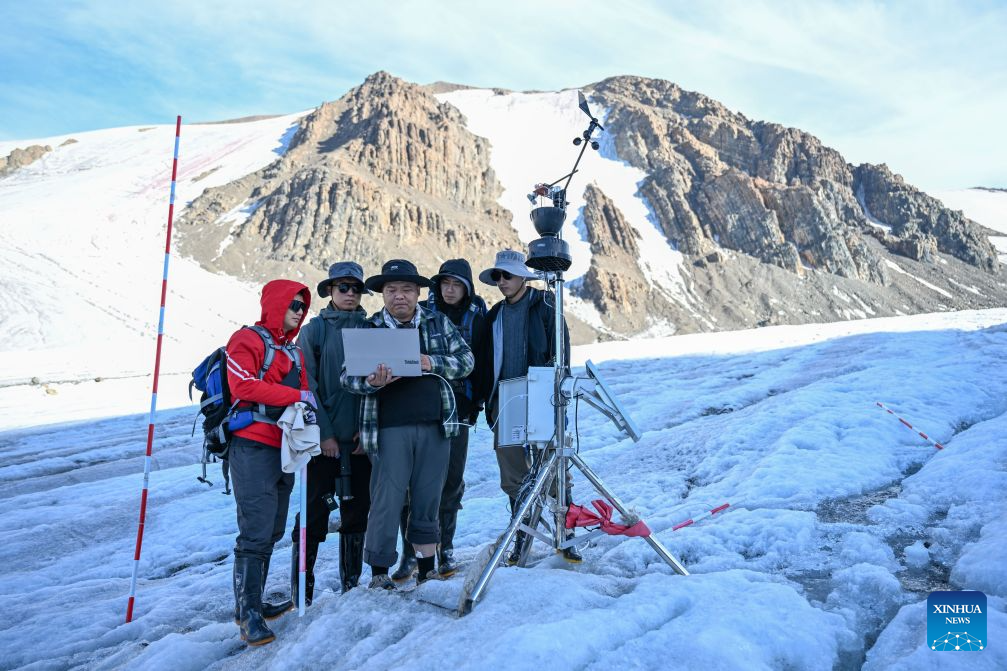
Researchers conduct scientific research on the Muz Taw Glacier in Altay, northwest China's Xinjiang Uygur Autonomous Region, Aug. 10, 2026. In recent days, a scientific expedition to the Muz Taw Glacier in Altay was carried out by a research team from the Altay Mountains comprehensive observation and research station, in an effort to better understand the glacier's response to climate change and provide scientific data for glacier protection and water resources management in the region.
The team, affiliated with the Northwest Institute of Eco-Environment and Resources under the Chinese Academy of Sciences (CAS), conducted field observations at an altitude of 3,400 meters on the glacier, and systematically collected key data on meteorology, hydrology and glacier changes. (Xinhua/Ding Lei)
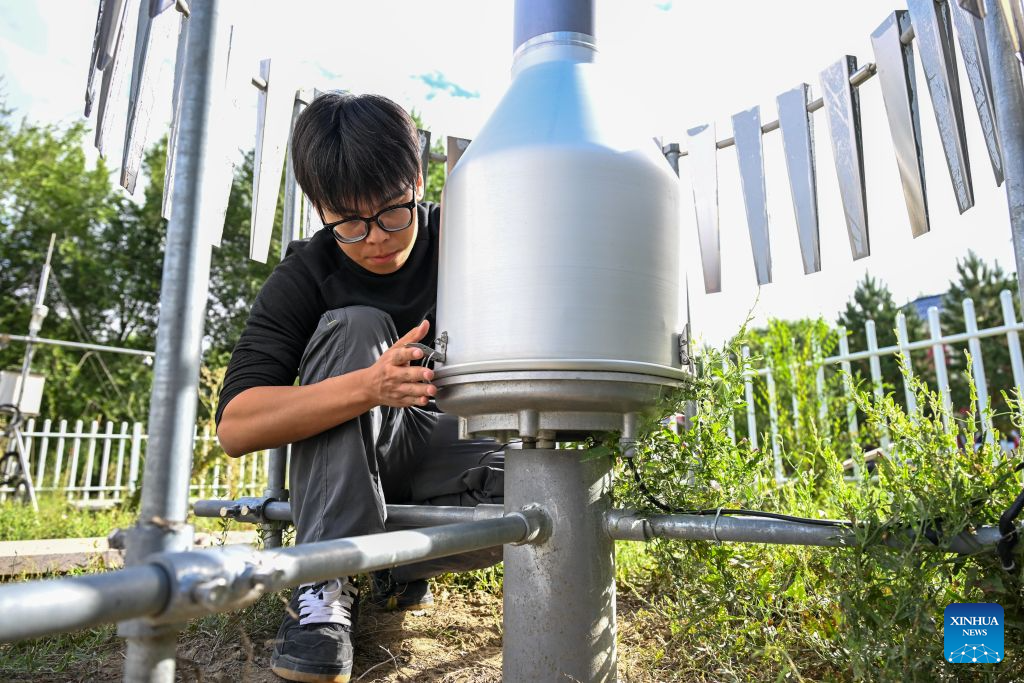
A researcher maintains a rain gauge at the Altay Mountains comprehensive observation and research station in Jeminay County in Altay, northwest China's Xinjiang Uygur Autonomous Region, Aug. 11, 2026. In recent days, a scientific expedition to the Muz Taw Glacier in Altay was carried out by a research team from the Altay Mountains comprehensive observation and research station, in an effort to better understand the glacier's response to climate change and provide scientific data for glacier protection and water resources management in the region.
The team, affiliated with the Northwest Institute of Eco-Environment and Resources under the Chinese Academy of Sciences (CAS), conducted field observations at an altitude of 3,400 meters on the glacier, and systematically collected key data on meteorology, hydrology and glacier changes. (Xinhua/Ding Lei)
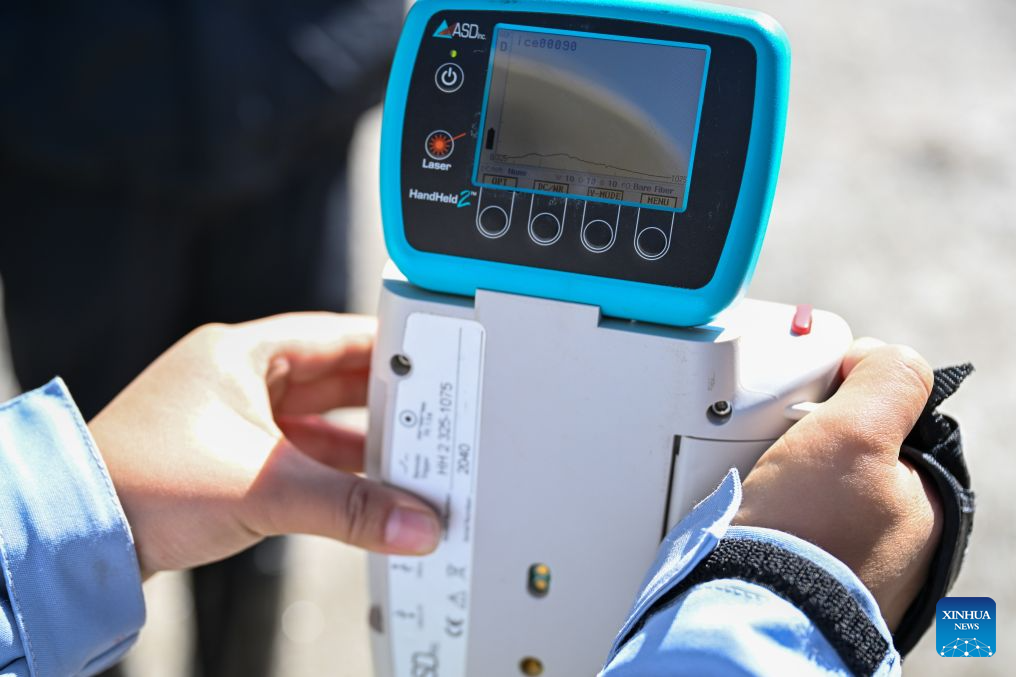
A researcher conducts scientific research on the Muz Taw Glacier in Altay, northwest China's Xinjiang Uygur Autonomous Region, Aug. 10, 2026. In recent days, a scientific expedition to the Muz Taw Glacier in Altay was carried out by a research team from the Altay Mountains comprehensive observation and research station, in an effort to better understand the glacier's response to climate change and provide scientific data for glacier protection and water resources management in the region.
The team, affiliated with the Northwest Institute of Eco-Environment and Resources under the Chinese Academy of Sciences (CAS), conducted field observations at an altitude of 3,400 meters on the glacier, and systematically collected key data on meteorology, hydrology and glacier changes. (Xinhua/Ding Lei)
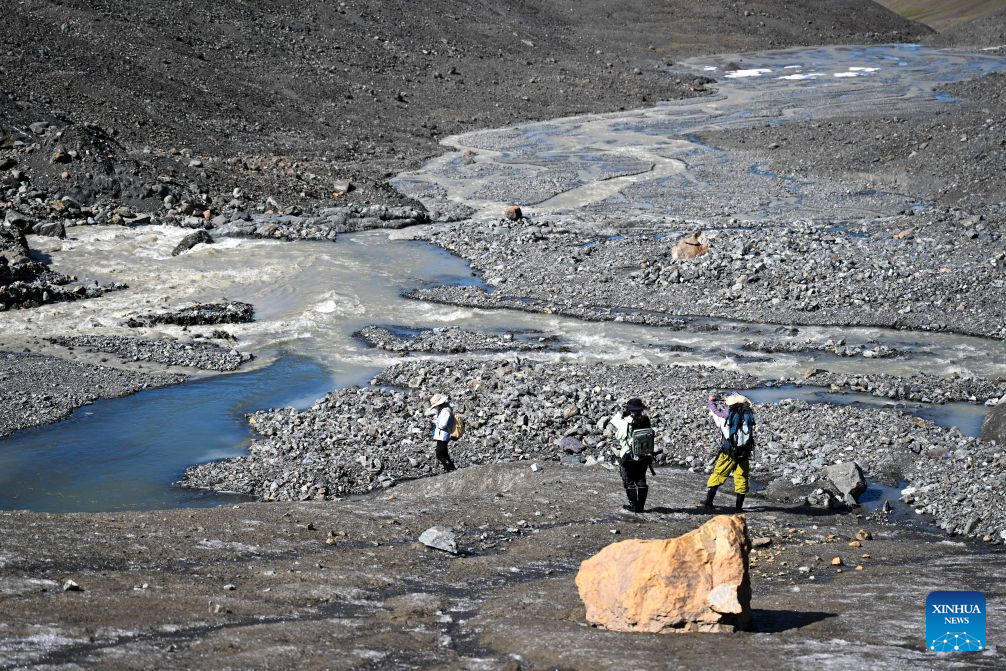
Researchers conduct scientific research on the Muz Taw Glacier in Altay, northwest China's Xinjiang Uygur Autonomous Region, Aug. 10, 2026. In recent days, a scientific expedition to the Muz Taw Glacier in Altay was carried out by a research team from the Altay Mountains comprehensive observation and research station, in an effort to better understand the glacier's response to climate change and provide scientific data for glacier protection and water resources management in the region.
The team, affiliated with the Northwest Institute of Eco-Environment and Resources under the Chinese Academy of Sciences (CAS), conducted field observations at an altitude of 3,400 meters on the glacier, and systematically collected key data on meteorology, hydrology and glacier changes. (Xinhua/Ding Lei)
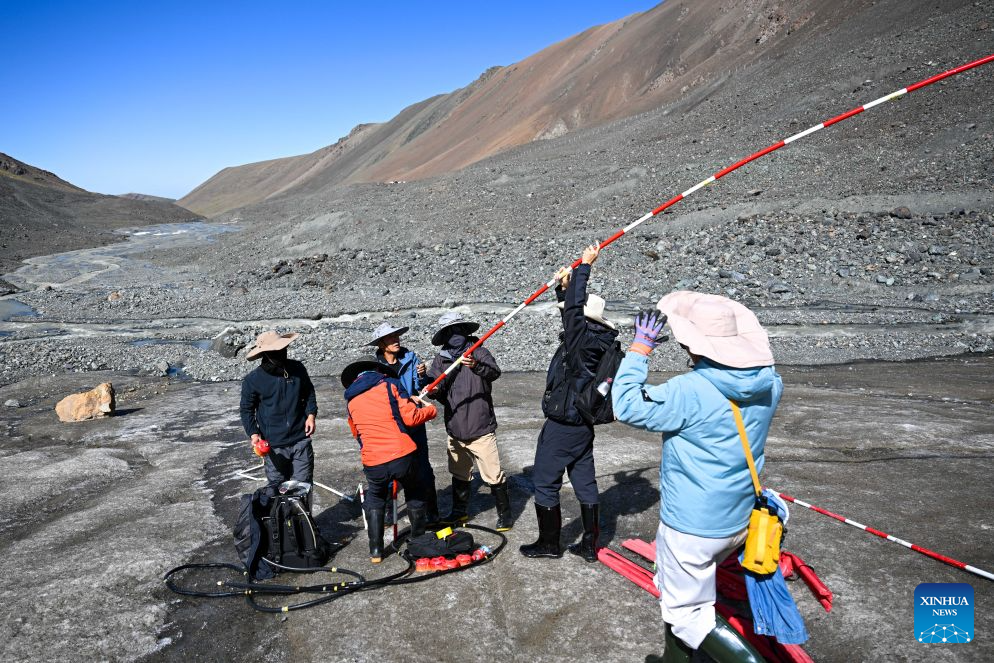
Researchers conduct scientific research on the Muz Taw Glacier in Altay, northwest China's Xinjiang Uygur Autonomous Region, Aug. 10, 2026. In recent days, a scientific expedition to the Muz Taw Glacier in Altay was carried out by a research team from the Altay Mountains comprehensive observation and research station, in an effort to better understand the glacier's response to climate change and provide scientific data for glacier protection and water resources management in the region.
The team, affiliated with the Northwest Institute of Eco-Environment and Resources under the Chinese Academy of Sciences (CAS), conducted field observations at an altitude of 3,400 meters on the glacier, and systematically collected key data on meteorology, hydrology and glacier changes. (Xinhua/Ding Lei)
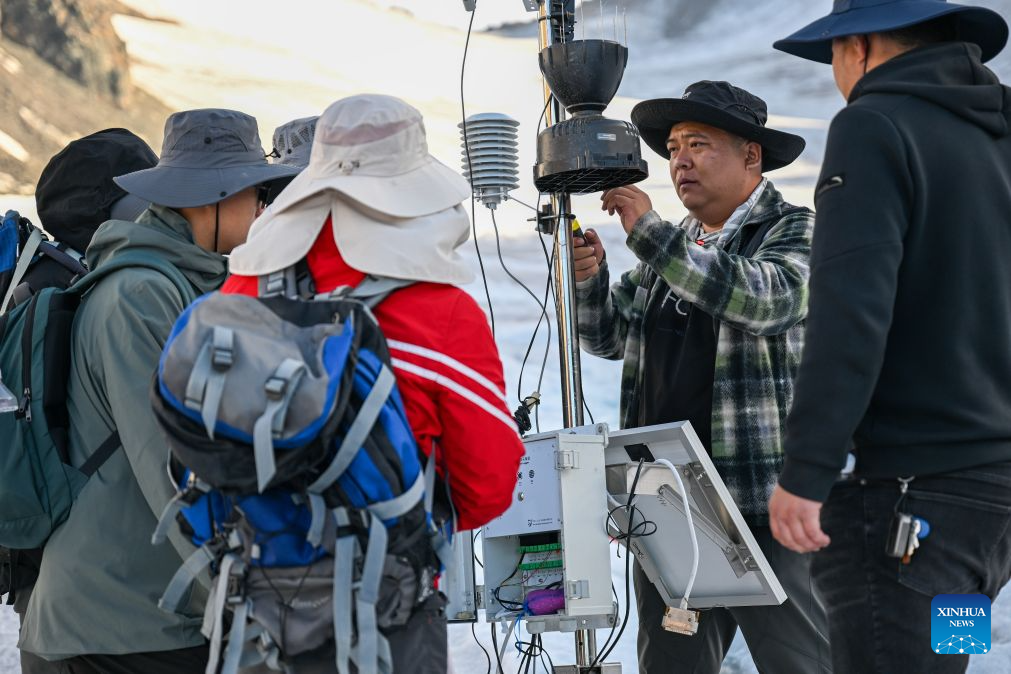
Researchers conduct scientific research on the Muz Taw Glacier in Altay, northwest China's Xinjiang Uygur Autonomous Region, Aug. 10, 2026. In recent days, a scientific expedition to the Muz Taw Glacier in Altay was carried out by a research team from the Altay Mountains comprehensive observation and research station, in an effort to better understand the glacier's response to climate change and provide scientific data for glacier protection and water resources management in the region.
The team, affiliated with the Northwest Institute of Eco-Environment and Resources under the Chinese Academy of Sciences (CAS), conducted field observations at an altitude of 3,400 meters on the glacier, and systematically collected key data on meteorology, hydrology and glacier changes. (Xinhua/Ding Lei)
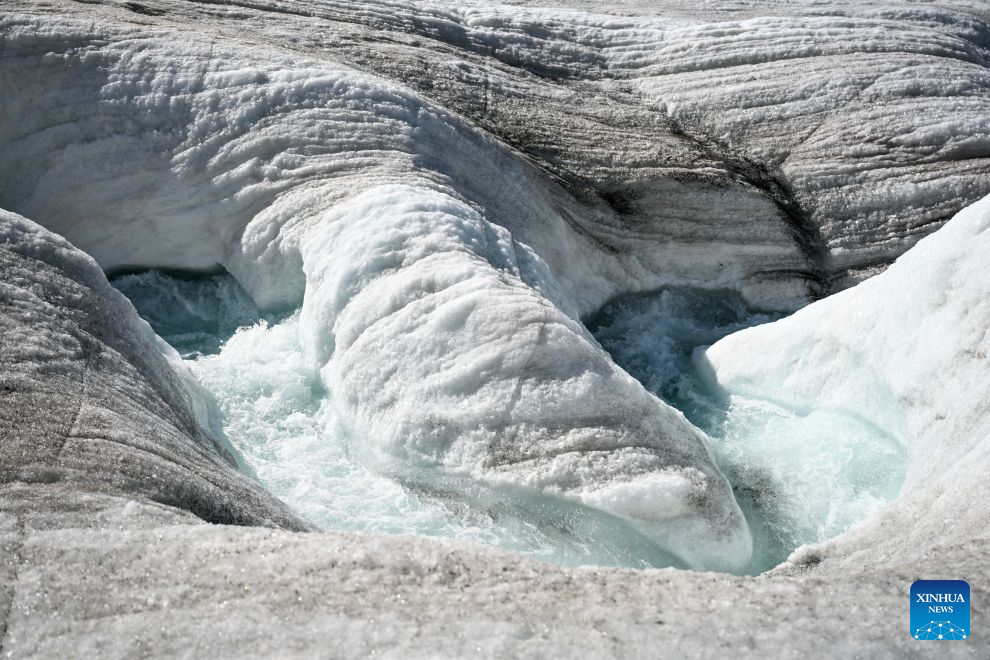
This photo taken on Aug. 10, 2026 shows a view of the Muz Taw Glacier in Altay, northwest China's Xinjiang Uygur Autonomous Region. In recent days, a scientific expedition to the Muz Taw Glacier in Altay was carried out by a research team from the Altay Mountains comprehensive observation and research station, in an effort to better understand the glacier's response to climate change and provide scientific data for glacier protection and water resources management in the region.
The team, affiliated with the Northwest Institute of Eco-Environment and Resources under the Chinese Academy of Sciences (CAS), conducted field observations at an altitude of 3,400 meters on the glacier, and systematically collected key data on meteorology, hydrology and glacier changes. (Xinhua/Ding Lei)
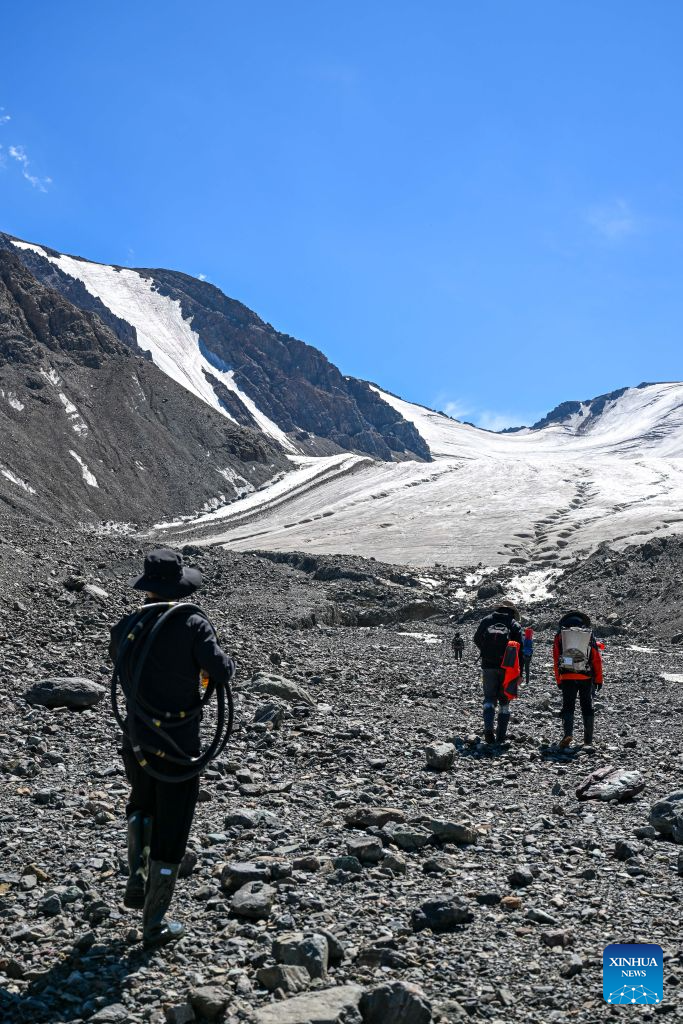
Researchers are pictured during a scientific expedition to the Muz Taw Glacier in Altay, northwest China's Xinjiang Uygur Autonomous Region, Aug. 10, 2026. In recent days, a scientific expedition to the Muz Taw Glacier in Altay was carried out by a research team from the Altay Mountains comprehensive observation and research station, in an effort to better understand the glacier's response to climate change and provide scientific data for glacier protection and water resources management in the region.
The team, affiliated with the Northwest Institute of Eco-Environment and Resources under the Chinese Academy of Sciences (CAS), conducted field observations at an altitude of 3,400 meters on the glacier, and systematically collected key data on meteorology, hydrology and glacier changes. (Xinhua/Ding Lei)
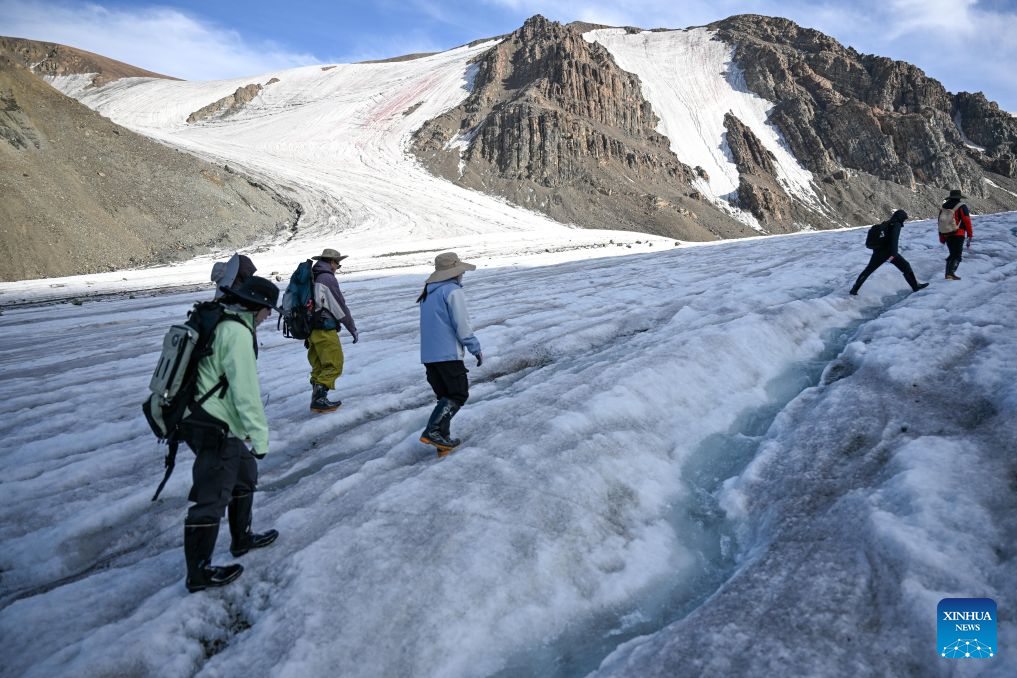
Researchers are pictured during a scientific expedition to the Muz Taw Glacier in Altay, northwest China's Xinjiang Uygur Autonomous Region, Aug. 10, 2026. In recent days, a scientific expedition to the Muz Taw Glacier in Altay was carried out by a research team from the Altay Mountains comprehensive observation and research station, in an effort to better understand the glacier's response to climate change and provide scientific data for glacier protection and water resources management in the region.
The team, affiliated with the Northwest Institute of Eco-Environment and Resources under the Chinese Academy of Sciences (CAS), conducted field observations at an altitude of 3,400 meters on the glacier, and systematically collected key data on meteorology, hydrology and glacier changes. (Xinhua/Ding Lei)
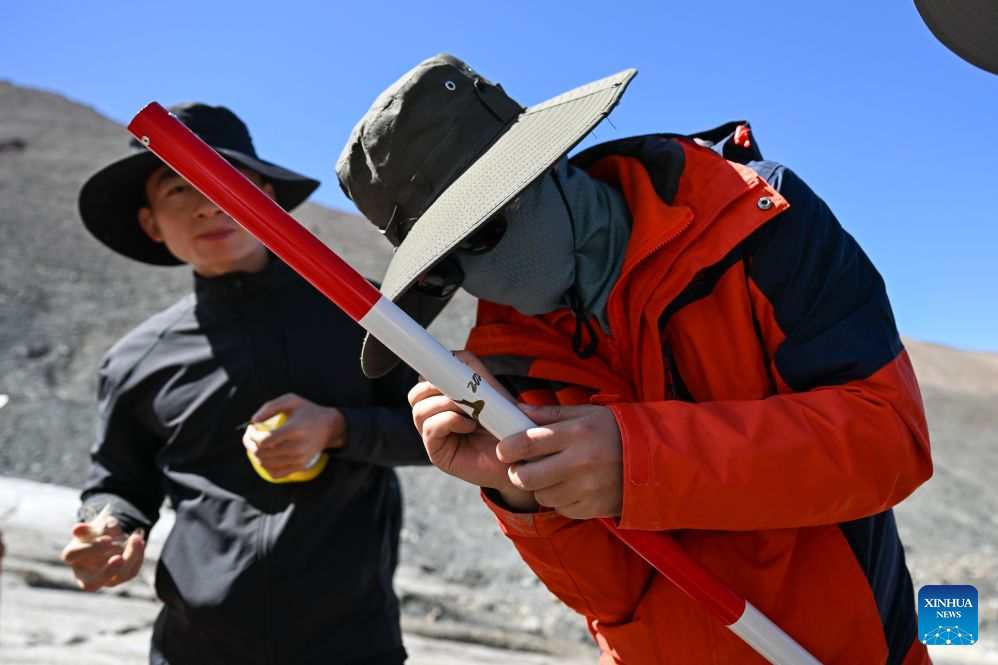
Researchers conduct scientific research on the Muz Taw Glacier in Altay, northwest China's Xinjiang Uygur Autonomous Region, Aug. 10, 2026. In recent days, a scientific expedition to the Muz Taw Glacier in Altay was carried out by a research team from the Altay Mountains comprehensive observation and research station, in an effort to better understand the glacier's response to climate change and provide scientific data for glacier protection and water resources management in the region.
The team, affiliated with the Northwest Institute of Eco-Environment and Resources under the Chinese Academy of Sciences (CAS), conducted field observations at an altitude of 3,400 meters on the glacier, and systematically collected key data on meteorology, hydrology and glacier changes. (Xinhua/Ding Lei)

A researcher sorts out collected data at the Altay Mountains comprehensive observation and research station in Jeminay County in Altay, northwest China's Xinjiang Uygur Autonomous Region, Aug. 11, 2026. In recent days, a scientific expedition to the Muz Taw Glacier in Altay was carried out by a research team from the Altay Mountains comprehensive observation and research station, in an effort to better understand the glacier's response to climate change and provide scientific data for glacier protection and water resources management in the region.
The team, affiliated with the Northwest Institute of Eco-Environment and Resources under the Chinese Academy of Sciences (CAS), conducted field observations at an altitude of 3,400 meters on the glacier, and systematically collected key data on meteorology, hydrology and glacier changes. (Xinhua/Ding Lei)


