HOHHOT, Aug. 11 (Xinhua) -- Sheep, cattle and the vast grasslands once dominated Wang Xiufang's conversations. Now, the 64-year-old herder often finds herself chatting with tourists from across the country -- about planets, observatories and radio telescopes.
The boom in stargazing tourism has drawn experts, entrepreneurs and visitors to Zhengxiangbai Banner in north China's Inner Mongolia Autonomous Region. Wang is one of many locals swept up in the trend and reaping its benefits.
Wang works as a cleaner at a local stargazing camp. She told Xinhua that tourists frequently ask her questions: How to join a study tour to the "Grassland Sky Eye"? What is the best viewing angle?
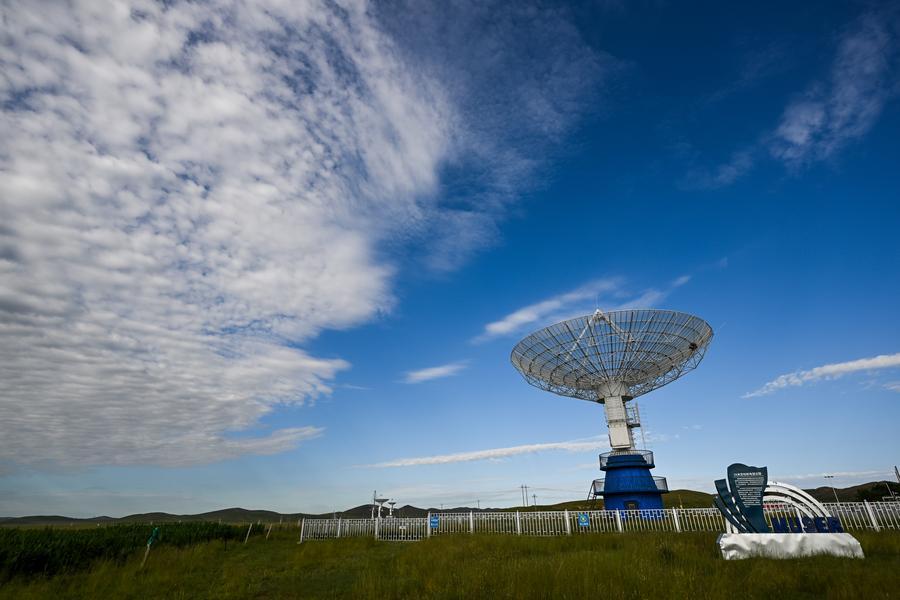
The "Grassland Sky Eye" is the nickname for the Ming'antu observing station, part of the National Space Science Center under the Chinese Academy of Sciences. Its advanced scientific instruments are drawing a growing number of visitors eager to explore the universe.
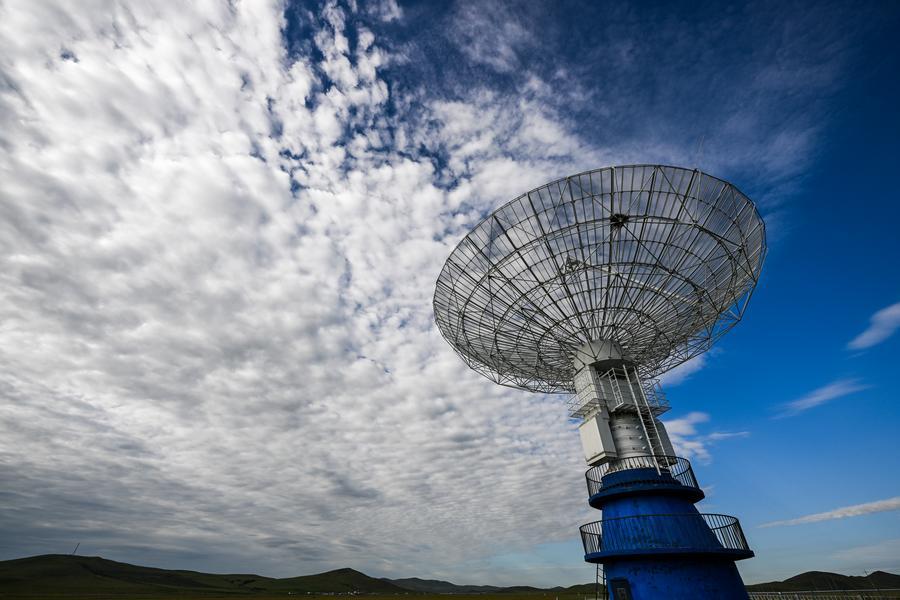
"More than a decade ago, when these facilities were first being built on the grasslands, I had no idea what they were for, let alone how much they would change our lives," Wang recalled.
Today, the camp near the station offers Wang a job close to home. From April to October, she earns 3,000 yuan (about 441.83 U.S. dollars) a month as a cleaner. During the winter, she tends to her livestock.
Nearly half of the camp's 40-plus employees come from surrounding villages. Local collective economies provide subsidies and prioritise herders for employment.
The banner enjoys over 200 clear nights a year and meets international standards for dark-sky quality. It also holds an astronomical heritage. In 2002, the International Astronomical Union named Asteroid 28242 "Ming'antu," honoring the Chinese astronomer from the Mongolian ethnic group, who lived in the early years of the Qing Dynasty (1644-1911).
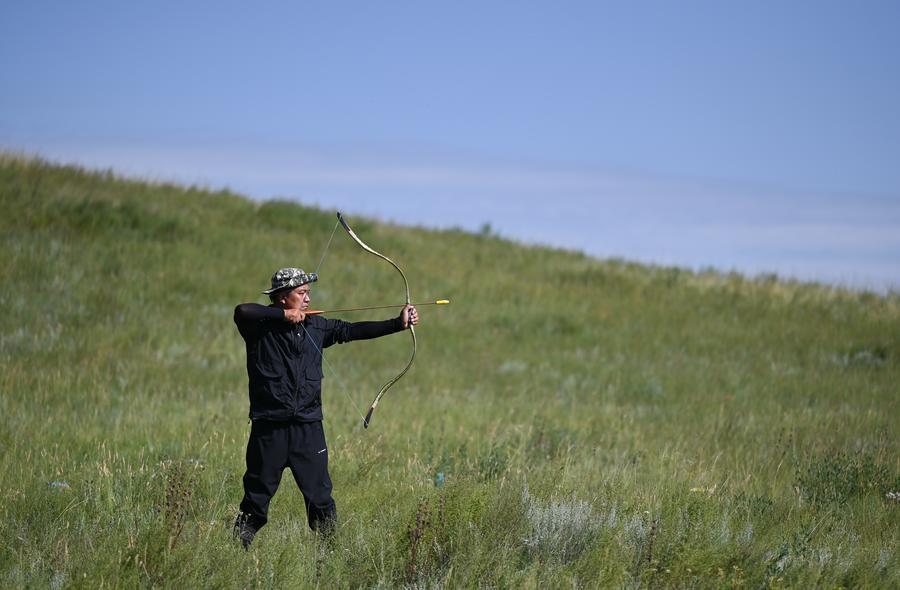
The local government has capitalised on these natural and cultural assets to forge an industrial path that integrates science popularisation, stargazing and study tours.
"The camp receives over 100,000 visits a year and offers more than 20 immersive projects ranging from VR 'space travel' to optical telescope observation," said Liang Hua, head of the camp.
The starry skies are drawing not only out-of-town visitors but also sparking curiosity among local children. During the current tourism season, for example, primary school students attended a series of astronomy lectures.
Guan Jinfan, a second-grader at a local primary school, was among them. Alongside his classmates, he explored the cosmos with Zhu Jin, former director of the Beijing Planetarium.
"So many people come to my hometown to see the stars. I want to know what makes our skies special," Guan said. "I also hope to travel to more places to compare them."
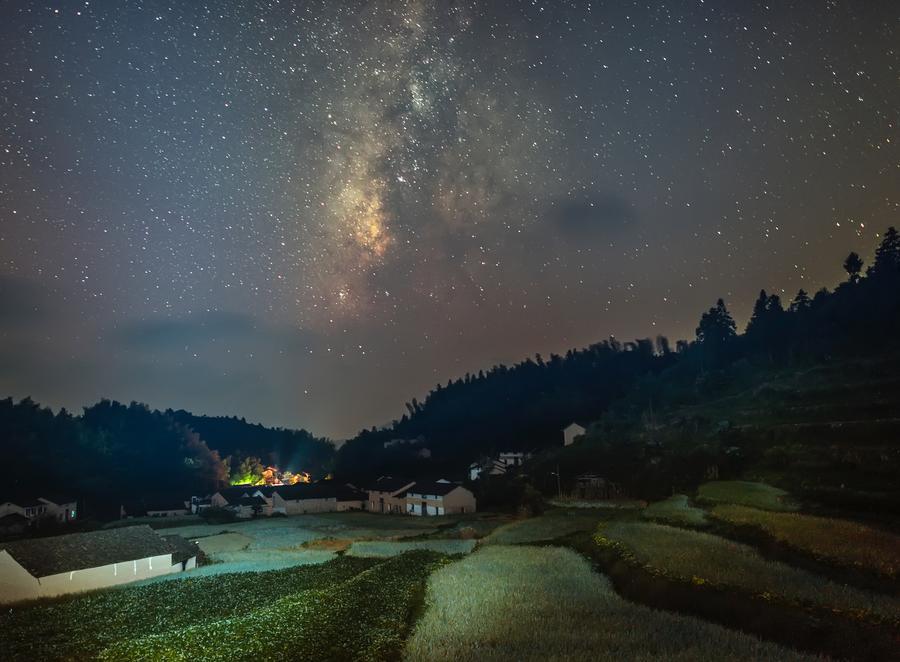
Zhu noted that as urbanisation advances, high-quality dark-sky sites are becoming increasingly rare. Stargazing has thus emerged as a unique leisure activity that offers both spiritual solace and educational value, and is rapidly gaining popularity.
Across China, stargazing is moving from a niche pursuit to a popular experience. Destinations such as Pingtang County in southwest China's Guizhou Province and Kaihua County in east China's Zhejiang Province are also leveraging dark-sky resources to attract tourists and boost consumption.
In 2025, China issued a policy incorporating stargazing into its meteorological tourism product system, marking the first time the sector has received policy backing at the national level.
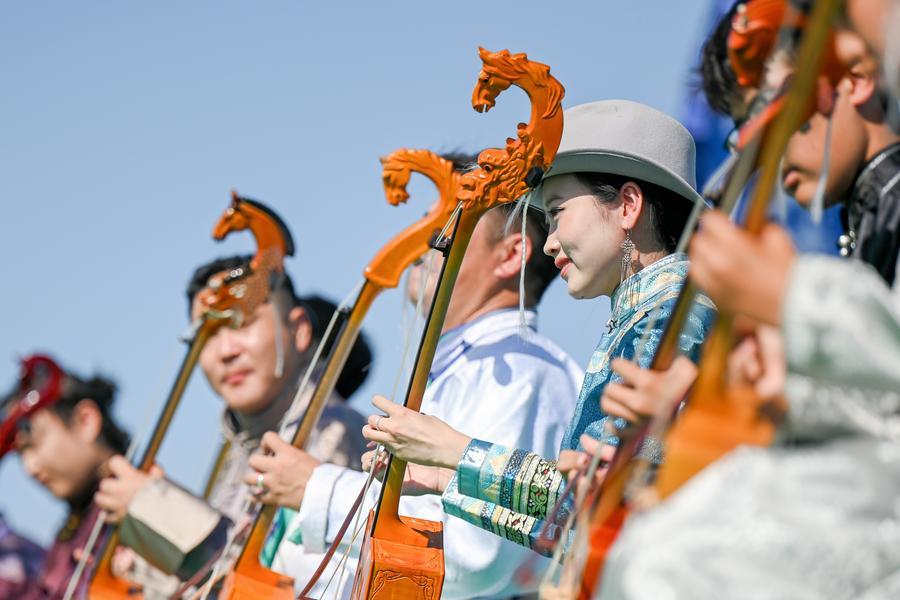
In Zhengxiangbai Banner, stargazing tourism means more than attracting tourists. It has also boosted local specialties, including Chahar mutton, dairy products and intangible cultural heritage handicrafts.
The banner is known for Chahar sheep, dubbed "sheep that count stars." Through standardised breeding and grassland conservation, the banner produces over 200,000 sheep annually, with meat sold in major cities including Beijing.
"Stargazing tourism is emerging as a new business format combining scientific, ecological and economic value," said Jiang Chenming, a stargazing tourism planner. As China drives forward its tourism development, he added, this sector is set to become a key force in empowering rural revitalisation and fuelling high-quality growth at the county level. ■