
By Liu He
BEIJING, Aug.8 (Xinhuanet) -- For years, American travel vlogger Tressa had known China from afar. She thought she knew what China was like -- until she experienced it herself.
From the convenience of high-speed rail and cashless payments to the warmth of ordinary people she met along the way, Tressa discovered a China far different from the one she had imagined.
Her YouTube series documenting the journey has gained more than 1 million views.
"China's breathtaking rate of development has been evident from my very first day in the country," reads one highly-upvoted comment. Remarks like this poured into the comment section, helping to fuel the global trending hashtag #Chinamaxxing.
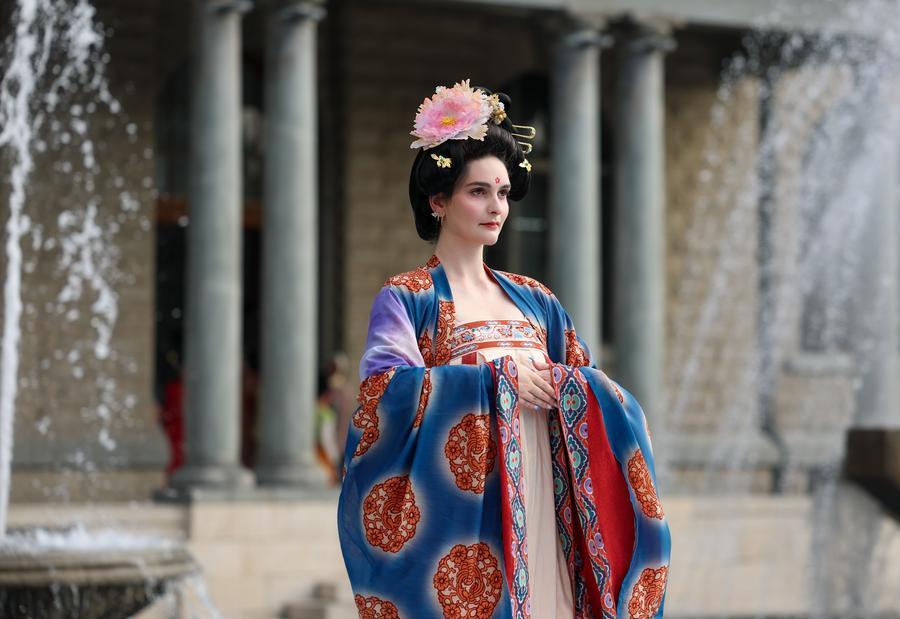
A foreign student presents traditional Chinese costumes during a fashion show at Tianjin Foreign Studies University in north China's Tianjin, June 17, 2026. (Xinhua/Sun Fanyue)
Combining "China" with Gen Z slang "maxxing" (meaning to optimize one's life around something), the term describes the growing enthusiasm among overseas internet users for adopting elements of Chinese daily life: from drinking warm water and practicing Baduanjin to traveling, shopping, and consuming Chinese popular culture.
What began as scattered lifestyle videos has quickly evolved into a broader cultural phenomenon. But what exactly is driving this trend?
At its foundation is the undeniable appeal of China's daily life. High-speed rail, digital payments, and safe streets have created a remarkably convenient and secure living environment. Electric vehicles and tech breakthroughs have redefined "Made in China"—shifting the label from affordable alternatives to highly desirable innovations.
When global audiences see these advancements as everyday realities for ordinary citizens rather than elite privileges, cultural attraction follows naturally.
This organic appeal is amplified by social media, which has enabled genuine, peer-to-peer cultural connection.
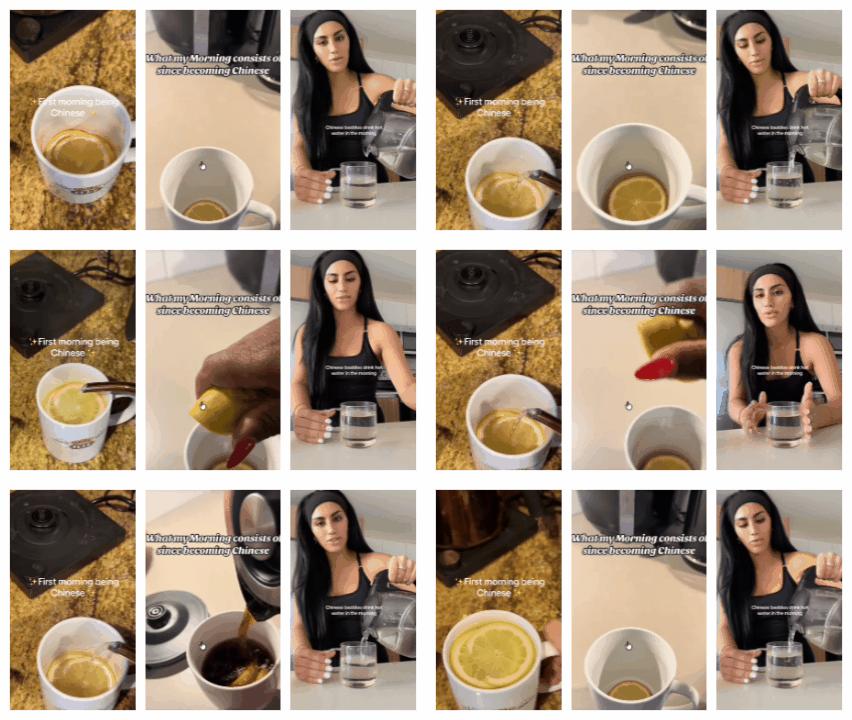
This compilation GIF shows global netizens practicing Chinese wellness habits, such as drinking hot tea and ginger tea. (Composite from TikTok users)
Creators like Chinese-American vlogger Sherry Zhu bridge cultural gaps with relatable content—her wellness videos went viral, sparking the #BecomingChinese trend. Platforms like TikTok and Xiaohongshu propel this content across borders, turning individual videos into a collective movement.
Beyond daily convenience, China has simply become "cool."
Public perceptions are changing accordingly. A July 2026 Pew Research Center survey across 36 countries revealed that global favorability toward China (46%) has surpassed that of the U.S. (36%) for the first time in over two decades.
For younger generations, this shift is largely driven by China's cutting-edge innovation and creative energy. From advanced EVs and AI applications to global cultural hits like the game Black Myth: Wukong and the animated film Ne Zha 2, China is increasingly seen as a hub of the future. They are drawn to a country that makes futuristic tech and vibrant culture accessible to everyone, rather than limiting them to a select few.
Today, that curiosity is being met with unprecedented accessibility.
Chinese culture has never been easier to experience, driven by a two-way flow of people and products. Expanding visa-free policies have lowered physical barriers, inviting millions to see China for themselves. At the same time, Chinese cultural brands are moving rapidly in the other direction—going straight to global consumers.

The Labubu mascots from Chinese toy company Pop Mart are seen at the opening ceremony of the 2026 FIFA World Cup at Mexico City Stadium, June 11, 2026. (Photo by Francisco Canedo/Xinhua)
When the designer toy Labubu made a surprise appearance at the 2026 FIFA World Cup opening ceremony, it underscored this shift. Add the everyday presence of Chinese games, apps, and consumer goods, and foreign youth now encounter Chinese culture not as something exotic, but as a natural part of their daily lives.
Chinamaxxing, at its core, reflects a simple shift: ordinary foreign netizens can form their own impressions of China through firsthand experience rather than second-hand narratives. They are choosing to see it for themselves, and sharing what they find with the world.
(Zhao Luzhe and Wang Yihan contribute to this story.)


