
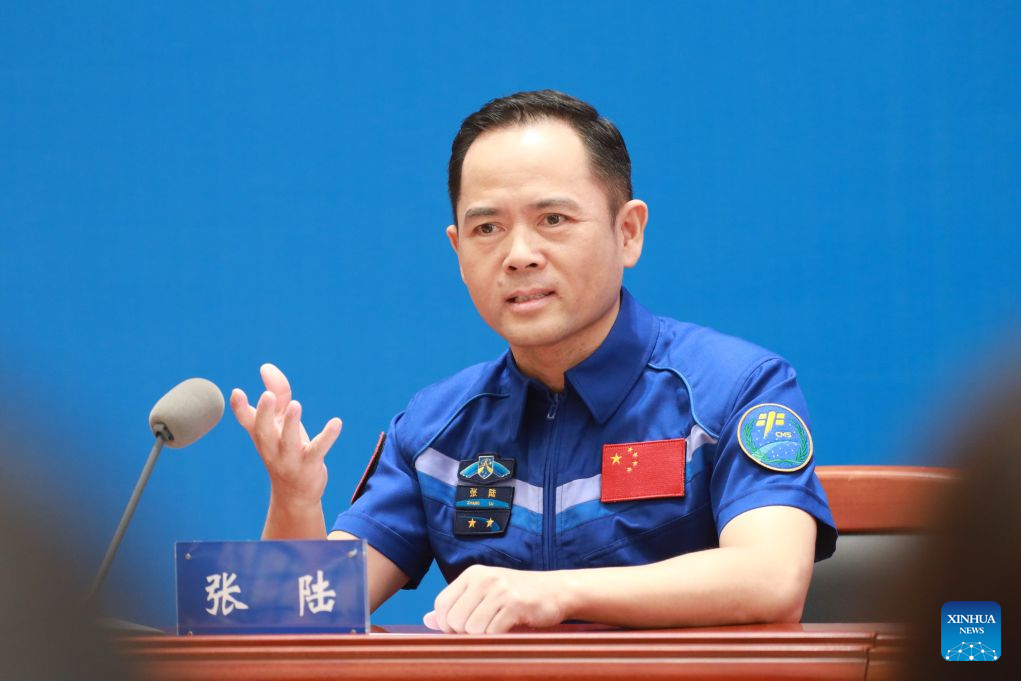
The Shenzhou-21 astronaut Zhang Lu attends a press conference in Beijing, capital of China, Aug. 5, 2026. The three astronauts from China's Shenzhou-21 crewed mission met the press in Beijing on Wednesday, their first public appearance after returning to Earth in May this year. (Photo by Zhang Wenjun/Xinhua)
BEIJING, Aug. 5 (Xinhua) -- The three astronauts from China's Shenzhou-21 crewed mission met the press in Beijing on Wednesday, their first public appearance after returning to Earth in May this year.
Astronauts Zhang Lu, Wu Fei and Zhang Hongzhang are in good physical and mental condition, with muscle strength, endurance and cardiovascular fitness largely restored to pre-flight levels, as it was announced at the briefing. They have now entered a recovery observation phase and will resume regular training following a final health assessment.
The Shenzhou-21 crew spent 210 days in orbit, from their launch on Oct. 31, 2025, to their return on May 29, 2026, setting a new record for the longest single crew stay by Chinese astronauts.
During their mission, they completed three spacewalks and conducted extensive space science experiments, notably witnessing and participating in the first-ever in-orbit emergency rescue operation in the history of China's manned space program.
"The emergency response system of China's manned space program withstood a real-world test during our stay," said Zhang Lu, the mission commander. "From handling a spacecraft impact by space debris, adjusting our orbital schedule and switching return vehicles, to executing an emergency launch, the entire system operated seamlessly to ensure our safety."
Zhang said he was most impressed by China's space sector's calm confidence, scientific rigor and unwavering teamwork.
Zhang has completed seven spacewalks across two missions, namely Shenzhou-15 and Shenzhou-21, making him the most experienced spacewalker in China's history.
Wu Fei, who previously contributed to the development of the Tianhe core module and the Wentian lab module, said operating equipment in orbit that he had once tested on the ground gave him a sense of familiarity. "All the experience accumulated from my ground work translated into the confidence and composure I needed for precise operations and sound judgments in space," Wu said.
Payload specialist Zhang Hongzhang shared several scientific breakthroughs achieved during the mission, including China's first successful aeroponic cultivation of cherry tomatoes and wheat in orbit, the first closed-loop breeding of mice in space, and the validation of key technologies for efficient spectral and water-fertilizer utilization.
Beyond their demanding research schedule, the crew cultivated more than ten types of crops, including wheat, sunflowers, tomatoes, sweet potatoes and mint, which not only helped refine in-orbit planting techniques but also brought joy to their intensive space life. ■
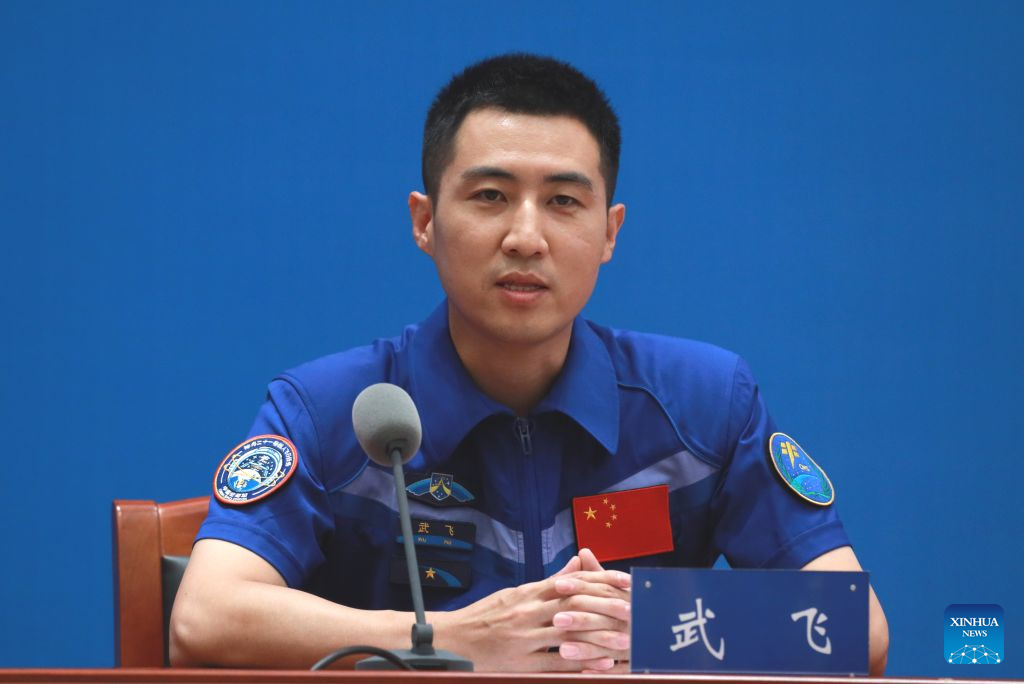
The Shenzhou-21 astronaut Wu Fei attends a press conference in Beijing, capital of China, Aug. 5, 2026.
The three astronauts from China's Shenzhou-21 crewed mission met the press in Beijing on Wednesday, their first public appearance after returning to Earth in May this year. (Photo by Zhang Wenjun/Xinhua)
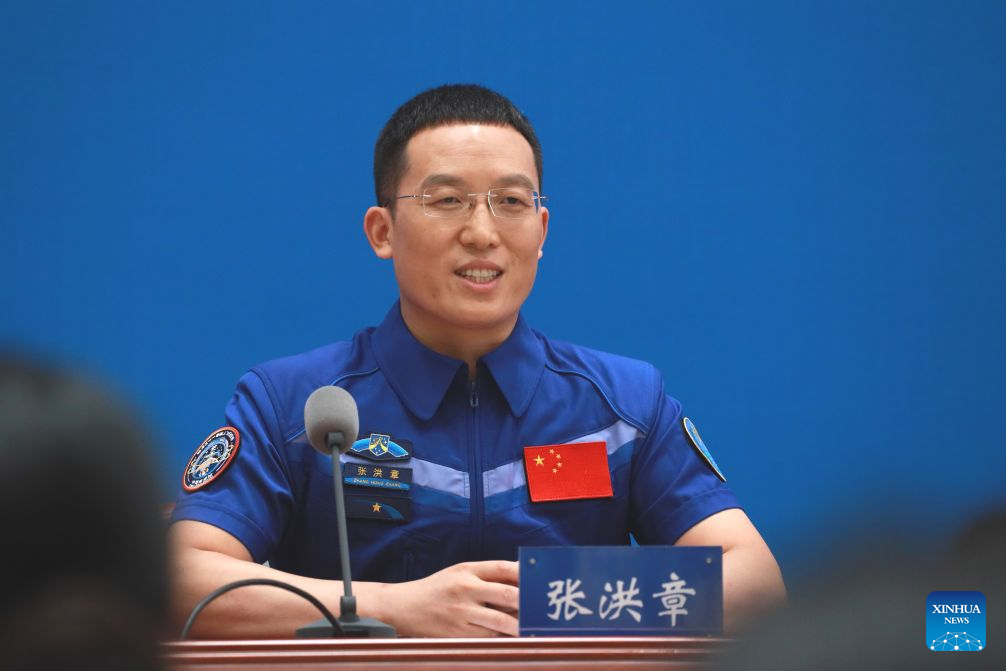
The Shenzhou-21 astronaut Zhang Hongzhang attends a press conference in Beijing, capital of China, Aug. 5, 2026.
The three astronauts from China's Shenzhou-21 crewed mission met the press in Beijing on Wednesday, their first public appearance after returning to Earth in May this year. (Photo by Zhang Wenjun/Xinhua)


