

The dropping water levels on the Danube River have threatened the complete shutdown of the Paks nuclear power plant amid an extreme heatwave in Hungary.
BUDAPEST, Aug. 2 (Xinhua) -- Hungary is entering its "most critical 5 days" as dropping water levels on the Danube River threaten the complete shutdown of the Paks nuclear power plant amid an extreme heatwave, Hungary's Prime Minister Peter Magyar said on Sunday, warning that the plant could be shut down for more than a month.
Speaking to local commercial television channel RTL, Magyar said the last remaining operating turbine at the 2,000 MW facility will likely be shut down late Sunday or on Monday. A complete halt to power generation at Paks, which accounts for nearly half of Hungary's domestic electricity generation, would mark the first full closure in the plant's 44-year history.
Magyar explained earlier on social media that strict nuclear safety regulations mandate the shutdown because of record-low river levels needed for cooling water. He reassured the public that nuclear safety remains fully guaranteed, with around 50 water management experts assisting plant personnel to maintain cooling operations.
The unprecedented energy crisis comes as Hungary braces for temperatures reaching 40 degrees Celsius or higher over these "most critical five days," placing immense strain on the national grid.
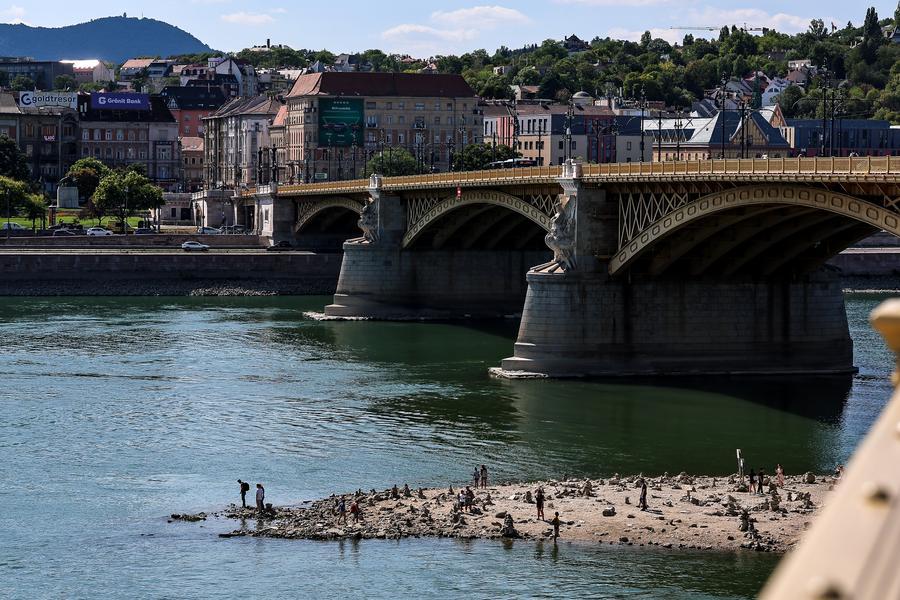
The Hungarian government has introduced emergency measures to maintain grid stability. Under a decree that took effect on Saturday, mandatory consumption cutbacks can be enforced on major industrial consumers if necessary.
However, Magyar noted that voluntary conservation efforts by businesses and the public have so far helped avoid enforced rationing. Major companies, including MOL, Audi, and Gedeon Richter, have pledged significant demand reductions.
Nearly 300 companies have already pledged voluntary reductions for Monday, along with numerous state-owned firms, most local councils, civil society groups and churches, he said.
To save power, decorative lighting on Budapest's iconic landmarks, including the Hungarian Parliament, Buda Castle, and the Chain Bridge, was turned off on Sunday evening.
Additional measures include halting most rail freight transport between 5:00 p.m. and 10:00 p.m. starting Monday, bringing reserve power units on standby, and maximizing electricity imports.
"If Hungary can get through these most critical five days, temperatures are expected to drop by 5 to 7 degrees Celsius," Magyar said, adding that household restrictions remain an absolute last resort to maintain system stability. ■