by Zhou Xin
On July 17, Japanese Defense Minister Shinjiro Koizumi blatantly claimed in an online program that Japan cannot avoid touching the issue of nuclear weapons in a worsening security environment.
He cited France and Finland as examples and said Japan must discuss its security policy "without any taboos." Five days later, Koizumi doubled down on his argument at NATO headquarters, saying that no country can ensure its own security unless discussions are free from taboos. He even invoked Germany's first-ever dispatch of troops to French nuclear drills, as if that could justify his claim as "only natural."
Koizumi's reckless rhetoric has sparked widespread alarm in East Asia and beyond -- and for good reason. Behind the pacifist facade lies a right-wing push to break nuclear taboos and unshackle its military.
Beneath the surface, Japan has been making gradual incremental advances toward nuclear armament for some time. Last November, Japanese media revealed that Prime Minister Sanae Takaichi was exploring revisions to the Three Non-Nuclear Principles as part of updates to the country's three security documents. In December, Sadamasa Oue, a special advisor to the prime minister, bluntly stated that "Japan should possess nuclear weapons," prompting a public outcry. Koizumi's latest call to cast aside all taboos fits seamlessly into this pattern.
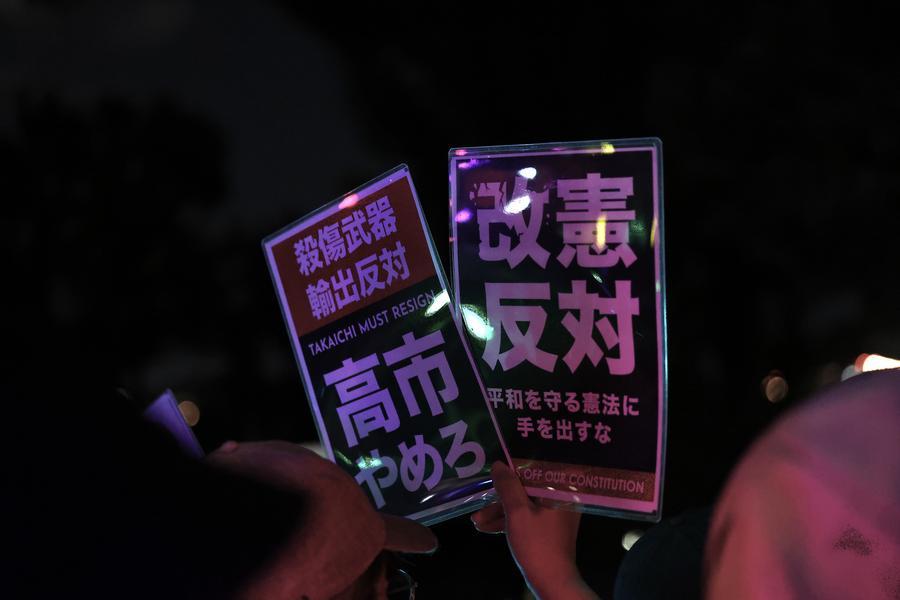
Since taking office, Takaichi has accelerated Japan's remilitarization by stepping up "extended deterrence" cooperation, lifting restrictions on exports of lethal weapons, pushing for the acquisition of nuclear-powered submarines, pursuing "nuclear sharing" arrangements, and introducing intermediate-range missile systems. These moves are all stepping stones toward breaking the Three Non-Nuclear Principles, securing nuclear sharing, and eventually acquiring an independent nuclear arsenal. Now Koizumi, as the sitting defense minister, has abandoned earlier pretenses -- his nuclear rhetoric is tantamount to a declaration that the nuclear option is no longer off the table.
The motive behind this gambit is plain for all to see. Domestically, Koizumi is using his high-profile remarks to gauge public reaction and soften the ground for revising the Three Non-Nuclear Principles when the government updates the three security documents later this year. Externally, by citing France's nuclear stockpile expansion and Finland's decision to allow nuclear weapons on its soil in wartime, he seeks to craft a false narrative that Japan has no choice but to follow suit in a changing international landscape, thereby justifying a break from the post-war order.
That also explains why Japan goes out of its way to play up China's routine military activities at every turn. In doing so, it seeks to sell the illusion that Japan faces grave external threats, using that perception as a pretext for its military buildup and nuclear breakout.
Historically, Japan has a long track record of cloaking its aggressive ambitions in narratives of "existential crisis." But what it frames as "having no choice" has always been, in essence, a calculated choice dressed up as necessity.
Legally, as a defeated aggressor, Japan remains historically culpable to its Asian neighbors for its wartime aggression. Its military capabilities are strictly constrained by the pacifist Constitution, which requires it to adhere to an exclusively defense-oriented policy and the Three Non-Nuclear Principles. On top of that, as a non-nuclear-weapon state party to the Treaty on the Non-Proliferation of Nuclear Weapons (NPT), Japan is bound by non-negotiable and binding obligations under international law not to receive, manufacture, acquire and transfer nuclear weapons.
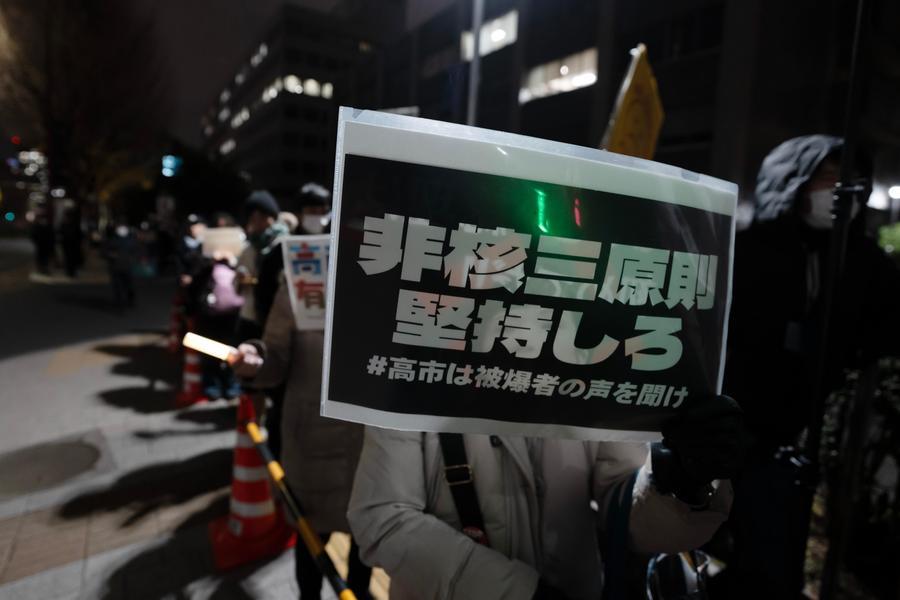
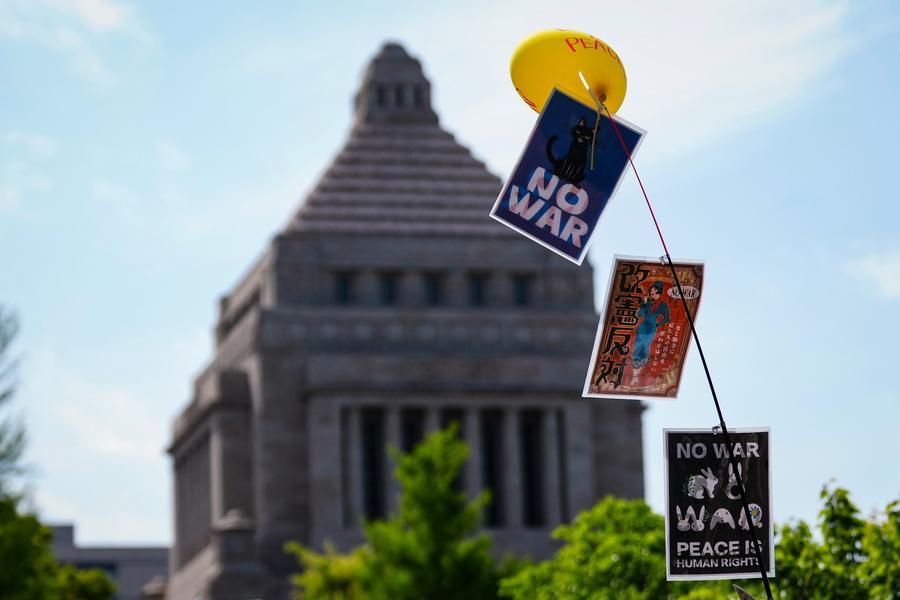
On the domestic front, the memory of the atomic bombings has nurtured peace-loving forces in Japan that have consistently and firmly opposed nuclear armament. According to Japanese media reports, since the Takaichi administration took office, 82 local assemblies have submitted petitions urging the government to uphold the Three Non-Nuclear Principles -- far more than under any previous cabinet. This is a clear sign of public anxiety over any revision of the principles in the revised security documents. Regrettably, Japan's right-wing administration has turned a deaf ear to the calls of its own people and the international community, thereby eroding the country's pacifist foundation.
Even more alarming is the fact that Japan is the world's only non-nuclear-weapon state under the NPT that possesses a complete nuclear fuel cycle. It is also the only such state that has mastered reprocessing technology, is capable of extracting weapons-grade plutonium, and maintains reprocessing facilities. Its stockpile of nuclear material far exceeds reasonable civilian needs, giving it a significant latent capacity to manufacture nuclear warheads. Taken together, these facts mean that Japan is now only one step away from possessing nuclear weapons.
Once Pandora's box is opened, Japan's transition from a non-nuclear state to a nuclear-armed one could proceed far more rapidly than the outside world imagines, triggering a domino effect that would deal a severe blow to the global non-proliferation regime and drag the world into dangerous geopolitical confrontation.
Japan has no right to use Europe as a cover, still less to invoke Germany as a justification -- on any level. The point here is not to comment on the nuclear policies of European countries. But if history is to be invoked, consider Germany: then Chancellor Willy Brandt knelt before the Warsaw Ghetto Memorial to apologize for Nazi atrocities; successive German leaders have continued to acknowledge that historical guilt; and the Nazi era remains a compulsory part of the national school curriculum -- a commitment to confronting the past that Germany has embedded in its laws and its society. So why does Japan, so eager to invoke Germany when it suits its argument, refuse to learn from Germany where it truly matters?
Japanese politicians pay annual homage at the Yasukuni war shrine, which notoriously enshrines 14 Class-A World War II war criminals. Japanese textbooks whitewash the country's war of aggression against China, dismiss the Nanjing Massacre as the "Nanjing Incident," and continue to deny crimes such as forced labor and the coercive recruitment of "comfort women."
Far from educating its own people with its war history, Japan has portrayed itself as a victim to garner sympathy, evaded responsibility for the suffering it inflicted on Asian nations, and smeared other countries' legitimate pursuit of historical justice as "exerting pressure through historical issues" or "anti-Japan campaigns."
One cannot help but ask: How can a country that still glorifies war criminals and rewrites its history of aggression -- a country that pushes past its limits to remilitarize -- expect its Asian neighbors to view its talk of nuclear armament as merely a matter of "security?" Such a country can only be seen as returning to its aggressive past.
History teaches that appeasing militaristic expansion only leads to war. That is precisely why the international community must not only keep a wary eye on the dangerous push by Japan's right-wing forces to shake off the post-war order, but also push back against such moves. Should Japan proceed unchecked down the path of nuclear armament, the fallout for Asia and the world would be catastrophic.
Editor's note: The author is an observer on international affairs.
The views expressed in this article are those of the author and do not necessarily reflect those of Xinhua News Agency.■