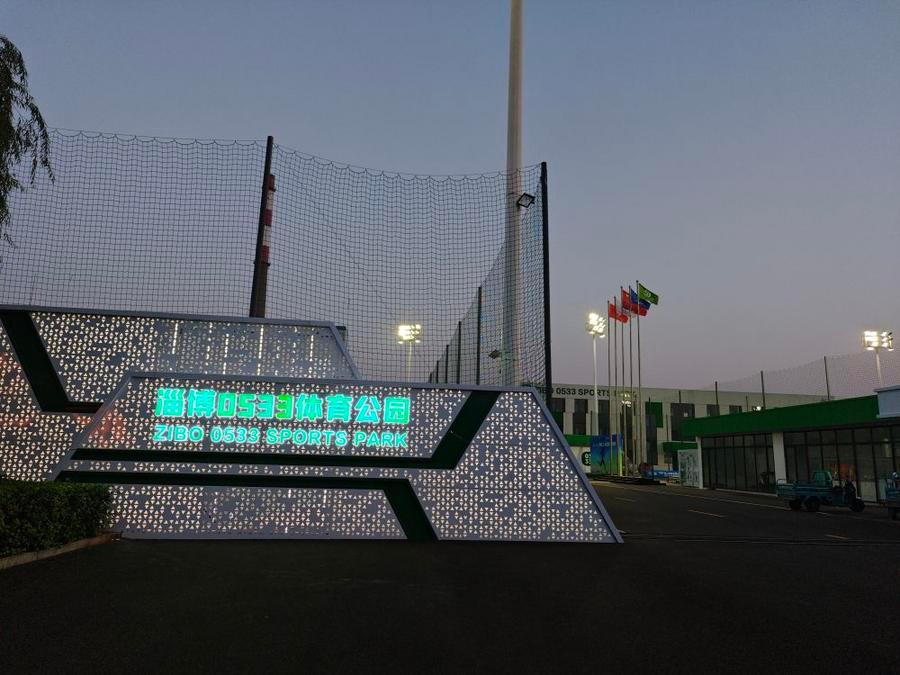
A former thermal power plant has been rebuilt into a football sports park in Zibo, in east China. This new model for renovating and running idle industrial site creates economic returns and meets residents' demand for public sports space.
JINAN, Aug. 3 (Xinhua) -- As dusk fell over Zibo 0533 Football Park in Zibo, in east China's Shandong Province, local enthusiast Rong Zefu joined his teammates for a match under the floodlights.
"Beforehand, it was harder to find a decent pitch than to gather enough players for a match," said Rong. "Now, with this park, it is much easier for us to arrange games."
The park was built on the site of a former thermal power plant, where old workshops and a towering cooling structure remain visible around the pitches.
Its transformation from an idle industrial site into a public sports venue offers a fresh example of how Chinese cities are exploring new uses for underused urban facilities.
Zibo is known as the birthplace of cuju, an ancient precursor of football. Despite the city's strong football culture, modern pitches built to professional standards remain relatively scarce, particularly for youth training and grassroots matches.
Hou Zhiqiang, a Zibo native and former professional player, was among the initiators of the football park project. In 2024, he and several enthusiasts began discussing whether they could build a park themselves to provide more training and competition space for children and amateur players.
The idea received unanimous support, but finding a suitable site proved difficult. A football park had to be accessible, capable of hosting matches and far enough from residential communities to minimize concerns over noise and lighting. The land also had to meet construction requirements.
The breakthrough came when officials from the Suozhen Subdistrict administration used drones to search for available land and identified a large vacant area inside an abandoned thermal power plant. After coordination by the subdistrict authorities, the plant's owner agreed to lease part of the site for the project.
Rather than building a new venue from scratch through large-scale, government-led land development, the project adopted a lighter model combining government guidance, policy support and private investment.
Hou and his partners established a joint-stock enterprise that attracted 15 shareholders, with total investment exceeding 18 million yuan (2.5 million U.S. dollars).
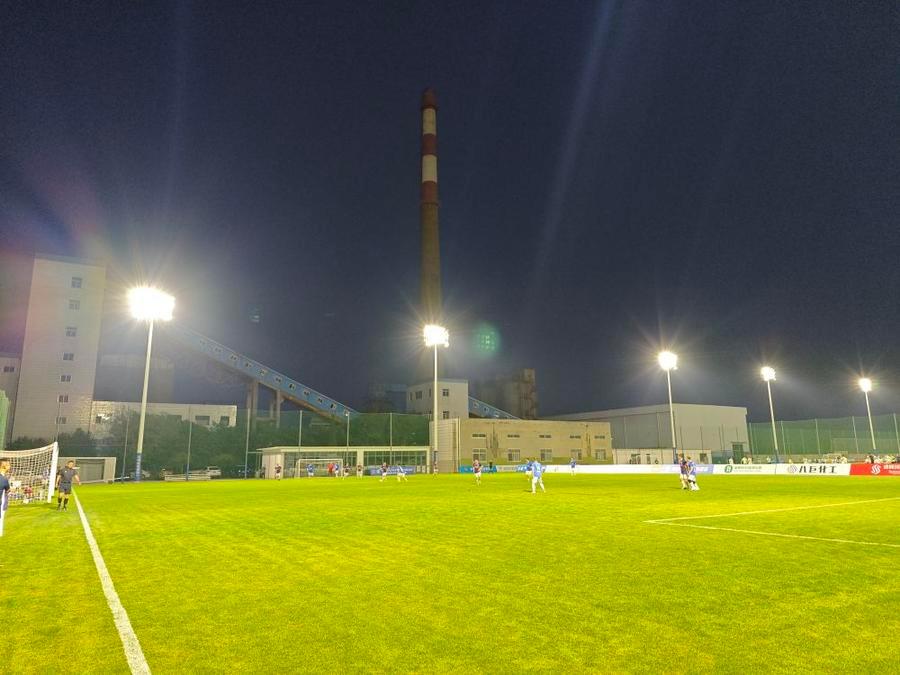
Construction began in March 2025. Within about three months, two FIFA-certified artificial-turf pitches were completed. By the end of 2025, two natural-grass pitches had also opened. Several old factory buildings were renovated into offices, locker rooms and dormitories, providing supporting facilities for staff, coaches and teams.
"Building the pitches was only the first step," said Du Pengcheng, another person in charge of the company. "The key is to keep the place running in a sustainable way."
The park has focused on hosting youth tournaments, city leagues and mass-participation football activities. So far, it has staged more than 950 matches and events, attracting over 350 teams and recording 42,000 visits, which has generated sustainable revenue for the park.
"The park should not only serve professional teams," said Song Kai, deputy head of the Suozhen Subdistrict office. "It should also be a place where ordinary people are willing and able to come."
Park operators said the venue is run as a business but also serves a public function by keeping prices affordable. "When shared by two teams, the cost for each player remains relatively low," Du said.
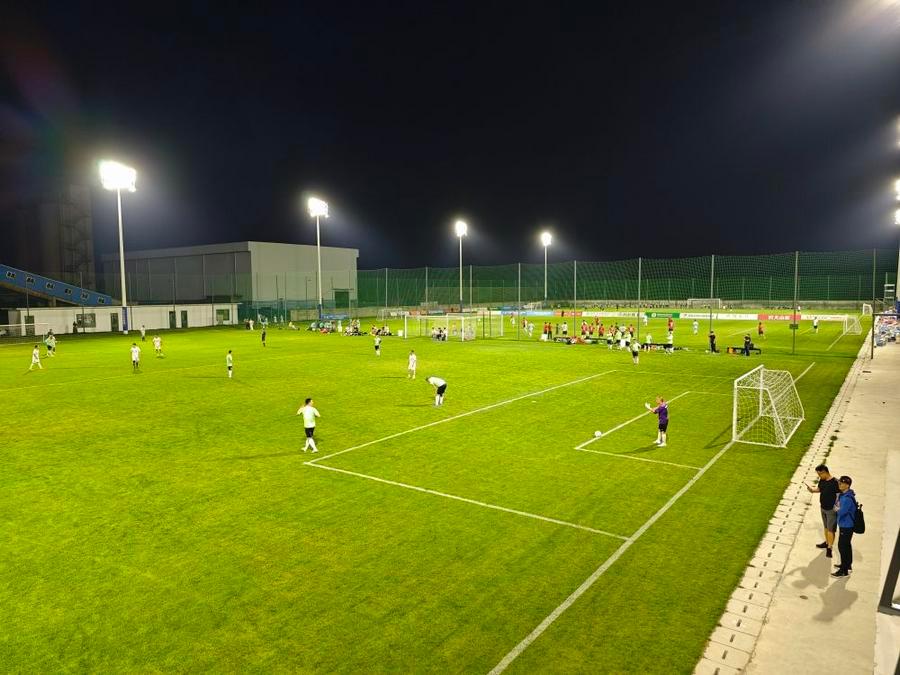
The football park in Huantai reflects a broader trend in China's urban renewal efforts: making better use of existing urban spaces while improving access to public services.
China's urban renewal plan for the 15th Five-Year Plan period calls for developing fitness and recreational facilities based on local conditions, as well as revitalizing idle and underused factories, workshops and other facilities by introducing new business models and functions.
The benefits have extended beyond the pitches. Visiting teams have increased spending on accommodation, catering, transport and tourism. Local authorities said the project has generated more than eight million yuan in additional revenue for nearby restaurants, hotels and related businesses.
As night deepens, the pitches remain brightly lit. Children train, amateur teams compete and spectators chat beside the old factory buildings. A once-quiet industrial site is becoming part of everyday urban life again.
"We plan to renovate more idle factory buildings into sports venues, including basketball courts, pickleball courts and facilities for model aircraft activities, allowing old spaces to create new value," said Wang Di, head of Suozhen Subdistrict. ■