* Long known as one of China's traditional industrial heartlands, northeast China's Heilongjiang Province built its reputation on industries such as steel, machinery and oil. Today, the province is seeking new growth engines as China pushes to upgrade its manufacturing sector and advance artificial intelligence.
* Authorities in Heilongjiang have identified robotics as one of the sectors in which the province could leverage its existing strengths, including a deep pool of engineering talent, a strong industrial base and a concentration of research universities.
* These advantages, coupled with China's increasingly complete robotics supply chains, have created favorable conditions for companies to turn technological breakthroughs into commercial applications, local companies said.
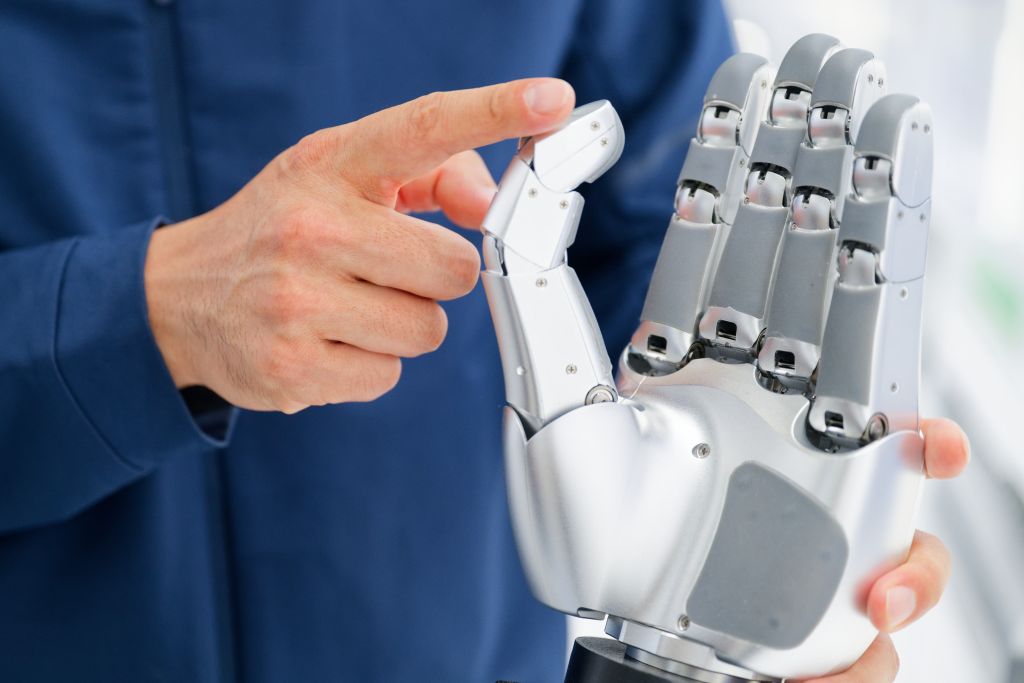
HARBIN, Aug. 2 (Xinhua) -- A lightweight robotic hand deftly rotated and gripped objects at an exhibition hall. Nearby, a surgical robot designed for retinal procedures demonstrated movements with micron-level precision, finer than a human hair.
These exhibits at Harbin Institute of Technology (HIT), a leading engineering university in northeast China's Heilongjiang Province, offer a glimpse into a broader transformation underway in a province that once faced challenges in industrial upgrading.
Long known as one of China's traditional industrial heartlands, Heilongjiang built its reputation on industries such as steel, machinery and oil. Today, the province is seeking new growth engines as China pushes to upgrade its manufacturing sector and advance artificial intelligence.
Fostering new quality productive forces is one of China's top priorities in the 15th Five-Year Plan period (2026-2030). The country has, notably, remained the world's largest market for industrial robots for 13 consecutive years.
Authorities in Heilongjiang have identified robotics as one of the sectors in which the province could leverage its existing strengths, including a deep pool of engineering talent, a strong industrial base and a concentration of research universities.
These advantages, coupled with China's increasingly complete robotics supply chains, have created favorable conditions for companies to turn technological breakthroughs into commercial applications, local companies said.
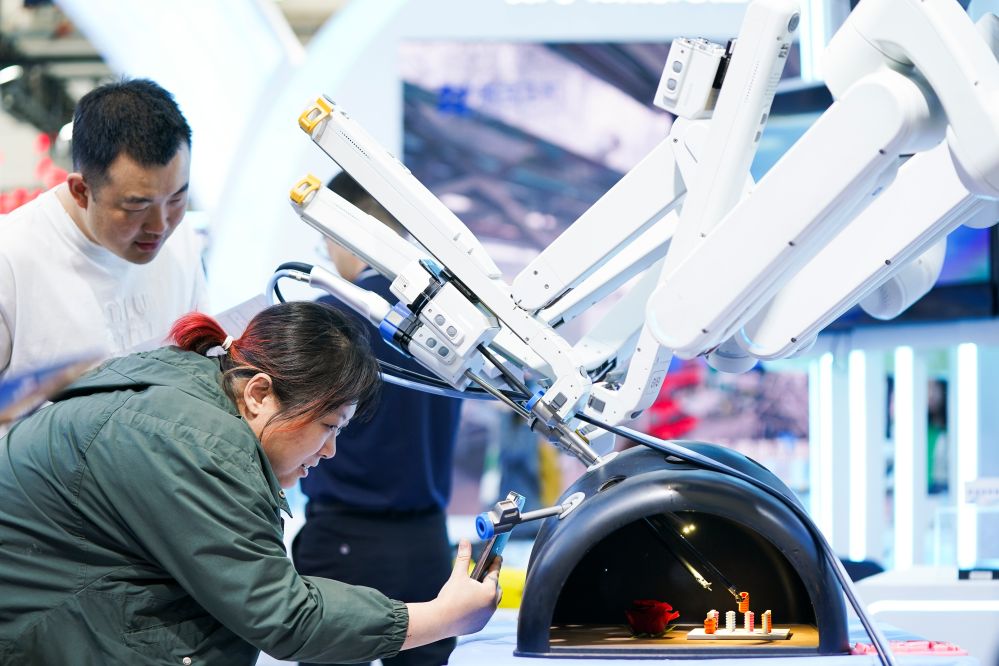
At the exhibition in HIT's Institute of Advanced Technology, dozens of robotics innovations developed by universities, research institutes and technology platforms across Heilongjiang were on display, covering sectors including aerospace, advanced manufacturing, marine engineering, modern agriculture and the digital economy.
Qi Le, general manager of Harbin Dexbot Robotics Co., Ltd., which developed the exhibited robotic hand, said the company was founded in 2024, and draws on decades of robotics research at a key HIT laboratory.
Today, its team, averaging under 30 years old, has developed internationally competitive technologies in dexterous manipulation, robotic arms and coordinated arm-hand control, Qi said.
The startup's rapid growth has been fueled by a broad innovation ecosystem, according to Qi.
The company was first incubated at HIT's Institute of Advanced Technology before expanding into larger facilities for research, development and manufacturing. Provincial programs supporting key technologies and commercialization, together with local venture capital funds, helped finance its early growth.
Heilongjiang's established equipment manufacturing and aerospace industries, meanwhile, have enabled swift prototype testing and engineering, Qi said.
China's unified national market also gives the company efficient access to precision machining, electronic components and specialized suppliers in manufacturing hubs such as the Yangtze River Delta and Pearl River Delta, shortening development cycles, Qi noted.
"Through various trade fairs, technology exhibitions and robotics conferences, our company can identify market demand and connect with customers, accelerating product development and market expansion," the general manager explained.
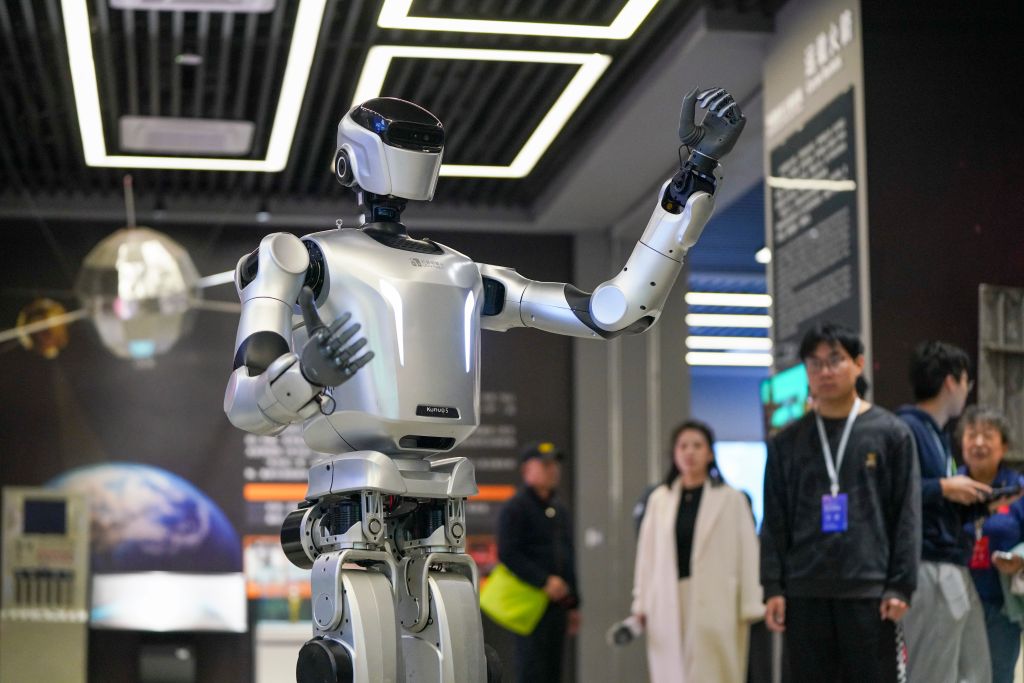
Over the past two years, HIT has spun off startups specializing in medical robotics, agricultural equipment, special-purpose inspection, ice construction and precision manufacturing, said Liu Hong, vice president of HIT and director of the State Key Laboratory of Robotics and Systems.
China has been encouraging its universities and research institutes to turn innovations into productive forces by working with enterprises. In its 15th Five-Year Plan (2026-2030), China calls for improving policies that allow researchers to take entrepreneurial leave or hold multiple positions with pay, encouraging top talent to move into enterprises. It also urges joint industry-university R&D to address industrial needs.
Zhang He, an HIT professor and chief scientist of a national key research and development project, spent nine years developing the robotic system for retinal microsurgery and founded a company last year.
"Core patents developed through research programs are licensed to the company, allowing it to build on years of research rather than starting from scratch," Zhang said. The firm has continued to benefit from the laboratory's steady pipeline of engineering and medical robotics talent, he added.
Zhang also noted that China's mature precision manufacturing sector and comprehensive supply chains for medical materials and electronic components have helped cut R&D and production costs.
BUILT FOR LOCAL NEEDS
China has focused on boosting the application of new technologies, and the robotics industry is no exception. In Heilongjiang, developers of robots are adapting to local demands arising from the province's vast forests, fertile farmlands and snow-rich winters.
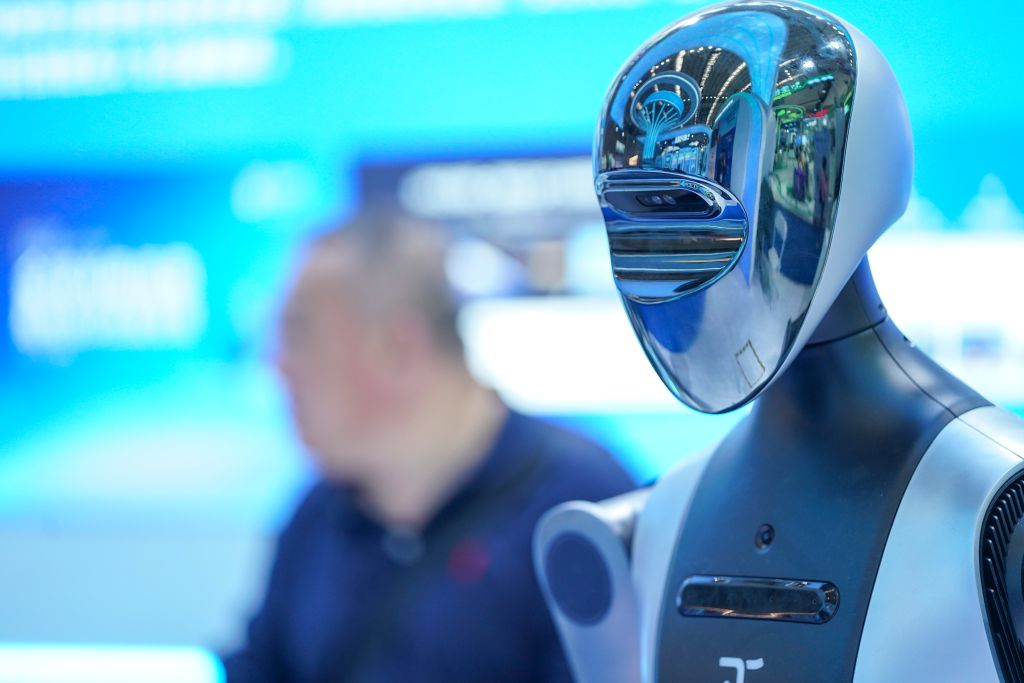
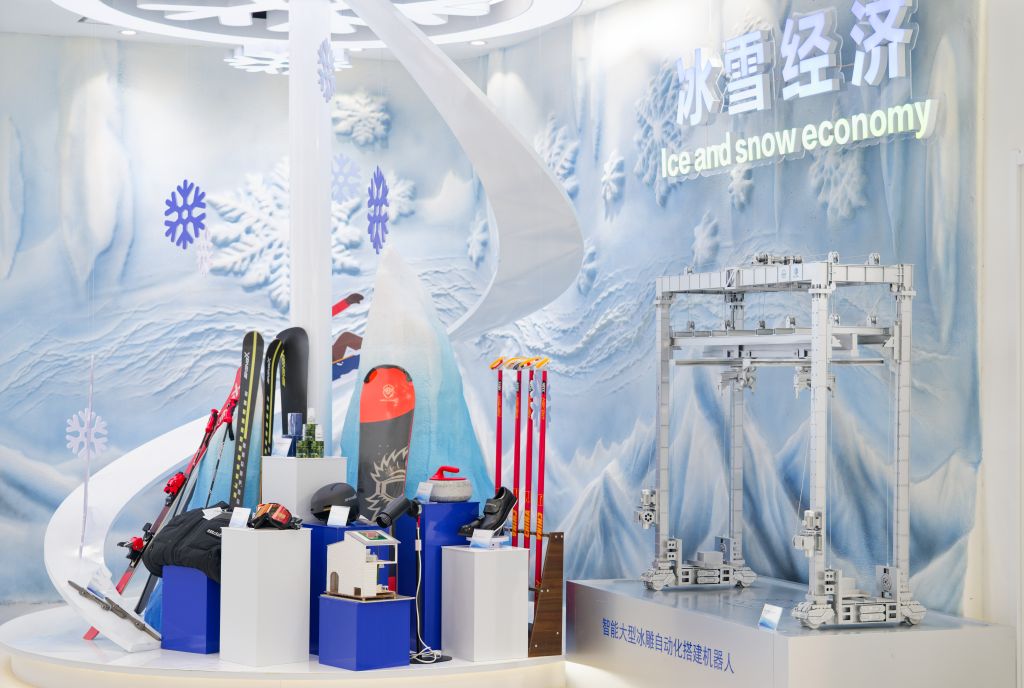
In the provincial capital Harbin, home to the world-famous Ice and Snow World, researchers have developed an automated robot capable of constructing giant ice sculptures with millimeter precision in extreme cold.
The robot automates a process traditionally performed by workers at height. It can complete tasks equivalent to the work of around 30 skilled workers simultaneously while shortening construction time by about 30 percent.
This technology could eventually find broader applications in polar research and infrastructure construction in cold regions, developers said.
Home to more than 20 million hectares of forest, including roughly 10 million hectares of birch forest, the province faces challenges harvesting birch sap in mountainous terrain within a short seasonal window.
To improve efficiency, researchers from Northeast Forestry University, HIT and a local manufacturer have jointly developed an intelligent tracked transport vehicle capable of climbing slopes of up to 30 degrees.
The machine reduces loading work that would otherwise take three workers an hour to approximately 10 minutes and can also be adapted for irrigation, soil cultivation and other forestry tasks, according to project expert Yang Chunmei.
At Daqing Oilfield in Heilongjiang, China's largest onshore oilfield, companies are applying technologies developed from HIT's aerospace and robotics research to develop intelligent systems for deep resource extraction and hazardous operations, including oil tank inspection and cleaning.
In April, Heilongjiang introduced a package of policies supporting the intelligent robotics industry, targeting an industry value exceeding 10 billion yuan (about 1.5 billion U.S. dollars) by 2028 and aiming to foster three to five nationally competitive leading companies.
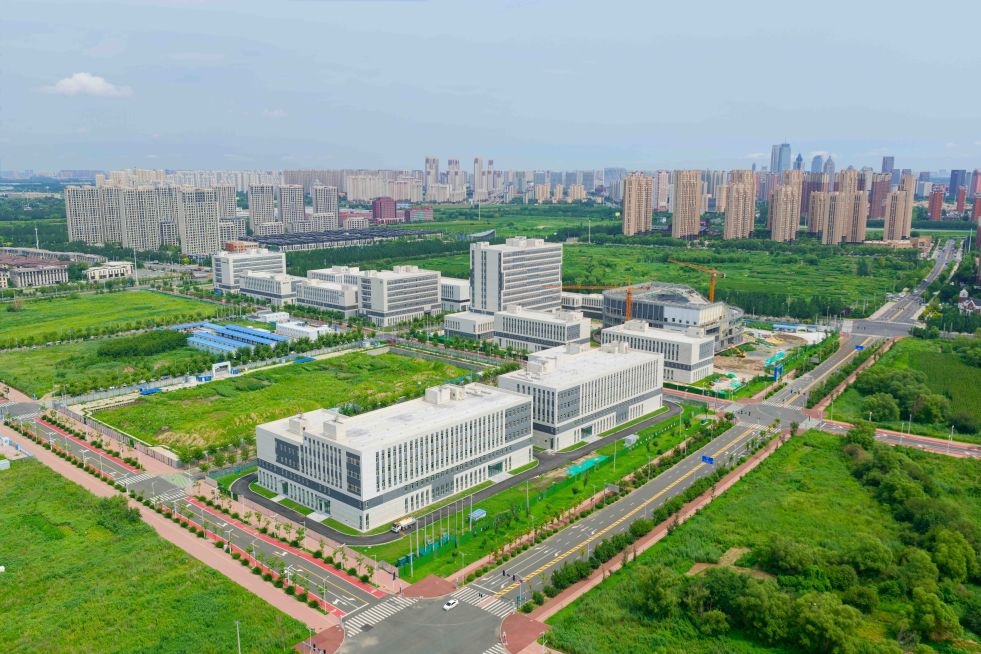
Construction is also underway on a planned "Robot Island," a technology park in Harbin that will integrate research, manufacturing, international cooperation and talent services, with several university startups already committed to moving in.
"Robotics is not about chasing the latest trend," said Liu, the HIT vice president. "For Heilongjiang's robotics industry, the opportunity lies in building on local strengths and developing technologies that solve real-world problems." ■
(Reporting by Peng Peigen, Gu Qianjiang, Yang Siqi, Wang Zuo and Shen Yijin; video reporter: He Shan; video editors: Hong Ling, Zhang Mocheng, Zhang Yuhong, Zhang Yichi)