by Li Xirui
NEW YORK, Aug. 2 (Xinhua) -- Rising raw material, production and shipping costs together with shifting tariff policies are putting pressure on textile and apparel exporters eyeing the U.S. market and forcing many companies to absorb higher expenses while competing for customers.
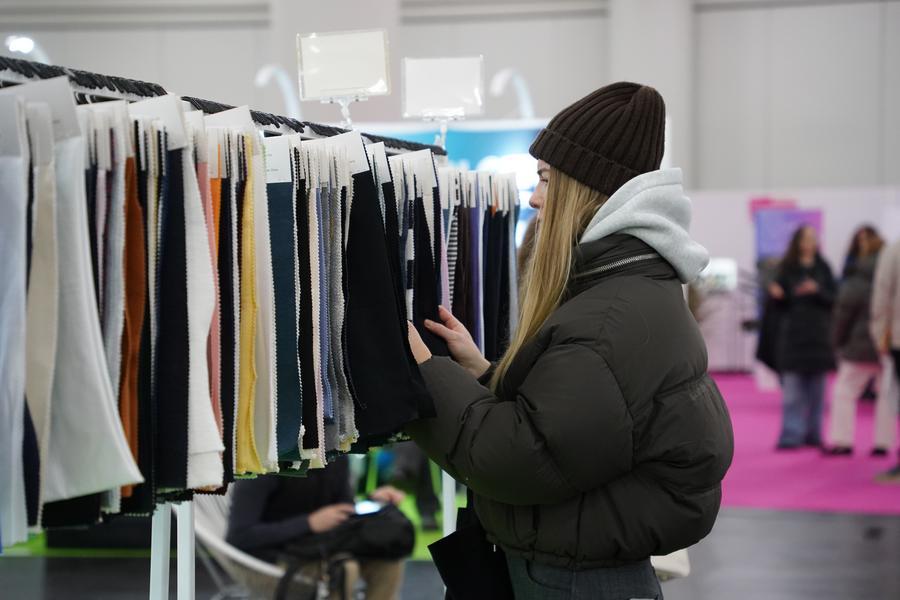
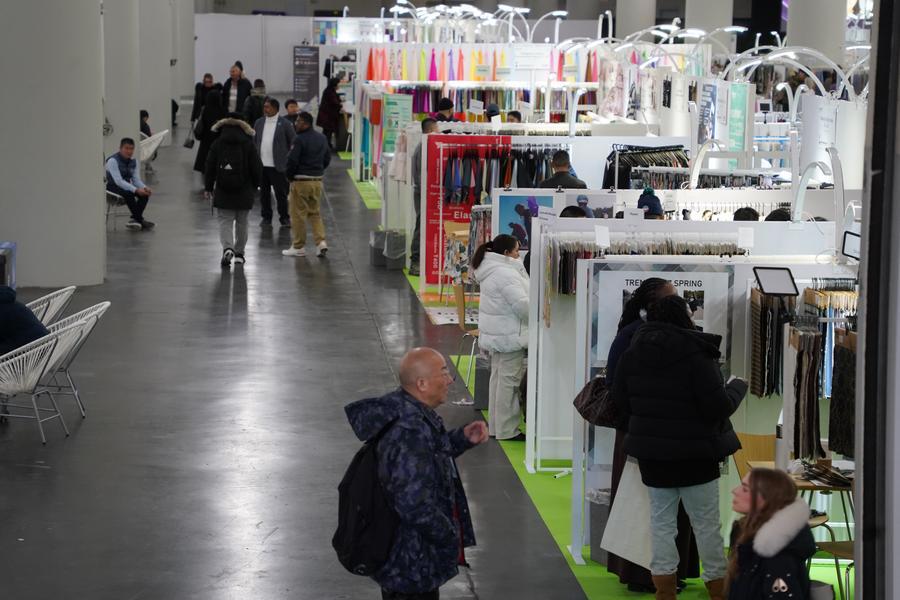
Those challenges were a common theme among participants at Texworld NYC, which marked its 20th anniversary this year and brought together more than 400 exhibitors from around the world at the end of July.
For exhibitors, trade shows remain one of the most direct ways to reach buyers. But many said buyer traffic has slowed in recent years as costs continue to climb across the supply chain, forcing companies to balance profitability and competitiveness.
Booth traffic was "better than expected," according to Jason Liu, business director with Chinese textile manufacturer Sumec Textile & Light Industry Co., Ltd., which exhibits at Texworld NYC for the first time.
Liu said the company has collected around 50 to 60 leads from potential clients, mainly from the United States, Canada and Mexico. Liu added that its U.S. buyers are mainly importers and brand owners, whose end customers include major retailers such as Costco, Walmart, Sam's Club and Burlington.
The current tariff rates vary depending on the type of product, Liu said. In addition to the baseline tariffs, additional tariffs are determined based on factors such as fabric composition, including the proportion of cotton and polyester used.
On July 24, the United States imposed tariffs ranging from 10 percent to 12.5 percent on imports from 60 economies, including China, under Section 301 of the Trade Act of 1974.
On July 27, China's Ministry of Commerce urged the United States to correct its wrong practices and fully remove the unilateral tariff measures it imposed under the pretext of so-called "forced labor."
In response to the U.S. move, Liu said companies are focusing on strengthening their own competitiveness amid changing external conditions.
"The external environment is beyond our control. What we can do is focus on making better products," Liu said.
According to Karthic Balasubramanian, managing partner of India-based textile company CB Exporters, a third-time participant, visitor traffic at this year's exhibition was lower than previous years.
Balasubramanian said around 30 percent of its business comes from the U.S. market, with the rest serving customers in Europe, Mexico and other regions. Balasubramanian said frequent changes in tariff policies have created uncertainty for businesses. However, compared with previous tariff levels of around 50 percent at their peak, the current rate has eased some pressure.
He also noted that the recent expansion of Section 301 tariffs added another 10 percent duty on imports from India, further increasing costs for exporters.
"It's inconsistent," Balasubramanian said. "The prices are totally inconsistent too, due to the different wars happening right now."
Ongoing geopolitical tensions have continued to drive up costs across the textile industry. Industry insiders said tensions in the Middle East have pushed up cotton prices, while expenses for dyeing and printing have also increased. International shipping costs have now risen to two to three times the level of one to two years ago, further squeezing profit margins.
Policy uncertainty has made long-term planning increasingly difficult.
U.S.-based home textile brand Utopia Brands has built a more diversified global supply chain. Khurram Shafique, the company's director of sales, said most of its products are sold through Amazon.
Around 60 percent to 65 percent of its products are manufactured at its own facilities in Pakistan, while the remainder is sourced from partner factories in China, Shafique said.
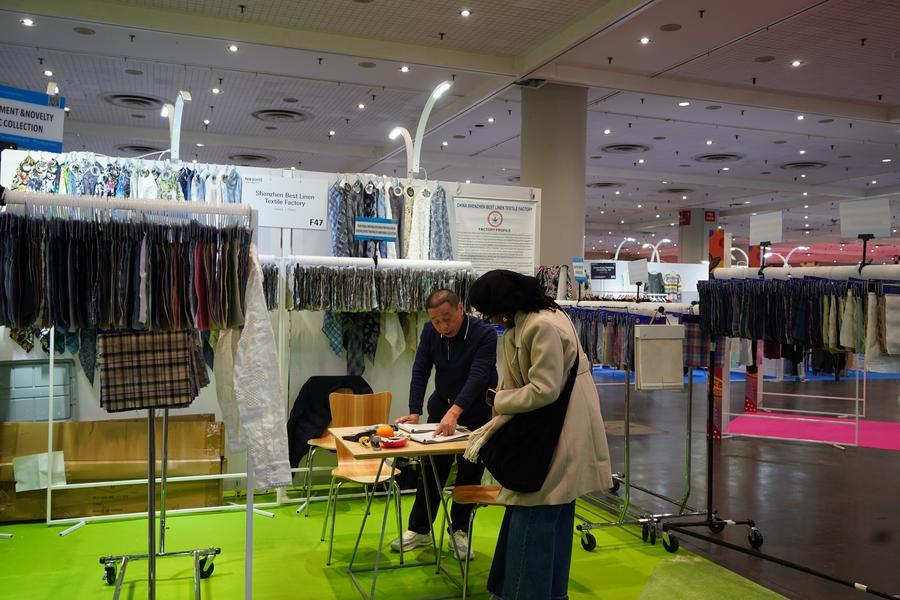
Shafique noted that additional tariffs have pushed up import costs. He also highlighted that politically motivated allegations regarding labor practices have created an uneven playing field, making it difficult for compliant businesses to operate normally.
"We initially tried to absorb as much as we can, and then we were just waiting for the final decision," he said.
Ivy Tettegah, CEO of iLORM, a U.S.-based textile company that primarily manufactures its products in West Africa, said import duties and shipping costs do not follow a fixed rate.
Logistics providers estimate duties and shipping charges based on shipment weight, volume and prevailing customs policies, with the final amount determined only after customs clearance, she said.
This year, the company showcased products using its proprietary loom, which combines traditional Ghanaian weaving techniques with Scandinavian and Japanese loom technologies.
Tettegah said she hopes to differentiate itself from the highly standardized textile market through innovation.
"Many textile companies are struggling right now. The focus is on how to sell more and how to become more efficient, but sometimes in efficiency you lose creativity," she said. "We're still excited about where things are headed and the opportunities available to us."■