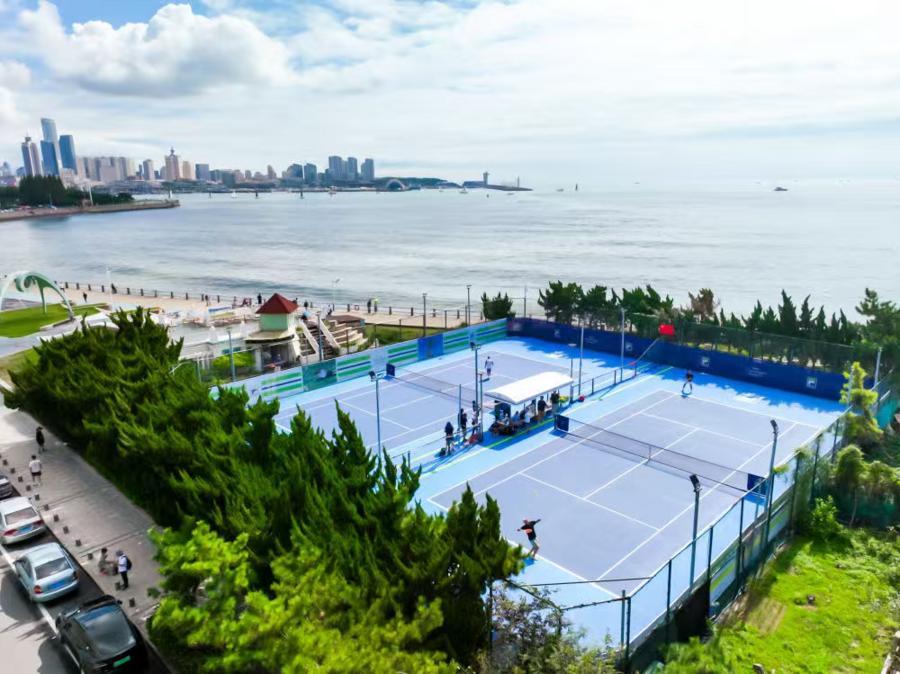
JINAN, China, Aug. 2 (Xinhua) -- As evening fell over a blue tennis court by the sea in Qingdao, east China's Shandong Province, the crack of rackets and bounce of balls blended with the sound of waves.
Dai Xiaodong, a local tennis enthusiast, had just finished a rally when he turned toward the sea and praised the court's open view and consistent bounce.
"The court does not feel different from any other professional tennis court," he said.
Tennis's growing popularity in China and around the world has brought with it a less visible problem: the vast number of balls discarded once they lose their bounce.
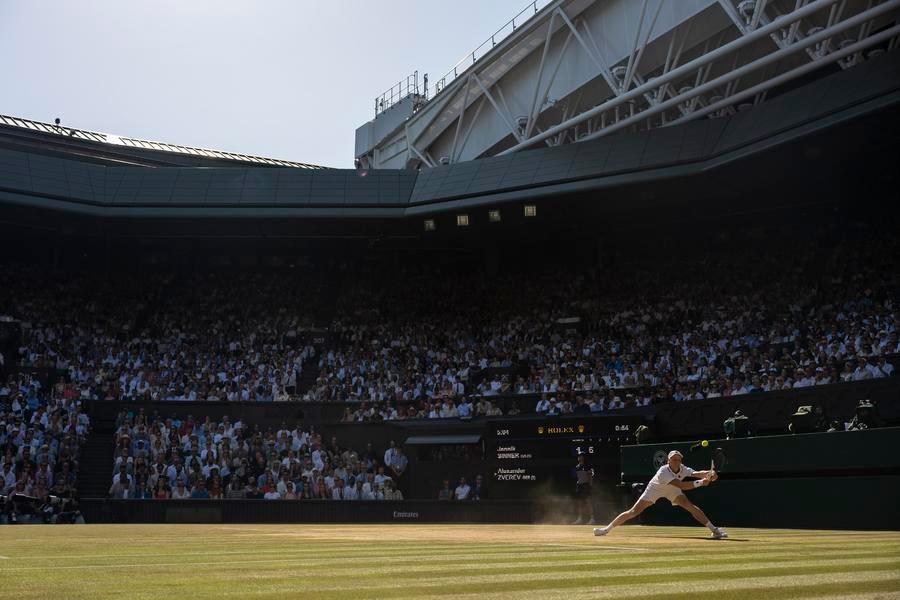
At Wimbledon, for example, balls are changed regularly under competition rules, with more than 50,000 used during the two-week tournament. Around 330 million tennis balls are produced globally each year, and a substantial proportion are eventually discarded.
"Tennis balls have a complex structure, with nylon felt on the outside and rubber inside. If buried, rubber can take around 400 years to decompose," said Jeremy Jiang, vice president of marketing at FILA Greater China.
"In the past, used balls were often treated as general waste and sent to landfill or incineration, creating a long-term environmental burden."
Recycling used tennis balls is challenging not only because their materials must be separated, but also because collection is spread across clubs, tournaments and individual players. Finding new uses for "retired" balls has therefore become a practical challenge in the sport's green transition.
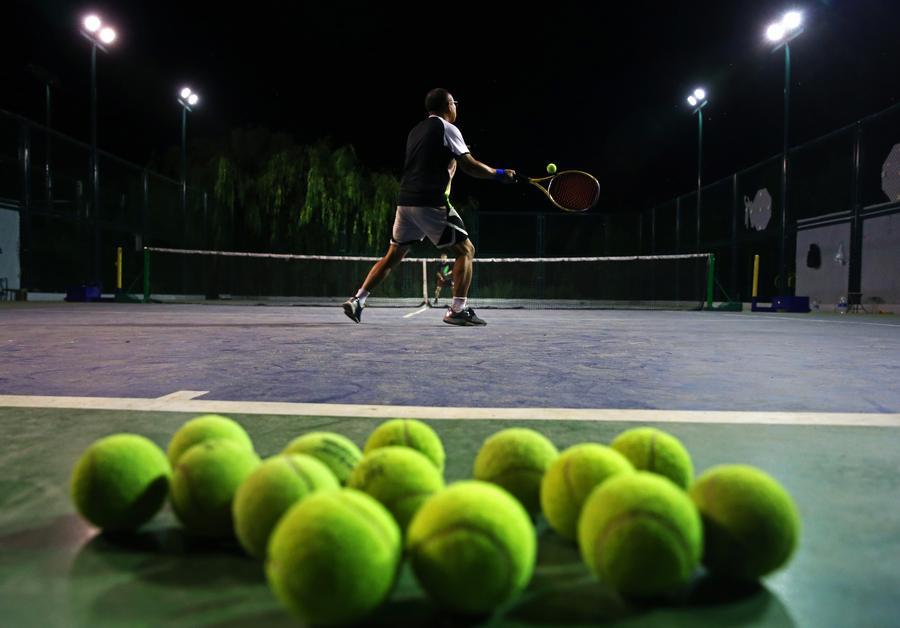
For the Qingdao project, FILA extended its recycling network to clubs and players. In 2025, the company placed collection bins at more than 40 clubs in 16 Chinese cities to gather balls that might otherwise have been discarded.
Amber Wang, associate director of sustainability at Anta Group, which operates FILA in China, outlined the recycling process. Collected balls are crushed and separated into outer felt and inner rubber, with the rubber then processed into recycled granules for sports surfaces. The granules form the court's cushioning layer, which is finished with an environmentally friendly coating.
According to Jiang, the project, covering collection, material processing and court construction, achieved a carbon reduction of about 12.36 tonnes, equivalent to the annual carbon absorption of roughly 4.53 hectares of forest.
Similar green initiatives are spreading internationally, with used balls repurposed in sports venues, playgrounds and public facilities. In China, recycled materials from sports shoes, plastic bottles and waste textiles are increasingly being used in sportswear, equipment and venue construction.
Reusing old sporting goods forms part of a broader shift toward greener production and lifestyles. China's 15th Five-Year Plan calls for accelerating circular production and consumption patterns, strengthening policy incentives and encouraging broad public participation.
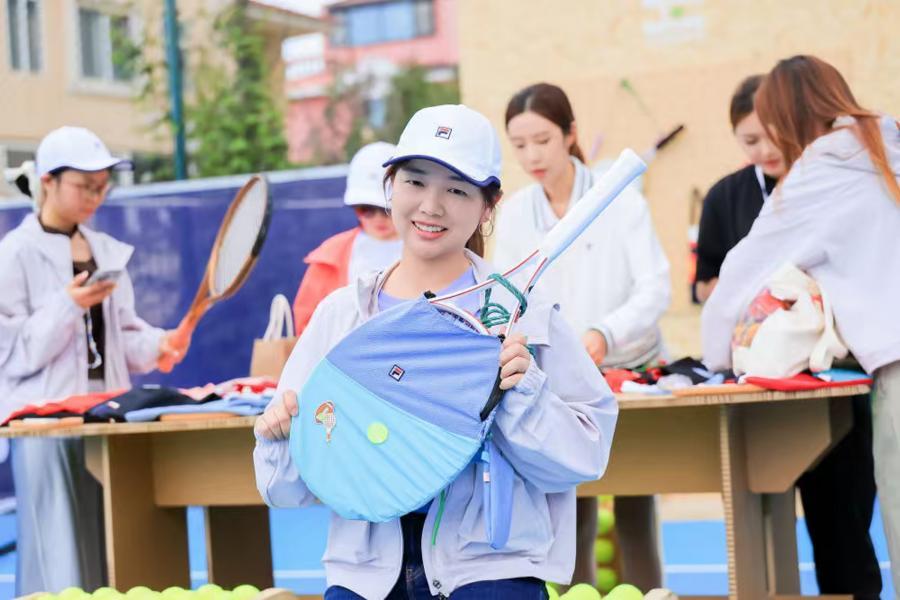
Wang Xianliang, deputy dean of the School of Physical Education at Shandong University, said China is expected to place greater emphasis on building comprehensive recycling systems for old sporting goods and introducing recycling funds to support the green transition.
For ordinary players, the change is already visible. At the Qingdao court, some deposit their used balls in recycling bins and pose for photos, while others say standing on a surface made partly from recycled balls feels both unusual and familiar.
"Now that I know a tennis ball may become part of a court, I'm willing to take a few more steps and put it into a recycling bin," Dai said.
Used balls attached to the court fence spell out "FROM NATURE TO NATURE," a fitting slogan for this experiment in circular reuse. ■