
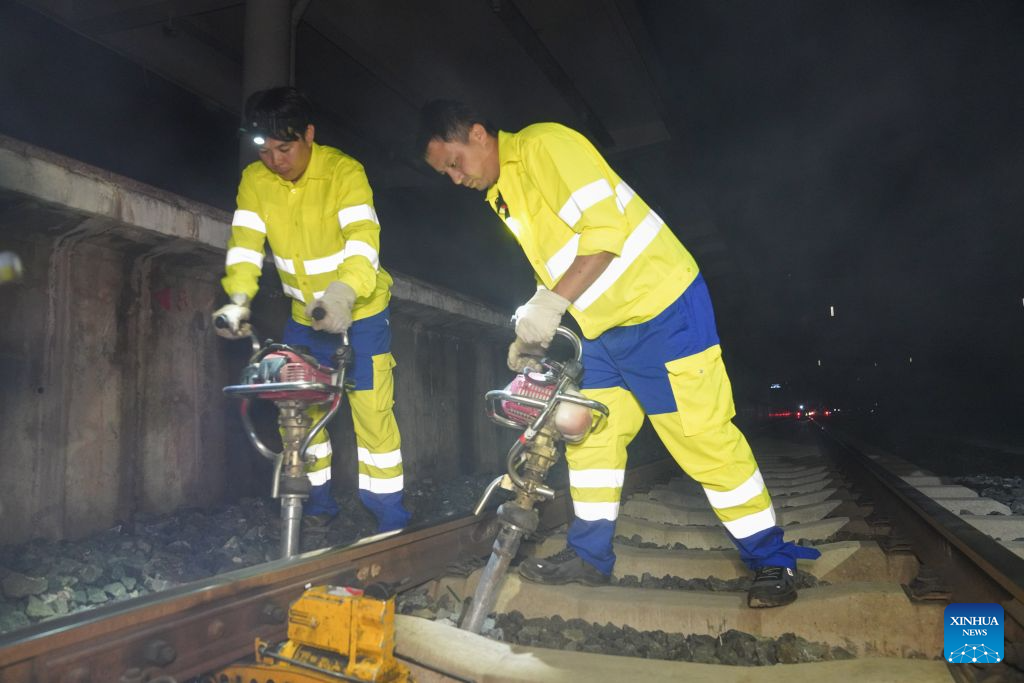
Chinese mentor Li Li (R) and his Lao apprentice Bounyadeth Thepvongsa do track maintenance work at Meuangxay Station of the China-Laos Railway in Meuangxay, Laos, July 30, 2026. (Photo by Pu Hongsi/Xinhua)
VIENTIANE, Aug. 2 (Xinhua) -- In the early hours of Saturday, at Meuangxay Station on the Lao section of the China-Laos Railway, station lights shone on the tracks. Bounyadeth Thepvongsa, a Lao track worker, moved steadily along the rails, measuring, inspecting, and repairing equipment to ensure the safe and smooth operation of the railway.
"Master, the height and alignment deviations at the rail joints have exceeded the maintenance standards. What should we do?" Bounyadeth asked his Chinese mentor, Li Li, in Chinese.
Li and Bounyadeth are a mentor-apprentice team at the Meuangxay Comprehensive Maintenance Workshop. Although they come from different countries, their life journeys share remarkable similarities. Both once served in the military to defend their respective homelands. Today, they share a new mission -- safeguarding the China-Laos Railway, a symbol of friendship connecting the two nations.
After retiring from the military, Bounyadeth learned that the railway was about to begin operations and decided to apply for a position. "Laos now has its first modern railway, and I wanted to be part of it," he said.
To achieve that goal, he began learning Chinese from scratch. In 2021, after successfully passing the recruitment examination, he became one of the first Lao employees of the Laos-China Railway Co. Ltd. (LCRC), which operates the Lao section of the railway.
When he first joined the company, he faced three major challenges: understanding Chinese technical terminology, mastering the principles of railway equipment, and memorizing operating standards. Li became one of the key people who helped him overcome these obstacles.
A highly experienced railway maintenance specialist from the Kaiyuan Engineering Section of China Railway Kunming Bureau Group Co., Ltd., Li has more than 20 years of experience in railway track maintenance. In March 2025, he was assigned to the Meuangxay Comprehensive Maintenance Workshop as foreman of the track maintenance team. After learning that Bounyadeth had also served in the military, the two quickly developed a strong rapport.
From identifying tools and equipment to analyzing inspection data and developing maintenance solutions, Li turned the worksite into a classroom and every task into a practical lesson. He was always exceptionally meticulous when checking the quality of assignments.
"Why did this problem occur?" "What would happen if a train passed over this section?" Faced with his mentor's questions, Bounyadeth learned to carefully analyze each situation before responding.
While maintaining high standards, Li shared his knowledge generously. When dealing with complex faults, he would crouch beside the tracks, patiently explaining the technical principles time and again. During critical maintenance procedures, he demonstrated every step according to standard operating practices. Under his guidance, Bounyadeth gradually grew into a skilled technician capable of independently carrying out track maintenance works.
At work, Li was a strict teacher. Outside work, he became a close friend of Bounyadeth, who had taught Li everyday Lao phrases to help him adapt more quickly to life in Laos. During their free time, the two often talked about their hometowns, cultures, and the development of the railway. Over time, their relationship evolved from mentor and apprentice into trusted colleagues working side by side.
"Before, I wore a military uniform to protect my homeland. Now, I wear a work uniform to protect the railway," said Bounyadeth.
Li shared the same sentiment. "Ensuring the safety of the railway means protecting the journeys of people in both countries and supporting social development," he said.
As night gave way to dawn, several hours of intensive maintenance work came to an end. All identified equipment hazards had been eliminated, and normal railway operations resumed. After putting away their tools, the mentor and his apprentice walked side by side along the tracks, ready to continue safeguarding the railway they both proudly serve. ■
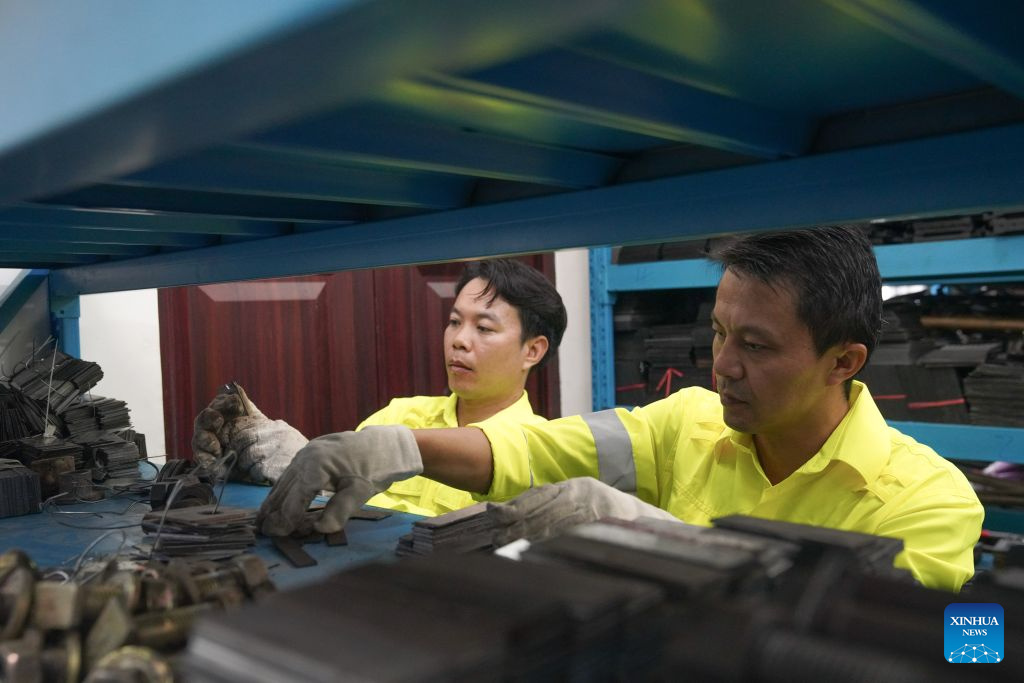
Chinese mentor Li Li (R) arranges tools with his Lao apprentice Bounyadeth Thepvongsa at the Meuangxay Comprehensive Maintenance Workshop of the China-Laos Railway in Meuangxay, Laos, July 30, 2026. (Photo by Pu Hongsi/Xinhua)
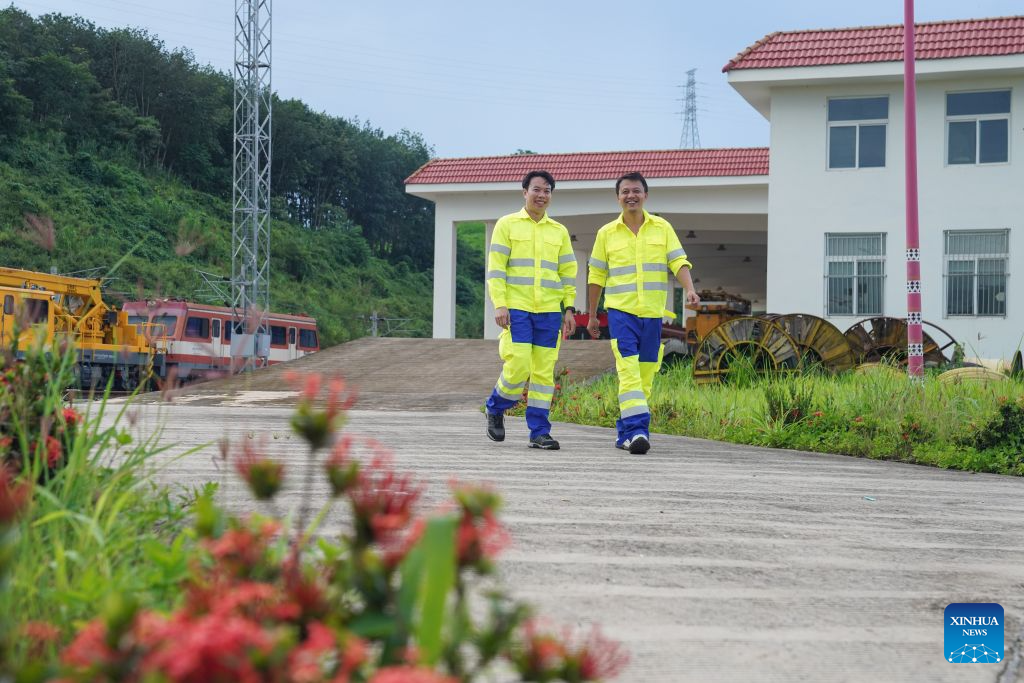
Chinese mentor Li Li (R) and his Lao apprentice Bounyadeth Thepvongsa are pictured at the Meuangxay Comprehensive Maintenance Workshop of the China-Laos Railway in Meuangxay, Laos, July 30, 2026. (Photo by Pu Hongsi/Xinhua)


