* Longyangxia is now China's largest and most developed high-altitude cold-water fish export base. Qinghai's cold-water fish exports account for over 98 percent of the national total, with products shipped to more than 10 countries and regions.
* Global salmon supply has long been dominated by sea-farmed Atlantic salmon from Norway and Chile, while China has relied heavily on imports. Qinghai's producers are expanding the domestic supply of high-quality cold-water fish while steadily building markets overseas.
* For the communities around the reservoir, such trade has brought jobs and income, while for overseas buyers, it has introduced an unexpected new source of salmon from the Qinghai-Tibet Plateau.
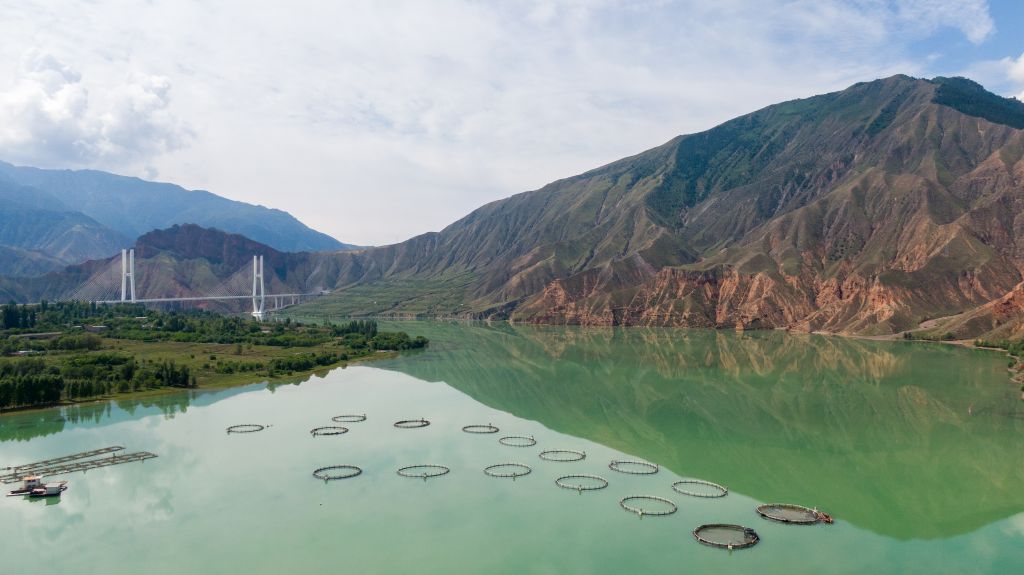
XINING, July 31 (Xinhua) -- The fish on a Bangkok restaurant menu does not come from a Norwegian fjord or the waters off Chile, but from a cold, clear reservoir on the upper reaches of China's Yellow River.
Raised at Longyangxia on the northeastern edge of the Qinghai-Tibet Plateau, the triploid salmon trout, also known as the Longyangxia salmon, is harvested, chilled and shipped across borders before reaching the kitchen of chef Otto Jurscha in Thailand.
"The Longyangxia trout I sample in Bangkok leaves an incredibly deep, positive impression on me," Jurscha said. He praised its natural orange-pink color and firm texture, calling it a premium cold-water fish. "That's the core reason I settle on Longyangxia salmon for our menu."
The journey from a landlocked plateau to an overseas dining table shows how northwest China's Qinghai Province is emerging as a new supplier in the global salmon trade.
Longyangxia is now China's largest and most developed high-altitude cold-water fish export base. Qinghai's cold-water fish exports account for over 98 percent of the national total, with products shipped to more than 10 countries and regions, including Japan, the United Arab Emirates, Russia, Thailand and Singapore.
The industry begins with geography.
Longyangxia Reservoir covers 383 square km, with year-round water temperatures of 12 to 15 degrees Celsius and visibility of more than five meters. With no major industrial pollution sources upstream, glacier-fed water helps keep it cold and clean.
Zhong Qiwen, president of the Qinghai Academy of Agriculture and Forestry Sciences, said the cool climate created by the plateau's high elevation is well suited to cold-water fish.
"The clear, low-temperature and highly oxygenated flowing waters of the upper Yellow River provide an excellent environment for their growth," Zhong said. "Globally, Longyangxia is an exceptionally suitable area for cold-water aquaculture."
A local producer, Longyang Fresh (Qinghai) Co., Ltd., said the low temperatures lengthen the growth cycle, helping produce firmer flesh. The fish are raised at low density, with only four to five kg of adult fish per cubic meter of water, equivalent on average to about one fish per cubic meter.
Environmental safeguards, notably, are built into the farming process. Cages are equipped to collect dead fish and fecal waste, while workers regularly clean the water surface. Producers have also adopted standardized deep-water cage farming instead of less controlled farming practices. These safeguards have helped Longyangxia cold-water fish become one of the few Chinese aquatic products supplied at scale to premium international markets.
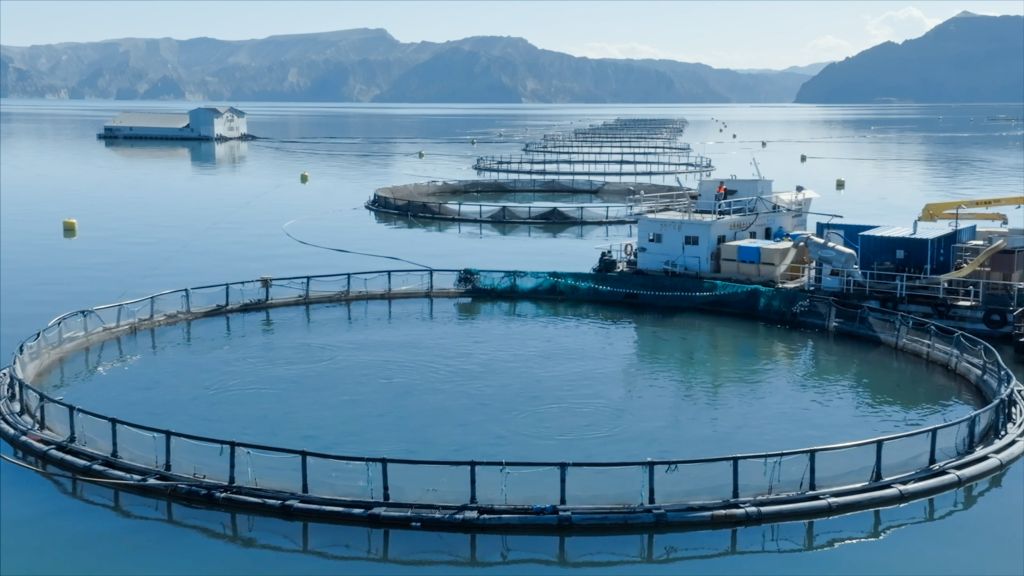
Turning this natural advantage into an export business requires more than favorable water. Over more than a decade, Longyangxia has built a chain covering hatchery, farming, processing, cold storage and overseas shipment.
More than 200 cages use automated feeding systems that adjust feed according to water temperature, dissolved oxygen levels and fish size, noted Xie Xuanwei with Longyang Fresh.
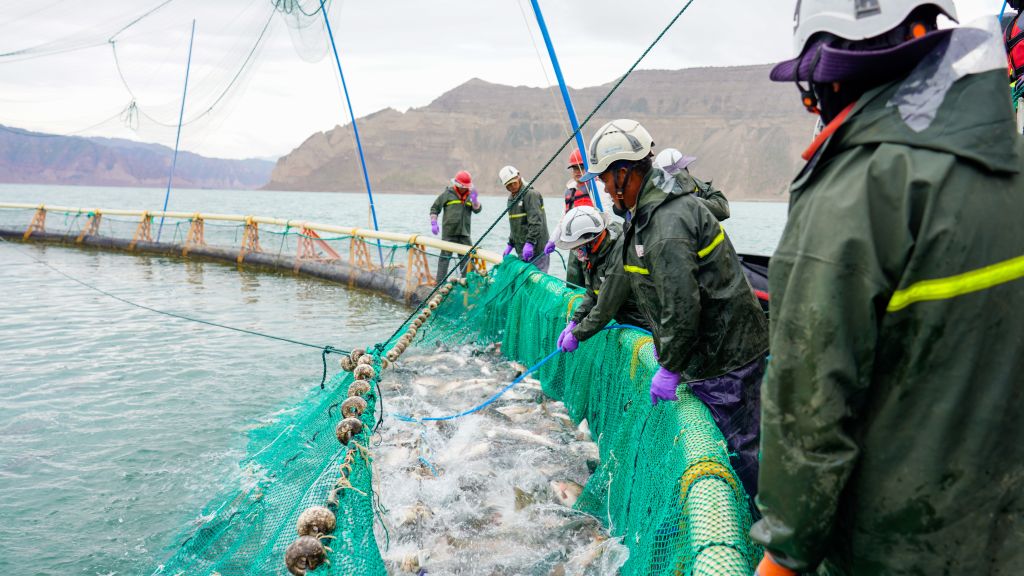
At harvest, suction pumps transfer the fish to harvesting platforms. Luo Zhanyuan, head of the company's aquaculture division who used to be a fisherman decades ago, said this method avoids the violent struggling associated with traditional netting, which can cause blood congestion in the flesh and affect its flavor.
"After being pumped onto the platform, the fish are stunned, fully bled and quickly chilled," Luo said. "No more than two hours elapse between harvesting in the reservoir and delivery to the processing plant."
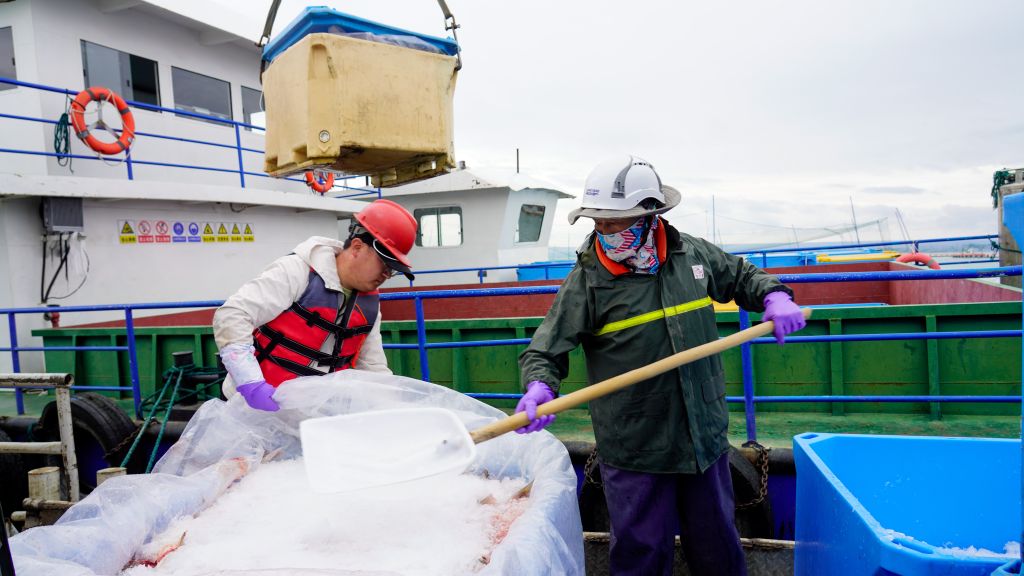
Customs authorities have introduced tailored supervision for this highly perishable product. The online monitoring system tracks fishery products throughout the entire process from harvesting and processing to their departure from the factory, while a dedicated green channel enables faster inspection and clearance.
Shipped as belly cargo on passenger flights, chilled fish can reach Southeast Asian markets within 72 hours, Xining Customs said.
This export push comes amid growing demand for salmon, particularly in the Asia-Pacific region. The global salmon market was valued at about 30.6 billion U.S. dollars in 2025, according to industry data from commercial research organizations. Europe and the Americas remain the traditional core markets, while demand is rising in China, Southeast Asia and the Republic of Korea.
Global salmon supply has long been dominated by sea-farmed Atlantic salmon from Norway and Chile, while China has relied heavily on imports. Qinghai's producers are expanding the domestic supply of high-quality cold-water fish while steadily building markets overseas.
The industry is also supporting local employment around Longyangxia and along the upper Yellow River. Longyang Fresh said it has created more than 2,500 job opportunities. Local fishing workers earn up to 60,000 to 70,000 yuan (roughly 8,837 to 10,309 U.S. dollars) a year, while one smaller cooperative employs villagers from households lifted out of poverty and people with disabilities.
Fish raised in the cold waters of Longyangxia are now shipped from the upper Yellow River to global markets. For the communities around the reservoir, such trade has brought jobs and income, while for overseas buyers, it has introduced an unexpected new source of salmon from the Qinghai-Tibet Plateau.
(Video reporters: Wang Yan, Zhou Shengsheng; video editors: Zhang Yueyuan, Luo Hui, Zhang Mocheng) ■