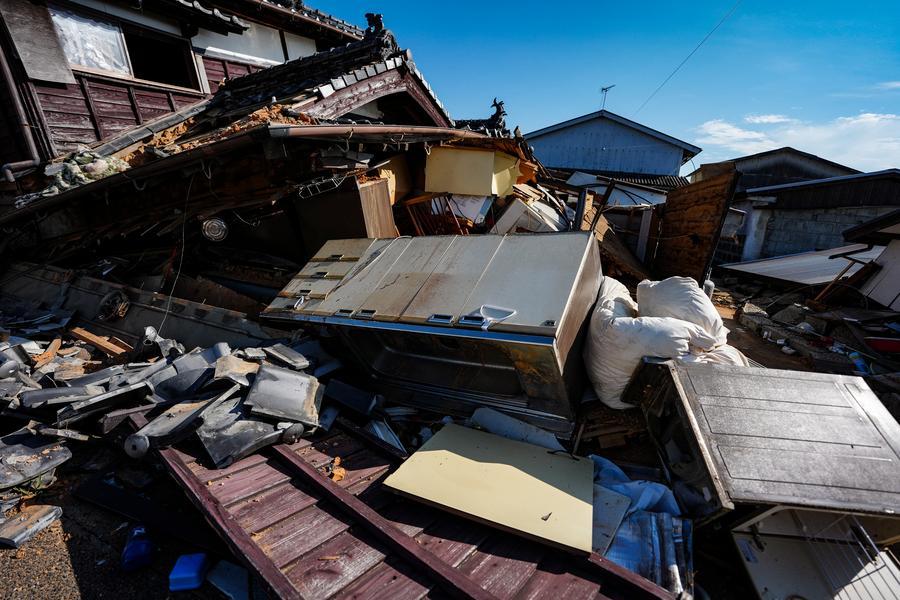
TOKYO, July 30 (Xinhua) -- Two days after a magnitude 7.1 earthquake struck Kumamoto Prefecture, southwestern Japan, rescue operations were still underway amid rising death toll, widespread destruction, persistent aftershocks and sweltering summer heat, raising concerns about residents' well-being.
With the runway at Kumamoto Airport closed following the powerful tremor and multiple flights canceled, Xinhua reporters arrived in the disaster-hit area on Wednesday morning overland from Fukuoka.
Upon entering Kumamoto Prefecture, traffic moved slowly, with long lines of vehicles waiting at gas stations along the roads, reflecting the disruption to transportation and daily life caused by the earthquake.
The powerful earthquake occurred at around 4:27 p.m. local time Tuesday, registering an intensity of 7, the highest on the Japanese seismic scale of 0 to 7, in some parts of the prefecture. At that level, people cannot remain standing or move without crawling and may be thrown through the air.
In the town of Kashima, Xinhua reporters visited the major shopping complex Aeon Mall Kumamoto, where an explosion occurred following the earthquake. The second floor of the building had been devastated. Large sections of the exterior walls and glass facade had collapsed, exposing the building's steel framework. Rubble, twisted metal and shattered glass littered the surrounding area, while parts of nearby roads remained blocked by debris.
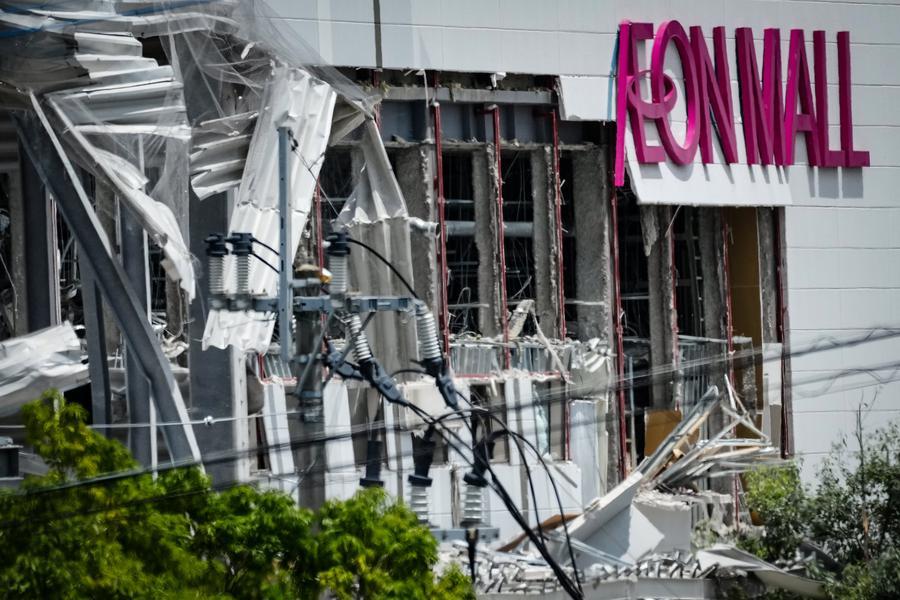
The area around the mall was cordoned off as firefighters, police officers and other emergency personnel continued search and rescue efforts.
"There was suddenly a loud bang, and everything around us was engulfed in white dust," a taxi driver recalled. He had been waiting for passengers in the mall's parking lot, about 30 meters from the section where the exterior wall was blown apart. He said several vehicles parked dozens of meters away were also damaged, including a refrigerated truck whose stainless steel exterior was dented by the blast.
According to Kyodo News, authorities are investigating the cause of the explosion, with a possible gas leak suspected. Chief Cabinet Secretary Minoru Kihara told a press conference on Wednesday that firefighters and police officers searching the collapsed mall had detected the smell of gas inside the building.
Prefectural government officials said Thursday that a total of 12 people have been rescued from the mall so far. Of them, six have been confirmed dead, one remains in cardiac arrest, and five sustained injuries. Authorities believe that at least one person is still unaccounted for inside the building.
A resident living near the mall, identified by her surname Kushiyama, told Xinhua that the earthquake struck without warning and caused violent shaking. In her view, the tremor felt even stronger than the devastating Kumamoto earthquakes a decade ago.
"I couldn't sleep at all last night because I was so afraid of the aftershocks," she said. "Every time the ground shook, I woke up immediately."
Kushiyama said tap water at her home had turned cloudy and was no longer safe to drink. Toilets could not be flushed, and residents were unable to bathe, leaving many struggling with shortages of both drinking water and water for daily use.
The Japan Meteorological Agency has named the disaster the 2026 Kumamoto Earthquake. As of Thursday morning, over 250 aftershocks have rattled the region since it was struck on Tuesday, the agency said.
The death toll from the Kumamoto Earthquake has risen to 34, the prefectural government said Thursday.
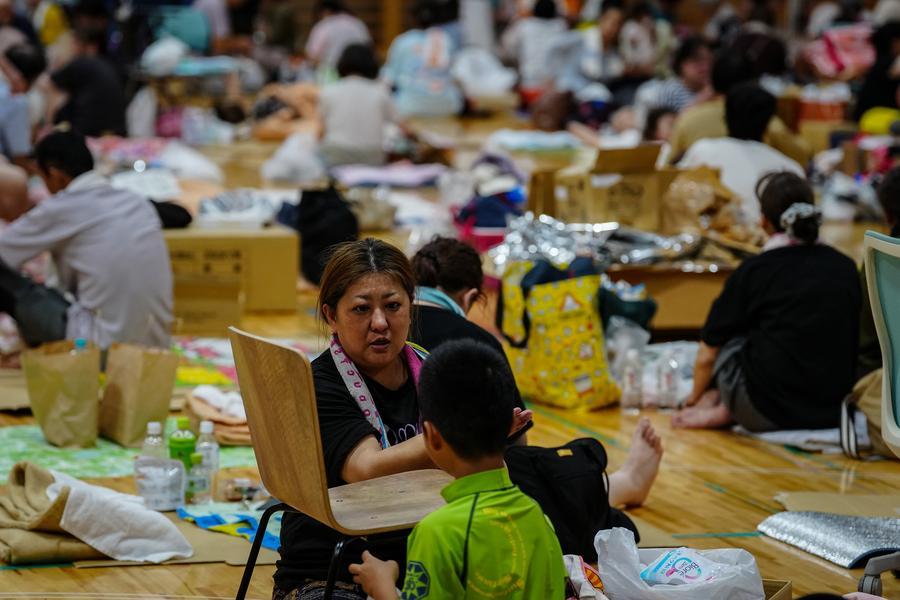
As of Thursday morning, more than 10,000 people were staying in evacuation centers. About 23,000 households were without electricity and some 75,000 households without water, according to the prefecture.
Meanwhile, a dangerous heatwave is expected to continue across wide areas of Japan. Quake-hit areas in Kumamoto Prefecture are among those likely to experience scorching conditions, the weather agency warned Thursday.
For residents already coping with the devastation of the earthquake, the combination of intense heat, water shortages and relentless aftershocks has made every hour of recovery more difficult.■