
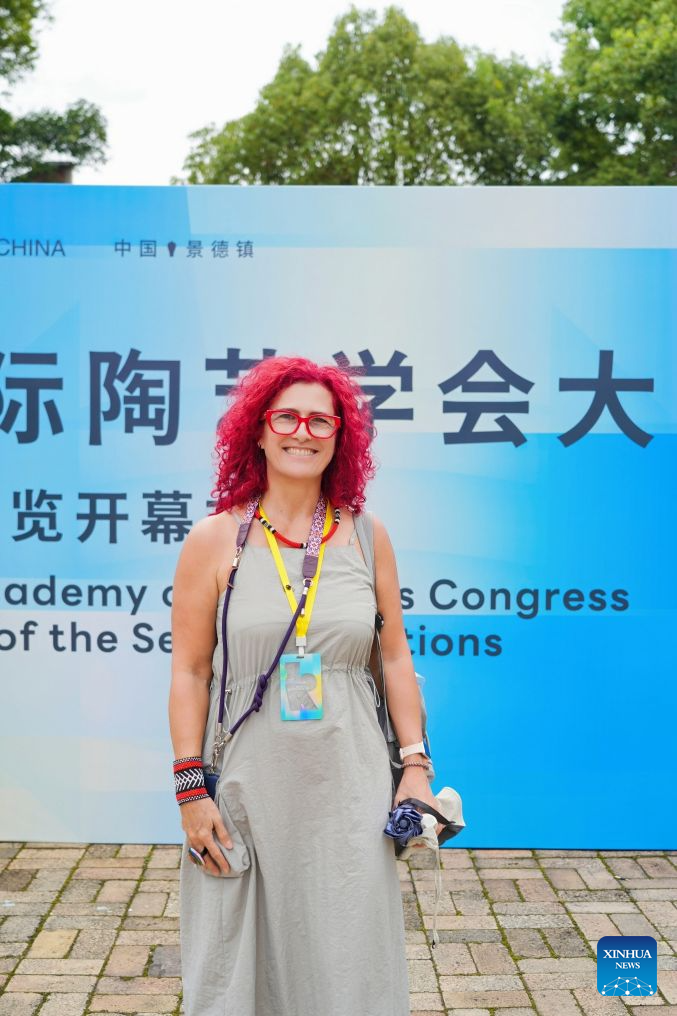
Brazilian artist Viviane Diehl takes part in the 2026 Congress of the International Academy of Ceramics in Jingdezhen, east China's Jiangxi Province, June 28, 2026. (Xinhua)
NANCHANG, July 30 (Xinhua) -- Even against the red-brick backdrop of Taoxichuan cultural and creative district in Jingdezhen, Brazilian artist Viviane Diehl stands out with her striking red hair.
For the 62-year-old visual artist, her presence in this ancient porcelain capital in east China's Jiangxi Province is the realization of a long-time dream. "When I started to learn about porcelain, I knew I needed to go to China," Diehl told Xinhua.
Her journey to the heart of Chinese ceramics was paved by her fellow artists, who had previously worked in Jingdezhen's Sanbao village. After returning to Brazil, they shared stories of the city at various events, sparking a deep fascination in Diehl.
"I've loved art since I was a child," said Diehl, recalling how she studied at age 15 to learn ceramic painting, from glazing to firing.
This fascination has blossomed into tangible creations. Her artwork titled "Afforest," which is on display at the Taoxichuan Art Museum until the end of August, was conceived during a residency in Jingdezhen in 2024.
"Ceramic art and nature guide human beings toward inner contemplation, giving meaning to cycles and coexistence, providing a pause and reconnecting freedom to well-being and unity," Diehl wrote in the introduction.
Mastering this medium in a foreign land has been an expressive journey. Before arriving in Jingdezhen, Diehl completed a residency in Longquan, where she began experimenting with local clay and celadon glazes.
Longquan, a city in east China's Zhejiang Province, is known for its centuries-old celadon tradition, and the firing techniques of Longquan celadon were added in 2009 to UNESCO's list of Intangible Cultural Heritage of Humanity.
"Research with China's local clay is an expressive challenge. Experimentation in construction, surface design with celadon glazes, and gas firing techniques is a continuous process," she said. "I have something new to learn all the time."
Diehl, who has worked as an art teacher since 1989, considers herself an "educator-artist." She said that while advanced technologies have made it easier for porcelain enthusiasts worldwide to learn about ceramics, Jingdezhen remains unparalleled.
"We don't have another place with such quality and special techniques to make porcelain," said Diehl. This unique appeal is rooted in the city's geography and heritage.
Nestled in a hilly area of northeastern Jiangxi, Jingdezhen is endowed with abundant reserves of kaolin, or China clay, and other raw materials essential for porcelain production. For generations, local artisans have perfected a specialized sequence of tasks, from preparing clay to firing kilns.
The world has taken note. The Jingdezhen Handicraft Porcelain Industry Sites were added to UNESCO's World Heritage List this month, filling a long-standing gap in the list for porcelain heritage. It is China's 61st World Heritage site.
Today, the city's comprehensive ceramic industrial chain continues to attract international artists like Diehl. At peak times, it draws more than 5,000 ceramic enthusiasts from around the world.
Beyond its industrial foundations, the city has further encouraged artists to stay through targeted programs. As early as 2015, the Taoxichuan cultural and creative district in Jingdezhen launched the "Migratory Bird Program." The program has reached out to art institutions in more than 50 countries and regions, attracting 3,600 artists from around the world.
As Jingdezhen continues to evolve, it remains a beacon for global creators. "Jingdezhen is opening doors for the world," Diehl said. ■
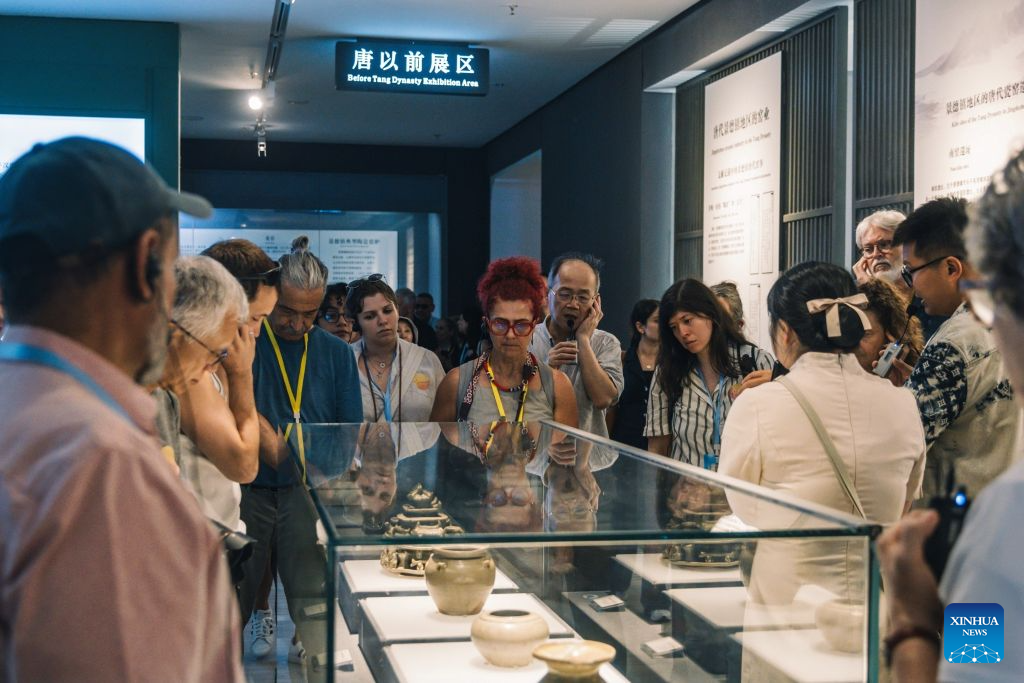
Brazilian artist Viviane Diehl (C) visits China Ceramics Museum in Jingdezhen, east China's Jiangxi Province, June 28, 2026. (Xinhua)


