
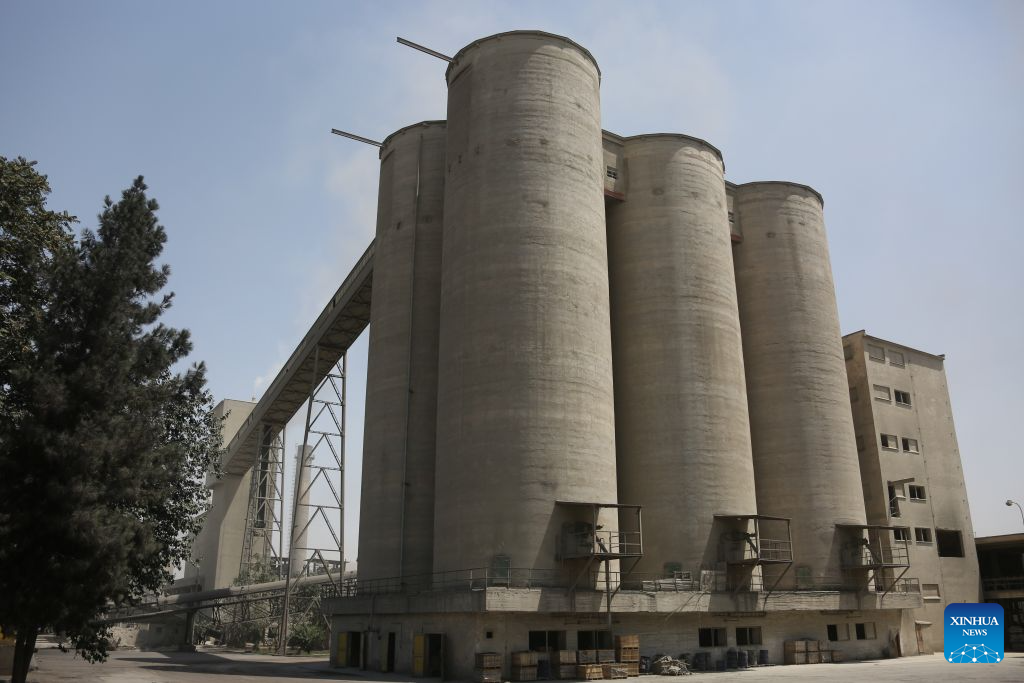
This photo taken on July 15, 2026 shows a view of a cement factory in Pul-e-Khumri city, Baghlan province, Afghanistan. (Photo by Saifurahman Safi/Xinhua)
BAGHLAN/KUNDUZ, Afghanistan, July 30 (Xinhua) -- The thick plumes of coal smoke and the thunderous roar of machinery that have operated for over half a century echo across Pul-e-Khumri city, as the historic state-owned Ghori Cement Plant in northern Baghlan province continues to transform Afghanistan's unique stones and raw minerals into high-quality cement, forging the very foundations of strength and nation-building.
Engineer Nazar Mohammad Mamoozi, a weathered veteran who has served as the technical director of the Ghori Cement Plant for over three decades, recalls the day the plant's first machinery roared to life in 1963. Since then, the facility has consistently produced high-quality cement.
"Currently, we produce 800 tonnes of cement per day, equivalent to 16,000 bags, which we supply to the market," Mamoozi said. "We produce around 7 percent of the total cement consumed in Afghanistan."
According to him, the factory has provided employment for hundreds of skilled and unskilled workers. "In total, 1,000 people are working here and earning a livelihood for their families."
Amid the ceaseless grinding of stone and the fine white dust that coats everything, Hakim Shinwari, a man of strong build, has spent 27 years at the Ghori Cement Plant, performing his duties with the kind of quiet dignity that defines Afghanistan's working class.
"I work here from 7 a.m. to 4 p.m. Our work is good, our salaries are paid on time, and I am satisfied," Shinwari said. As the sole breadwinner for his family of eight, with children pursuing their education, Shinwari is grateful for the employment opportunity and hopes more such factories will be established across the country.
"Factories should be built in other provinces too so that work begins and people don't have to leave the country for jobs," he said.
In a significant step toward expanding industrial capacity, the Afghan government has recently launched the construction of the third cement factory adjacent to the existing Ghori plant. The project, valued at about 87 million U.S. dollars, is expected to increase the facility's daily cement production capacity to over 5,000 tonnes upon completion, while creating thousands of additional jobs.
Afghan authorities also launched the construction of another cement plant in eastern Parwan province three weeks ago, valued at around 90 million dollars, with a similar target capacity of 5,000 tonnes per day and potential to employ up to 5,000 people directly.
Some 90 kilometers away in neighboring Kunduz province, the official Spinzar Company stands as another enduring symbol of local industry. Established more than 90 years ago, the company produces 14 different products, including cottonseed, edible oil, soap, tissue paper, and other hygiene items, moving the country closer to self-sufficiency in essential goods.
Mohammad Haroon Mohammadi, technical and production manager of Spinzar, said that the core activities of the company are cottonseed processing, oil refining, and soap production. "During the operating season, the factory processes 120 tonnes of cotton, refines 30 tonnes of oil, and produces 100,000 bars of laundry soap every 24 hours."
The company also provides substantial employment. "Directly, 1,500 people work in the production process around the clock, while more than 5,000 others are engaged indirectly with the company," Mohammadi told Xinhua. All raw materials are sourced locally from Kunduz and the surrounding provinces.
Ahmad Hilal Ahmadi, head of the tissue paper production unit, carries out his duties with professionalism and takes pride in his stable income. "The salary we receive is used for our family expenses. I am very happy. I was previously unemployed, even though I am a skilled technician."
Ahmadi called on authorities to expand such initiatives and establish a factory of this standard in every province so that the country's youth can be productively engaged and prevented from migrating abroad.
In a war-torn nation grappling with severe economic challenges, high unemployment, international sanctions, widespread poverty, and a large influx of returnees, these state-backed industrial enterprises represent rare pockets of stability and hope, offering not just cement and soap, but dignity, livelihoods, and a measure of self-reliance. ■
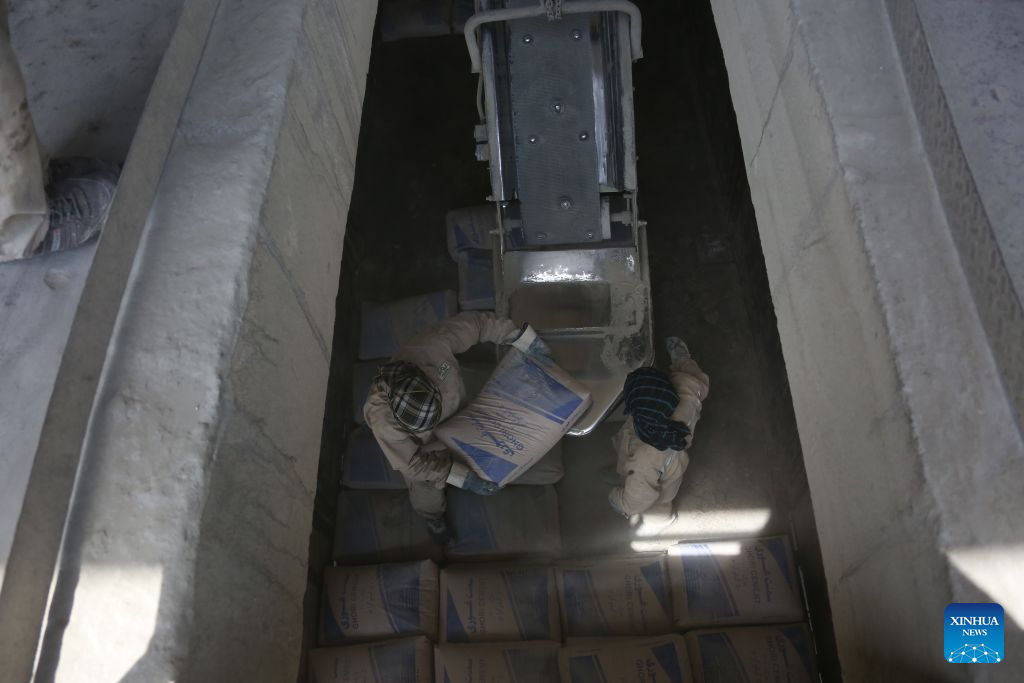
Laborers work at a cement factory in Pul-e-Khumri city, Baghlan province, Afghanistan, July 15, 2026. (Photo by Saifurahman Safi/Xinhua)


