by Burak Akinci
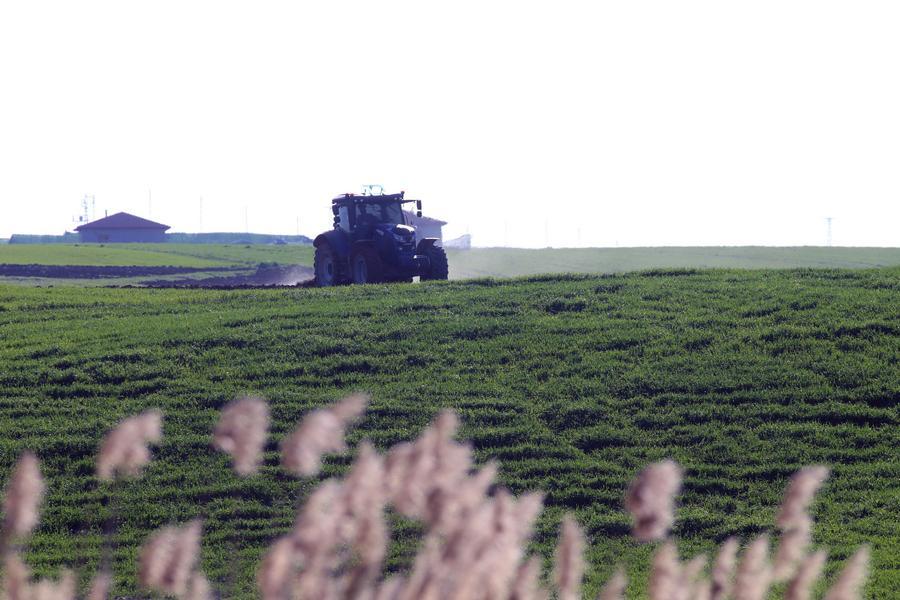
ANKARA, July 28 (Xinhua) -- As combines sweep across the golden wheat fields of Ankara's Golbasi district, farmers are breathing a sigh of relief after a harvest that has exceeded expectations, thanks to abundant rainfall and favorable growing conditions.
But the optimism brought by one of Türkiye's strongest grain harvests in years is being tempered by a familiar challenge: soaring production costs, particularly for diesel fuel, driven by the renewed conflict in the Middle East.
Since the U.S.-Iran conflict reignited in early July after a ceasefire collapsed, Türkiye has raised gasoline prices three times, with pump prices rising by about 14 Turkish liras (0.30 U.S. dollars) per liter this month.
To cushion consumers from sharp fluctuations, the Turkish government introduced a temporary fuel stabilization mechanism in April, set to run through October.
However, farmers say the measure has done little to offset mounting costs during one of the year's busiest agricultural seasons.
"This year's harvest is better than normal compared with last year, but high yields alone cannot save us," wheat farmer Omer Temizsoy told Xinhua as trucks lined up beside his freshly harvested fields.
"Our costs have doubled compared with last year. Gasoline keeps getting more expensive almost every week," he said, noting that fuel prices have jumped from around 27 liras per liter last year to more than 70 liras today.

Agriculture remains one of Türkiye's strategic sectors, with the country ranking among the world's top producers of wheat, barley, fruits and vegetables.
This year's abundant rainfall across much of Anatolia, Türkiye's Asian heartland and also the main grain belt, has delivered a bumper harvest, fueling expectations of stronger domestic supplies.
Yet the larger harvest has not translated into greater financial security. Adding to the strain of rising costs, debt has become a major burden in the countryside.
"Nearly 80 percent of farmers have bank loans," said Ismail Derin, another grain producer in Golbasi.
Many are borrowing just to continue producing in the face of mounting costs, he added.
The financial pressures extend well beyond grain farming.
Sheep breeder Umut Uzum from Golbasi said soaring costs for feed, barley, and fertilizer are squeezing livestock producers, eroding margins despite steady output.
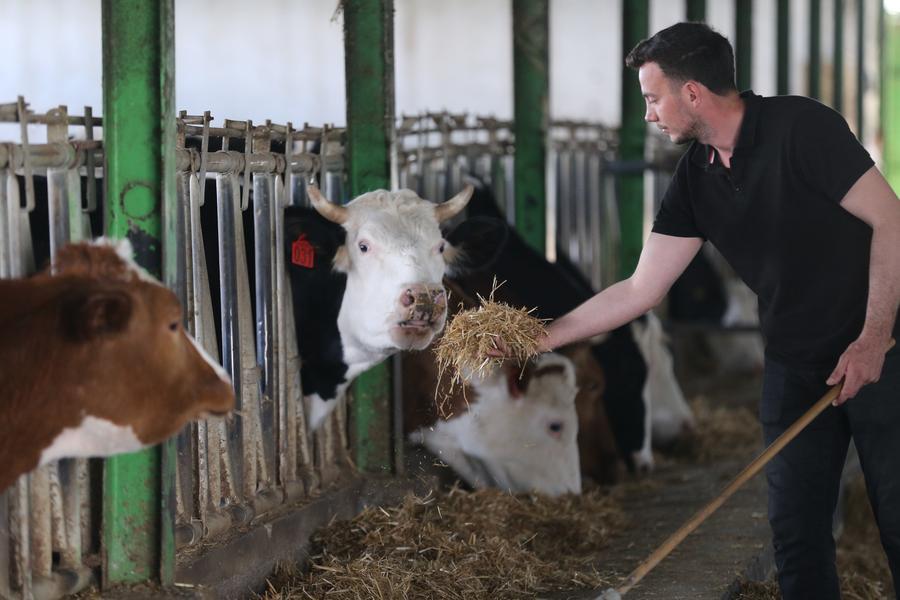
"The costs of feed, barley and fertilizer have risen sharply, while our profits have fallen," Uzum said. "Everything is becoming more expensive. We are struggling to keep up."
Events unfolding thousands of kilometers away have immediate consequences for rural families, he warned, referring to the ongoing conflict in the Middle East.
As the last combines continue their slow march across the rolling wheat fields outside Ankara, a sense of cautious relief lingers in the dust they leave behind.
Good weather has delivered a bumper harvest, but farmers remain wary: whether that abundance ultimately translates into meaningful income will depend on factors beyond the fields themselves.■